

Cable One Arm Press On Exercise Ball vs Cable Press On Exercise Ball: Complete Comparison Guide
Cable One Arm Press On Exercise Ball vs Cable Press On Exercise Ball — you’re deciding between unilateral stability work and a more balanced bilateral press. If you want exercises that stress the pectorals while forcing core and shoulder control, both are excellent, but they load muscles and joints differently. In this guide you’ll get clear comparisons of primary and secondary muscle activation, equipment needs, learning curves, technique cues (hips stacked, scapula set, 90° starting elbow), pros and cons, and practical recommendations so you can pick the variation that fits your goals.
Exercise Comparison
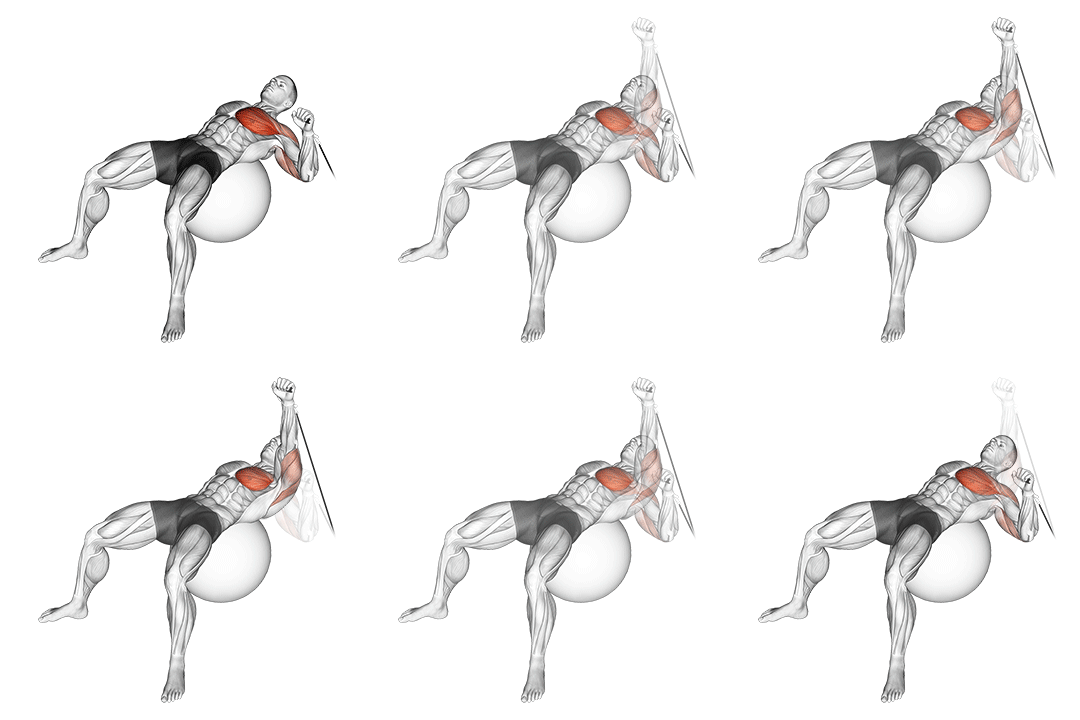
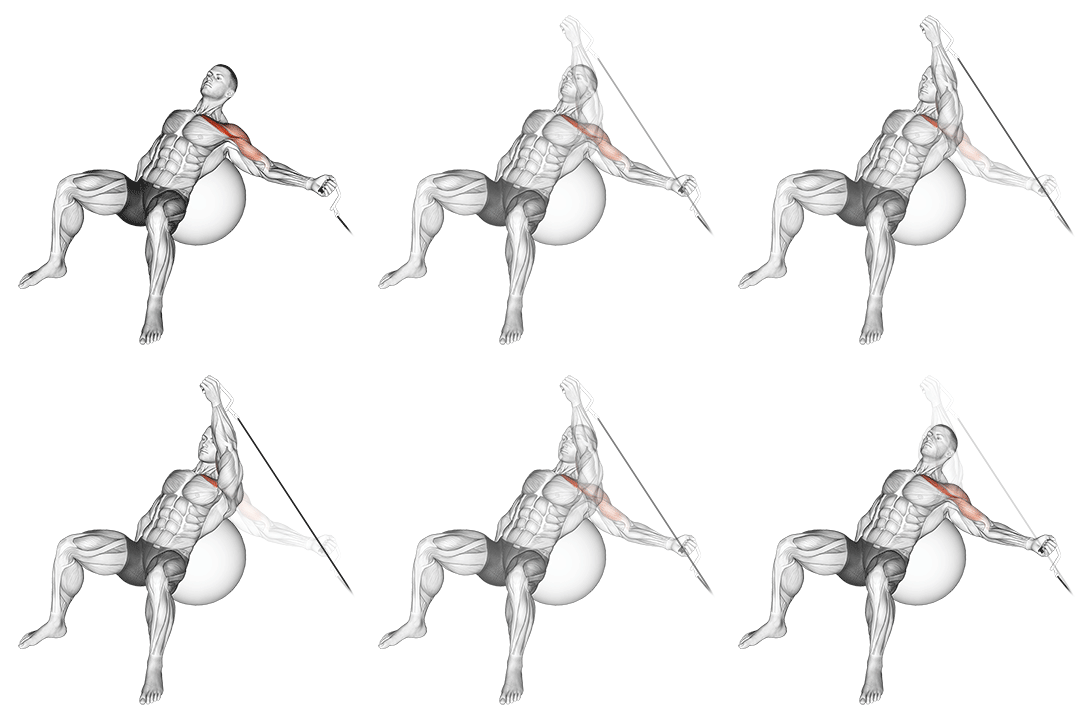
Cable One Arm Press On Exercise Ball
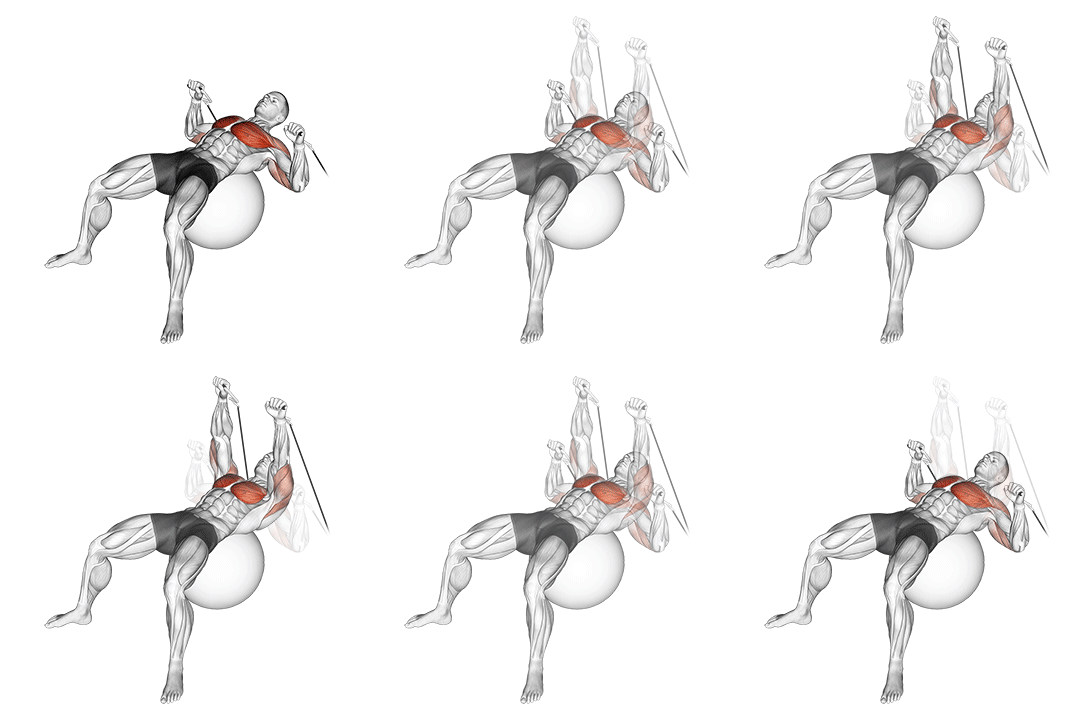
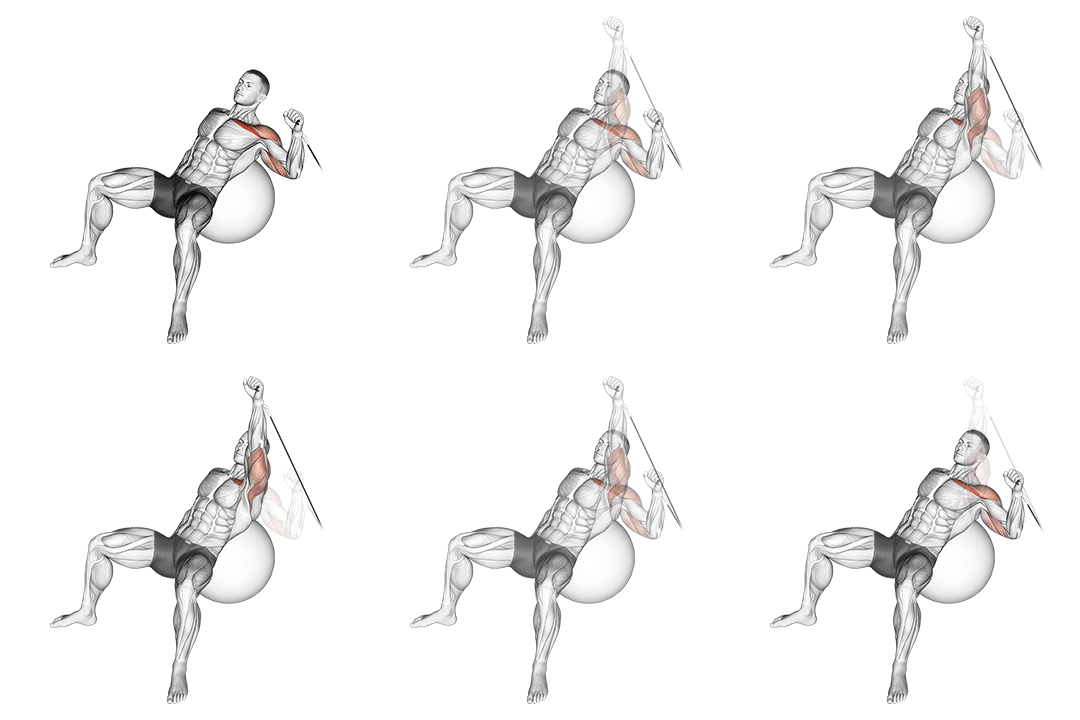
Cable Press On Exercise Ball
Head-to-Head Comparison
| Attribute | Cable One Arm Press On Exercise Ball | Cable Press On Exercise Ball |
|---|---|---|
| Target Muscle |
Pectorals
|
Pectorals
|
| Body Part |
Chest
|
Chest
|
| Equipment |
Stability-ball
|
Stability-ball
|
| Difficulty |
Advanced
|
Intermediate
|
| Movement Type |
Compound
|
Compound
|
| Secondary Muscles |
2
|
2
|
Secondary Muscles Activated
Cable One Arm Press On Exercise Ball
Cable Press On Exercise Ball
Visual Comparison
Overview
Cable One Arm Press On Exercise Ball vs Cable Press On Exercise Ball — you’re deciding between unilateral stability work and a more balanced bilateral press. If you want exercises that stress the pectorals while forcing core and shoulder control, both are excellent, but they load muscles and joints differently. In this guide you’ll get clear comparisons of primary and secondary muscle activation, equipment needs, learning curves, technique cues (hips stacked, scapula set, 90° starting elbow), pros and cons, and practical recommendations so you can pick the variation that fits your goals.
Key Differences
- Difficulty levels differ: Cable One Arm Press On Exercise Ball is advanced, while Cable Press On Exercise Ball is intermediate.
- Both exercises target the Pectorals using Stability-ball. The main differences are in their movement patterns and muscle activation angles.
Pros & Cons
Cable One Arm Press On Exercise Ball
+ Pros
- Higher unilateral core and anti-rotation demand for improved trunk stability
- Targets side-to-side imbalances by allowing independent loading per limb
- Greater serratus anterior and rotator-cuff stabilization activation
- Useful for sport-specific transfers and single-arm pushing strength
− Cons
- Harder to load heavily — limited absolute strength progression
- Higher technical demand; more coordination required
- Greater risk of lumbar rotation or compensation if core fails
Cable Press On Exercise Ball
+ Pros
- Easier to overload for hypertrophy and strength with symmetrical loading
- Lower balance demand — faster to teach and scale for beginners
- Consistent bilateral pectoral activation and force vector control
- More compatible with common gym attachments (bar or double handles)
− Cons
- Less stimulus for unilateral stability and anti-rotation strength
- Potential to hide left-right imbalances without unilateral checks
- Can encourage pressing with excessive shoulder elevation if scapula not controlled
When Each Exercise Wins
It allows higher absolute loads and more controlled volume—use 6–12 reps with 3–5 sets to maximize time under tension and pectoral fiber recruitment while maintaining consistent tension from the cable.
Symmetrical loading lets you progressively add heavier resistance and target lower-rep ranges (3–6 reps) with stable mechanics, giving better transfer to bilateral pressing strength.
Lower balance and technical demand make it easier to learn scapular setting, pressing path, and breathing; you can then progress to unilateral work as your core and rotator cuff control improve.
If you lack a single-handle pulley, bilateral setups adapt to resistance bands or a single low pulley; the exercise is simpler to set up and safer to perform without a spotter.
Frequently Asked Questions
Can I do both Cable One Arm Press On Exercise Ball and Cable Press On Exercise Ball in the same workout?
Yes — pair the bilateral cable press first for heavier sets (3–5 sets of 4–8 reps) then add one-arm presses as accessory work (2–3 sets of 6–10 reps) to target stability and correct imbalances. Do the unilateral work with lighter loads and focus on anti-rotation control.
Which exercise is better for beginners?
Cable Press On Exercise Ball is better for beginners because it reduces rotational torque and balance demand, letting you learn scapular control and a consistent pressing path before progressing to unilateral versions.
How do the muscle activation patterns differ?
The one-arm variation increases unilateral oblique, serratus anterior, and rotator-cuff activation to resist rotation, while bilateral pressing produces more symmetric pectoral and triceps activation and allows higher absolute load through the same horizontal adduction range.
Can Cable Press On Exercise Ball replace Cable One Arm Press On Exercise Ball?
For pure chest size and bilateral strength, yes — the bilateral press can replace the unilateral in many programs. However, if you need to address asymmetries or add anti-rotation training, keep the one-arm press in rotation as an accessory.
Expert Verdict
Use Cable Press On Exercise Ball when your goal is straightforward chest development or building bilateral pressing strength — it lets you load heavier, hit standard hypertrophy ranges (6–12 reps), and teach solid scapular mechanics. Choose Cable One Arm Press On Exercise Ball when you need to fix left-right imbalances, improve anti-rotation core strength, or transfer unilateral force to sport-specific actions; program it for controlled sets of 4–10 reps with strict tempo and focus on bracing. Either way, keep hips stacked, scapula retracted and depressed, elbows tracking at about 80–100°, and prioritize progressive overload and movement quality over extra weight.
Also Compare
More comparisons with Cable One Arm Press On Exercise Ball
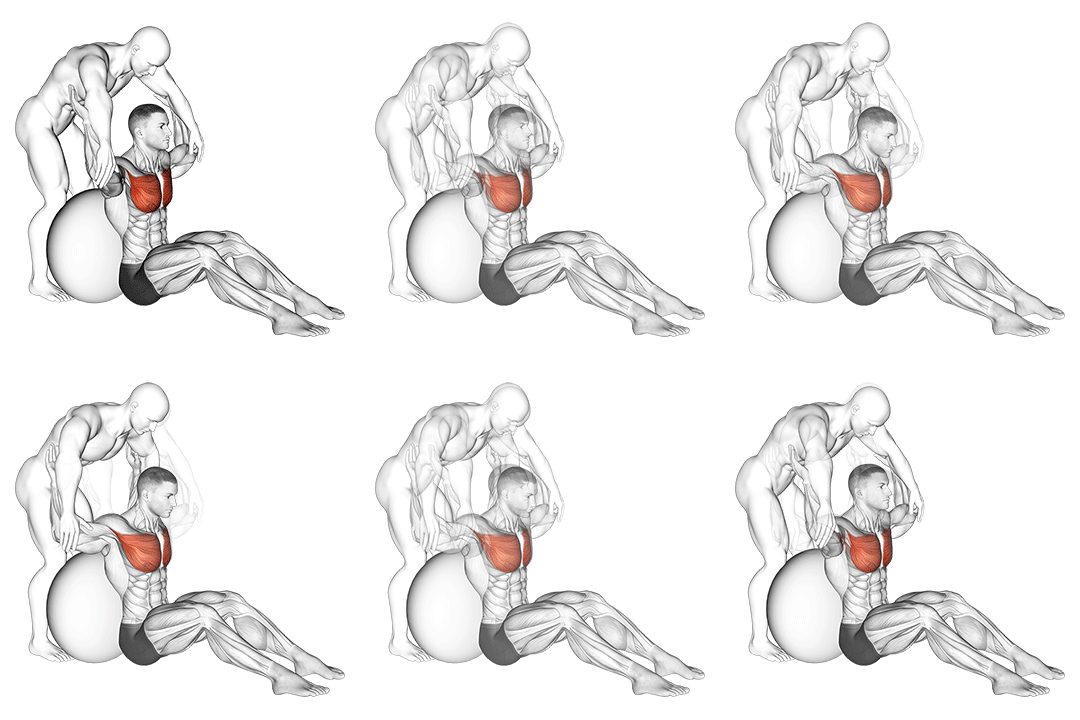
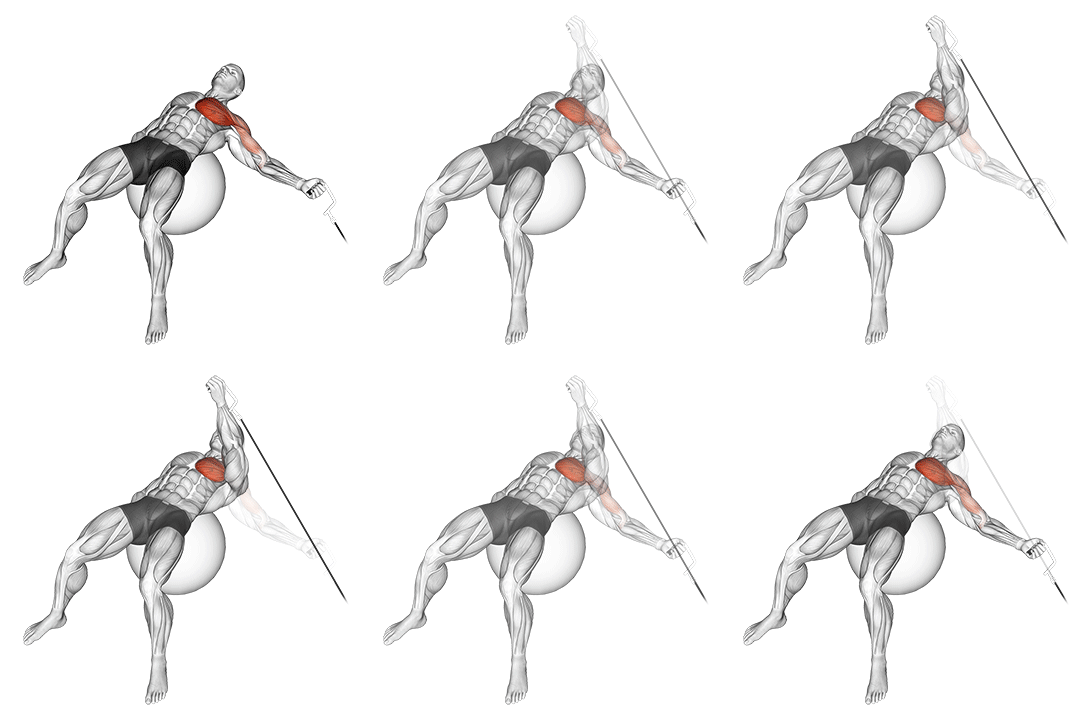
More comparisons with Cable Press On Exercise Ball
Compare More Exercises
Use our free comparison tool to analyze any two exercises head-to-head.
Compare Exercises