

Cable One Arm Press On Exercise Ball vs Chest Stretch With Exercise Ball: Complete Comparison Guide
Cable One Arm Press On Exercise Ball vs Chest Stretch With Exercise Ball — this head-to-head shows you when to press for muscle development and when to use the ball for mobility and recovery. You get clear technique cues, biomechanics explanations (length-tension, force vectors, scapular control), and practical recommendations for rep ranges, progressions, and safety. Read on if you want to pick the right movement for hypertrophy, strength, stability, or rehab. I’ll compare primary and secondary muscle activation, equipment needs, difficulty, and give scenario-based winners so you can choose the best tool for your goal.
Exercise Comparison
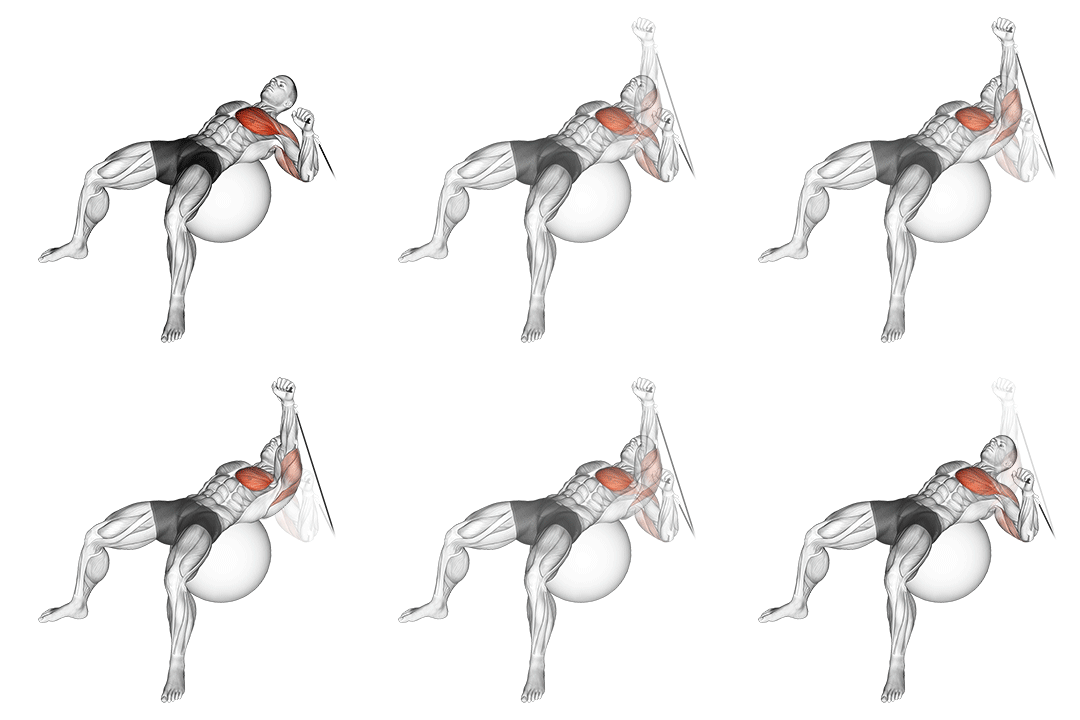
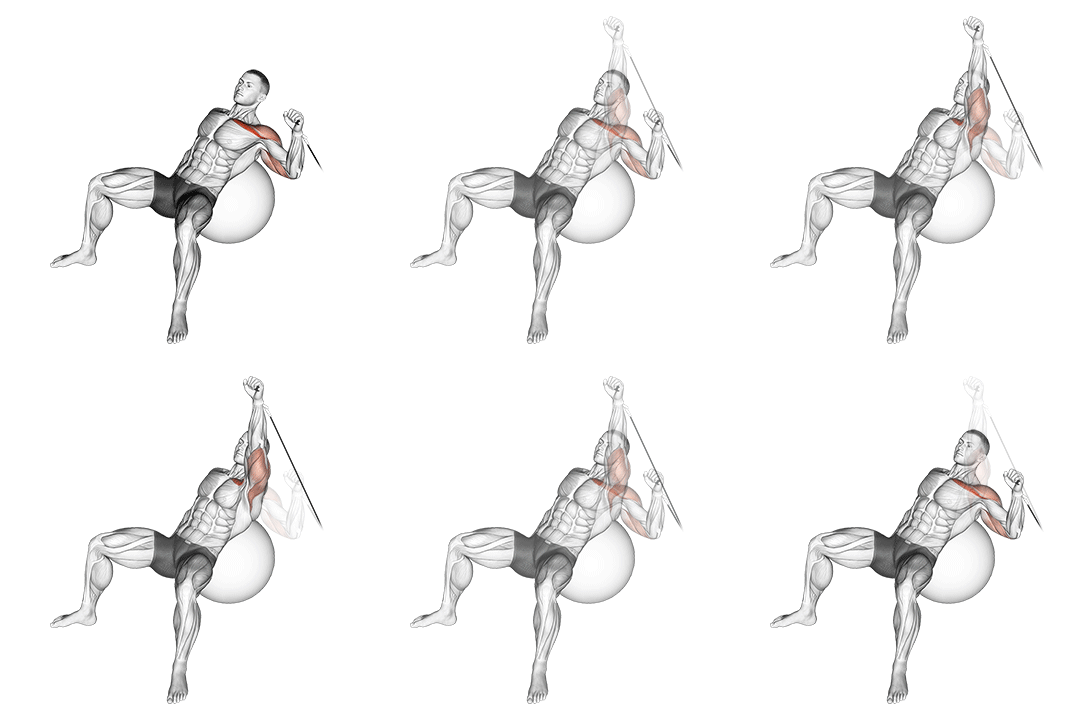
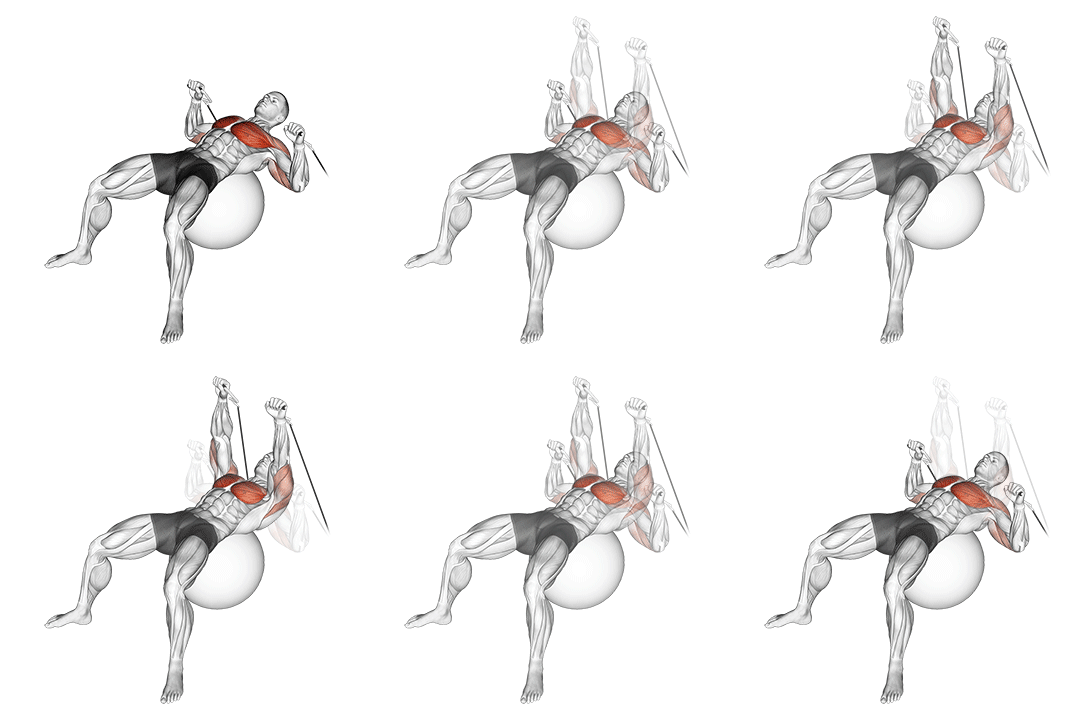
Cable One Arm Press On Exercise Ball
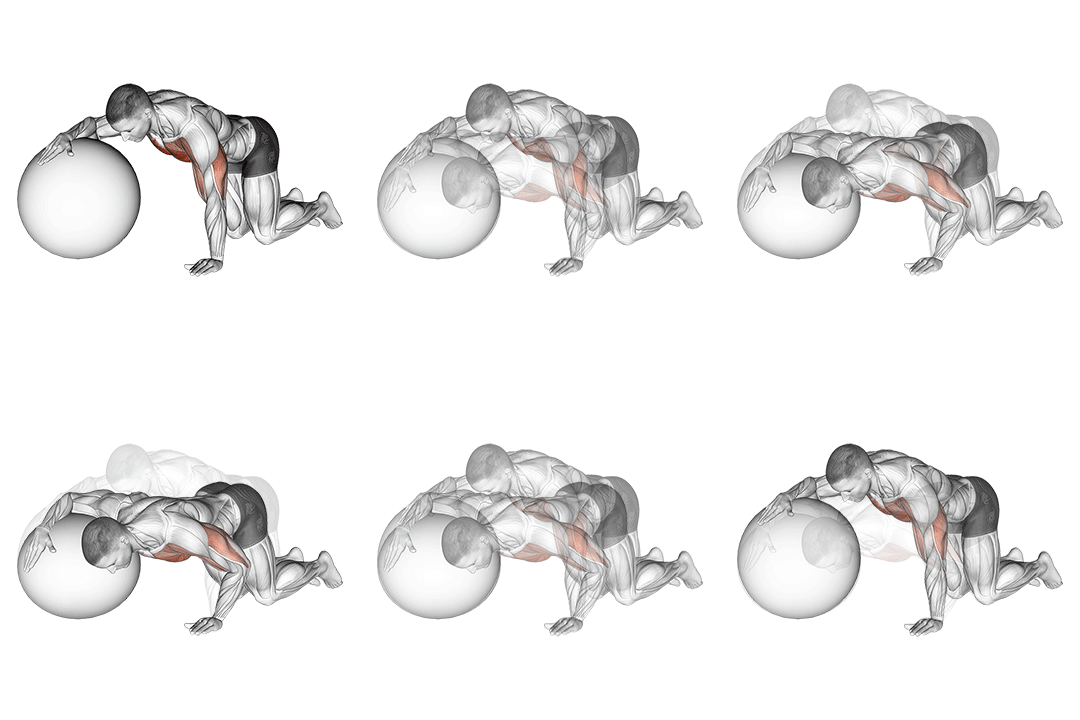
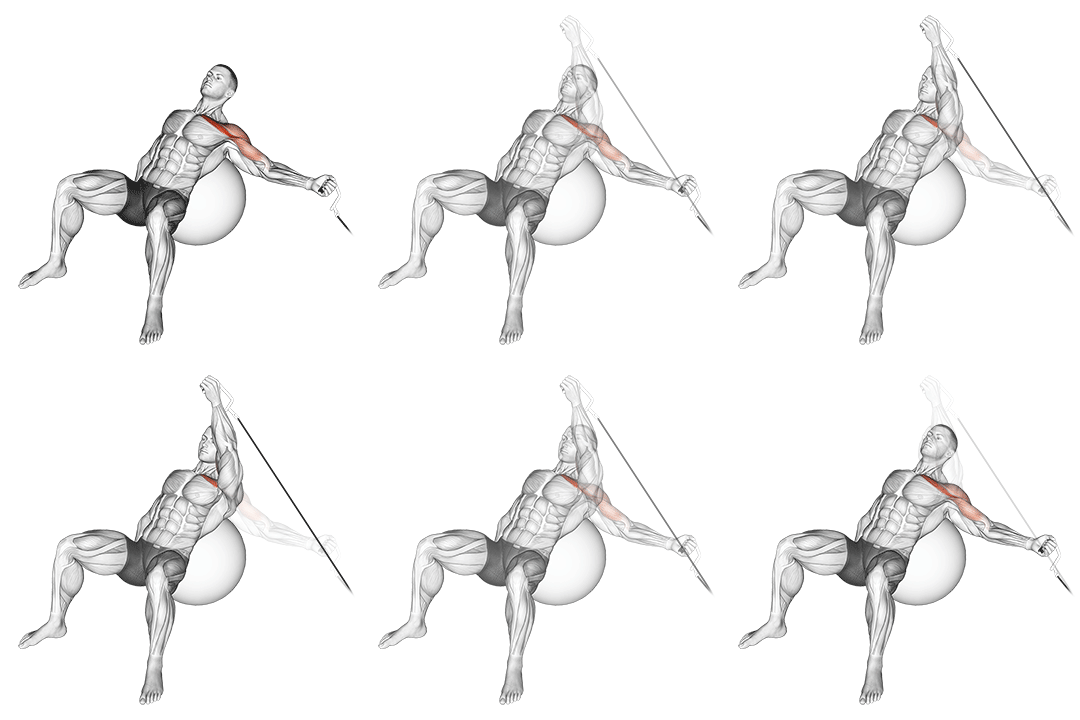
Chest Stretch With Exercise Ball
Head-to-Head Comparison
| Attribute | Cable One Arm Press On Exercise Ball | Chest Stretch With Exercise Ball |
|---|---|---|
| Target Muscle |
Pectorals
|
Pectorals
|
| Body Part |
Chest
|
Chest
|
| Equipment |
Stability-ball
|
Stability-ball
|
| Difficulty |
Advanced
|
Beginner
|
| Movement Type |
Compound
|
Isolation
|
| Secondary Muscles |
2
|
2
|
Secondary Muscles Activated
Cable One Arm Press On Exercise Ball
Chest Stretch With Exercise Ball
Visual Comparison
Overview
Cable One Arm Press On Exercise Ball vs Chest Stretch With Exercise Ball — this head-to-head shows you when to press for muscle development and when to use the ball for mobility and recovery. You get clear technique cues, biomechanics explanations (length-tension, force vectors, scapular control), and practical recommendations for rep ranges, progressions, and safety. Read on if you want to pick the right movement for hypertrophy, strength, stability, or rehab. I’ll compare primary and secondary muscle activation, equipment needs, difficulty, and give scenario-based winners so you can choose the best tool for your goal.
Key Differences
- Cable One Arm Press On Exercise Ball is a compound movement, while Chest Stretch With Exercise Ball is an isolation exercise.
- Difficulty levels differ: Cable One Arm Press On Exercise Ball is advanced, while Chest Stretch With Exercise Ball is beginner.
- Both exercises target the Pectorals using Stability-ball. The main differences are in their movement patterns and muscle activation angles.
Pros & Cons
Cable One Arm Press On Exercise Ball
+ Pros
- High concentric loading for pectoral hypertrophy and strength
- Unilateral design corrects left-right imbalances and forces core stabilization
- Cable provides constant tension through full ROM and adjustable resistance
- Multiple progression variables: load, tempo, angle, and unilateral sequencing
− Cons
- Requires a cable machine and a stability ball
- Advanced stability and scapular control needed to avoid shoulder strain
- Higher technical demand limits use for true beginners
Chest Stretch With Exercise Ball
+ Pros
- Very low equipment need — just a stability ball
- Excellent for improving thoracic extension and pec flexibility
- Low injury risk when performed correctly and useful in warm-ups or rehab
- Beginners can perform it easily and use it to improve posture for pressing
− Cons
- Minimal concentric overload — poor choice for direct hypertrophy stimulus
- Limited progression for strength because it’s primarily passive/isolation
- May be misused as a stretch into painful end-range without proper scapular control
When Each Exercise Wins
The cable press lets you apply progressive overload and maintain tension through the range, producing higher concentric/eccentric force on the pectorals. Use 6–12 reps with controlled 2–3s eccentrics to stimulate muscle growth.
Loaded unilateral pressing recruits triceps and stabilizers under tension, improving force production and intermuscular coordination; train in 3–6 rep ranges or heavier 4–8 sets with longer rest for neural adaptations.
It teaches thoracic extension, shoulder posture, and pec length control without heavy load or complex stabilization, making it safe for novices to improve mobility before advancing to loaded unilateral presses.
Requires only a stability ball and provides flexibility and posture benefits at home. The cable press typically needs gym equipment, limiting its practicality for home use.
Frequently Asked Questions
Can I do both Cable One Arm Press On Exercise Ball and Chest Stretch With Exercise Ball in the same workout?
Yes. Use the Chest Stretch as a warm-up or mobility primer (10–30s holds) to optimize length-tension before performing the Cable One Arm Press. Doing the stretch first can improve shoulder position and reduce compensations during heavy unilateral pressing.
Which exercise is better for beginners?
Chest Stretch With Exercise Ball is better for beginners—its low load and focus on posture and thoracic extension build the mobility and scapular control needed for later loaded pressing. Begin with the stretch before progressing to unilateral presses.
How do the muscle activation patterns differ?
The Cable One Arm Press produces high concentric and eccentric pectoral activation with significant anterior deltoid and triceps involvement, following a horizontal adduction force vector. The Chest Stretch puts pectoral fibers on the lengthened side of the length-tension curve, producing mostly passive/low-level active tension and minimal triceps loading.
Can Chest Stretch With Exercise Ball replace Cable One Arm Press On Exercise Ball?
No, not if your goal is hypertrophy or strength. The Chest Stretch improves tissue extensibility and posture but lacks the overload stimulus necessary for meaningful muscle growth or strength. Use the stretch to prepare or complement the cable press, not as a substitute for loading.
Expert Verdict
Use the Cable One Arm Press On Exercise Ball when your priority is muscle growth, unilateral strength, and challenging core/stabilizer recruitment. Program it into 3–4 sets of 6–12 reps for hypertrophy or 3–5 sets of 3–6 reps for strength, keeping load ≤70% of your flat press 1RM on the unstable surface until form is mastered. Choose the Chest Stretch With Exercise Ball when you need mobility, improved thoracic extension, or a safe warm-up/rehab tool—hold 10–30 seconds, 2–4 reps per side, and focus on scapular retraction. Both complement each other: use the stretch to prime tissue length-tension and the cable press to load for progress.
Also Compare
More comparisons with Cable One Arm Press On Exercise Ball
More comparisons with Chest Stretch With Exercise Ball
Compare More Exercises
Use our free comparison tool to analyze any two exercises head-to-head.
Compare Exercises