

Cable Press On Exercise Ball vs Chest Stretch With Exercise Ball: Complete Comparison Guide
Cable Press On Exercise Ball vs Chest Stretch With Exercise Ball — you’ll get a clear, practical comparison so you can pick the right move for your chest work. I’ll walk you through muscle activation, biomechanics (force vectors, length-tension relationships), equipment needs, learning curve, and rep ranges so you can program these exercises into your workouts. Expect specific technique cues (body angles, breathing, tempo), who benefits most, and simple progressions or regressions. Read on to decide whether you should use the cable press for pressing overload or the ball stretch for mobility and tissue quality.
Exercise Comparison
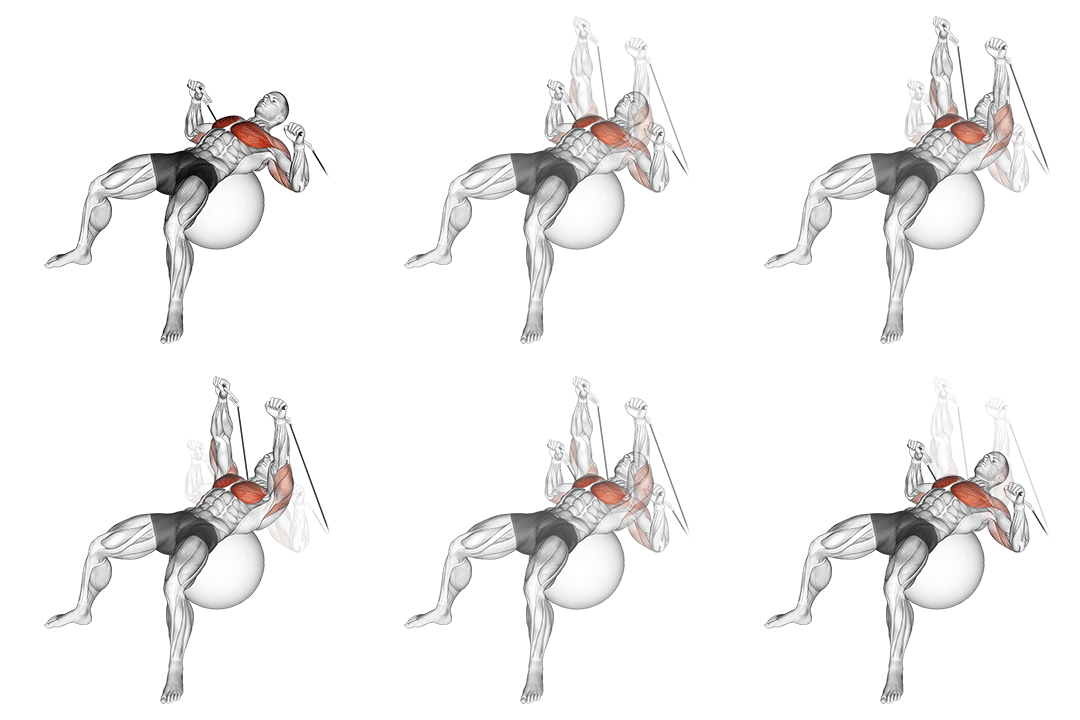
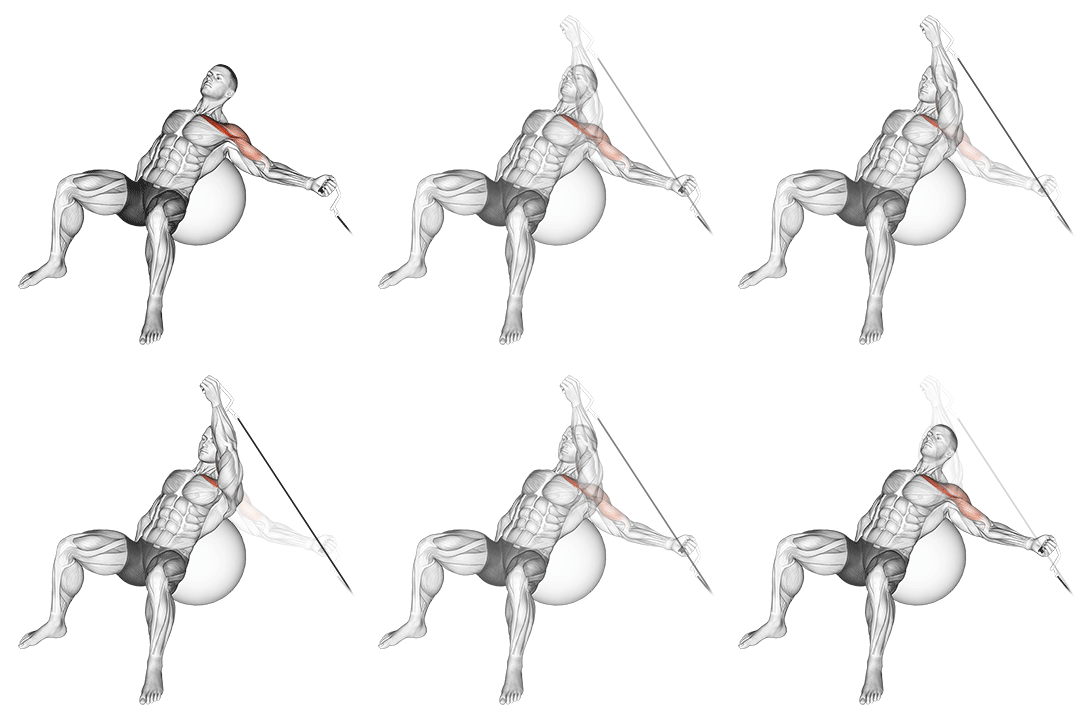
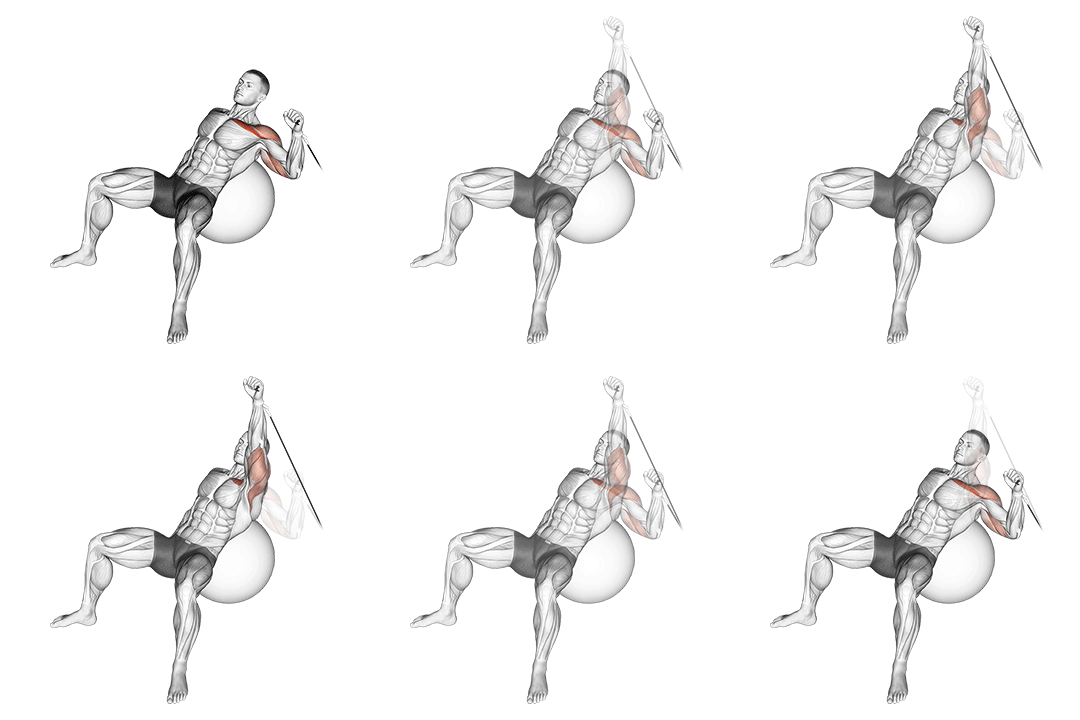
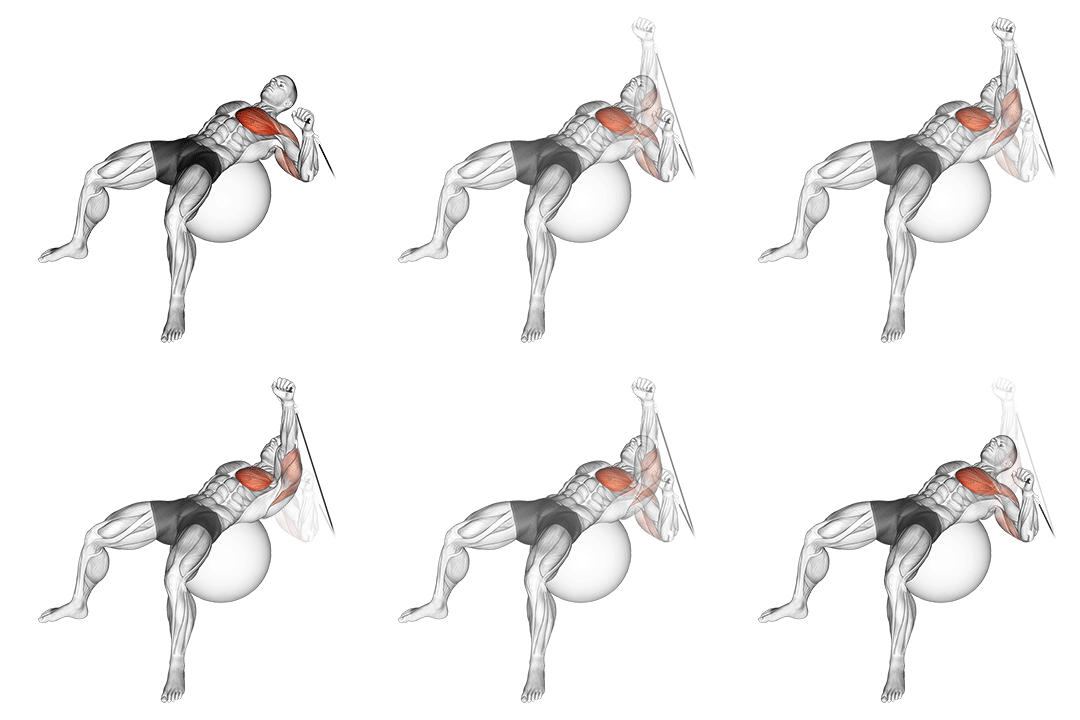
Cable Press On Exercise Ball
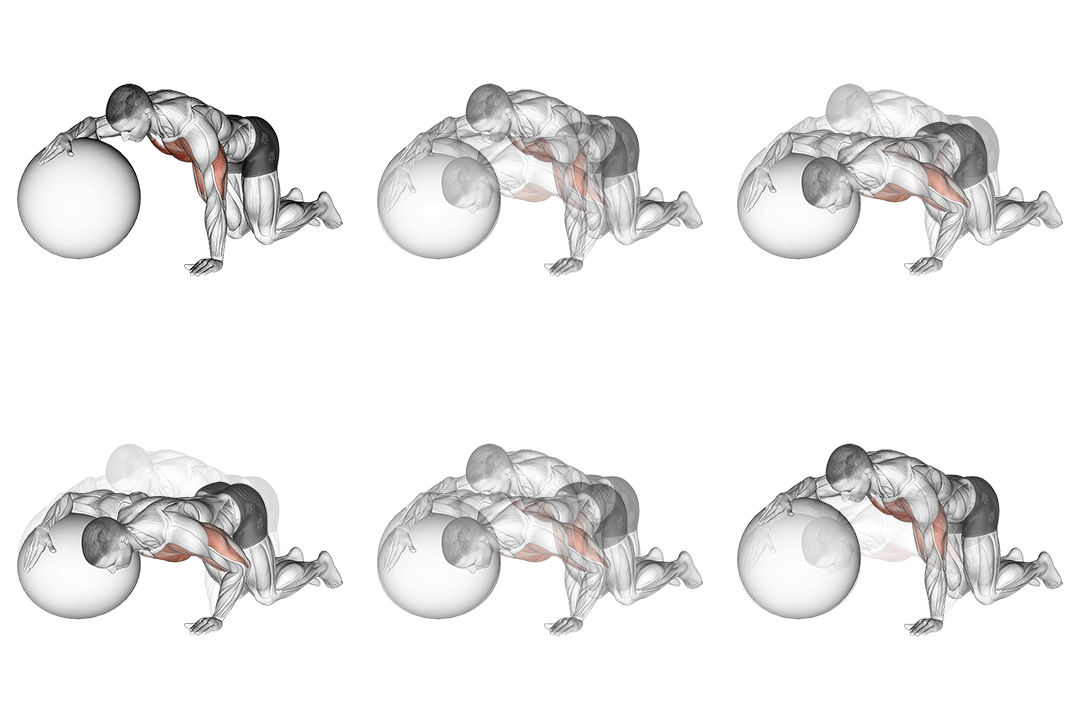
Chest Stretch With Exercise Ball
Head-to-Head Comparison
| Attribute | Cable Press On Exercise Ball | Chest Stretch With Exercise Ball |
|---|---|---|
| Target Muscle |
Pectorals
|
Pectorals
|
| Body Part |
Chest
|
Chest
|
| Equipment |
Stability-ball
|
Stability-ball
|
| Difficulty |
Intermediate
|
Beginner
|
| Movement Type |
Compound
|
Isolation
|
| Secondary Muscles |
2
|
2
|
Secondary Muscles Activated
Cable Press On Exercise Ball
Chest Stretch With Exercise Ball
Visual Comparison
Overview
Cable Press On Exercise Ball vs Chest Stretch With Exercise Ball — you’ll get a clear, practical comparison so you can pick the right move for your chest work. I’ll walk you through muscle activation, biomechanics (force vectors, length-tension relationships), equipment needs, learning curve, and rep ranges so you can program these exercises into your workouts. Expect specific technique cues (body angles, breathing, tempo), who benefits most, and simple progressions or regressions. Read on to decide whether you should use the cable press for pressing overload or the ball stretch for mobility and tissue quality.
Key Differences
- Cable Press On Exercise Ball is a compound movement, while Chest Stretch With Exercise Ball is an isolation exercise.
- Difficulty levels differ: Cable Press On Exercise Ball is intermediate, while Chest Stretch With Exercise Ball is beginner.
- Both exercises target the Pectorals using Stability-ball. The main differences are in their movement patterns and muscle activation angles.
Pros & Cons
Cable Press On Exercise Ball
+ Pros
- Direct concentric/eccentric loading for pectoral hypertrophy and strength
- Adjustable force vector via pulley height to target clavicular vs. sternal fibers
- Core and glute activation from stabilizing on the ball enhances total-body tension
- Scalable: add weight, unilateral work, tempo control, and higher intensity sets (6–12 reps ideal)
− Cons
- Requires gym cable setup and quality stability ball
- Higher coordination and balance demand increases technical failure risk
- If performed with poor scapular control, can stress the anterior shoulder
Chest Stretch With Exercise Ball
+ Pros
- Low equipment need—only a stability ball
- Excellent for improving pectoral flexibility and scapular mobility
- Beginner friendly with minimal concentric load—good for recovery days
- Useful as a prehab/soft-tissue tool to restore length-tension before pressing sessions
− Cons
- Minimal hypertrophic stimulus—won’t replace loaded pressing for muscle growth
- Can overstretch if you lack scapular control or posterior chain stability
- Limited progression options for strength development
When Each Exercise Wins
The cable press provides progressive concentric and eccentric loading, adjustable force vectors, and higher time under tension (aim 6–12 reps, 40–90 seconds total set time), which directly stimulates pectoral muscle growth via mechanical tension.
Loaded cable pressing allows progressive overload and heavy concentric efforts (3–8 reps) while forcing stabilizer engagement. It better transfers to horizontal pressing strength than a passive stretch.
The chest stretch requires less coordination and no external loading, making it safer for new trainees to learn scapular positioning and pectoral lengthening before adding loaded presses.
Because it only needs a stability ball and little space, the chest stretch fits home routines and recovery sessions; the cable press requires a gym cable station.
Frequently Asked Questions
Can I do both Cable Press On Exercise Ball and Chest Stretch With Exercise Ball in the same workout?
Yes. Perform the chest stretch as a mobility warm-up for 30–60 seconds per position to improve tissue extensibility, then follow with 3–5 working sets of the cable press (6–12 reps). The stretch prepares your length-tension relationship and reduces risk of shoulder compensation during pressing.
Which exercise is better for beginners?
Chest Stretch With Exercise Ball is better to start with because it teaches scapular positioning and pectoral length without load. After mastering control and posture, progress to the Cable Press On Exercise Ball for loading and strength work.
How do the muscle activation patterns differ?
The cable press produces active concentric and eccentric pectoral contractions with peak activation near mid-range (~20°–30° horizontal adduction), recruiting anterior deltoid and triceps. The chest stretch creates high passive tension at end-range (≈70°–90°), with low active EMG—so it improves stretch tolerance more than generating force.
Can Chest Stretch With Exercise Ball replace Cable Press On Exercise Ball?
No, not for strength or hypertrophy. The chest stretch enhances mobility and tissue health but lacks the mechanical overload needed for muscle growth. Use the stretch alongside the cable press, not as a direct substitute.
Expert Verdict
Use the Cable Press On Exercise Ball when your goal is pectoral strength or hypertrophy: it delivers adjustable force vectors, concentric/eccentric loading, and clear progression options (work in 6–12 rep ranges for size, 3–8 for strength). Prioritize scapular control and a trunk angle around 20°–40° recline to bias pecs while protecting the shoulder. Use the Chest Stretch With Exercise Ball as a complementary tool for mobility, improving pectoral length-tension and shoulder health, or on recovery days. For most trainees, the best approach is to pair the cable press as your primary load-based exercise and the ball stretch as a prep/recovery drill.
Also Compare
More comparisons with Cable Press On Exercise Ball
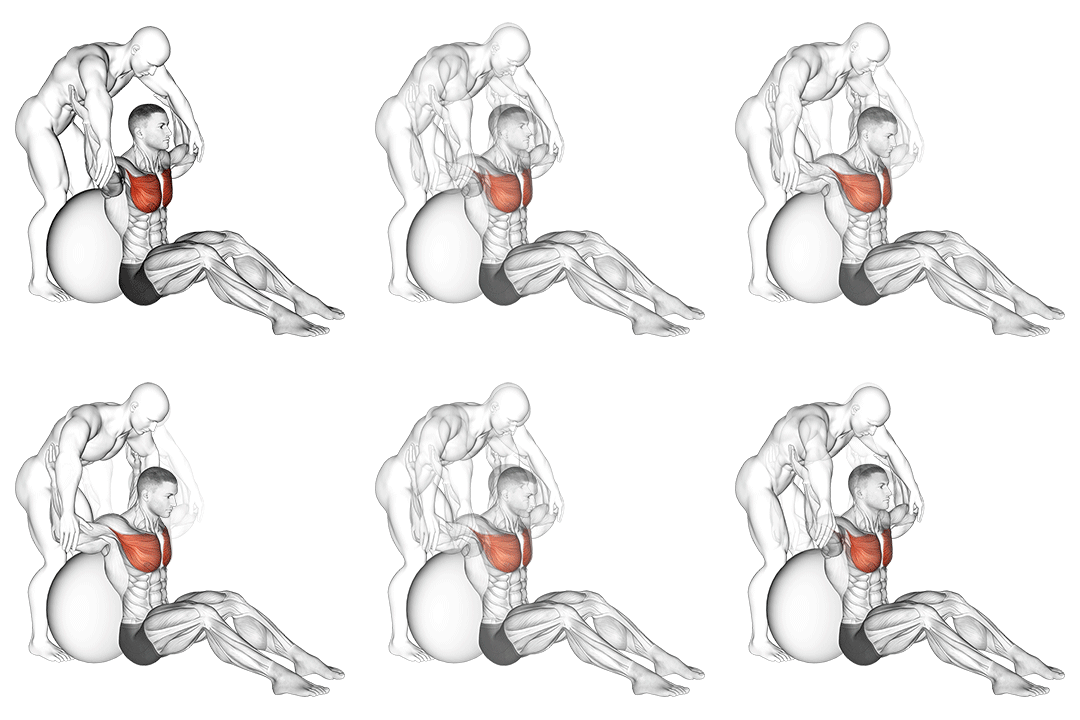
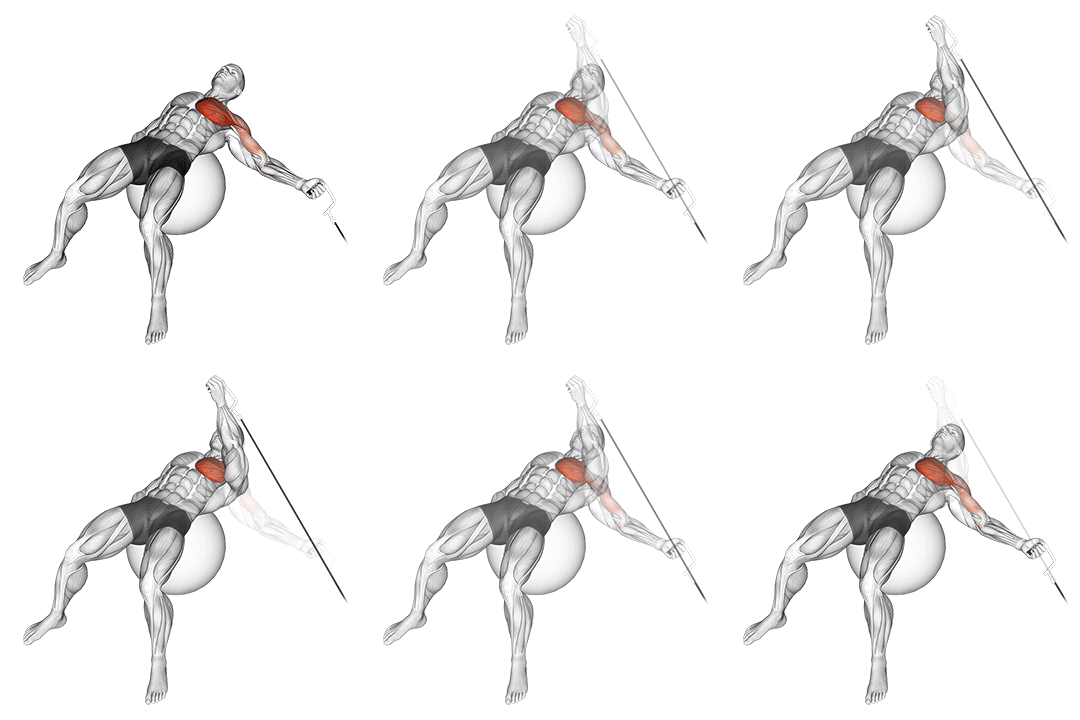
More comparisons with Chest Stretch With Exercise Ball
Compare More Exercises
Use our free comparison tool to analyze any two exercises head-to-head.
Compare Exercises