

Cable Press On Exercise Ball vs Dumbbell One Arm Chest Fly On Exercise Ball: Complete Comparison Gui
Cable Press On Exercise Ball vs Dumbbell One Arm Chest Fly On Exercise Ball — two chest moves done on a stability ball, but they load the pecs and stabilizers very differently. You’ll get a clear, practical breakdown of how each stresses the pectorals, which secondary muscles carry the load, and which exercise fits your goals: muscle growth, strength, or balance training. I’ll cover biomechanics, exact technique cues, rep ranges, equipment needs, and when to use one over the other so you can pick the better tool for your program.
Exercise Comparison
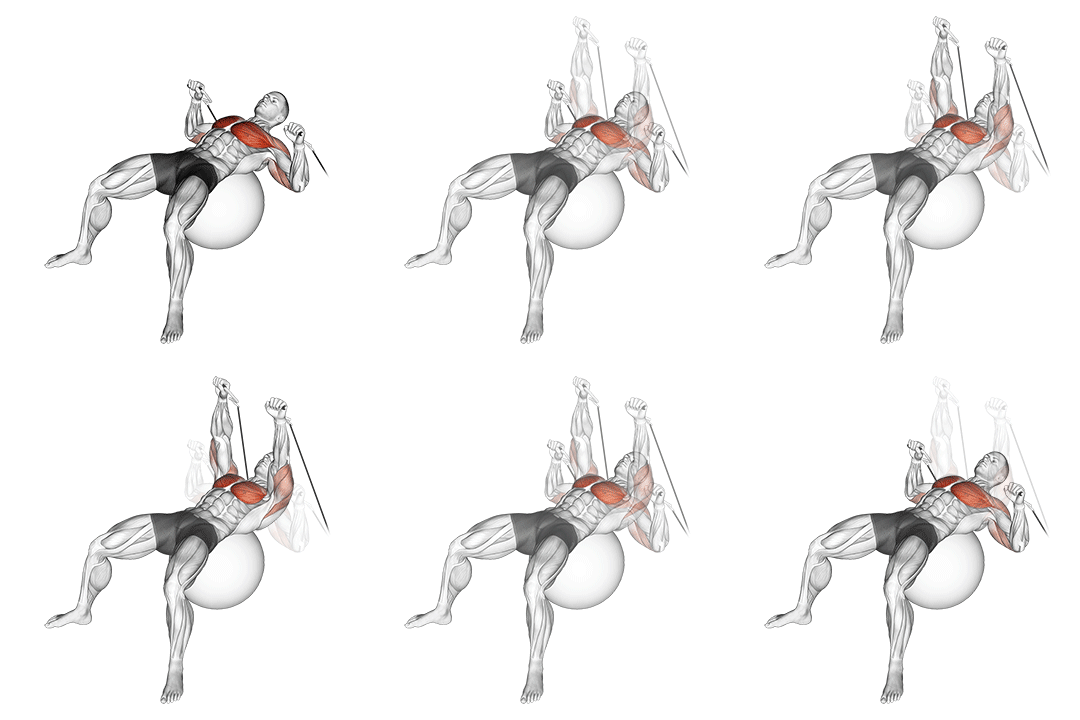
Cable Press On Exercise Ball
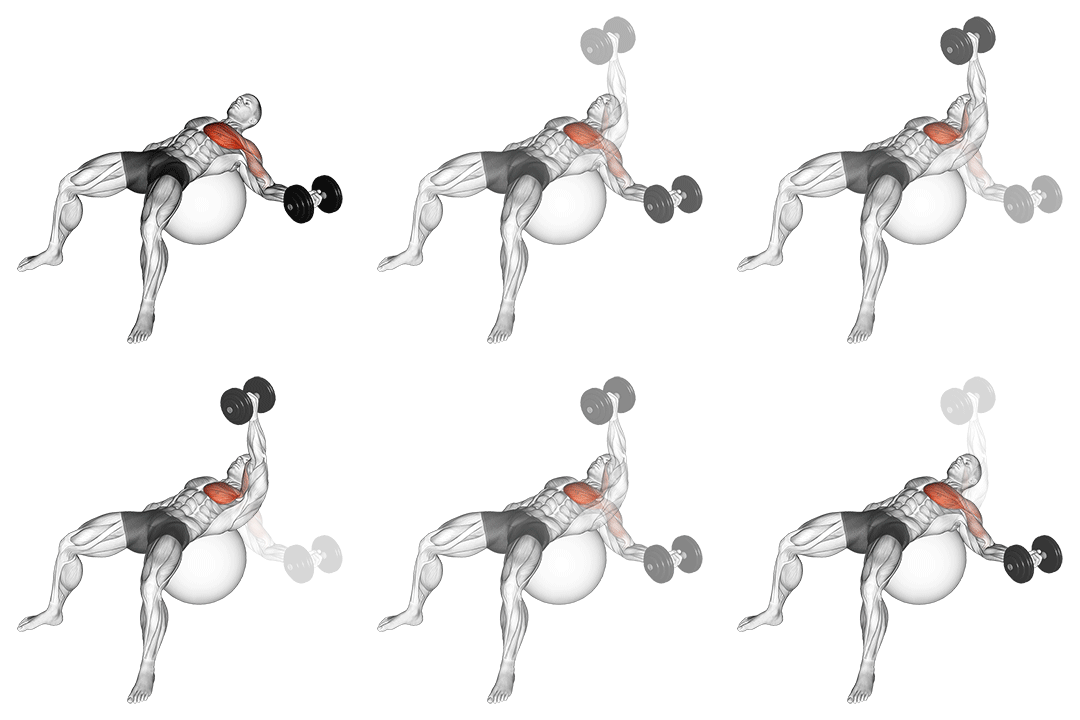
Dumbbell One Arm Chest Fly On Exercise Ball
Head-to-Head Comparison
| Attribute | Cable Press On Exercise Ball | Dumbbell One Arm Chest Fly On Exercise Ball |
|---|---|---|
| Target Muscle |
Pectorals
|
Pectorals
|
| Body Part |
Chest
|
Chest
|
| Equipment |
Stability-ball
|
Stability-ball
|
| Difficulty |
Intermediate
|
Advanced
|
| Movement Type |
Compound
|
Isolation
|
| Secondary Muscles |
2
|
2
|
Secondary Muscles Activated
Cable Press On Exercise Ball
Dumbbell One Arm Chest Fly On Exercise Ball
Visual Comparison
Overview
Cable Press On Exercise Ball vs Dumbbell One Arm Chest Fly On Exercise Ball — two chest moves done on a stability ball, but they load the pecs and stabilizers very differently. You’ll get a clear, practical breakdown of how each stresses the pectorals, which secondary muscles carry the load, and which exercise fits your goals: muscle growth, strength, or balance training. I’ll cover biomechanics, exact technique cues, rep ranges, equipment needs, and when to use one over the other so you can pick the better tool for your program.
Key Differences
- Cable Press On Exercise Ball is a compound movement, while Dumbbell One Arm Chest Fly On Exercise Ball is an isolation exercise.
- Difficulty levels differ: Cable Press On Exercise Ball is intermediate, while Dumbbell One Arm Chest Fly On Exercise Ball is advanced.
- Both exercises target the Pectorals using Stability-ball. The main differences are in their movement patterns and muscle activation angles.
Pros & Cons
Cable Press On Exercise Ball
+ Pros
- Constant tension through range from cable resistance
- Allows heavier absolute loading for strength work
- Better progression via small, consistent weight increments
- Lower peak shoulder torque than long‑lever fly when performed with proper elbow angle
− Cons
- Requires a cable machine and setup space
- Less isolated mid‑range pec stretch compared to fly
- Requires stable ball bracing and decent core control to perform safely
Dumbbell One Arm Chest Fly On Exercise Ball
+ Pros
- Strong isolation of pectorals at long muscle lengths
- High stretch and peak contraction for hypertrophy-focused work
- Minimal equipment — just a dumbbell and stability ball
- Unilateral loading corrects left/right imbalances and increases core challenge
− Cons
- Higher shoulder and rotator cuff stress due to long lever arm
- Harder to progressively overload with small increments
- Advanced balance and mobility demands make it less beginner-friendly
When Each Exercise Wins
The fly emphasizes pectoral stretch and peak contraction at longer muscle lengths, which drives sarcomere tension and hypertrophy. Use 8–15 reps with a controlled 2–3 second eccentric and a 1–2 second concentric to maximize mechanical tension.
Cable pressing lets you use heavier absolute loads and steady progressive overload in lower rep ranges (4–8 reps) while maintaining constant tension. The compound pattern also recruits triceps and anterior delts to build pressing strength.
Pressing is a more intuitive pattern and the cable guides the line-of-pull, making technique easier to learn. Start with lighter loads, focus on 6–12 reps, and practice ball bracing before advancing to unilateral fly variations.
You only need a dumbbell and a stability ball, making this exercise ideal for home setups without access to a cable machine. Keep loads conservative and control the range to protect the shoulder.
Frequently Asked Questions
Can I do both Cable Press On Exercise Ball and Dumbbell One Arm Chest Fly On Exercise Ball in the same workout?
Yes. Put the Cable Press earlier for heavier compound loading (4–8 reps) then use the One Arm Fly as a finisher for isolated hypertrophy (8–15 reps, slow eccentrics). Match total volume and monitor shoulder fatigue.
Which exercise is better for beginners?
Cable Press is better for beginners because the cable guides the line of pull and pressing mechanics are easier to learn. Use light loads and focus on ball bracing before attempting unilateral flies.
How do the muscle activation patterns differ?
The fly loads the pectorals at longer muscle lengths and emphasizes horizontal adduction with minimal triceps contribution, increasing tension in the sternal fibers during the eccentric-to-concentric transition. The cable press produces a more uniform concentric and eccentric load across the pecs while recruiting triceps and anterior deltoids due to the elbow extension component.
Can Dumbbell One Arm Chest Fly On Exercise Ball replace Cable Press On Exercise Ball?
Only if your goal is strict pectoral isolation and you have the shoulder control to handle the long lever. It won’t match the Cable Press for progressive strength development or heavy loading, so use it as a complement rather than a direct replacement for compound pressing work.
Expert Verdict
Choose the Cable Press On Exercise Ball when you want heavier loads, clearer progression, and a compound pressing pattern that builds overall chest and pressing strength while still challenging core stabilizers. Pick the Dumbbell One Arm Chest Fly On Exercise Ball when your goal is targeted pectoral hypertrophy, unilateral correction, and a strong stretch-contraction stimulus — but only after you’ve built shoulder stability. Program them together by using cable presses earlier in the workout for heavy compound loading (4–8 reps) and finishing with unilateral flies for 8–15 controlled reps to emphasize muscle growth.
Also Compare
More comparisons with Cable Press On Exercise Ball
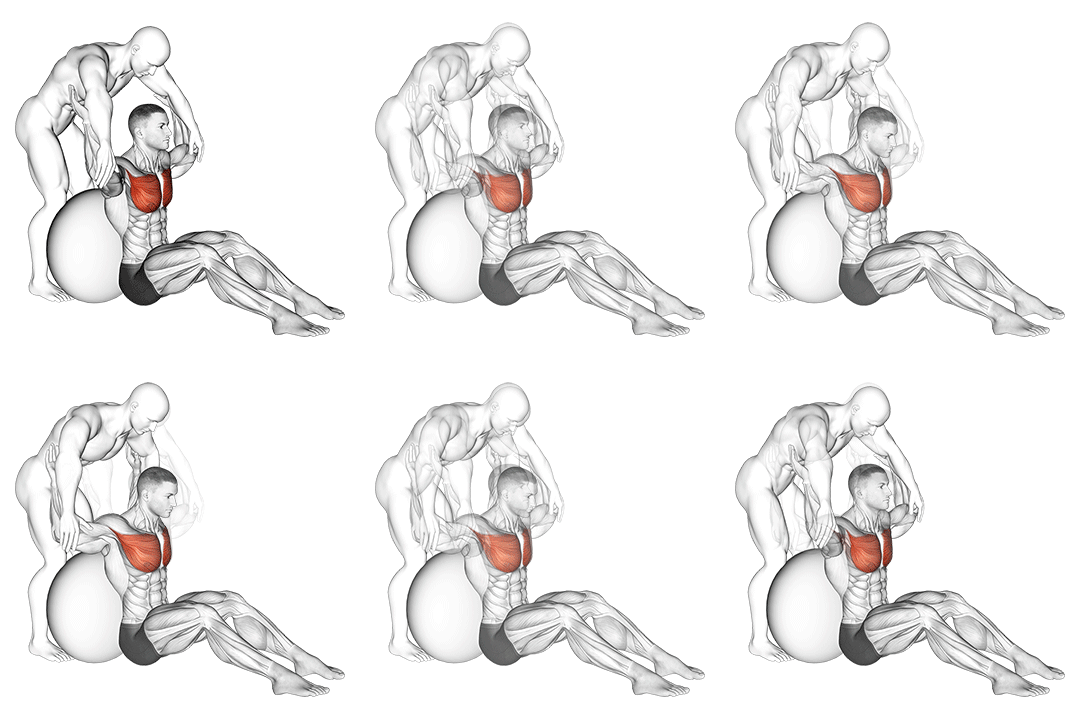
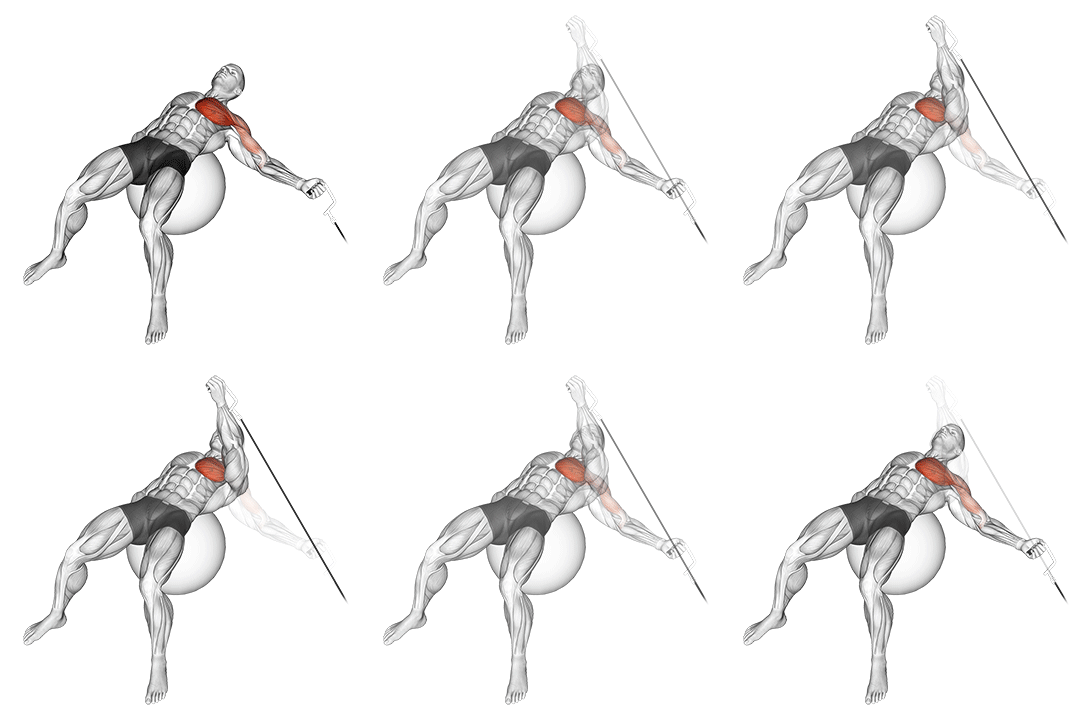
More comparisons with Dumbbell One Arm Chest Fly On Exercise Ball
Compare More Exercises
Use our free comparison tool to analyze any two exercises head-to-head.
Compare Exercises