

Cable Rear Delt Fly vs Face Pull
Compare target muscles, equipment, difficulty, movement type, and secondary muscles for Cable Rear Delt Fly and Face Pull.
Get comparison link
Select the link and use your device's Copy command.
Comparison overview
AI-generatedExercise Comparison
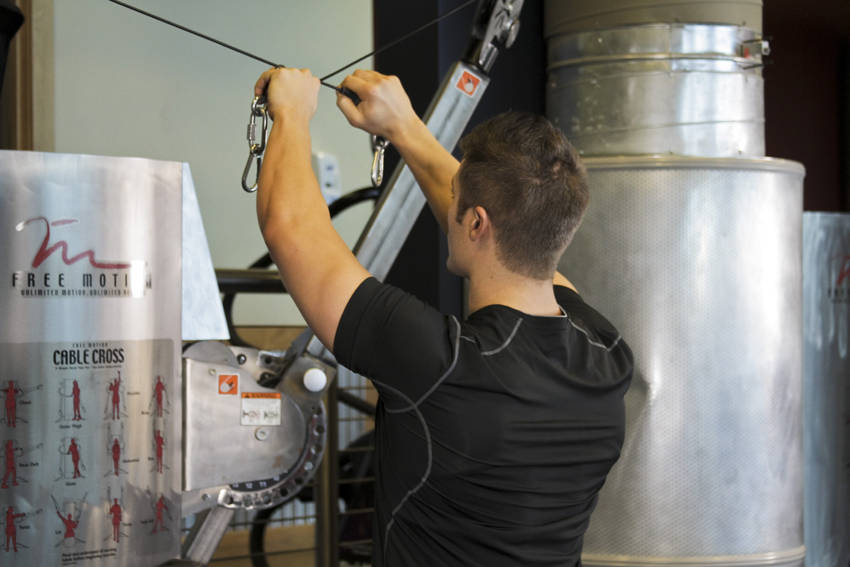
Cable Rear Delt Fly
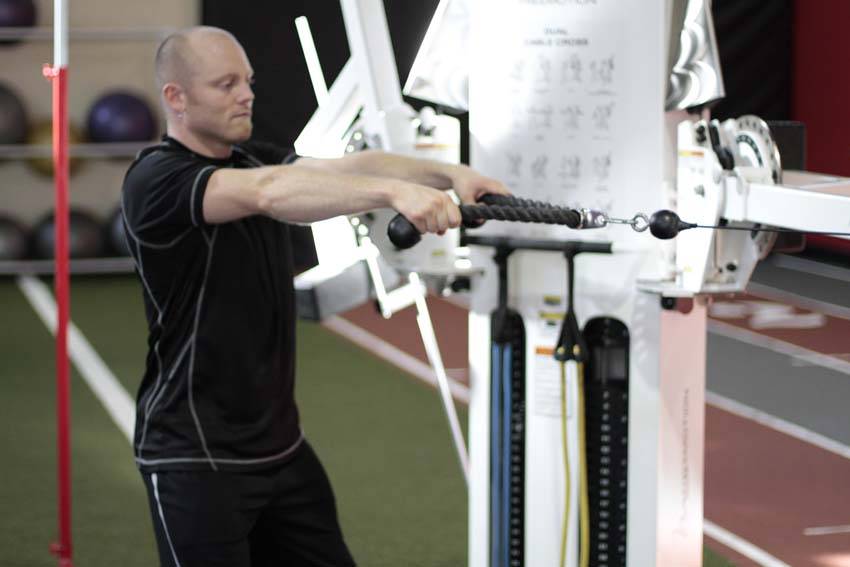
Face Pull
Head-to-Head Comparison
Different values are marked. These are catalogue attributes, not performance scores.
Muscles used
Listed target and secondary muscles, shown on the body. Locations, not activation or strength scores.
- Target
- Secondary
- Not highlighted
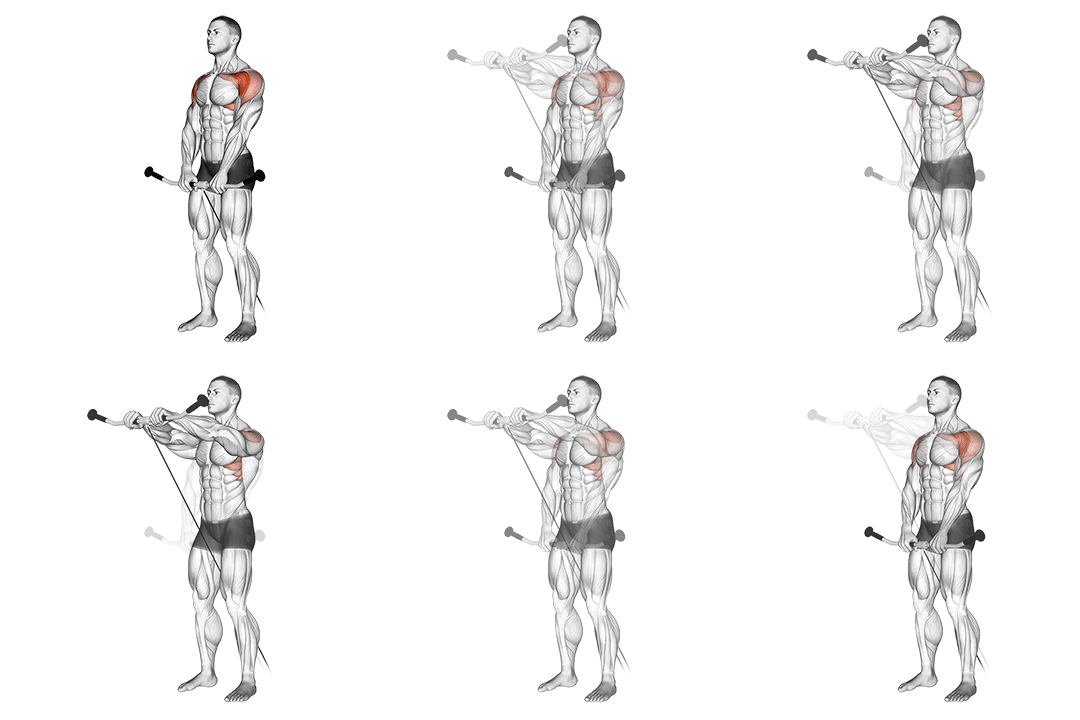
Cable Rear Delt Fly
Diagram unavailable. The catalogue muscle names are listed below.
- Target
- Delts
- Secondary
- None listed
Not shown on diagram: Delts. These labels do not identify a precise region on this map.
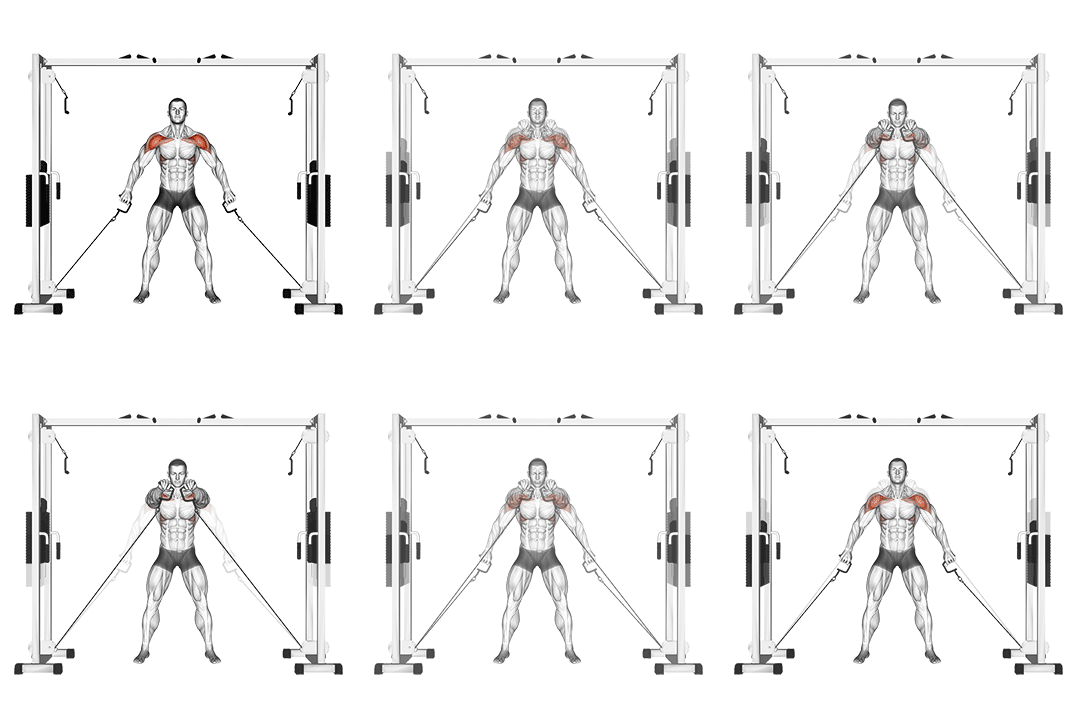
Face Pull
Diagram unavailable. The catalogue muscle names are listed below.
- Target
- Delts
- Secondary
- Middle Back
Not shown on diagram: Delts, Middle Back. These labels do not identify a precise region on this map.
Grey does not mean a muscle is unused. The diagrams show only the mapped catalogue labels.
| Attribute | Cable Rear Delt Fly | Face Pull |
|---|---|---|
| Target Muscle | Delts |
Delts |
| Body Part | Shoulders |
Shoulders |
| Equipment | Cable |
Cable |
| Difficulty | Intermediate |
Intermediate |
| Movement Type Different | Isolation |
Compound |
| Secondary Muscles Different | None listed |
Middle Back |
Visual Comparison
An illustrative 1–10 profile derived from catalog difficulty, equipment, and listed-muscle fields—not measured performance or muscle activation.
Key Differences
- Cable Rear Delt Fly is an isolation exercise, while Face Pull is a compound movement.
- Both exercises target the Delts using Cable. The catalogue does not establish which exercise is better for an individual goal.
Muscle comparison
Shared target muscles
Secondary muscle differences
Muscle involvement analysis
Equipment and setup
Cable Rear Delt Fly: setup
Face Pull: setup
Access and practicality
Learning and progression
Learning the movements
Progression considerations
Limitations and precautions
Pros & Cons
Cable Rear Delt Fly
+ Pros
- Direct posterior deltoid isolation for focused hypertrophy
- Easier to emphasize a strict transverse-plane humeral movement
- Single-arm variations reduce bilateral dominance and allow targeted overload
- Works well in high-rep ranges (12–20) for time under tension
− Cons
- Easy to cheat with torso swing or trap dominance
- Harder to perform at home without bands or handles
- Limited scapular retraction and mid-back recruitment
Face Pull
+ Pros
- Simultaneously trains posterior delts, mid-traps, rhomboids, and external rotators
- Excellent for shoulder health and posture correction
- Simple to scale from rehab-level tension to strength work
- Common gym equipment (rope + high pulley) makes it accessible
− Cons
- Less isolated posterior-delt load than strict fly variations
- Can be performed poorly with excessive momentum or too-heavy loads
- Finish position may stress the AC joint in some lifters if performed incorrectly
When Each Exercise Wins
The cable fly isolates the posterior deltoid with a clear transverse-plane force vector, letting you concentrate tension on the muscle for 8–15+ rep work. Isolation reduces mid-back takeover, allowing better progressive overload focused on the posterior head.
Face pulls load multiple scapular and rotator-cuff muscles, improving pulling strength and shoulder stability that transfer to pressing and heavy compound lifts. You can progressively add load and tempo while strengthening scapular retractors and external rotators.
Face pulls teach scapular retraction and external rotation patterns that protect the shoulder and improve posture, and the movement is easier to self-cue. Low-load sets (15–20 reps) reinforce motor control before adding heavier resistance.
With bands or dumbbells you can replicate the transverse-plane fly more easily than a high-rope face pull, making it practical at home. Single-arm band flies let you match tension and angles without a cable tower.
Frequently Asked Questions
Can I do both Cable Rear Delt Fly and Face Pull in the same workout?
Which exercise is better for beginners?
How do the muscle activation patterns differ?
Can Face Pull replace Cable Rear Delt Fly?
Comparison Summary
Exercise instructions
Steps from the exercise catalogue. Read the full sequence before starting.
Cable Rear Delt Fly
- Adjust the pulleys to the appropriate height and adjust the weight. The pulleys should be above your head.
- Grab the left pulley with your right hand and the right pulley with your left hand, crossing them in front of you. This will be your starting position.
- Initiate the movement by moving your arms back and outward, keeping your arms straight as you execute the movement.
Read remaining steps for Cable Rear Delt Fly
- Pause at the end of the motion before returning the handles to the start position.
Face Pull
- Facing a high pulley with a rope or dual handles attached, pull the weight directly towards your face, separating your hands as you do so. Keep your upper arms parallel to the ground.
Also Compare
More comparisons with Face Pull
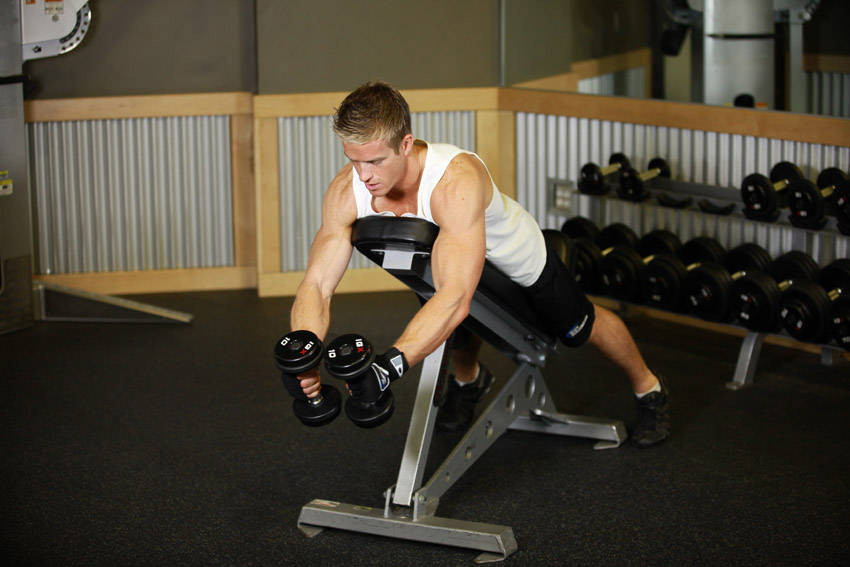
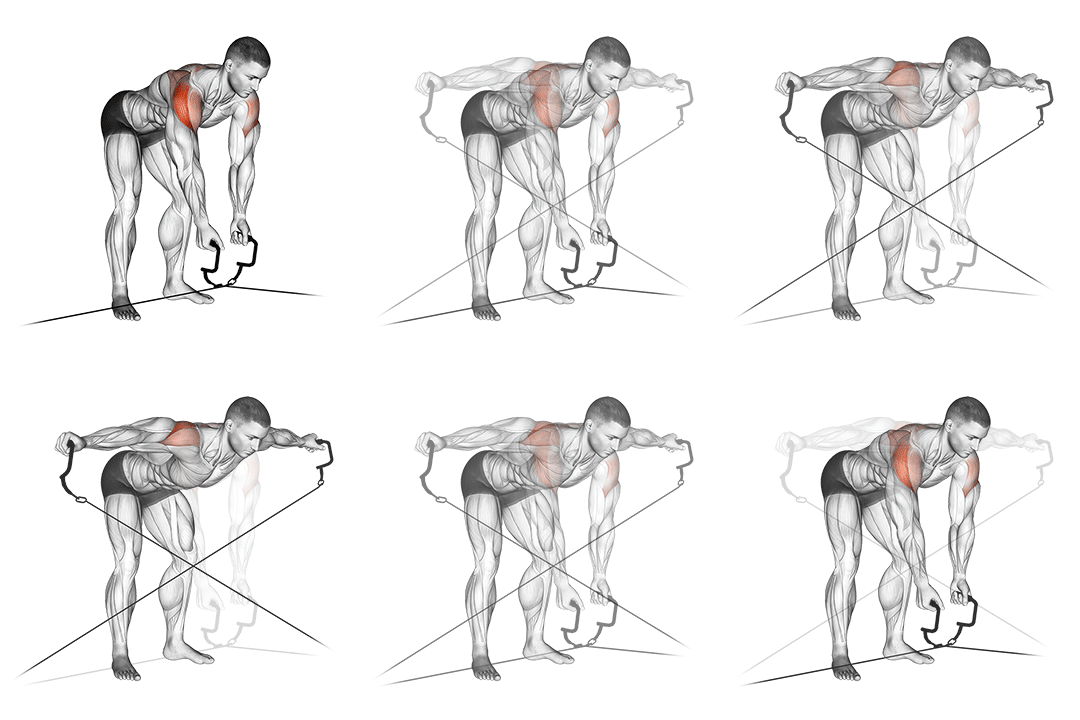
Compare another pair
Choose two exercises to see their differences side by side.