

Calf Push Stretch With Hands Against Wall vs Calf Stretch With Hands Against Wall: Complete Comparis
Calf Push Stretch With Hands Against Wall vs Calf Stretch With Hands Against Wall — you’ll learn the practical differences so you can choose the right stretch for your calves. I’ll walk you through mechanics, muscle activation, step-by-step technique cues, recommended hold times (20–60 seconds), progression options, and when to use each stretch based on goals like mobility, pre-workout prep, or recovery. Read on to get clear, actionable guidance so you can improve ankle dorsiflexion and calf flexibility safely.
Exercise Comparison
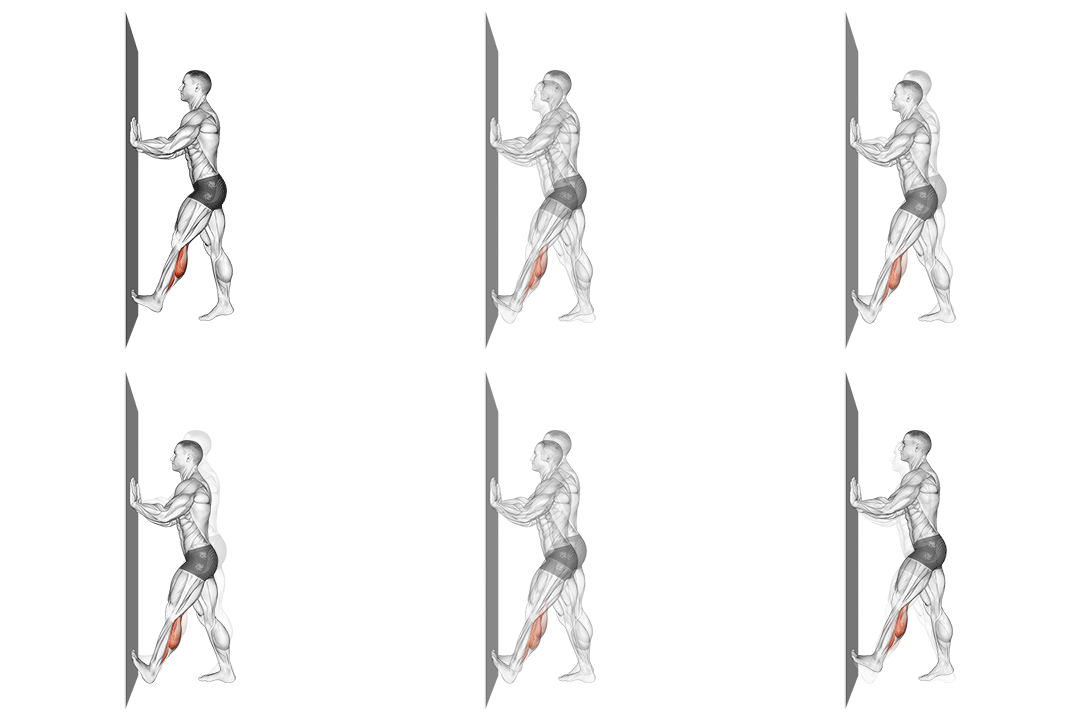
Calf Push Stretch With Hands Against Wall
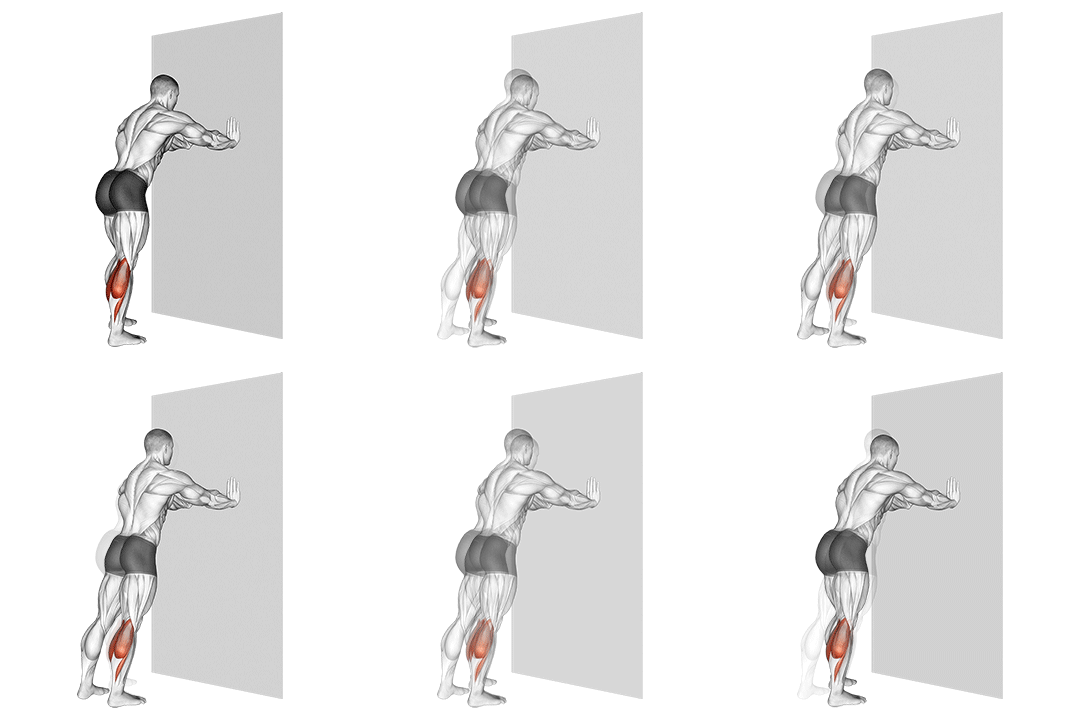
Calf Stretch With Hands Against Wall
Head-to-Head Comparison
| Attribute | Calf Push Stretch With Hands Against Wall | Calf Stretch With Hands Against Wall |
|---|---|---|
| Target Muscle |
Calves
|
Calves
|
| Body Part |
Lower-legs
|
Lower-legs
|
| Equipment |
Body-weight
|
Body-weight
|
| Difficulty |
Beginner
|
Beginner
|
| Movement Type |
Isolation
|
Isolation
|
| Secondary Muscles |
1
|
1
|
Secondary Muscles Activated
Calf Push Stretch With Hands Against Wall
Calf Stretch With Hands Against Wall
Visual Comparison
Overview
Calf Push Stretch With Hands Against Wall vs Calf Stretch With Hands Against Wall — you’ll learn the practical differences so you can choose the right stretch for your calves. I’ll walk you through mechanics, muscle activation, step-by-step technique cues, recommended hold times (20–60 seconds), progression options, and when to use each stretch based on goals like mobility, pre-workout prep, or recovery. Read on to get clear, actionable guidance so you can improve ankle dorsiflexion and calf flexibility safely.
Key Differences
- Both exercises target the Calves using Body-weight. The main differences are in their movement patterns and muscle activation angles.
Pros & Cons
Calf Push Stretch With Hands Against Wall
+ Pros
- Produces a deeper posterior chain and calf stretch by combining hip lean with ankle dorsiflexion
- Easy to progress by increasing lean angle or hold time (20–60s)
- Useful for addressing ankle dorsiflexion deficits and posterior chain tightness
- Bodyweight-only; no equipment needed
− Cons
- Requires more trunk and hip control to perform safely
- Slightly higher risk of overstretching if you push too aggressively
- May recruit hamstrings, reducing isolation of the calf
Calf Stretch With Hands Against Wall
+ Pros
- Simpler setup and easier to teach to beginners
- Better isolation of ankle dorsiflexion when hips are neutral
- Easily modified by bending the knee to emphasize soleus
- Low injury risk and consistent, repeatable position
− Cons
- May produce less overall posterior chain stretch compared with the push variant
- Fewer dynamic progression options without external load
- Can feel less intense for lifters needing a deeper end-range stretch
When Each Exercise Wins
While static stretching alone won’t drive large muscle growth, the push variation produces greater passive tension and longer time under stretch (aim 45–60s), which supports remodeling when paired with heavy loading and eccentric work.
Strength work benefits from focused ankle mechanics; the standard wall stretch lets you isolate ankle dorsiflexion and then load through specific calf raises, preserving motor control without excessive hip contribution.
Its simple stance, lower coordination demand, and easy knee-bend modification make it safer and faster to learn for people new to mobility work.
Both require only a wall and bodyweight. Choose the push version if you want a deeper posterior chain stretch; choose the standard stretch for straightforward ankle isolation.
Frequently Asked Questions
Can I do both Calf Push Stretch With Hands Against Wall and Calf Stretch With Hands Against Wall in the same workout?
Yes. Start with the standard wall stretch to assess ankle ROM, then perform the push variation to target deeper posterior chain length. Keep total time under stretch to 4–6 minutes per session and avoid aggressive end-range holds before maximal strength sets.
Which exercise is better for beginners?
The Calf Stretch With Hands Against Wall is better for beginners because it has simpler alignment cues and lower balance demands. You can then progress to the push version as your trunk control and ankle mobility improve.
How do the muscle activation patterns differ?
The push variant shifts the resultant force vector posteriorly, increasing passive tension across gastrocnemius and engaging hamstring tissue through hip flexion. The standard wall stretch produces a cleaner ankle dorsiflexion torque that isolates plantarflexors, with knee position determining gastrocnemius (extended) versus soleus (bent) emphasis.
Can Calf Stretch With Hands Against Wall replace Calf Push Stretch With Hands Against Wall?
Yes for general ankle mobility and maintenance—both improve dorsiflexion. If you specifically need deeper posterior chain length or greater passive tension for remodeling, incorporate the push variation instead of fully replacing it with the standard stretch.
Expert Verdict
Use the Calf Stretch With Hands Against Wall when you want a simple, repeatable stretch that isolates ankle dorsiflexion—especially if you’re new to mobility work or want to emphasize soleus by bending the knee (2–3 sets of 20–30s). Choose the Calf Push Stretch With Hands Against Wall when you need a deeper, posterior-chain focused stretch or want to preload the calf for eccentric work; increase lean angle gradually and hold 30–60s. For training carryover, pair either stretch with targeted calf raises: 3–4 sets of 8–15 reps. Be decisive about knee position (extended = gastrocnemius, bent = soleus) and progress by duration, angle, or adding eccentric loading rather than forceful bouncing.
Also Compare
More comparisons with Calf Push Stretch With Hands Against Wall
More comparisons with Calf Stretch With Hands Against Wall
Compare More Exercises
Use our free comparison tool to analyze any two exercises head-to-head.
Compare Exercises