

Calf Push Stretch With Hands Against Wall vs Circles Knee Stretch: Complete Comparison Guide
Calf Push Stretch With Hands Against Wall vs Circles Knee Stretch — you’ll get clear guidance on which stretch to use when, how each targets the calf complex, and practical cues to perform them safely. I’ll cover primary and secondary muscle activation, biomechanics (knee angle, dorsiflexion, length-tension), equipment and accessibility, progression options, and quick programming advice (hold times, reps, frequency). Use this to pick the best option for mobility, pre-work warm-ups, or to emphasize soleus vs gastrocnemius lengthening.
Exercise Comparison
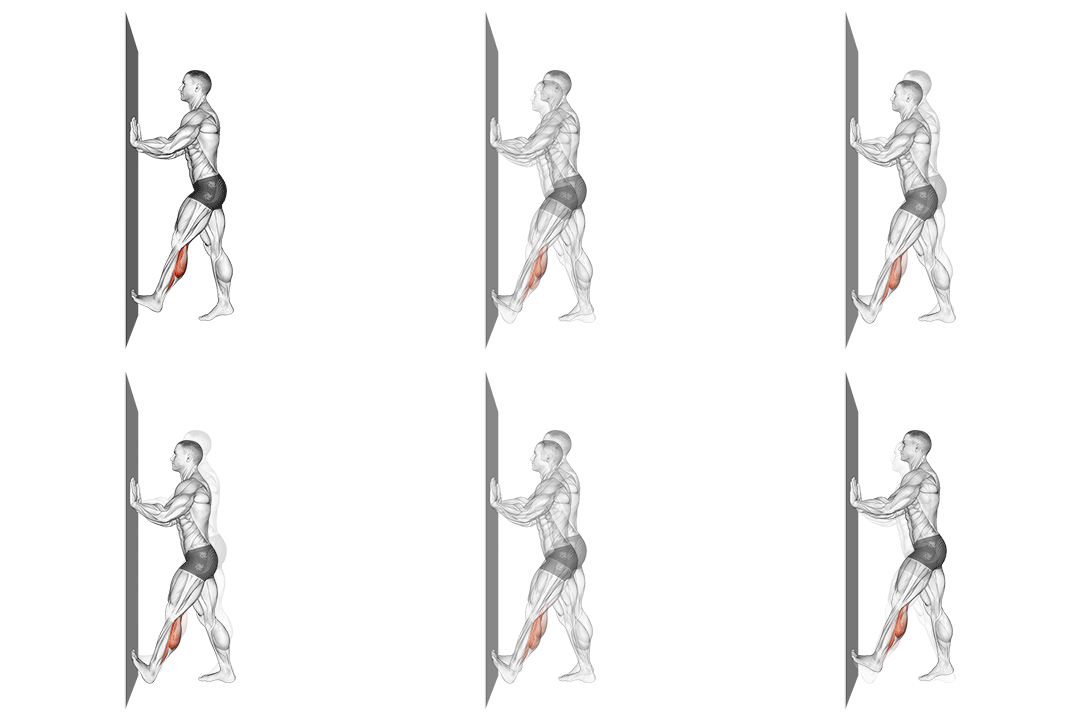
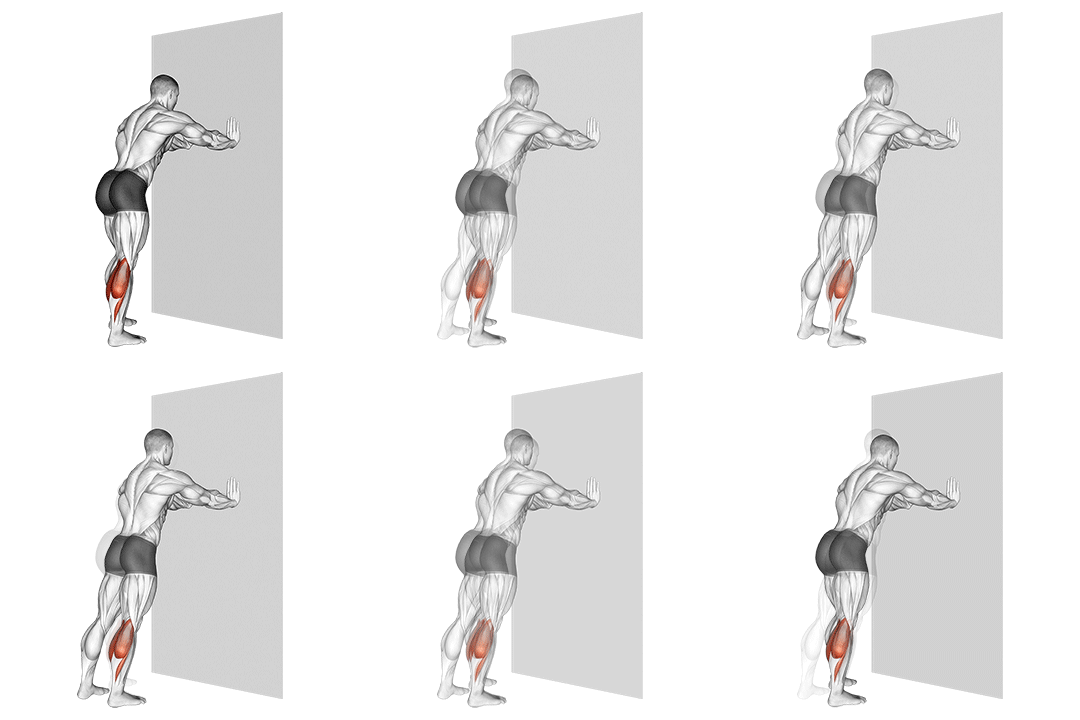
Calf Push Stretch With Hands Against Wall
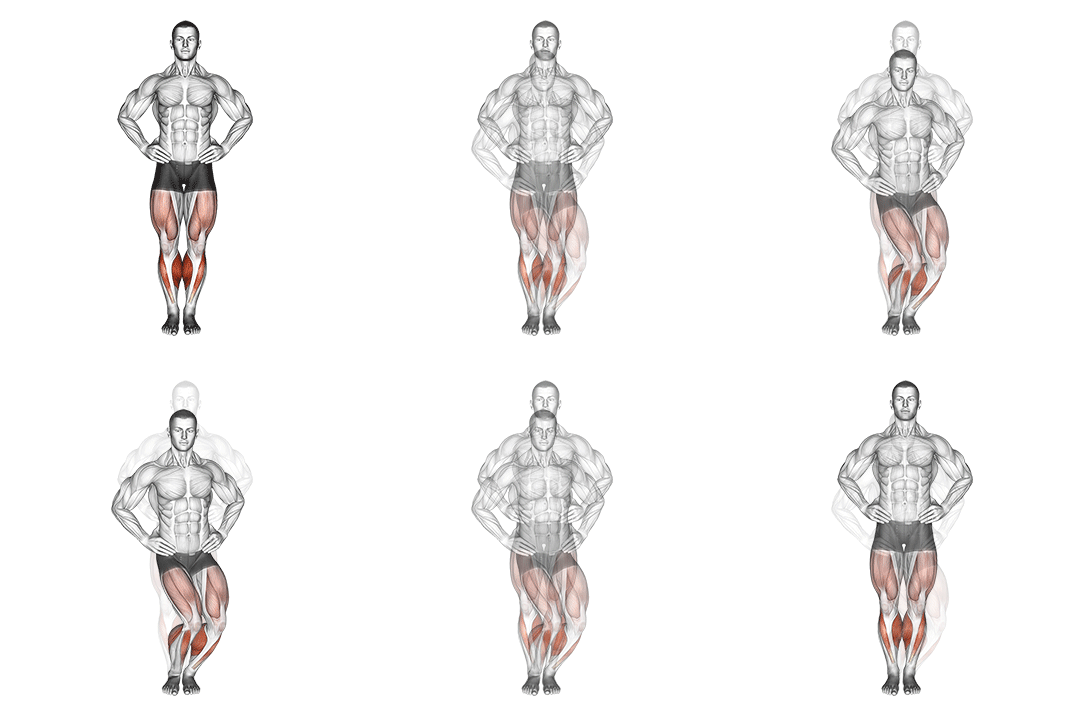
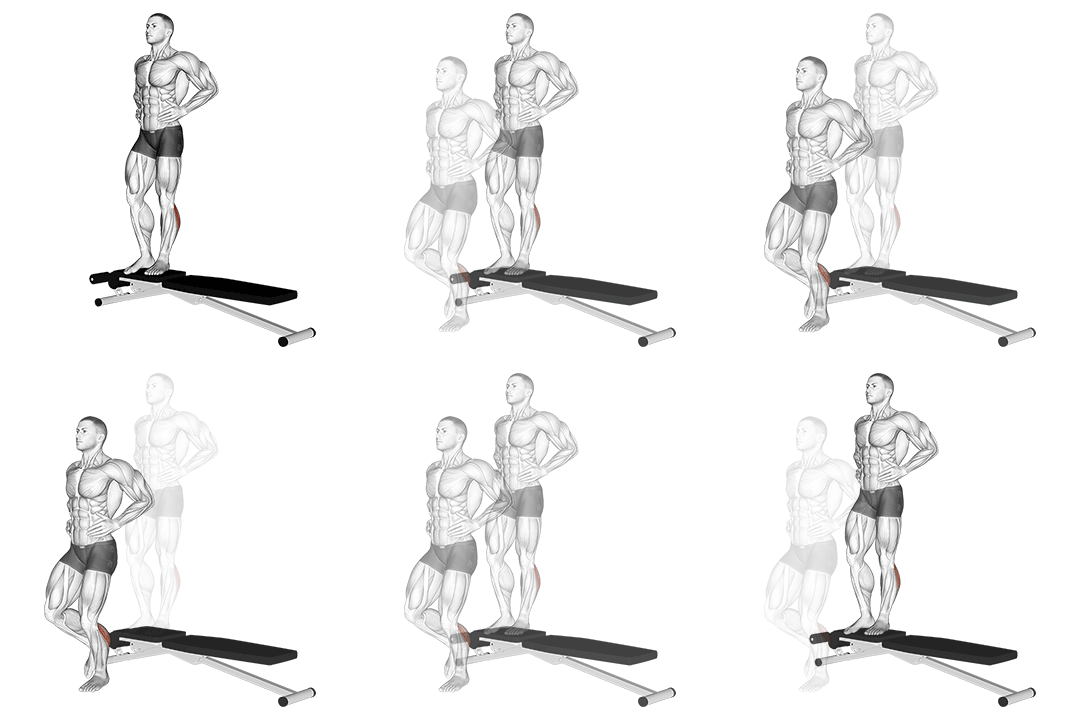
Circles Knee Stretch
Head-to-Head Comparison
| Attribute | Calf Push Stretch With Hands Against Wall | Circles Knee Stretch |
|---|---|---|
| Target Muscle |
Calves
|
Calves
|
| Body Part |
Lower-legs
|
Lower-legs
|
| Equipment |
Body-weight
|
Body-weight
|
| Difficulty |
Beginner
|
Beginner
|
| Movement Type |
Isolation
|
Isolation
|
| Secondary Muscles |
1
|
2
|
Secondary Muscles Activated
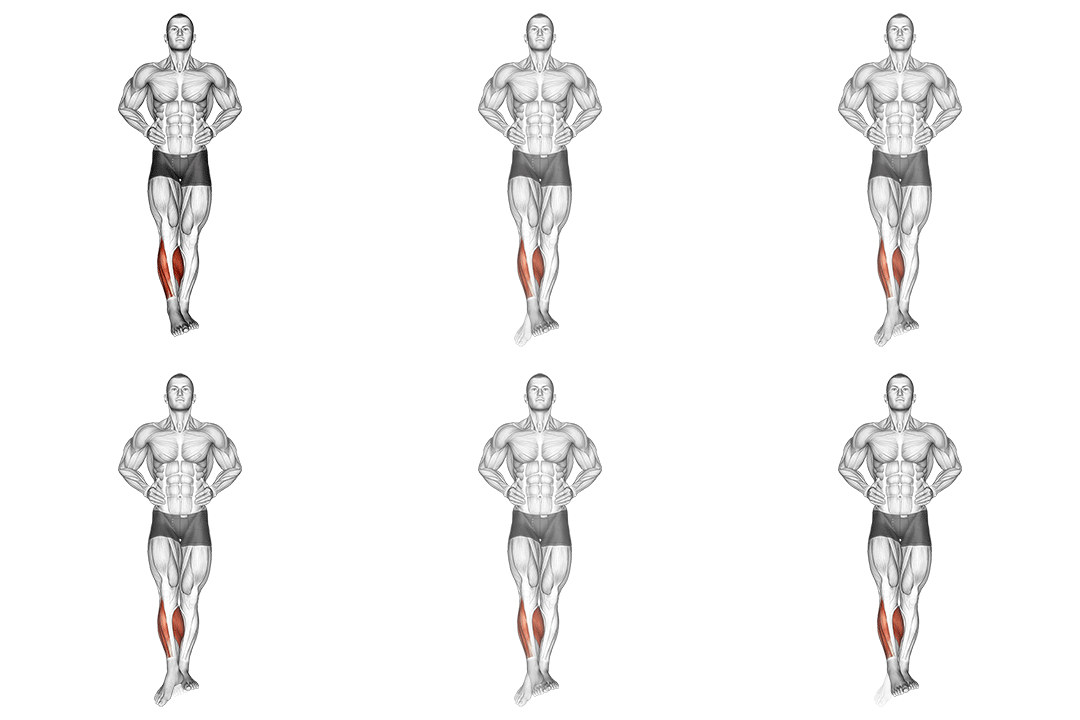
Calf Push Stretch With Hands Against Wall
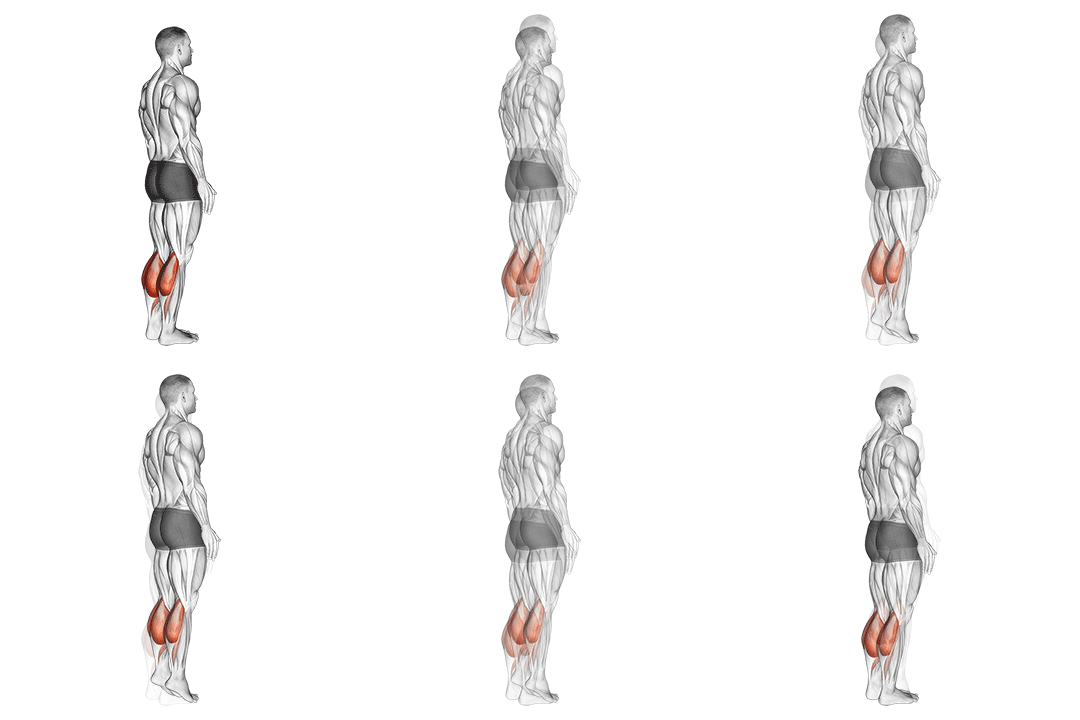
Circles Knee Stretch
Visual Comparison
Overview
Calf Push Stretch With Hands Against Wall vs Circles Knee Stretch — you’ll get clear guidance on which stretch to use when, how each targets the calf complex, and practical cues to perform them safely. I’ll cover primary and secondary muscle activation, biomechanics (knee angle, dorsiflexion, length-tension), equipment and accessibility, progression options, and quick programming advice (hold times, reps, frequency). Use this to pick the best option for mobility, pre-work warm-ups, or to emphasize soleus vs gastrocnemius lengthening.
Key Differences
- Both exercises target the Calves using Body-weight. The main differences are in their movement patterns and muscle activation angles.
Pros & Cons
Calf Push Stretch With Hands Against Wall
+ Pros
- Simple setup — only a wall required
- Direct gastrocnemius emphasis with knee extended
- Stable base — good for tight calves and low balance
- Easy to control stretch angle (dorsiflexion 10–25°)
− Cons
- Limited progression for strength-focused work
- Less soleus emphasis unless knee is bent
- Static by nature — fewer dynamic control benefits
Circles Knee Stretch
+ Pros
- Dynamic control trains eccentric/concentric timing
- Greater soleus engagement when knee is bent ~20–40°
- Easily progressed to single-leg or resisted variations
- Adds quad/hamstring co-contraction for joint stability
− Cons
- Requires coordination and balance
- Potential knee irritation if tracking is poor
- Smaller setup space and slightly harder for very tight calves
When Each Exercise Wins
Circles Knee Stretch allows progressive overload via tempo, larger ranges, and single-leg variations that create more eccentric stimulus. Use 8–12 dynamic circles per set with slow 3–4s lowering phases to encourage muscle remodeling.
The dynamic loading pattern and ability to add resistance or single-leg progressions produce the repeated high-tension cycles needed for improving force capacity, whereas the static wall push is primarily mobility-focused.
It’s easier to set up and teach: keep the back heel down, hinge at the hips, and aim for 15–20° dorsiflexion. That low motor demand reduces risk and helps beginners safely increase ankle mobility.
Requires the least space and no coordination beyond a stable wall. It’s ideal if you have minimal room or balance limitations and need a quick, effective calf stretch.
Frequently Asked Questions
Can I do both Calf Push Stretch With Hands Against Wall and Circles Knee Stretch in the same workout?
Yes. Use the Calf Push Stretch as a static warm-up or mobility primer (20–30s holds) and follow with Circles Knee Stretch for dynamic control and loading (8–12 reps each direction). This sequence transitions from passive lengthening to active eccentric control.
Which exercise is better for beginners?
Calf Push Stretch With Hands Against Wall is better for beginners because it’s simpler to cue and provides a stable base. Keep the back heel down, hinge at the hips, and stop if you feel sharp Achilles or knee pain.
How do the muscle activation patterns differ?
The wall push produces sustained posterior chain tension—greater gastrocnemius stretch with knee extension and steady dorsiflexion. The circles produce alternating concentric and eccentric phases, increasing soleus engagement when the knee is bent and improving neuromuscular control through cyclic loading.
Can Circles Knee Stretch replace Calf Push Stretch With Hands Against Wall?
Circles Knee Stretch can replace the wall push when your goal is dynamic control, soleus focus, or progression to resistance work. For straightforward gastrocnemius lengthening or for users needing maximal stability, keep the wall push in your routine.
Expert Verdict
Use the Calf Push Stretch With Hands Against Wall when you want a reliable, low-skill way to lengthen the gastrocnemius, improve ankle dorsiflexion, or warm up before loaded calf work. Do 2–4 sets of 20–40 second holds with a straight back knee to emphasize gastrocnemius. Choose the Circles Knee Stretch when you want dynamic control, greater soleus emphasis, or a progression pathway toward eccentric and single-leg loading—perform 2–3 sets of 8–12 circles per side at a controlled tempo (3s eccentric). For mobility priority or limited space pick the wall push; for progressive conditioning and strength-oriented stimulus pick the circles.
Also Compare
More comparisons with Calf Push Stretch With Hands Against Wall
More comparisons with Circles Knee Stretch
Compare More Exercises
Use our free comparison tool to analyze any two exercises head-to-head.
Compare Exercises