

Calf Push Stretch With Hands Against Wall vs Donkey Calf Raise: Complete Comparison Guide
Calf Push Stretch With Hands Against Wall vs Donkey Calf Raise — both target the calves, but they serve different roles in your routine. If you want clear, practical guidance, this comparison walks you through muscle activation, biomechanics, equipment needs, safety, and how to program each for stretching, hypertrophy, or strength. You’ll get specific technique cues, rep ranges, and progression ideas so you can pick the best move for your goals and current ability.
Exercise Comparison
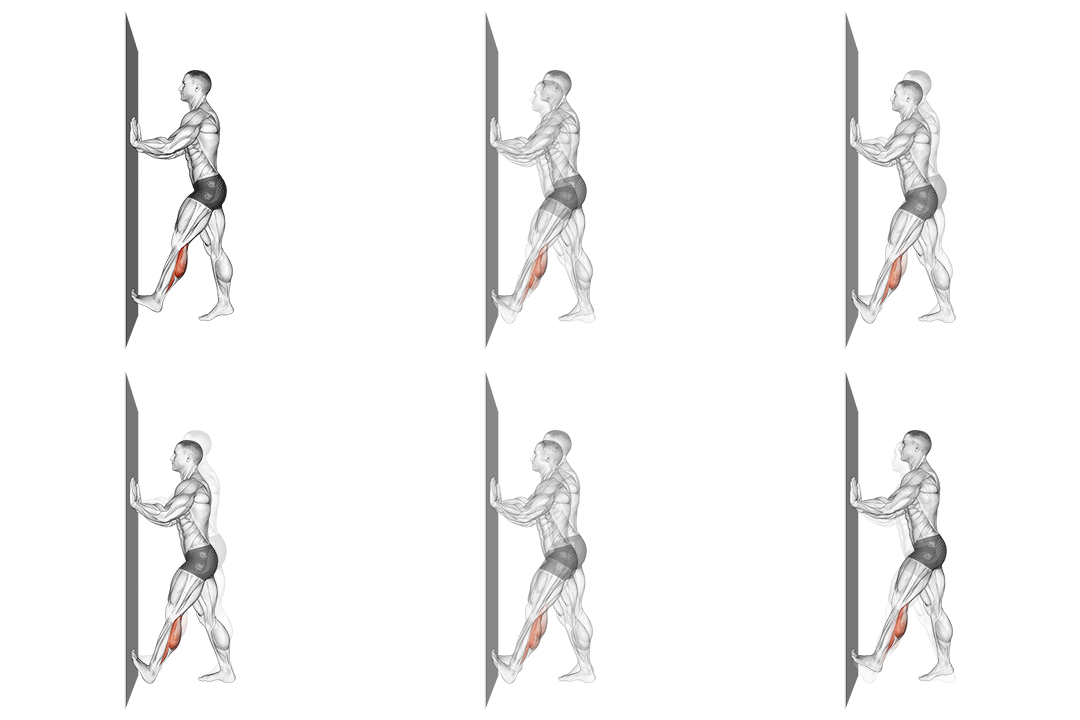
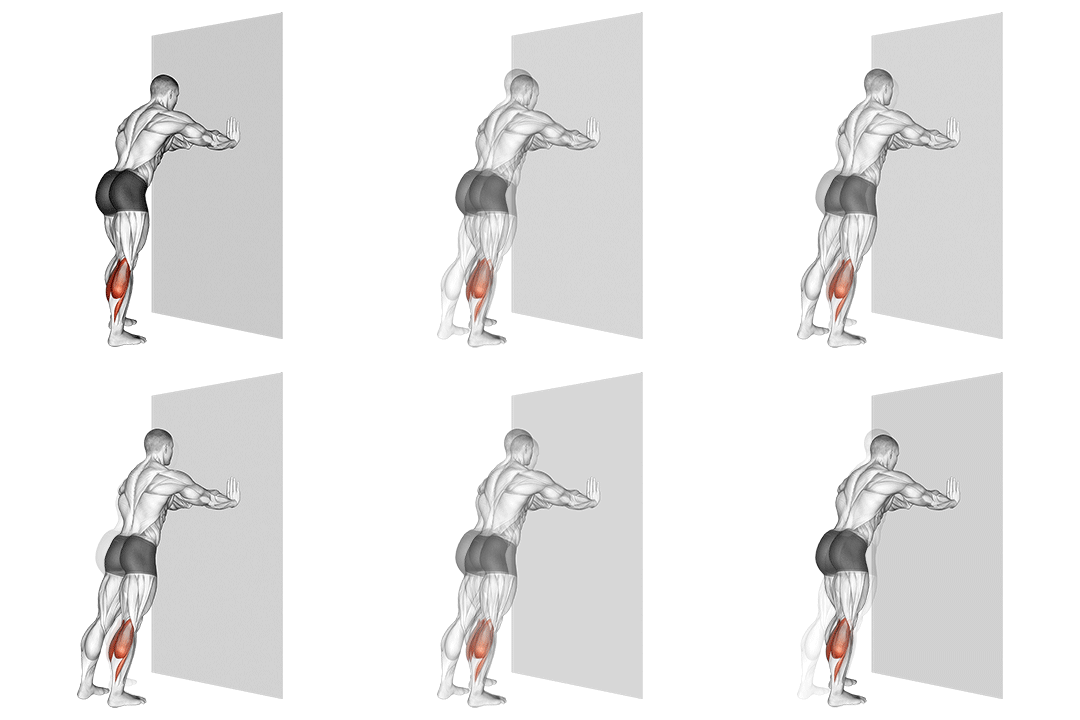
Calf Push Stretch With Hands Against Wall
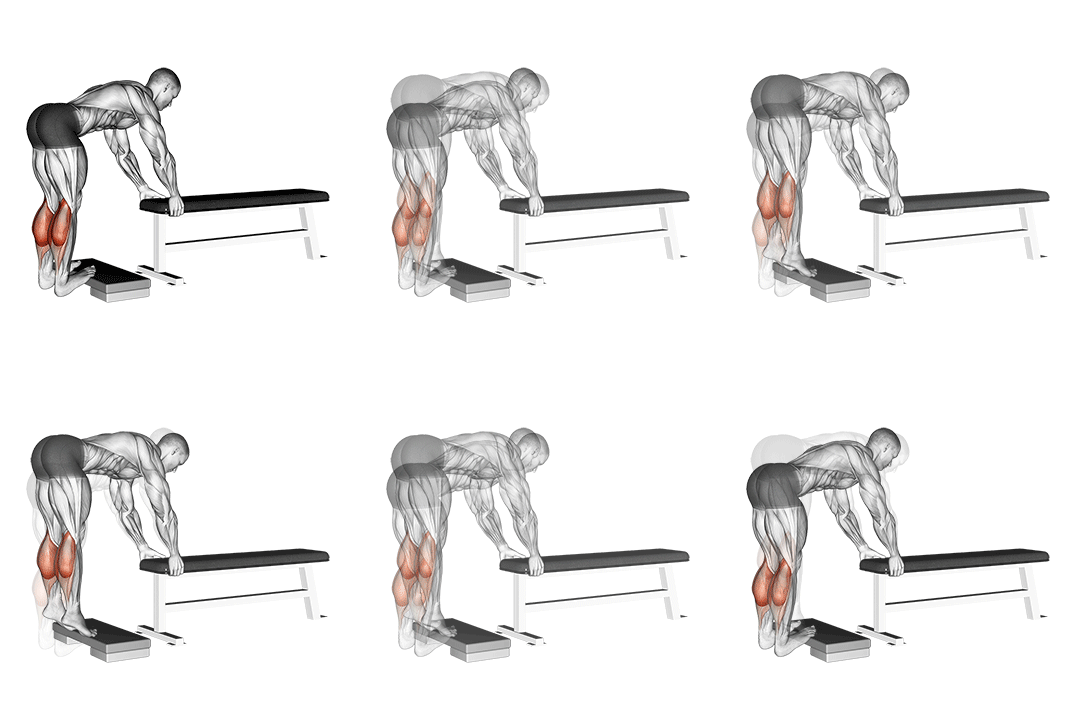
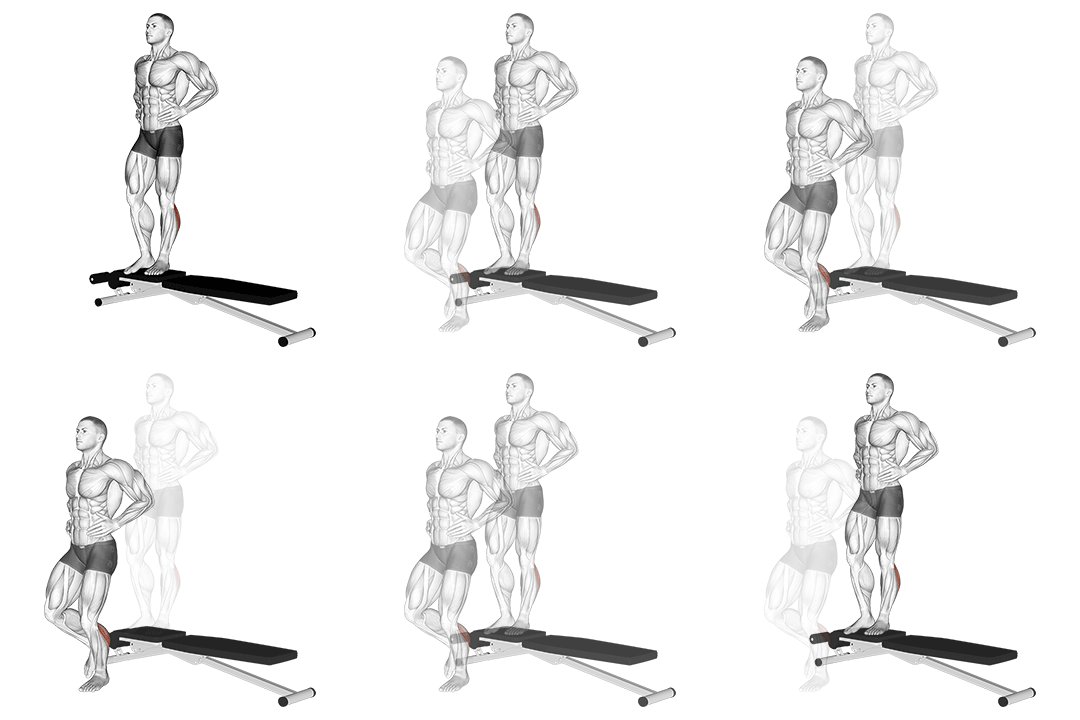
Donkey Calf Raise
Head-to-Head Comparison
| Attribute | Calf Push Stretch With Hands Against Wall | Donkey Calf Raise |
|---|---|---|
| Target Muscle |
Calves
|
Calves
|
| Body Part |
Lower-legs
|
Lower-legs
|
| Equipment |
Body-weight
|
Body-weight
|
| Difficulty |
Beginner
|
Beginner
|
| Movement Type |
Isolation
|
Isolation
|
| Secondary Muscles |
1
|
2
|
Secondary Muscles Activated
Calf Push Stretch With Hands Against Wall
Donkey Calf Raise
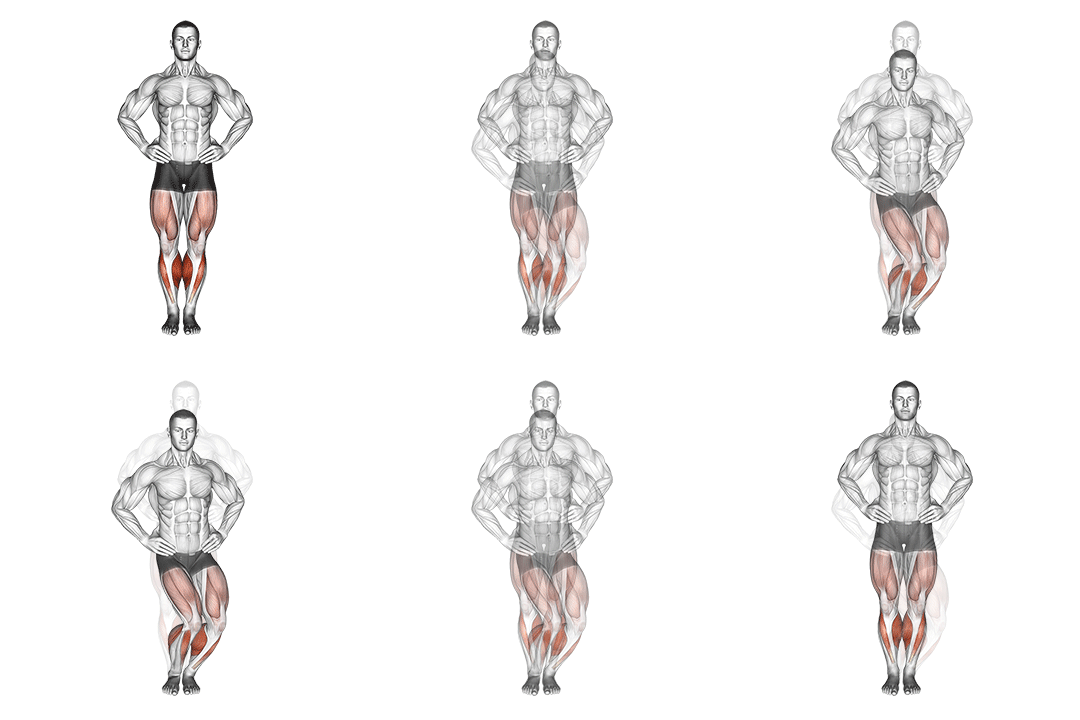
Visual Comparison
Overview
Calf Push Stretch With Hands Against Wall vs Donkey Calf Raise — both target the calves, but they serve different roles in your routine. If you want clear, practical guidance, this comparison walks you through muscle activation, biomechanics, equipment needs, safety, and how to program each for stretching, hypertrophy, or strength. You’ll get specific technique cues, rep ranges, and progression ideas so you can pick the best move for your goals and current ability.
Key Differences
- Both exercises target the Calves using Body-weight. The main differences are in their movement patterns and muscle activation angles.
Pros & Cons
Calf Push Stretch With Hands Against Wall
+ Pros
- Easy to learn and perform anywhere with a wall
- Improves calf length-tension and ankle dorsiflexion when held 20–30s
- Low injury risk when you control depth and keep back knee extended to target gastrocnemius
- Useful as a warm-up or cool-down to reduce passive stiffness
− Cons
- Low dynamic loading — limited stimulus for muscle hypertrophy
- Doesn't train strong concentric plantarflexion under load
- Progression options for strength are limited without adding extra exercises
Donkey Calf Raise
+ Pros
- Provides dynamic concentric and eccentric loading ideal for hypertrophy (8–15 reps) and strength work
- Greater range of progression: added weight, tempo changes, deficits
- Stronger recruitment of gastrocnemius under load, useful for functional push-off strength
- Engages hamstrings and glutes for stability when torso is flexed
− Cons
- Requires more coordination and sometimes equipment or a partner for optimal form
- Slightly higher risk to Achilles/tendon if overloaded or performed with poor control
- Less focused on passive flexibility and dorsiflexion gains compared with a dedicated stretch
When Each Exercise Wins
Donkey Calf Raise produces higher concentric loading and greater time under tension in the plantarflexion range, making it better for hypertrophy. Use 3–4 sets of 8–15 reps with slow eccentrics and full range to maximize muscle fiber recruitment.
Strength requires progressive overload and heavy plantarflexion. Donkey raises allow you to add external load or manipulate tempo to increase peak force and neural drive, which is more effective than a passive wall stretch.
The wall stretch gives immediate feedback on ankle range and calf tightness with minimal coordination demands. It teaches you how to find dorsiflexion angles safely (hold 20–30s, repeat 2–3x) before moving to loaded calf work.
It requires only a wall and body weight, fits into small spaces, and reduces the need for platforms or partners. Use it for mobility and as an accessible option between other body-weight lower-leg exercises.
Frequently Asked Questions
Can I do both Calf Push Stretch With Hands Against Wall and Donkey Calf Raise in the same workout?
Yes — pairing them is effective. Start with the wall stretch (2–3 × 20–30s) to improve dorsiflexion, then perform donkey raises for 3–4 sets of 8–15 reps to apply overload within that improved range.
Which exercise is better for beginners?
For absolute beginners the wall stretch is better because it teaches safe ankle mechanics and requires minimal coordination. Once mobility and control improve, add donkey raises to develop concentric strength.
How do the muscle activation patterns differ?
Donkey raises produce high concentric and eccentric activation of gastrocnemius during plantarflexion, while the wall stretch produces sustained passive and low-level active tension at long muscle lengths. The key difference is dynamic force production versus length-focused tension.
Can Donkey Calf Raise replace Calf Push Stretch With Hands Against Wall?
Donkey raises can substitute for strength and hypertrophy needs but won’t match the passive dorsiflexion and flexibility benefits of the wall stretch. If mobility is a goal, keep the wall stretch; if strength is the goal, prioritize donkey raises and add stretching separately.
Expert Verdict
Use the Calf Push Stretch With Hands Against Wall when your priority is ankle mobility, reducing calf tightness, or providing a low-risk option for beginners and home sessions. Hold dorsiflexed positions 20–30 seconds and vary knee bend to bias gastrocnemius or soleus. Choose Donkey Calf Raise when you want to build calf size or plantarflexion strength — program 3–4 sets of 8–15 reps with controlled eccentrics and incremental loading. For well-rounded development, pair a mobility-focused wall stretch before or after donkey raises to optimize range of motion and muscle length-tension for safer, more effective training.
Also Compare
More comparisons with Calf Push Stretch With Hands Against Wall
More comparisons with Donkey Calf Raise
Compare More Exercises
Use our free comparison tool to analyze any two exercises head-to-head.
Compare Exercises