

Calf Stretch With Hands Against Wall vs Circles Knee Stretch: Complete Comparison Guide
Calf Stretch With Hands Against Wall vs Circles Knee Stretch — both target the calves but use different mechanics. You’ll get a clear, practical comparison so you can pick the right move for flexibility, mobility, or preparatory calf work. I’ll cover primary and secondary muscle activation, technique cues (knee angles, ankle dorsiflexion), equipment needs, learning curve, progression options, and when to pick one over the other in your program. Read on to learn exact cues and rep/hold ranges so you can apply each safely and effectively.
Exercise Comparison
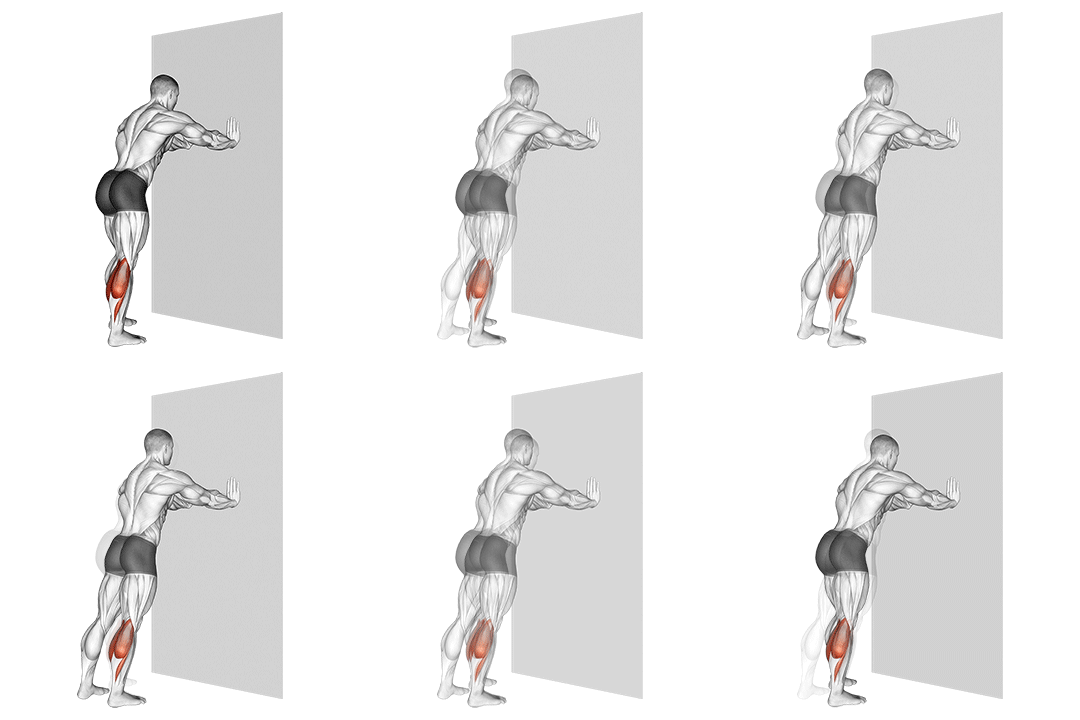
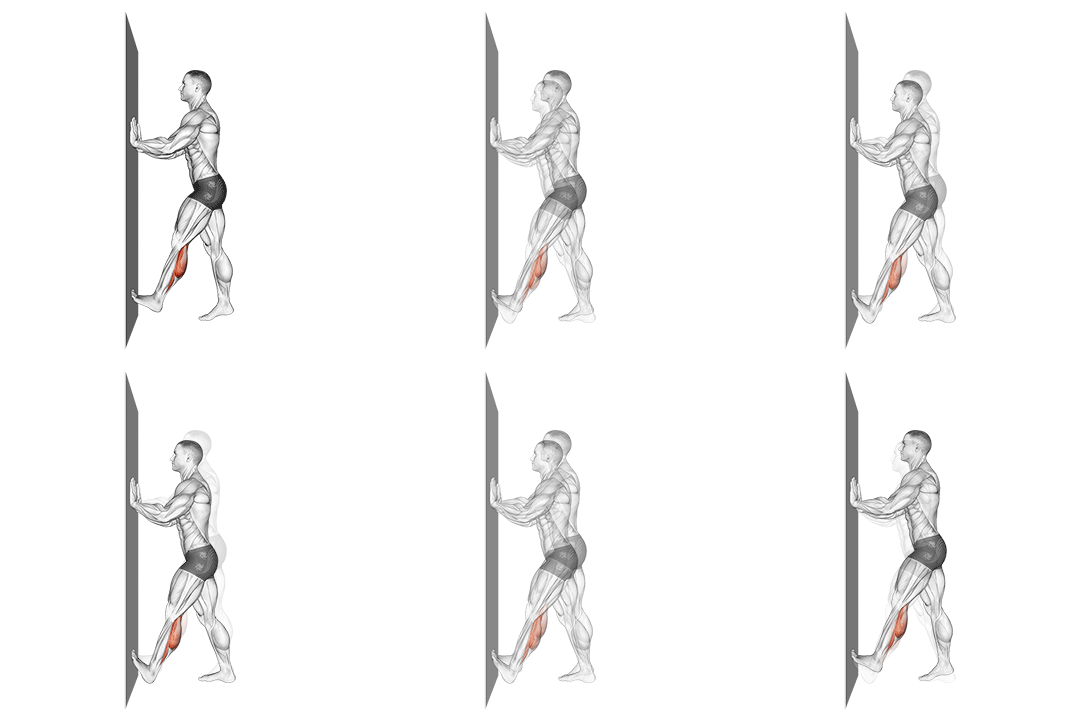
Calf Stretch With Hands Against Wall
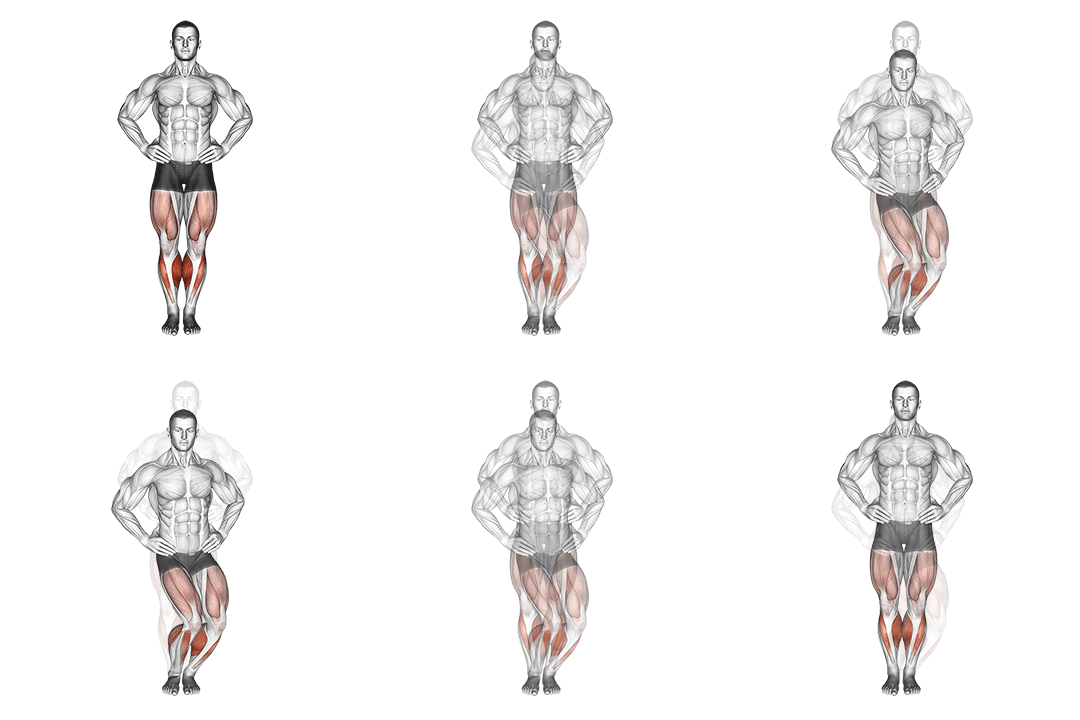
Circles Knee Stretch
Head-to-Head Comparison
| Attribute | Calf Stretch With Hands Against Wall | Circles Knee Stretch |
|---|---|---|
| Target Muscle |
Calves
|
Calves
|
| Body Part |
Lower-legs
|
Lower-legs
|
| Equipment |
Body-weight
|
Body-weight
|
| Difficulty |
Beginner
|
Beginner
|
| Movement Type |
Isolation
|
Isolation
|
| Secondary Muscles |
1
|
2
|
Secondary Muscles Activated
Calf Stretch With Hands Against Wall
Circles Knee Stretch
Visual Comparison
Overview
Calf Stretch With Hands Against Wall vs Circles Knee Stretch — both target the calves but use different mechanics. You’ll get a clear, practical comparison so you can pick the right move for flexibility, mobility, or preparatory calf work. I’ll cover primary and secondary muscle activation, technique cues (knee angles, ankle dorsiflexion), equipment needs, learning curve, progression options, and when to pick one over the other in your program. Read on to learn exact cues and rep/hold ranges so you can apply each safely and effectively.
Key Differences
- Both exercises target the Calves using Body-weight. The main differences are in their movement patterns and muscle activation angles.
Pros & Cons
Calf Stretch With Hands Against Wall
+ Pros
- Direct, strong passive stretch of gastrocnemius when back knee is straight, improving length-tension relationship
- Simple setup — easily adjustable knee angle (0° to ~30°) to shift emphasis to gastrocnemius or soleus
- Easily progressed to single-leg holds or elevated front-foot variations for greater mechanical overload
- Low coordination demand; good for clear cueing (keep heel down, push hips forward, 20–60s holds)
− Cons
- Mostly a static stretch — less dynamic joint control and lower neuromuscular challenge
- Can place compressive load on the front knee or Achilles if form is poor
- Less engagement of quadriceps and hip stabilizers compared to dynamic drills
Circles Knee Stretch
+ Pros
- Dynamic, multi-planar movement that improves ankle mobility and neuromuscular control
- Engages hamstrings and quadriceps as stabilizers, helping integrated lower-leg function
- No equipment and minimal space required — easy to add to warm-ups or mobility circuits
- Can be progressed by increasing reps, speed, or circle diameter to load stabilizers
− Cons
- Requires more coordination and hip/knee stability to perform cleanly
- Less ability to apply heavy mechanical overload for muscle strengthening
- Risk of knee or ankle irritation if rotation is excessive or alignment is poor
When Each Exercise Wins
While neither is a replacement for loaded calf raises, the Wall stretch lets you apply progressive overload more cleanly (single-leg holds, elevated dorsiflexion, weighted variations). Longer holds (30–60s) under tension combined with loaded work better stimulate muscle growth.
Strength adaptations require higher force. The Wall stretch allows transitions into loaded and single-leg strength work while maintaining correct ankle mechanics and force vectors through dorsiflexion/plantarflexion.
The position is easy to cue (heel down, hips forward, straight back leg) and low-risk. Beginners can safely control knee angle (0°–30°) to target gastrocnemius or soleus without complex coordination demands.
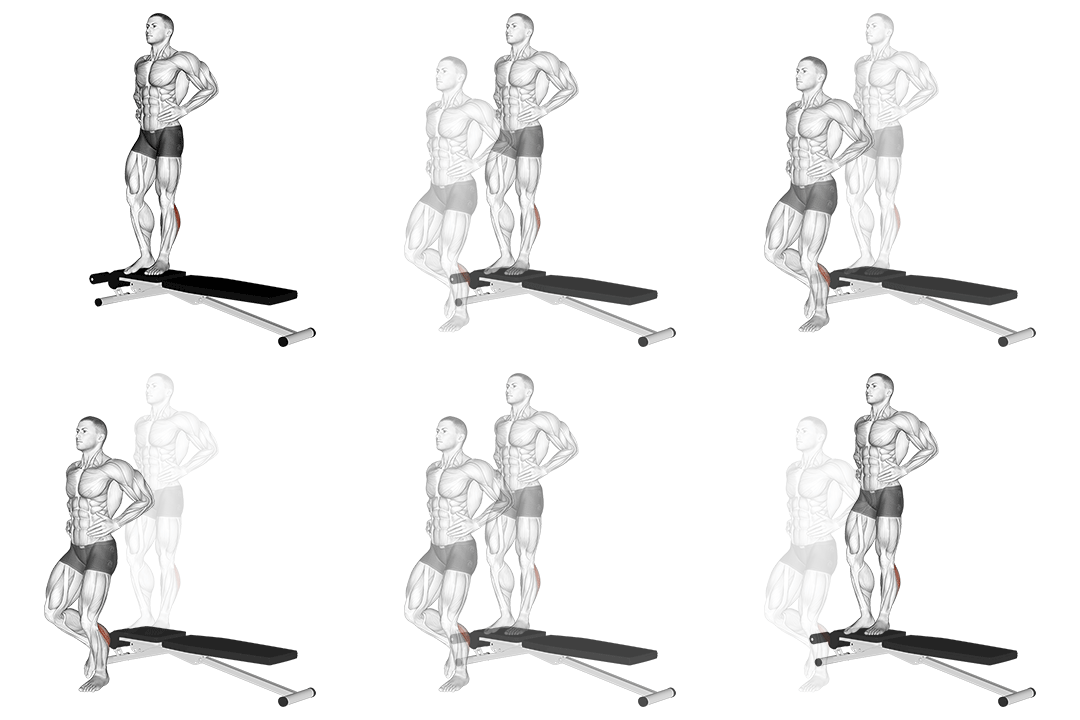
Circles need no wall or props and fit small spaces; they add ankle control and multi-muscle engagement without equipment. Use 10–20 reps per direction as part of a warm-up or mobility circuit at home.
Frequently Asked Questions
Can I do both Calf Stretch With Hands Against Wall and Circles Knee Stretch in the same workout?
Yes. Start with 10–20 reps of Circles Knee Stretch per direction to prime ankle ROM and neuromuscular control, then follow with 2–3 sets of 20–60 second Wall stretches to add sustained length-tension work. That order uses dynamic prep before static loading.
Which exercise is better for beginners?
Calf Stretch With Hands Against Wall is better for most beginners because it has simpler alignment cues and a lower coordination demand. It lets you control knee angle (0°–30°) to safely bias gastrocnemius or soleus without complex movement patterns.
How do the muscle activation patterns differ?
The Wall stretch creates prolonged passive/active lengthening—sustained dorsiflexion increases passive tension and stretches the gastrocnemius/soleus. Circles produce repeated concentric/eccentric cycles with intermittent peak activations and greater demand on hip/knee stabilizers for smooth motion.
Can Circles Knee Stretch replace Calf Stretch With Hands Against Wall?
Not completely. Circles improve dynamic mobility and control but offer less ability for progressive overload and maximal passive stretch. Use Circles for warm-up and mobility; use the Wall stretch when you need targeted lengthening or to progress toward strength work.
Expert Verdict
Use Calf Stretch With Hands Against Wall when you want a focused, adjustable stretch that you can progress toward strength and hypertrophy. Keep the back knee straight (0°) for gastrocnemius emphasis, bend it ~20–40° to bias the soleus, and hold 20–60 seconds for flexibility gains. Choose Circles Knee Stretch when your priority is dynamic ankle mobility, joint control, and integrating hamstring/quadriceps stabilizers — perform 10–20 circles per direction and keep controlled speed. Both are beginner-friendly; pick the Wall stretch for targeted length-tension work and Circles when you need mobility and coordination in a warm-up.
Also Compare
More comparisons with Calf Stretch With Hands Against Wall
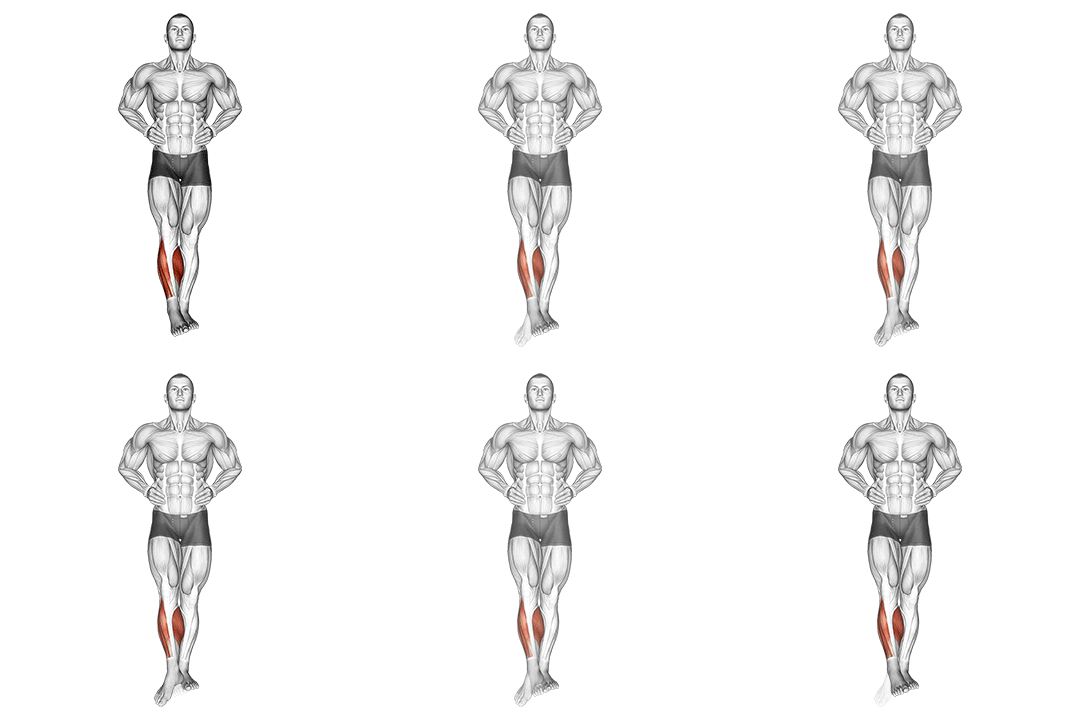
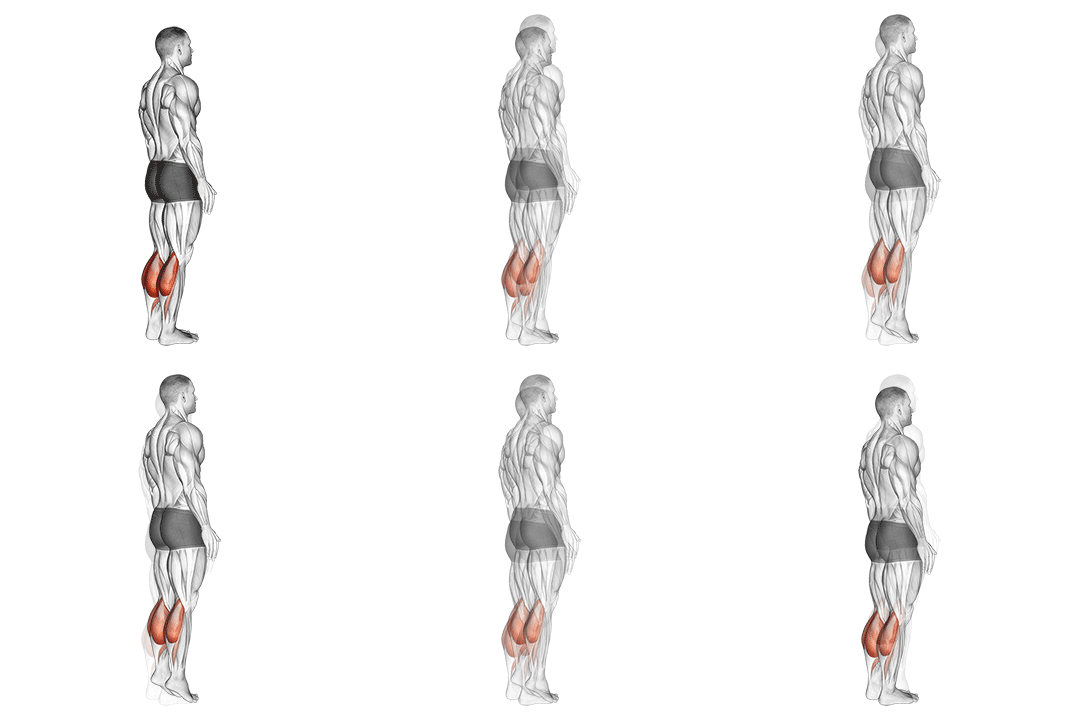
More comparisons with Circles Knee Stretch
Compare More Exercises
Use our free comparison tool to analyze any two exercises head-to-head.
Compare Exercises