

Calf Stretch With Hands Against Wall vs Donkey Calf Raise: Complete Comparison Guide
Calf Stretch With Hands Against Wall vs Donkey Calf Raise — this head-to-head look helps you pick the right move for your lower legs. You’ll get clear technique cues, biomechanical reasons each exercise works (or doesn’t), equipment needs, and rep/range guidelines. I’ll cover which targets the gastrocnemius versus the soleus, how knee angle changes activation, practical progressions, and when to choose the stretch over the loaded raise. Read on to know exactly what to do in your next session based on your goal: flexibility, muscle growth, or simple home training.
Exercise Comparison
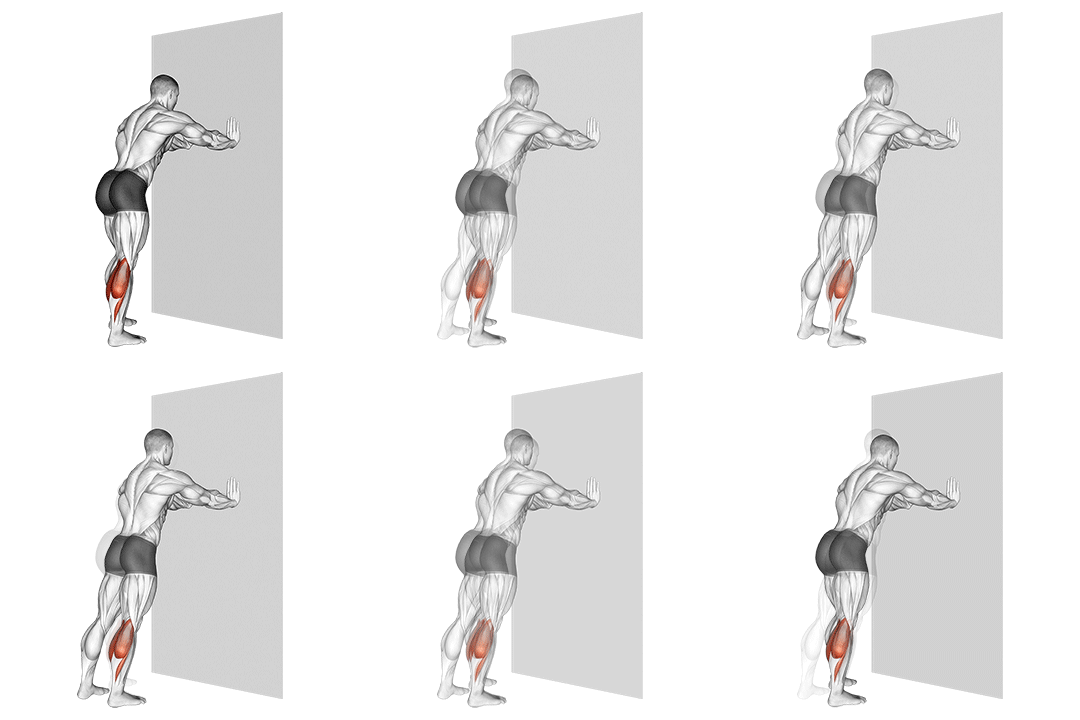
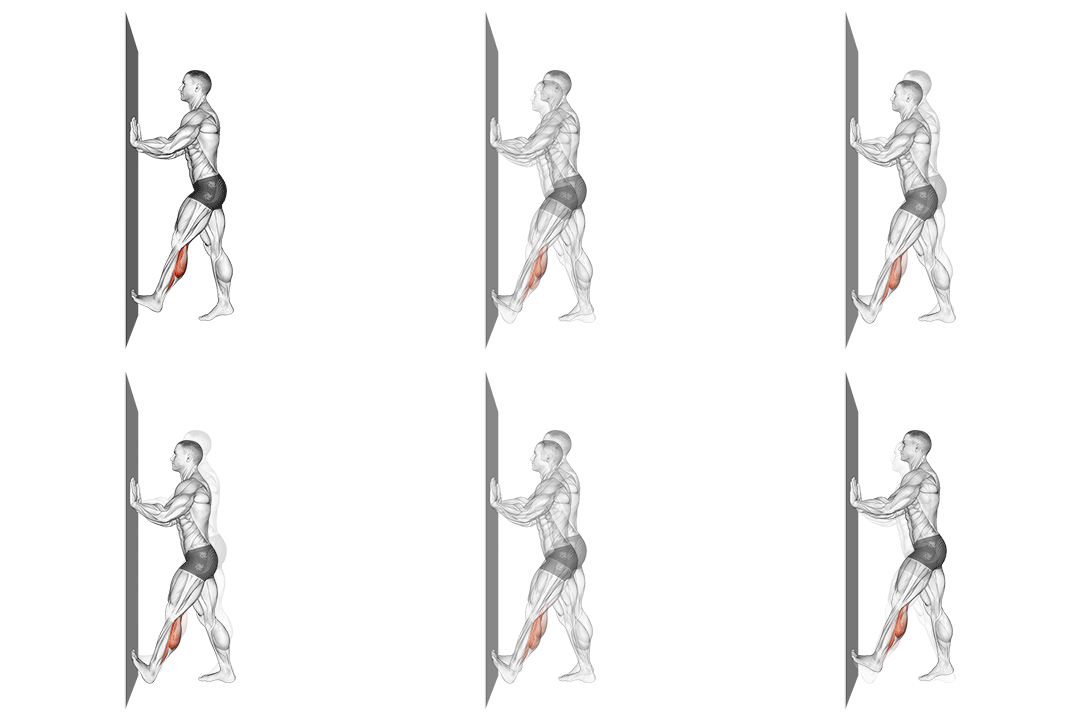
Calf Stretch With Hands Against Wall
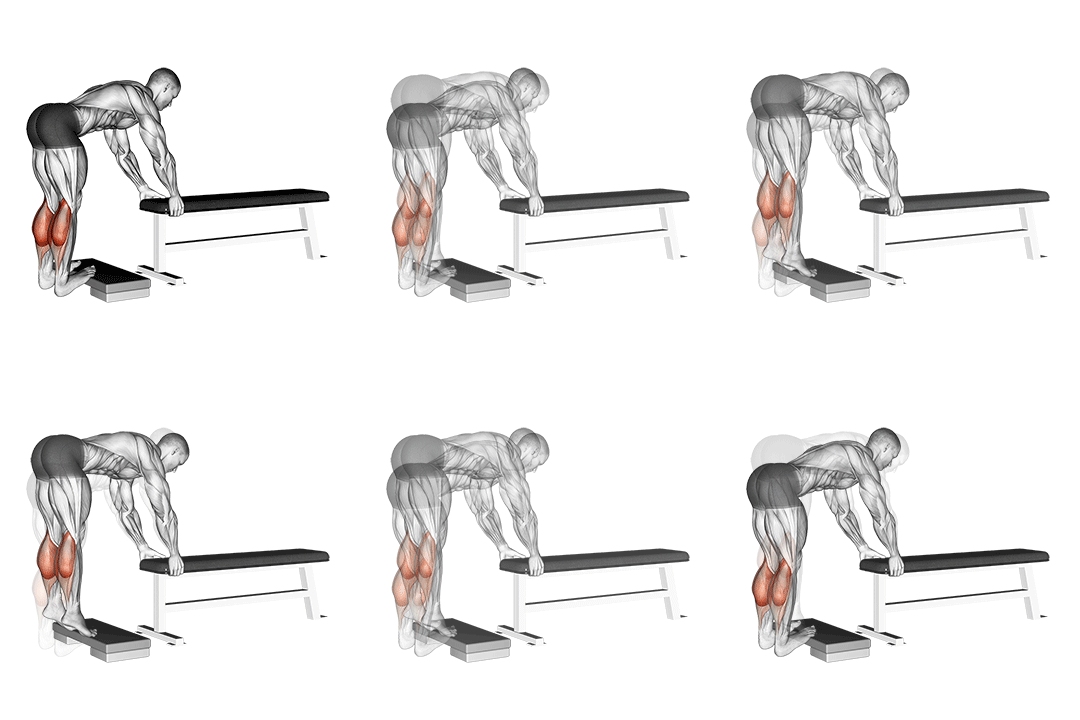
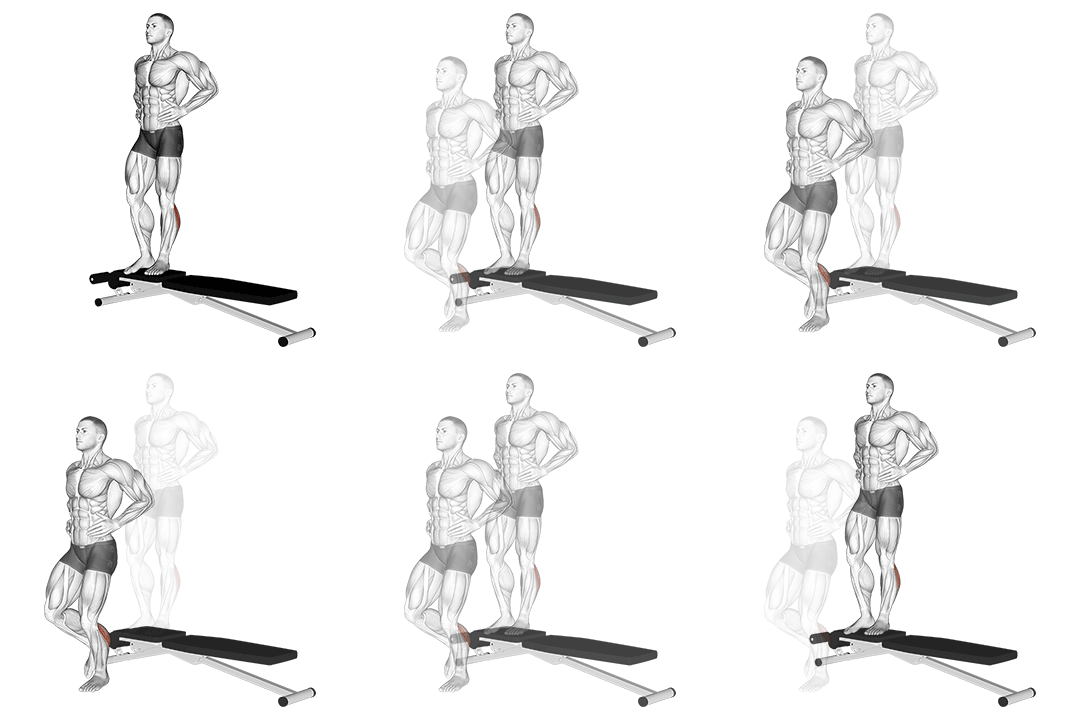
Donkey Calf Raise
Head-to-Head Comparison
| Attribute | Calf Stretch With Hands Against Wall | Donkey Calf Raise |
|---|---|---|
| Target Muscle |
Calves
|
Calves
|
| Body Part |
Lower-legs
|
Lower-legs
|
| Equipment |
Body-weight
|
Body-weight
|
| Difficulty |
Beginner
|
Beginner
|
| Movement Type |
Isolation
|
Isolation
|
| Secondary Muscles |
1
|
2
|
Secondary Muscles Activated
Calf Stretch With Hands Against Wall
Donkey Calf Raise
Visual Comparison
Overview
Calf Stretch With Hands Against Wall vs Donkey Calf Raise — this head-to-head look helps you pick the right move for your lower legs. You’ll get clear technique cues, biomechanical reasons each exercise works (or doesn’t), equipment needs, and rep/range guidelines. I’ll cover which targets the gastrocnemius versus the soleus, how knee angle changes activation, practical progressions, and when to choose the stretch over the loaded raise. Read on to know exactly what to do in your next session based on your goal: flexibility, muscle growth, or simple home training.
Key Differences
- Both exercises target the Calves using Body-weight. The main differences are in their movement patterns and muscle activation angles.
Pros & Cons
Calf Stretch With Hands Against Wall
+ Pros
- Requires only a wall — truly bodyweight and portable
- Great for improving ankle dorsiflexion and soft-tissue length
- Low-impact and easy to scale by knee position
- Useful pre- or post-workout for recovery and ROM (hold 20–60s)
− Cons
- Doesn’t build significant concentric strength or hypertrophy
- Limited progressive overload options for muscle growth
- If done improperly can overstretch tendon if warm-up is insufficient
Donkey Calf Raise
+ Pros
- Direct concentric/eccentric loading of gastrocnemius for muscle growth
- Easy to progress with added weight or single-leg variants
- Also recruits hamstrings and glutes for stability
- Good for building strength through a functional plantarflexion range
− Cons
- May require partner or equipment to load effectively
- Higher technical demand for hip and core stability
- Risk of Achilles irritation or cramp if overloaded or performed too fast
When Each Exercise Wins
Donkey Calf Raise produces concentric and eccentric tension under load, which drives hypertrophy. Use 3–5 sets of 8–20 reps with slow eccentrics (2–3 seconds) and progressive overload to stimulate muscle growth.
The donkey raise lets you increase external load and train heavy plantarflexion, improving force production. Aim for lower-rep blocks (4–8 reps) with heavier load and controlled descent to build strength.
It’s simpler to learn, requires no equipment, and safely increases ankle ROM and passive calf length. Beginners can hold 20–60 seconds and progress mobility before moving to loaded raises.
A wall is all you need, making it the most practical home option for improving flexibility and maintaining calf health. If you want strength at home, use single-leg donkey-style raises off a step to increase intensity without equipment.
Frequently Asked Questions
Can I do both Calf Stretch With Hands Against Wall and Donkey Calf Raise in the same workout?
Yes. Start with the wall stretch as a mobility primer (20–30s) to improve dorsiflexion, then perform donkey raises for strength or hypertrophy. Use the stretch between sets for maintenance but avoid long holds immediately before heavy sets if you need maximal force output.
Which exercise is better for beginners?
For general beginners focused on mobility and injury prevention, the Calf Stretch With Hands Against Wall is better because it’s easy and low-risk. If a beginner’s priority is strength and they can maintain form, start with bodyweight donkey raises before adding load.
How do the muscle activation patterns differ?
The wall stretch places the calf under passive tension in dorsiflexion, increasing muscle-tendon length but producing minimal concentric force. Donkey Calf Raise produces active concentric and eccentric contractions; peak activation occurs near plantarflexion and is influenced by knee angle which shifts load between gastrocnemius and soleus.
Can Donkey Calf Raise replace Calf Stretch With Hands Against Wall?
No — they serve different roles. Donkey raises are for strength and hypertrophy; the wall stretch improves range of motion and tissue compliance. Use both in a balanced program: stretch for mobility and donkey raises for progressive loading.
Expert Verdict
Use the Calf Stretch With Hands Against Wall when your goal is ankle mobility, tendon resilience, or post-workout recovery. It safely lengthens the gastrocnemius/soleus and improves dorsiflexion (hold 20–60 seconds, 2–3 rounds). Choose Donkey Calf Raise when you want to build calf strength or increase muscle size — it places concentric and eccentric load through the ankle and allows progressive overload (3–5 sets of 8–20 reps or heavier 4–8 rep blocks for strength). Be decisive: prioritize the stretch when mobility limits your form; prioritize donkey raises when you can safely add load and control the descent.
Also Compare
More comparisons with Calf Stretch With Hands Against Wall
More comparisons with Donkey Calf Raise
Compare More Exercises
Use our free comparison tool to analyze any two exercises head-to-head.
Compare Exercises