

Calf Stretch With Rope vs Rope Jumping: Complete Comparison Guide
Calf Stretch With Rope vs Rope Jumping puts a static mobility tool against a dynamic plyometric move. You’ll get clear guidance on who should use each exercise and why. I’ll cover muscle activation, biomechanics, equipment needs, difficulty, injury risk, and practical technique cues so you can pick the right option for your goals. Expect exact rep and hold ranges (30–60s holds, 100–300 jumps), simple cues (anchor rope, dorsiflex, land on forefoot), and evidence-based reasoning about force vectors, length–tension, and stretch–shortening cycles.
Exercise Comparison
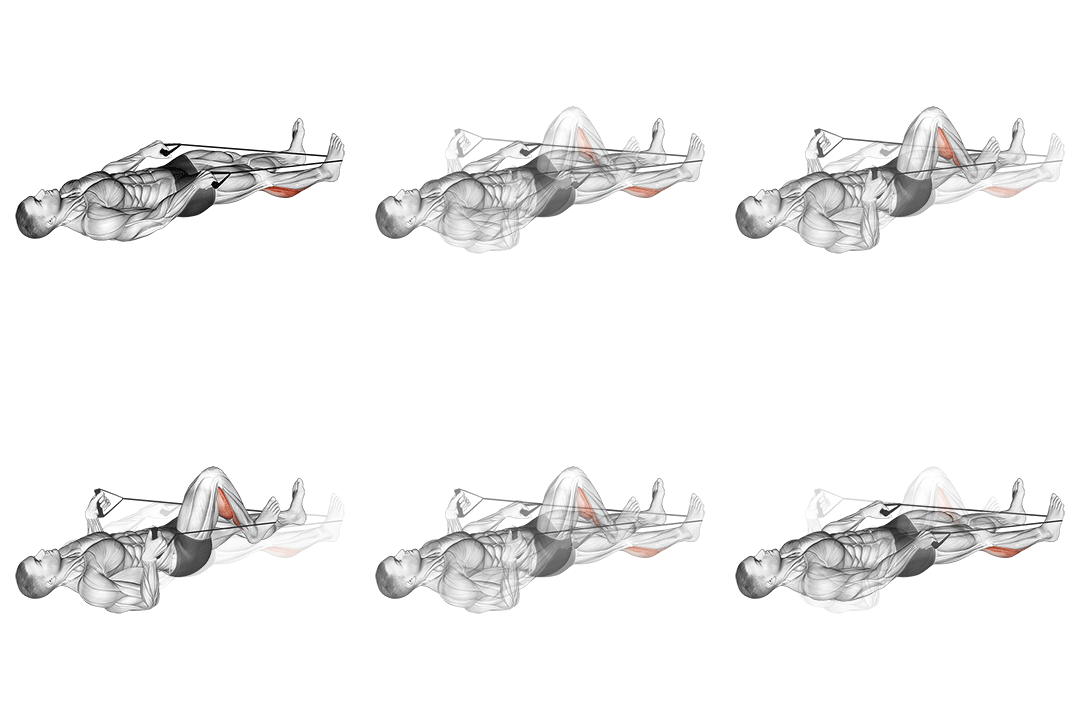
Calf Stretch With Rope
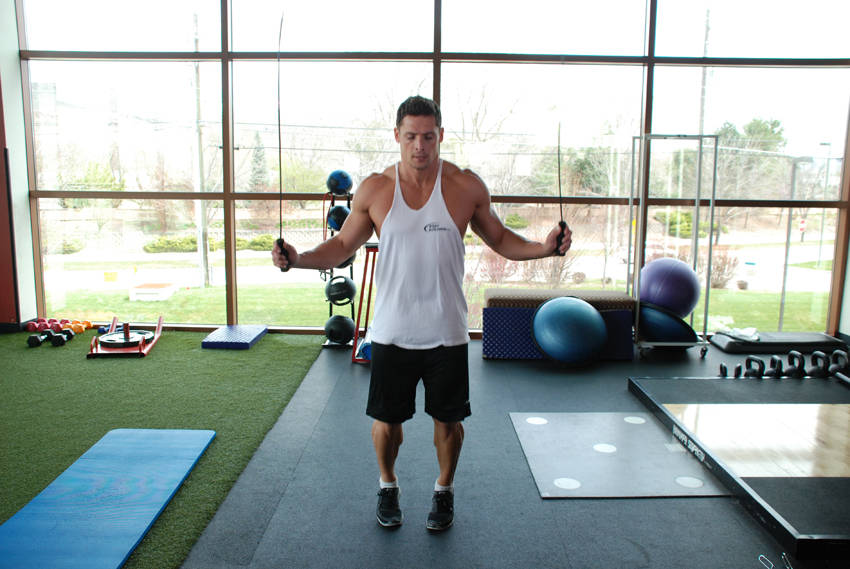
Rope Jumping
Head-to-Head Comparison
| Attribute | Calf Stretch With Rope | Rope Jumping |
|---|---|---|
| Target Muscle |
Calves
|
Calves
|
| Body Part |
Lower-legs
|
Cardio
|
| Equipment |
Rope
|
Rope
|
| Difficulty |
Beginner
|
Beginner
|
| Movement Type |
Isolation
|
Compound
|
| Secondary Muscles |
1
|
2
|
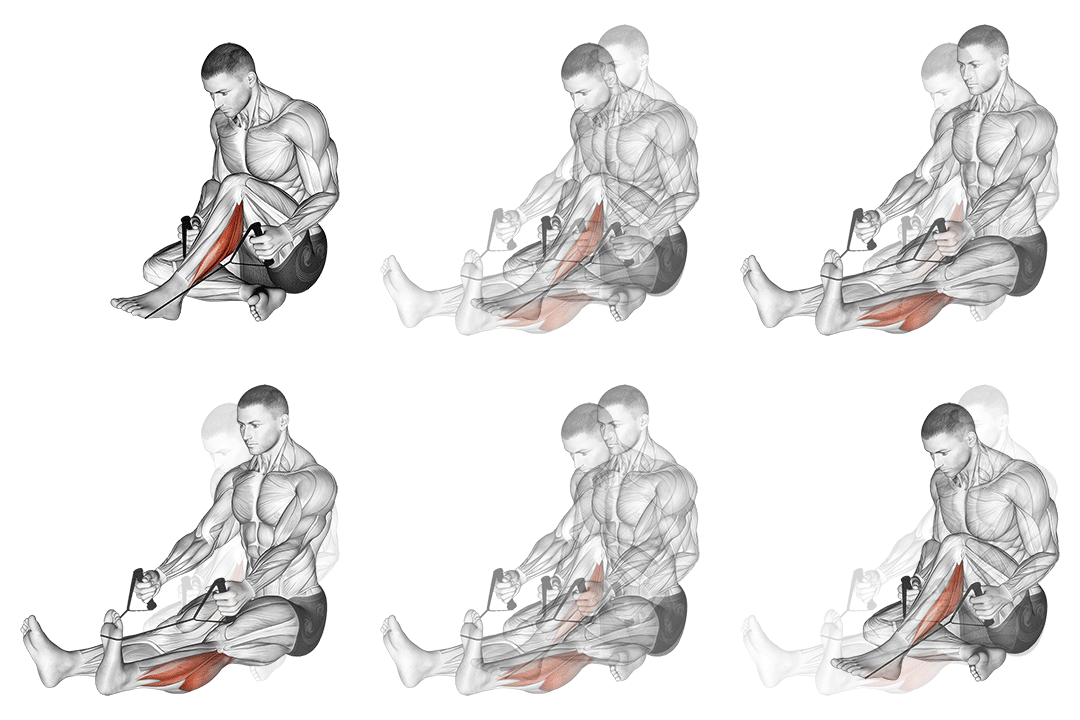
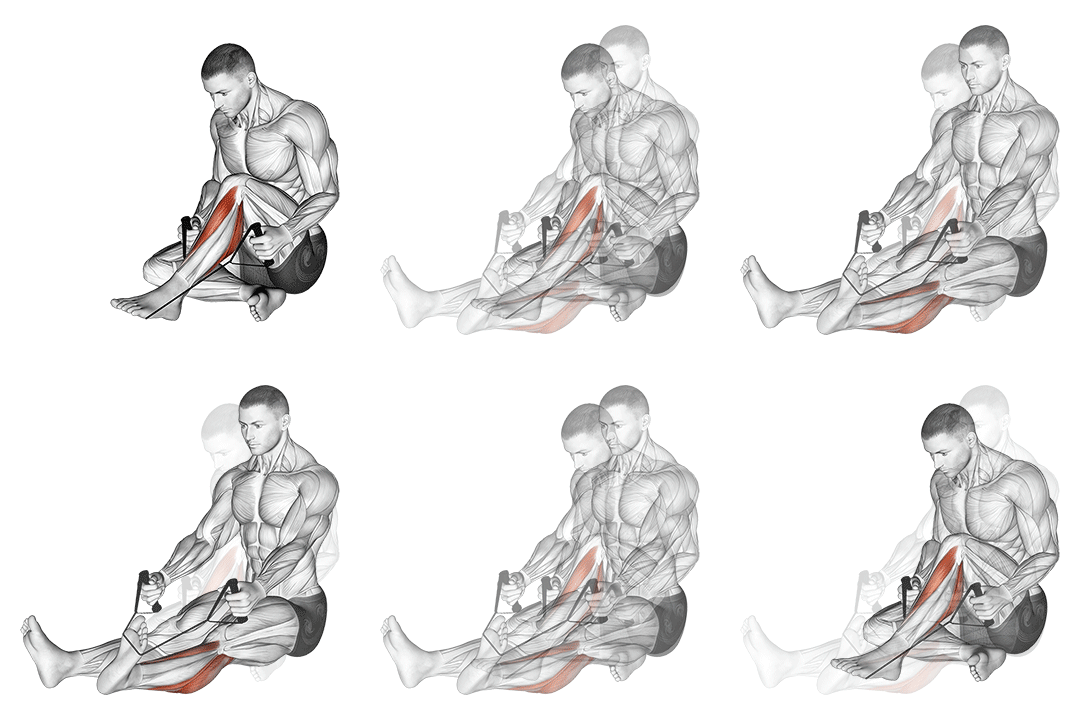
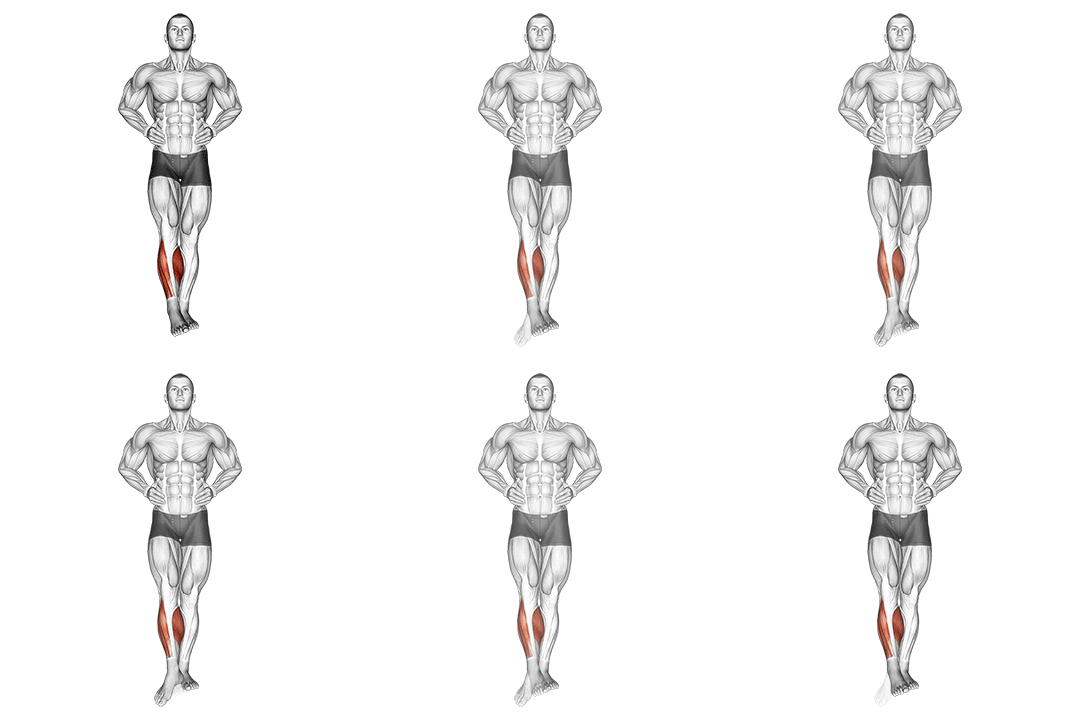
Secondary Muscles Activated
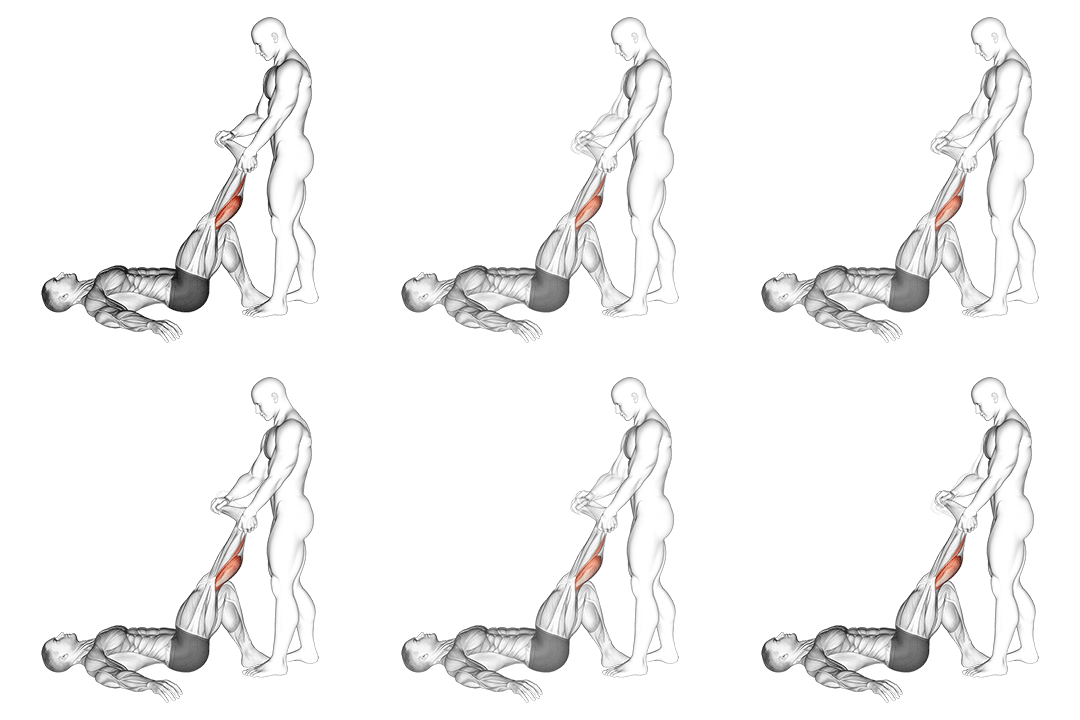
Calf Stretch With Rope
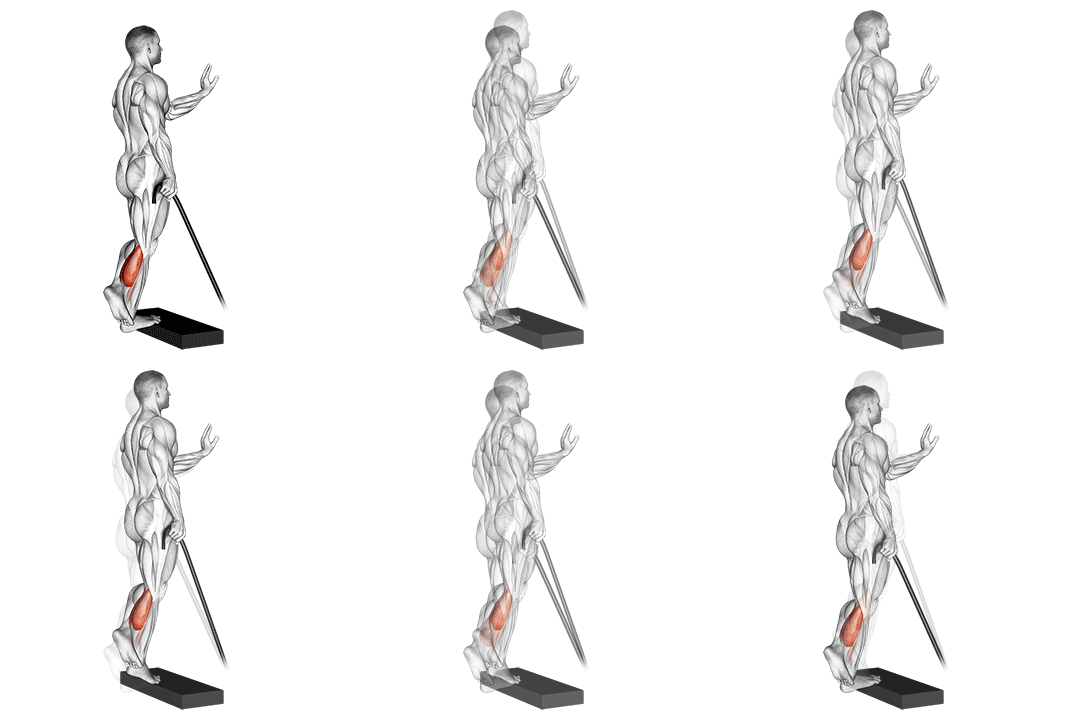
Rope Jumping
Visual Comparison
Overview
Calf Stretch With Rope vs Rope Jumping puts a static mobility tool against a dynamic plyometric move. You’ll get clear guidance on who should use each exercise and why. I’ll cover muscle activation, biomechanics, equipment needs, difficulty, injury risk, and practical technique cues so you can pick the right option for your goals. Expect exact rep and hold ranges (30–60s holds, 100–300 jumps), simple cues (anchor rope, dorsiflex, land on forefoot), and evidence-based reasoning about force vectors, length–tension, and stretch–shortening cycles.
Key Differences
- Calf Stretch With Rope is an isolation exercise, while Rope Jumping is a compound movement.
- Both exercises target the Calves using Rope. The main differences are in their movement patterns and muscle activation angles.
Pros & Cons
Calf Stretch With Rope
+ Pros
- Improves ankle dorsiflexion and calf flexibility with 30–60s holds
- Very low impact and minimal space required
- Easy to teach and scale for beginners
- Supports fascial remodeling and reduced passive stiffness
− Cons
- Limited concentric or eccentric loading for muscle growth
- Slow progression for strength or power
- Can aggravate existing Achilles tendinopathy if overdone
Rope Jumping
+ Pros
- High neuromuscular demand and power development through SSC
- Provides cardiovascular conditioning and calf conditioning simultaneously
- Easy to progress by increasing speed, duration, or complexity
- Improves reactive strength and ankle stiffness control
− Cons
- Higher impact—greater risk for Achilles, knee, or joint irritation
- Requires coordination and space/ceiling clearance
- Less focused on improving static ankle range-of-motion
When Each Exercise Wins
Rope Jumping produces repeated concentric–eccentric cycles and metabolic stress across many reps (100–300 jumps), increasing time under tension in a dynamic way. While heavy loaded calf raises are superior, among these two options rope jumping yields greater stimulus for muscle growth via higher contraction frequency and force peaks during push-off.
Rope Jumping generates higher peak forces and rate of force development through the SSC, training the neuromuscular system for stronger, faster plantarflexion. For pure maximal strength you still need progressive external load, but jumping better develops force production than a static rope stretch.
Calf Stretch With Rope is low-impact, low-skill, and lets you safely address tightness and basic calf conditioning with 30–60s holds. It’s the best starting point if you lack coordination, have joint issues, or need to restore dorsiflexion before loading.
Rope Jumping gives more return per minute—cardio, calf conditioning, and coordination—using only a rope and small footprint. If you have adequate ceiling clearance and tolerable impact, short intervals (3–5 x 30–60s) provide efficient conditioning at home.
Frequently Asked Questions
Can I do both Calf Stretch With Rope and Rope Jumping in the same workout?
Yes. Do Calf Stretch With Rope as part of your warm-up to increase dorsiflexion (30–60s holds) and reduce stiffness, then perform Rope Jumping sets (3–5 x 30–60s). Finish with another short stretch to aid recovery and maintain range of motion.
Which exercise is better for beginners?
Calf Stretch With Rope is better for absolute beginners because it’s low-impact and simple to execute, letting you restore ankle mobility and reduce passive stiffness before introducing impact work like rope jumping.
How do the muscle activation patterns differ?
Calf Stretch With Rope places the calf at longer muscle lengths under static tension, favoring passive tissue loading and fascial adaptation. Rope Jumping relies on rapid eccentric loading followed by concentric push-off (SSC), producing short, high-amplitude activation bursts and greater rate of force development.
Can Rope Jumping replace Calf Stretch With Rope?
Not entirely. Rope Jumping delivers dynamic conditioning but doesn’t restore static dorsiflexion the way targeted stretching does. If your goal is flexibility or tendon loading progression, keep the calf stretch; use rope jumping to add power and metabolic stimulus.
Expert Verdict
Use Calf Stretch With Rope when your priority is mobility, tendon health, or you’re introducing calf work safely—anchor the rope at your foot, dorsiflex the ankle, keep the knee straight for gastrocnemius or bent for soleus, and hold 30–60s for 2–3 sets. Choose Rope Jumping when you want dynamic conditioning, power, and greater stimulus for muscle growth—land softly on the forefoot, keep knees slightly bent, aim for ground contact under 0.3s, and program 3–5 sets of 30–60s or 100–300 total jumps. Combine both: stretch before and after jumping to preserve range of motion and reduce injury risk.
Also Compare
More comparisons with Calf Stretch With Rope
Compare More Exercises
Use our free comparison tool to analyze any two exercises head-to-head.
Compare Exercises