

Chest And Front Of Shoulder Stretch vs Clap Push Up: Complete Comparison Guide
Chest And Front Of Shoulder Stretch vs Clap Push Up — you’re looking at two very different tools for the chest. I’ll walk you through how each targets the pectorals, how they recruit the shoulders and triceps, what equipment and space you need, and when to choose one over the other. You’ll get clear cues, biomechanical reasons (length–tension, force vectors, stretch‑shortening cycle), rep and hold recommendations, plus risk and progression advice so you can pick the right move for your goal.
Exercise Comparison
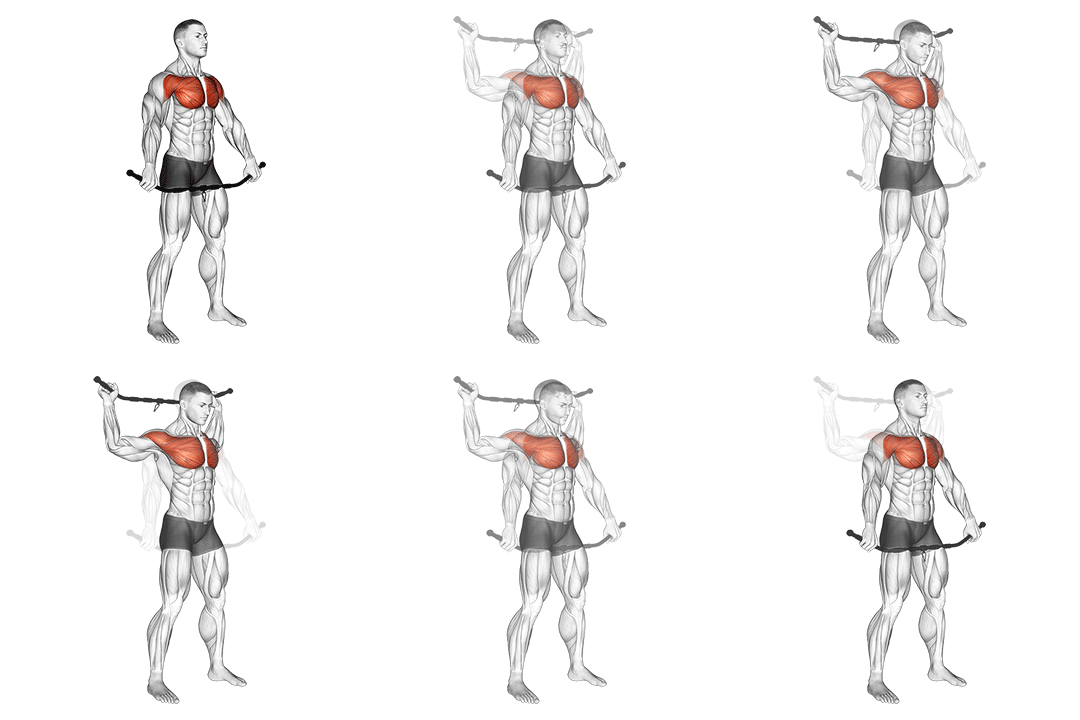
Chest And Front Of Shoulder Stretch
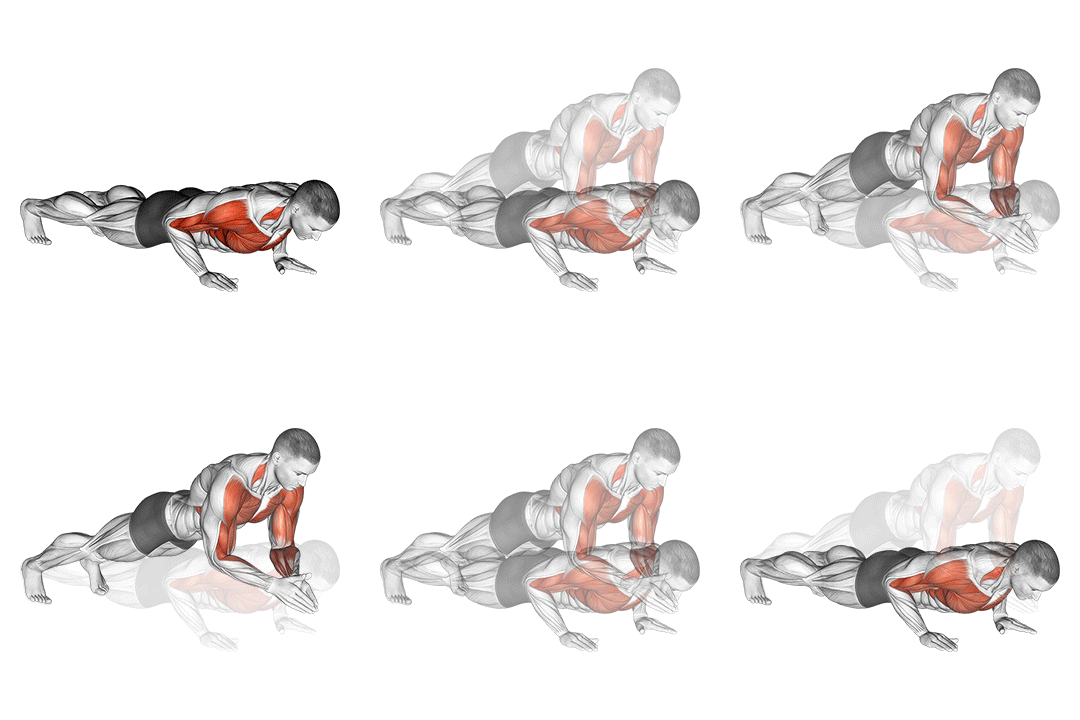
Clap Push Up
Head-to-Head Comparison
| Attribute | Chest And Front Of Shoulder Stretch | Clap Push Up |
|---|---|---|
| Target Muscle |
Pectorals
|
Pectorals
|
| Body Part |
Chest
|
Chest
|
| Equipment |
Body-weight
|
Body-weight
|
| Difficulty |
Beginner
|
Advanced
|
| Movement Type |
Isolation
|
Compound
|
| Secondary Muscles |
1
|
2
|
Secondary Muscles Activated
Chest And Front Of Shoulder Stretch
Clap Push Up
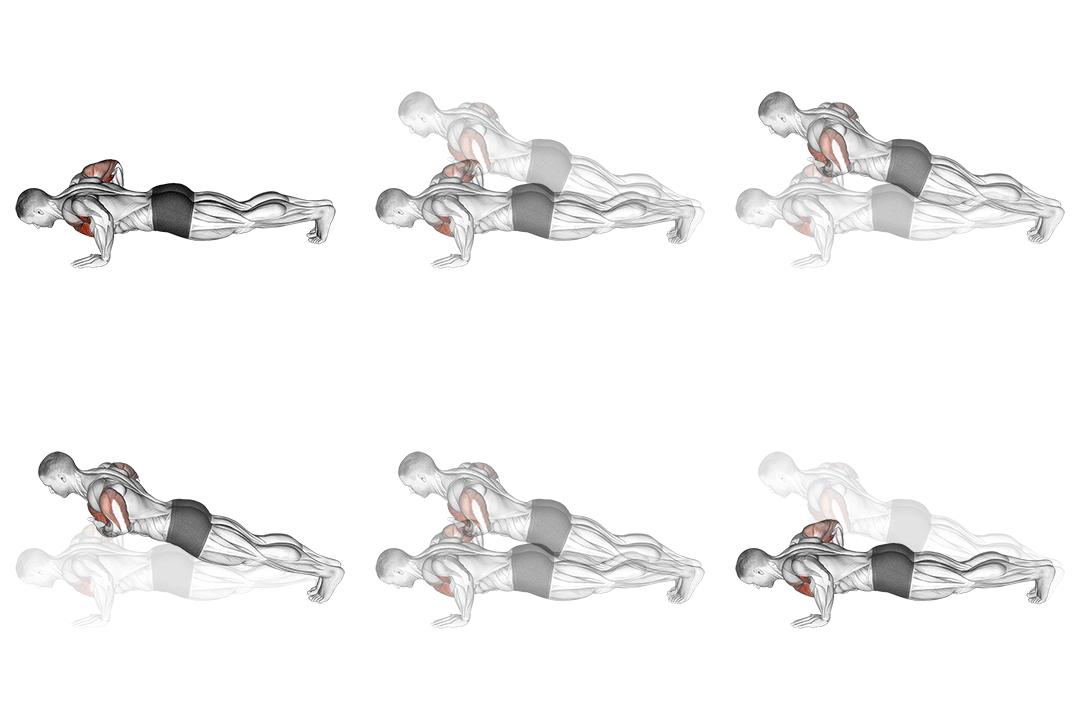
Visual Comparison
Overview
Chest And Front Of Shoulder Stretch vs Clap Push Up — you’re looking at two very different tools for the chest. I’ll walk you through how each targets the pectorals, how they recruit the shoulders and triceps, what equipment and space you need, and when to choose one over the other. You’ll get clear cues, biomechanical reasons (length–tension, force vectors, stretch‑shortening cycle), rep and hold recommendations, plus risk and progression advice so you can pick the right move for your goal.
Key Differences
- Chest And Front Of Shoulder Stretch is an isolation exercise, while Clap Push Up is a compound movement.
- Difficulty levels differ: Chest And Front Of Shoulder Stretch is beginner, while Clap Push Up is advanced.
- Both exercises target the Pectorals using Body-weight. The main differences are in their movement patterns and muscle activation angles.
Pros & Cons
Chest And Front Of Shoulder Stretch
+ Pros
- Improves anterior shoulder and pectoral mobility by opening the chest to ~90–120° of horizontal abduction
- Low impact and safe for beginners when performed with controlled range
- No equipment and highly accessible for daily use (hold 20–60 seconds)
- Reduces anterior shoulder tightness and can improve posture via scapular retraction cues
− Cons
- Minimal concentric loading—does not build significant strength or muscle growth alone
- Can be overused if you force end range, irritating the anterior capsule
- Offers limited progression options for strength and power
Clap Push Up
+ Pros
- High dynamic loading of the pectorals and triceps via explosive concentric force
- Great for developing upper‑body power and neuromuscular rate of force development
- Compound movement that transfers to athletic pushing actions
- Easy to program into 3–5 sets of 3–8 explosive reps for strength/power phases
− Cons
- High impact stresses on wrists, elbows, and shoulders; requires solid baseline strength
- Technical and coordination demands increase failure risk and poor repetitions
- Less useful for mobility; can tighten the anterior shoulder if not paired with counter‑mobility work
When Each Exercise Wins
Clap push ups generate much higher dynamic load and mechanical tension in the pecs and triceps, and you can progressively overload with reps, tempo, or added weight—aim for 6–12 controlled explosive reps per set.
The explosive concentric and eccentric phases stimulate neural drive and force production. Program 3–5 sets of 3–6 reps with full recovery to build pushing strength and rate of force development.
It teaches safe end‑range control, improves posture and scapular positioning, and carries very low mechanical demand—hold 20–60 seconds and repeat 2–3 times for beginners.
Requires almost no space or athletic ability and helps maintain shoulder health between training sessions. Clap push ups are possible at home but need clear space and baseline power.
Frequently Asked Questions
Can I do both Chest And Front Of Shoulder Stretch and Clap Push Up in the same workout?
Yes. Do the stretch as part of your warm‑up or cool‑down to preserve mobility (20–60 s holds). Save clap push ups for the main part of the session when you’re fresh—3–5 sets of 3–8 reps—to avoid fatigue‑related technique breakdown.
Which exercise is better for beginners?
The Chest And Front Of Shoulder Stretch is better for beginners because it requires no explosive strength and teaches safe shoulder positioning. Use it to build range before progressing to dynamic pushing variations.
How do the muscle activation patterns differ?
The stretch maintains the pecs at long lengths with mostly passive tension and isometric control, whereas the clap push up creates rapid eccentric loading followed by high‑force concentric contractions (stretch‑shortening cycle), increasing active motor unit recruitment in pecs, triceps, and anterior deltoids.
Can Clap Push Up replace Chest And Front Of Shoulder Stretch?
No. Clap push ups do not improve end‑range mobility and may increase anterior shoulder tightness if used alone. Keep the stretch for mobility and prehab, and use clap push ups for power and overload.
Expert Verdict
Use the Chest And Front Of Shoulder Stretch when your priority is shoulder mobility, posture correction, or prehab—hold 20–60 seconds, focus on scapular retraction and keeping elbow slightly bent (10–20°). Choose the Clap Push Up when you want to develop pectoral strength, power, and explosive coordination; program it for short sets (3–8 reps) with 90–120 seconds rest and only after you’ve built solid push‑up mechanics. Ideally, pair them across a program: stretch to maintain range and reduce injury risk, and use plyometric push‑ups for progressive overload and neural adaptation when your shoulder health and strength support it.
Also Compare
More comparisons with Chest And Front Of Shoulder Stretch
Compare More Exercises
Use our free comparison tool to analyze any two exercises head-to-head.
Compare Exercises