

Close-grip Push-up vs Close-grip Push-up (on Knees): Complete Comparison Guide
Close-grip Push-up vs Close-grip Push-up (on Knees) — if you want stronger, thicker triceps without equipment, pick the right version for your level. I’ll show you how each variation shifts load, changes muscle recruitment, and affects joint angles so you can choose the best option for strength, hypertrophy, or rehab. You’ll get clear technique cues (hand spacing, elbow tracking, torso angle), specific rep ranges (6–12 for strength/hypertrophy, higher reps for endurance), and simple progressions so you can program these into your workouts immediately.
Exercise Comparison
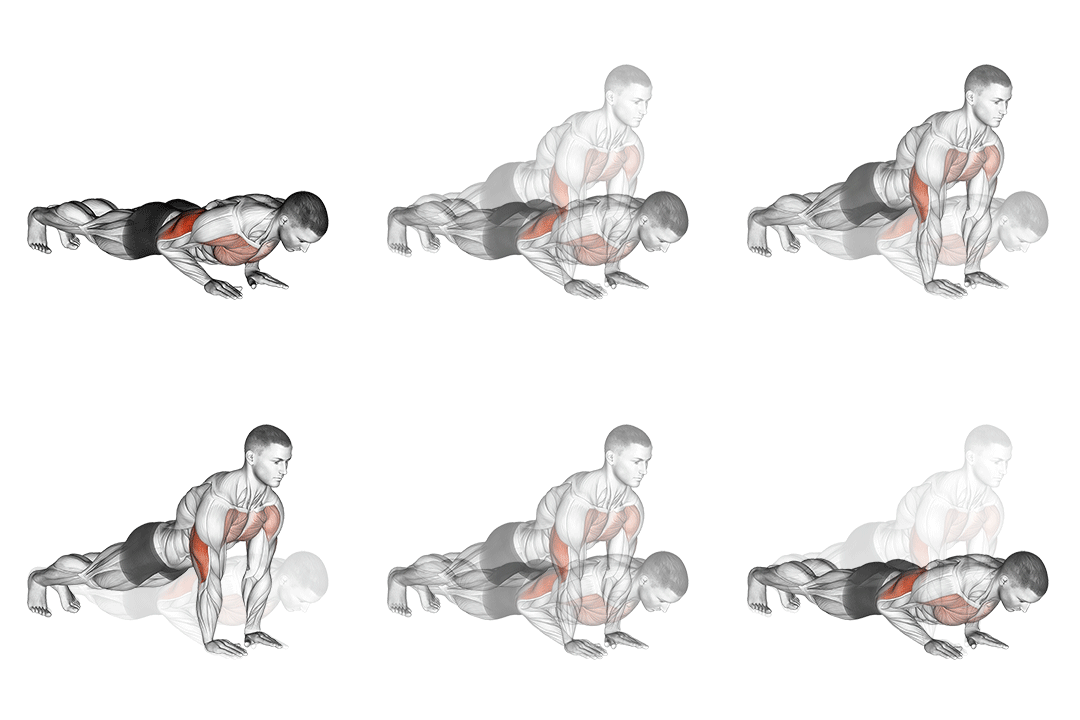
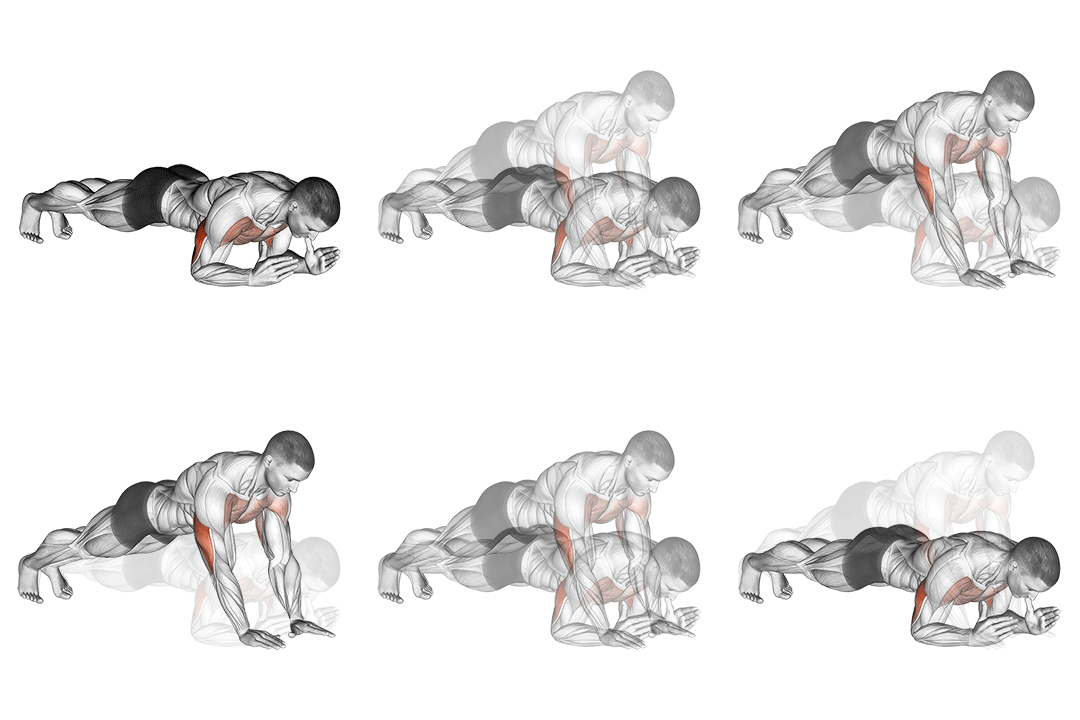
Close-grip Push-up
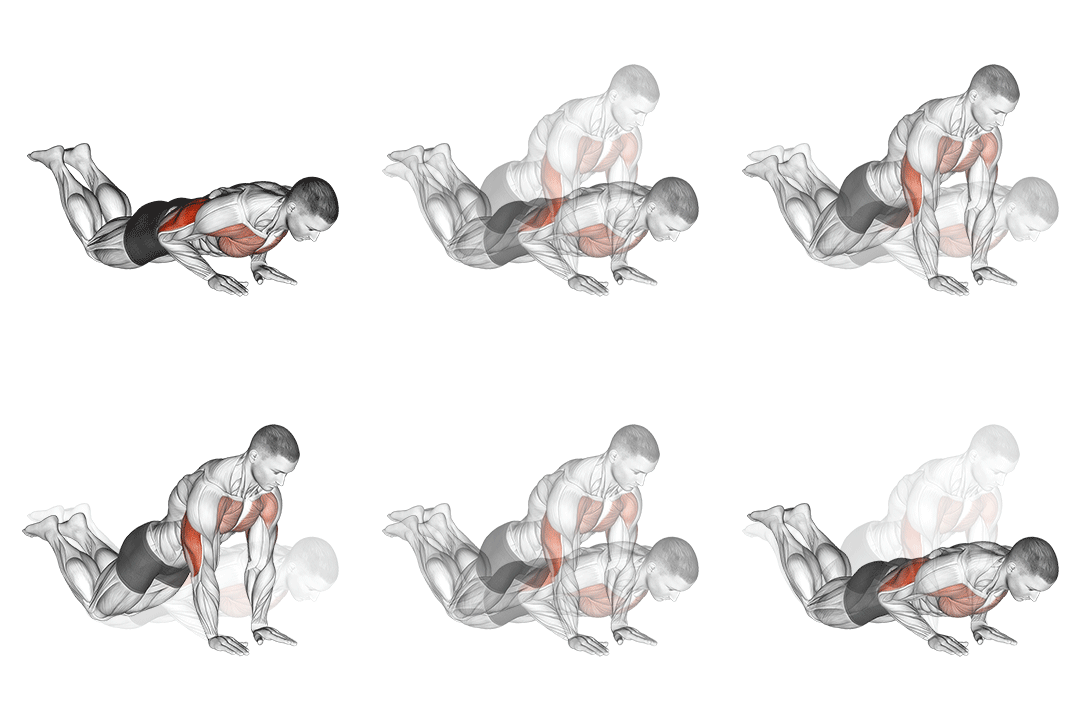
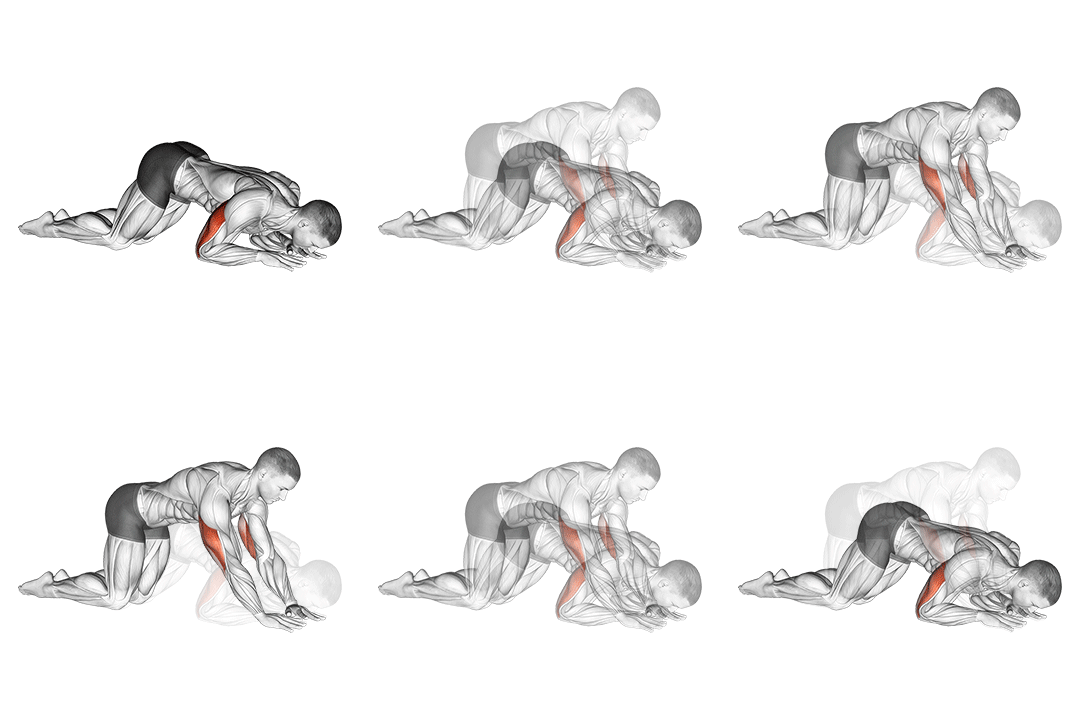
Close-grip Push-up (on Knees)
Head-to-Head Comparison
| Attribute | Close-grip Push-up | Close-grip Push-up (on Knees) |
|---|---|---|
| Target Muscle |
Triceps
|
Triceps
|
| Body Part |
Upper-arms
|
Upper-arms
|
| Equipment |
Body-weight
|
Body-weight
|
| Difficulty |
Intermediate
|
Beginner
|
| Movement Type |
Compound
|
Compound
|
| Secondary Muscles |
2
|
2
|
Secondary Muscles Activated
Close-grip Push-up
Close-grip Push-up (on Knees)
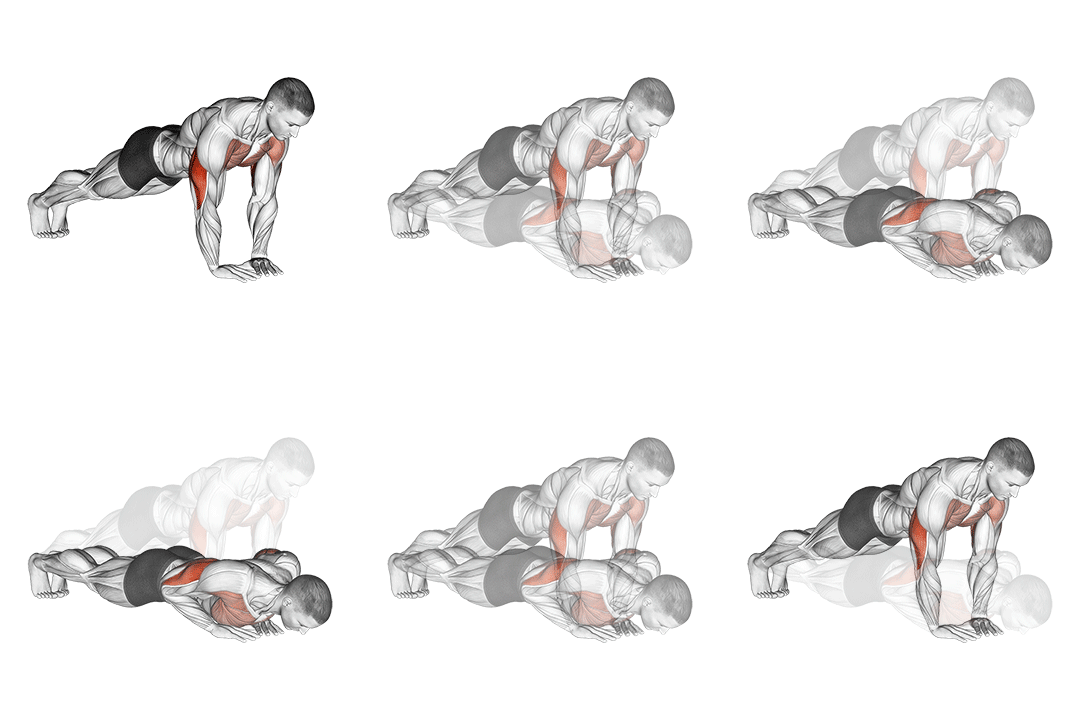
Visual Comparison
Overview
Close-grip Push-up vs Close-grip Push-up (on Knees) — if you want stronger, thicker triceps without equipment, pick the right version for your level. I’ll show you how each variation shifts load, changes muscle recruitment, and affects joint angles so you can choose the best option for strength, hypertrophy, or rehab. You’ll get clear technique cues (hand spacing, elbow tracking, torso angle), specific rep ranges (6–12 for strength/hypertrophy, higher reps for endurance), and simple progressions so you can program these into your workouts immediately.
Key Differences
- Difficulty levels differ: Close-grip Push-up is intermediate, while Close-grip Push-up (on Knees) is beginner.
- Both exercises target the Triceps using Body-weight. The main differences are in their movement patterns and muscle activation angles.
Pros & Cons
Close-grip Push-up
+ Pros
- Higher absolute triceps load for stronger mechanical tension
- Greater recruitment of chest, shoulders, and core for functional strength
- Many progression options (weighted vest, tempo, deficit, elevated feet)
- Better for building maximal push strength and transferring to full pressing movements
− Cons
- Requires more scapular stability and core tension, increasing technique demands
- Higher shoulder and elbow joint stress if form fails
- Harder to perform high-volume sets while maintaining strict elbow tracking
Close-grip Push-up (on Knees)
+ Pros
- Lower external load makes it accessible for beginners and rehab
- Easier to maintain tight core and correct elbow tracking (close to body)
- Lower shoulder anterior shear and reduced elbow compressive force
- Great for high-rep metabolic work and tempo control
− Cons
- Limited overload potential for long-term hypertrophy without external loading
- Less recruitment of chest and core, so transfer to full press is smaller
- Can become too easy—plateauing without progression strategies
When Each Exercise Wins
The full close-grip version produces greater absolute mechanical tension and allows progressive overload (weighted vest, tempo, deficit). Aim for 6–12 quality reps with 2–3 second eccentrics to maximize muscle growth.
Strength development requires higher external load and dense neural adaptation; the full push-up supports weighted progressions and higher force outputs, which better increase maximal triceps and pressing strength.
Kneeling reduces load by ~30–40% and shortens the lever arm, letting you learn elbow tracking (keep elbows ~45° to the body) and full ROM safely while building capacity.
Both require no equipment. Choose the kneeling version if you’re starting or recovering; choose the full version if you can perform 12+ strict reps and want progressive overload at home (add a backpack or tempo).
Frequently Asked Questions
Can I do both Close-grip Push-up and Close-grip Push-up (on Knees) in the same workout?
Yes. Use the kneeling variation as a warm-up or technique set (2–3 sets of 8–12 controlled reps) and follow with full close-grip push-ups for heavier work. Alternatively, finish with kneeling sets for extra volume without excessive joint stress.
Which exercise is better for beginners?
Close-grip Push-up (on Knees) is better for beginners because it reduces the external load and allows practice of elbow tracking and full range of motion with less fatigue and lower injury risk.
How do the muscle activation patterns differ?
Activation shifts because of torso angle and lever arm: the full close-grip push-up increases horizontal force vectors, raising pectoral and anterior deltoid activation and overall external load, while the kneeling version shortens the moment arm, lowering shoulder and chest EMG and keeping work more triceps-focused at a lower absolute intensity.
Can Close-grip Push-up (on Knees) replace Close-grip Push-up?
It can temporarily replace the full version for technique development or rehab, but for long-term strength and hypertrophy you should progress from knees to full push-ups and then add overload; the kneeling version alone has limited long-term progression unless external load is introduced.
Expert Verdict
Use the Close-grip Push-up when you want progressive overload and higher absolute triceps stimulus: it increases elbow extension torque and recruits chest and shoulders more, making it better for strength and hypertrophy when you can perform strict sets of 8–12. Use the Close-grip Push-up (on Knees) if you’re building technique, rehabbing, or starting out—its reduced lever arm (~30–40% less load) lowers shoulder and elbow stress so you can focus on tight form and consistent volume. Program both: start with kneeling to build reps and transition to full push-ups, then add weight or tempo work once you can complete 3–4 sets of 12 strict reps.
Also Compare
More comparisons with Close-grip Push-up
More comparisons with Close-grip Push-up (on Knees)
Compare More Exercises
Use our free comparison tool to analyze any two exercises head-to-head.
Compare Exercises