

Dumbbell Around Pullover vs Dumbbell Decline Bench Press: Complete Comparison Guide
Dumbbell Around Pullover vs Dumbbell Decline Bench Press — two compound chest movements that look similar on paper but load your pectorals differently. If you want clear guidance on which to use for muscle growth, strength, or home workouts, you’re in the right place. I’ll compare primary and secondary muscle activation, equipment needs, technical cues, injury risk, and practical progression strategies. By the end you’ll know which exercise to pick for 6–12 rep hypertrophy blocks, and when to swap one for the other based on biomechanics and movement pattern.
Exercise Comparison
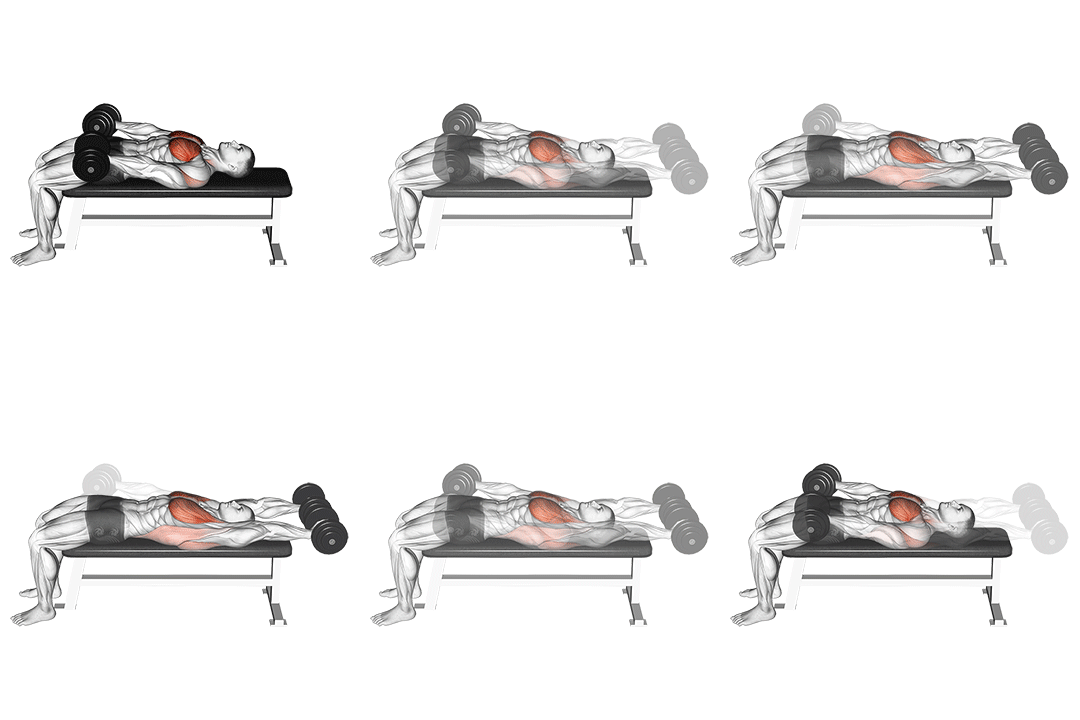
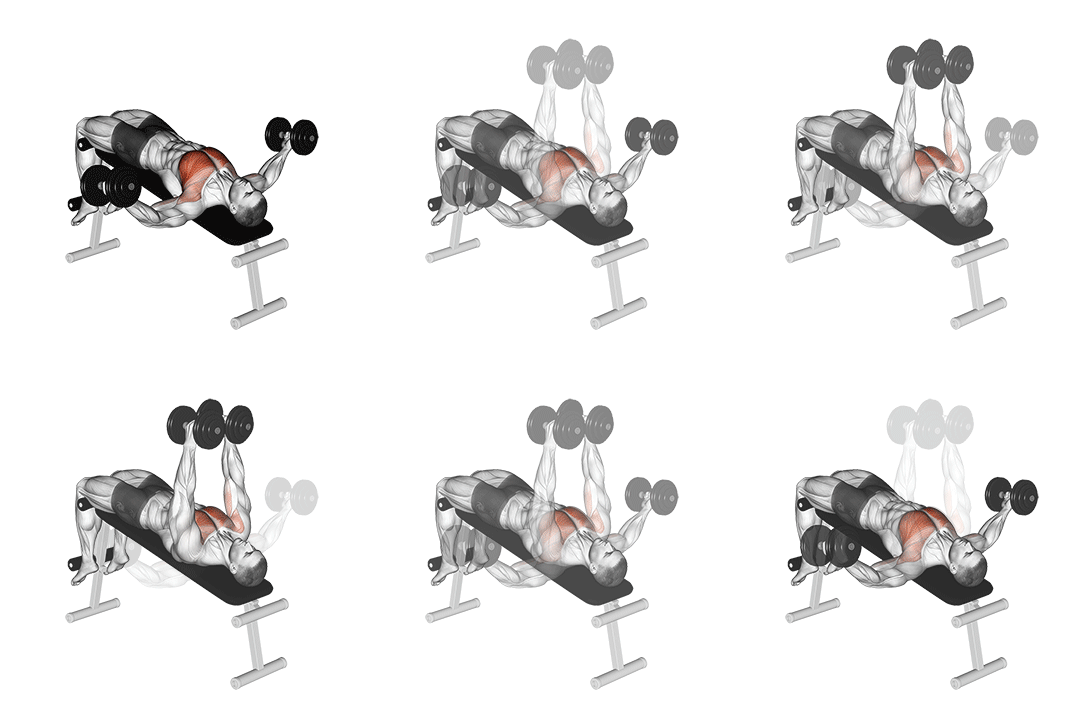
Dumbbell Around Pullover
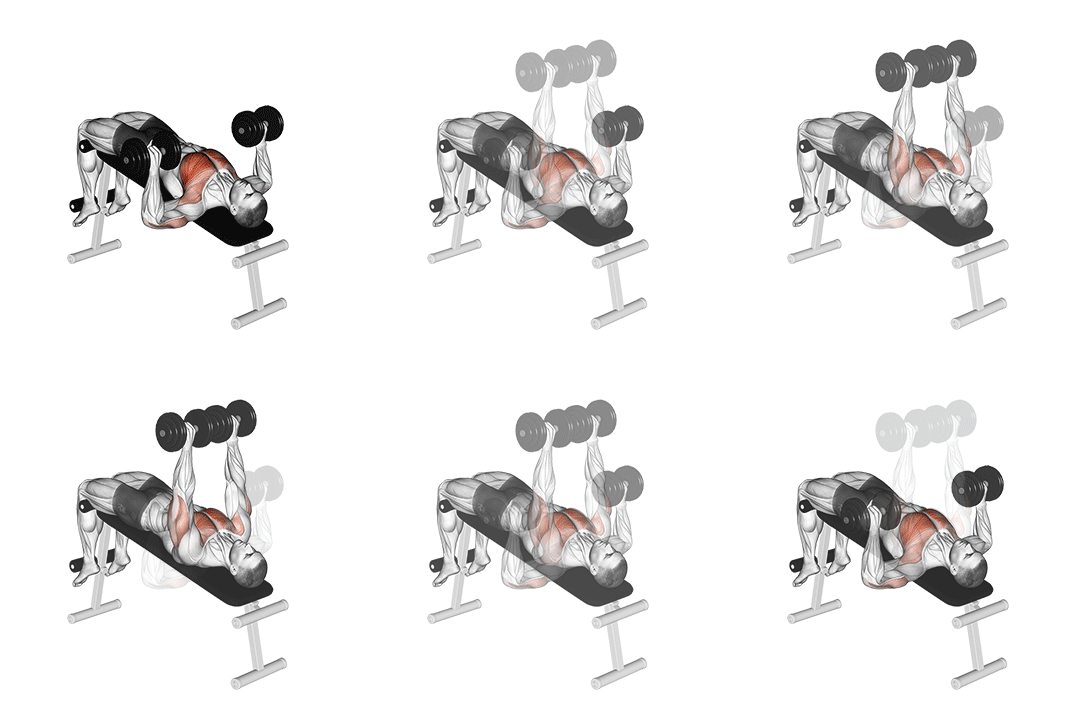
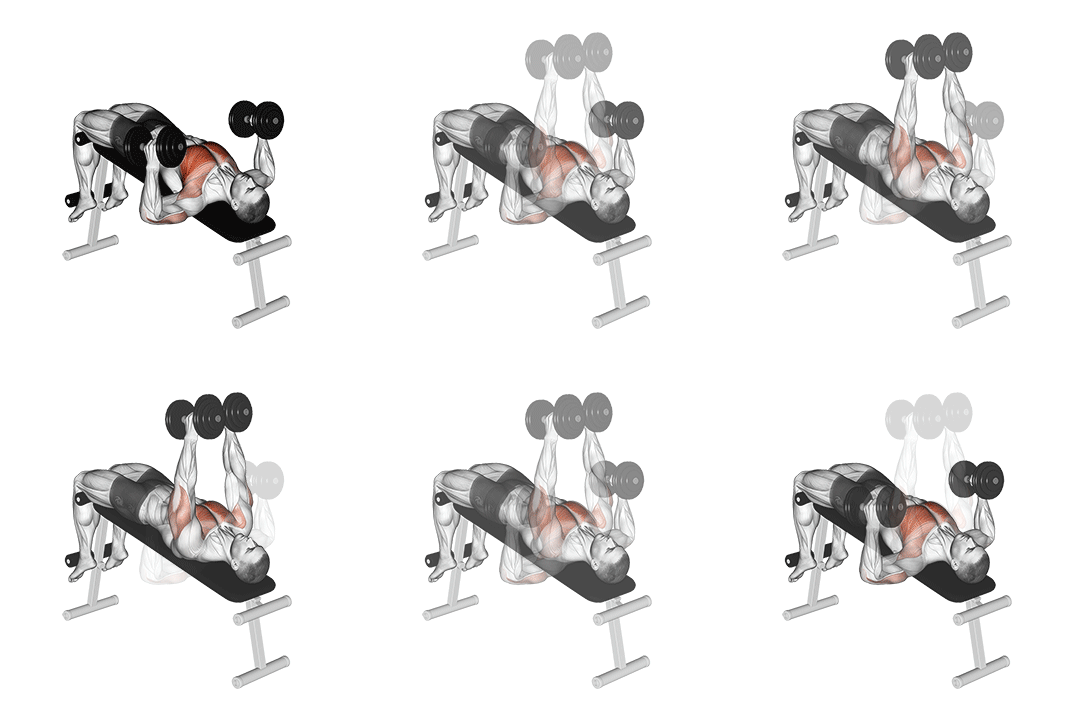
Dumbbell Decline Bench Press
Head-to-Head Comparison
| Attribute | Dumbbell Around Pullover | Dumbbell Decline Bench Press |
|---|---|---|
| Target Muscle |
Pectorals
|
Pectorals
|
| Body Part |
Chest
|
Chest
|
| Equipment |
Dumbbell
|
Dumbbell
|
| Difficulty |
Intermediate
|
Intermediate
|
| Movement Type |
Compound
|
Compound
|
| Secondary Muscles |
2
|
2
|
Secondary Muscles Activated
Dumbbell Around Pullover
Dumbbell Decline Bench Press
Visual Comparison
Overview
Dumbbell Around Pullover vs Dumbbell Decline Bench Press — two compound chest movements that look similar on paper but load your pectorals differently. If you want clear guidance on which to use for muscle growth, strength, or home workouts, you’re in the right place. I’ll compare primary and secondary muscle activation, equipment needs, technical cues, injury risk, and practical progression strategies. By the end you’ll know which exercise to pick for 6–12 rep hypertrophy blocks, and when to swap one for the other based on biomechanics and movement pattern.
Key Differences
- Both exercises target the Pectorals using Dumbbell. The main differences are in their movement patterns and muscle activation angles.
Pros & Cons
Dumbbell Around Pullover
+ Pros
- Loads the chest under long-length tension, promoting stretch-mediated muscle growth
- Requires only one dumbbell and a flat bench — highly accessible
- Engages lats and scapular stabilizers for functional upper-body integration
- Great for adding variety and improving chest extension ROM
− Cons
- Harder to progress with heavy loads due to long lever arm
- Higher shoulder stress if scapular control and thoracic extension are poor
- Less direct overload on triceps and anterior deltoids compared to pressing
Dumbbell Decline Bench Press
+ Pros
- Delivers high mechanical tension on lower pecs for strength and hypertrophy
- Clear, linear progression path with heavier dumbbells or barbells
- Stable body position reduces scapular drift and simplifies technique
- Strong transfer to pressing strength and upper-body power
− Cons
- Requires a decline bench or adjustable setup
- Can increase anterior shoulder and pec strain under maximal loads
- Less lat involvement and chest stretch compared to pullovers
When Each Exercise Wins
Decline bench allows higher mechanical tension and heavier loads in the 6–12 rep range, which is optimal for hypertrophy. Its stable pressing path targets the lower pecs directly and lets you progressively add weight for clear overload.
The decline press supports heavier absolute loads and a consistent force vector, enabling low-rep strength work (3–6 reps). That direct loading pattern produces greater neural adaptation for pressing strength compared with the long-lever pullover.
Beginners learn a stable horizontal push pattern more easily and can safely scale load on a decline bench. The pullover’s long lever and need for scapular control raise technical demands for a novice lifter.
Pullover needs only a single dumbbell and a flat surface, making it ideal for limited setups. It also trains chest and lats together, offering efficient stimulus when equipment is scarce.
Frequently Asked Questions
Can I do both Dumbbell Around Pullover and Dumbbell Decline Bench Press in the same workout?
Yes. Use the decline press as your main compound (heavy 4–6 sets, 4–8 reps) and add 2–3 sets of pullovers as accessory work (8–15 reps) to increase time under tension and lat involvement without compromising recovery.
Which exercise is better for beginners?
Dumbbell Decline Bench Press is generally better for beginners because the pressing pattern is simpler and stable. Start with light loads and 6–12 reps while you solidify scapular and wrist position before adding complex pullover movements.
How do the muscle activation patterns differ?
Decline bench emphasizes concentric-driven pec activation near lockout because of the horizontal push vector, while pullover stresses the pecs and lats under long eccentric stretch at end-range shoulder extension. The pullover shifts more work to lats and scapular stabilizers; the decline bench loads triceps and anterior deltoids more.
Can Dumbbell Decline Bench Press replace Dumbbell Around Pullover?
For pure pressing strength and lower-pec development, decline bench can replace pullover. However, if you want stretch-mediated hypertrophy, improved shoulder extension ROM, or lat integration, keep pullovers in your accessory rotation rather than fully replacing them.
Expert Verdict
Use the Dumbbell Decline Bench Press when your goal is direct chest hypertrophy or pressing strength. Its decline angle (15–30°) and stable pressing path let you lift heavier, progress load systematically, and overload the lower pectoralis effectively in 4–8 sets of 6–12 reps. Choose the Dumbbell Around Pullover when you want extra chest stretch, lat involvement, or a home-friendly option — use controlled 8–15 rep sets with emphasis on slow eccentrics and scapular stabilization. If you can, rotate both into blocks: prioritize decline bench for heavy training phases and add pullovers as accessory work to improve ROM and stretch-mediated muscle growth.
Also Compare
More comparisons with Dumbbell Around Pullover
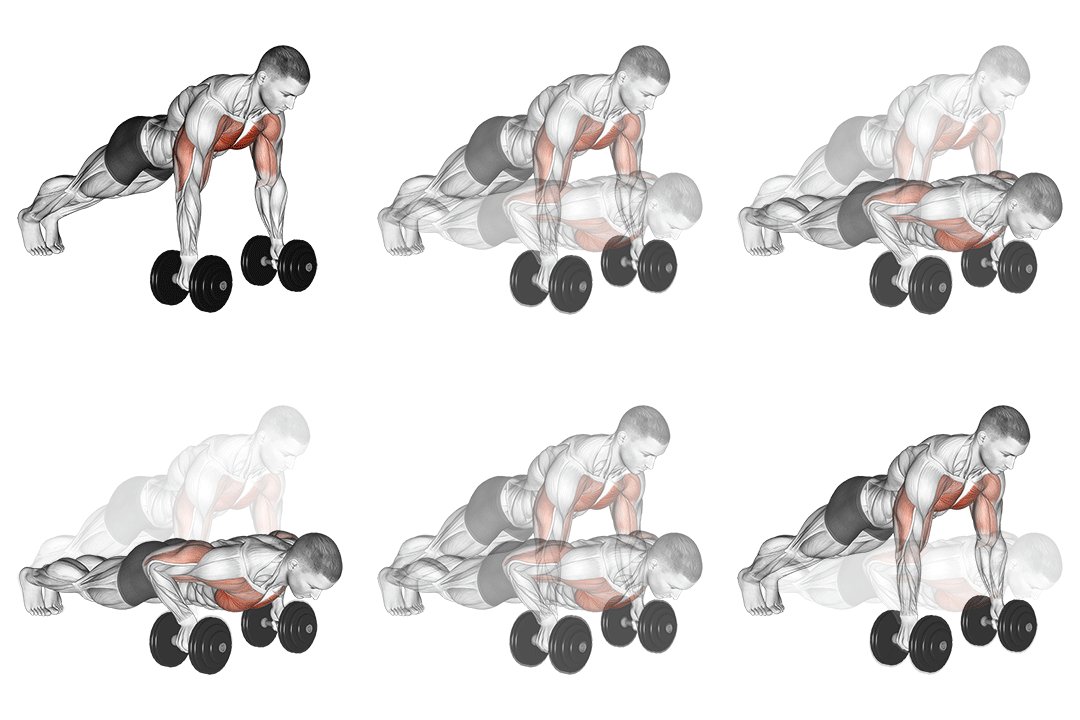
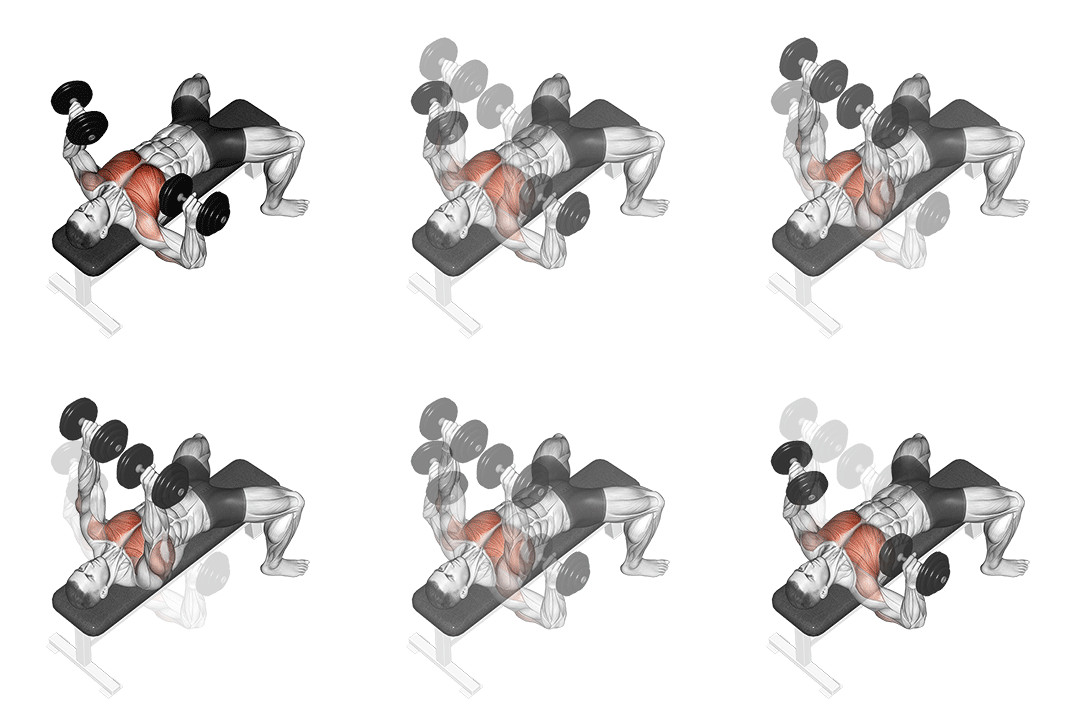
More comparisons with Dumbbell Decline Bench Press
Compare More Exercises
Use our free comparison tool to analyze any two exercises head-to-head.
Compare Exercises