

Dumbbell Bench Press vs Dumbbell Decline Bench Press: Complete Comparison Guide
Dumbbell Bench Press vs Dumbbell Decline Bench Press — you’ve probably tried one or wondered which to prioritize. This guide walks you through the biomechanics, muscle activation, equipment needs, difficulty, and clear scenarios to pick the right move. You’ll get technique cues (scapular set, elbow path, controlled eccentrics), rep ranges for hypertrophy and strength (6–12 and 3–6), and concrete reasons to use each press. Read on and you’ll know when the flat dumbbell press is the better default and when the decline version earns a spot in your program.
Exercise Comparison
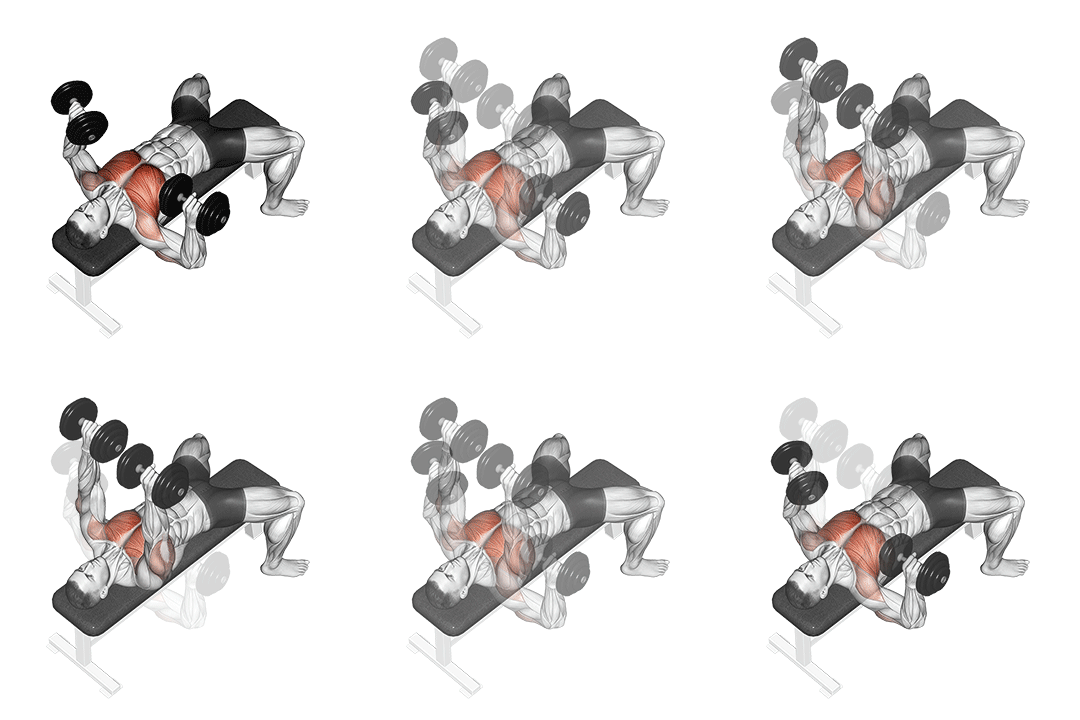
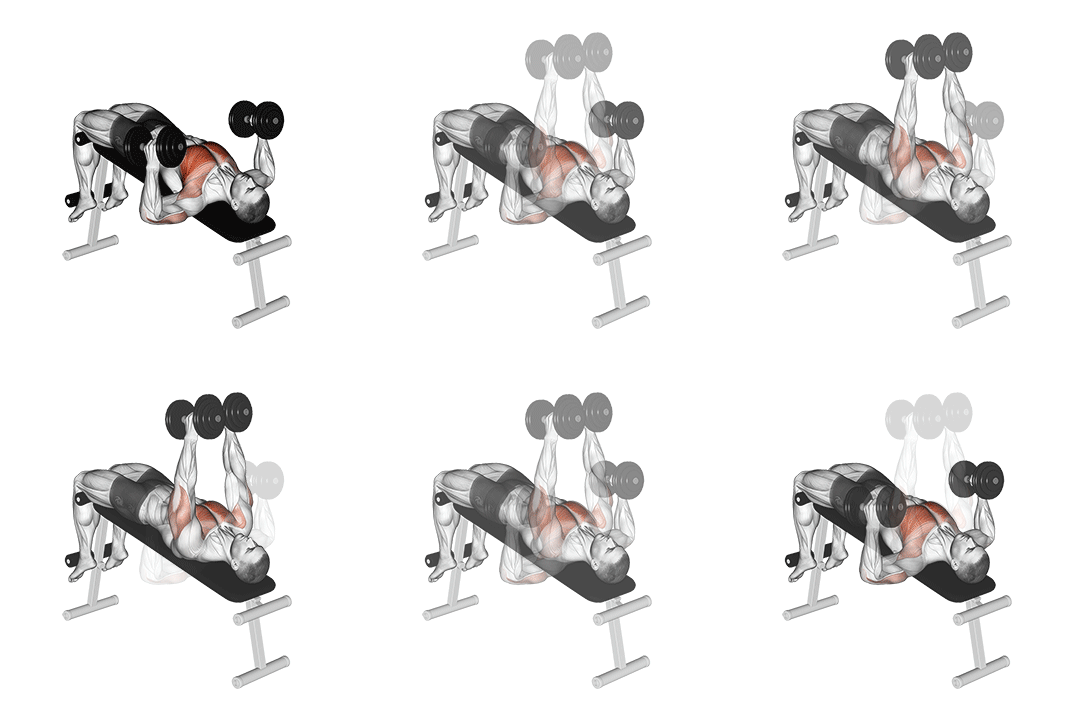
Dumbbell Bench Press
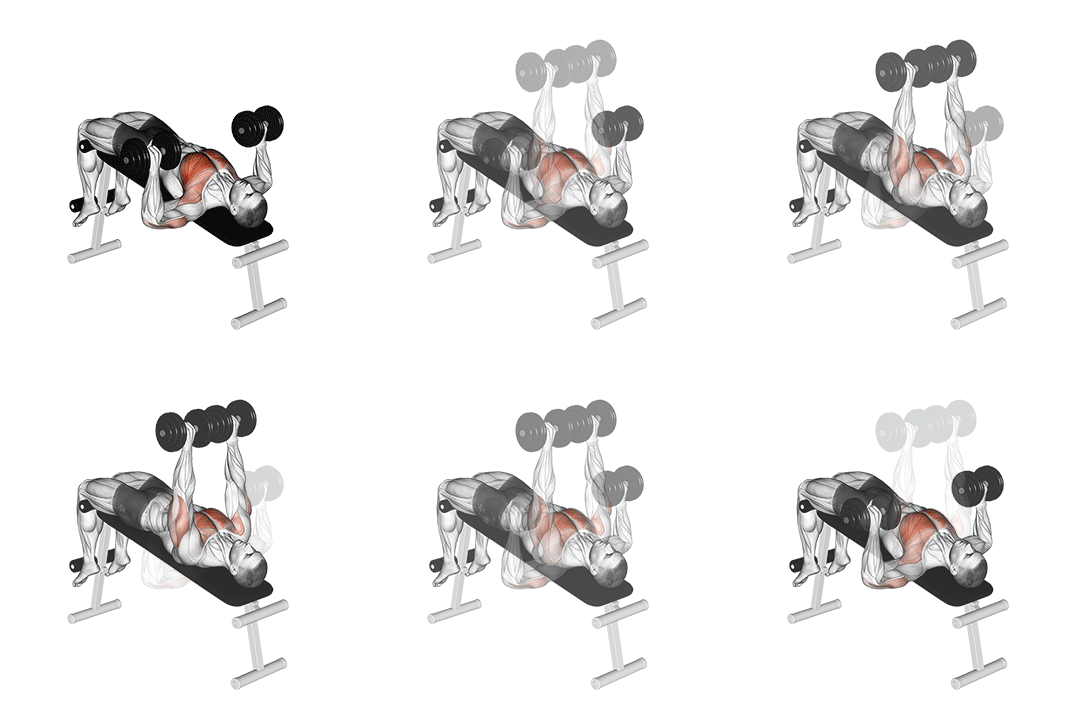
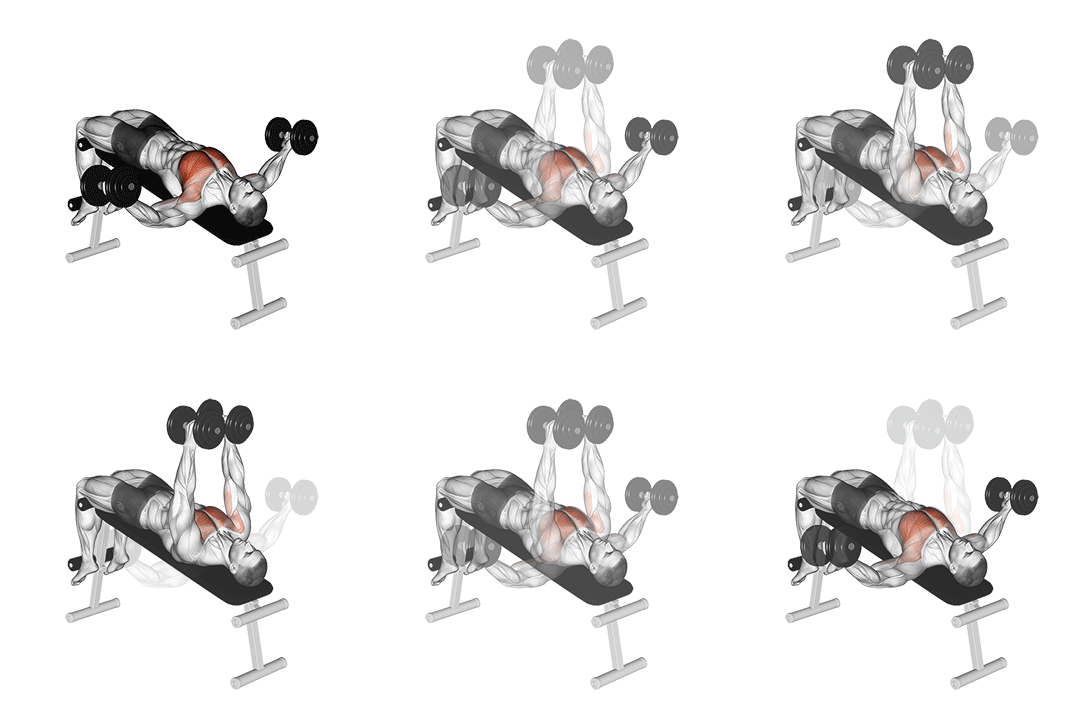
Dumbbell Decline Bench Press
Head-to-Head Comparison
| Attribute | Dumbbell Bench Press | Dumbbell Decline Bench Press |
|---|---|---|
| Target Muscle |
Pectorals
|
Pectorals
|
| Body Part |
Chest
|
Chest
|
| Equipment |
Dumbbell
|
Dumbbell
|
| Difficulty |
Intermediate
|
Intermediate
|
| Movement Type |
Compound
|
Compound
|
| Secondary Muscles |
2
|
2
|
Secondary Muscles Activated
Dumbbell Bench Press
Dumbbell Decline Bench Press
Visual Comparison
Overview
Dumbbell Bench Press vs Dumbbell Decline Bench Press — you’ve probably tried one or wondered which to prioritize. This guide walks you through the biomechanics, muscle activation, equipment needs, difficulty, and clear scenarios to pick the right move. You’ll get technique cues (scapular set, elbow path, controlled eccentrics), rep ranges for hypertrophy and strength (6–12 and 3–6), and concrete reasons to use each press. Read on and you’ll know when the flat dumbbell press is the better default and when the decline version earns a spot in your program.
Key Differences
- Both exercises target the Pectorals using Dumbbell. The main differences are in their movement patterns and muscle activation angles.
Pros & Cons
Dumbbell Bench Press
+ Pros
- Even chest development across upper and lower fibers due to neutral force vector
- Easier setup and loading — more accessible in most gyms and homes
- Better transfer to barbell pressing and strength progression
- Allows a full eccentric stretch for muscle growth when controlled (6–12 reps)
− Cons
- Can place more stress on the anterior shoulder if elbows flare
- May under-emphasize lower-pec fibers compared to decline
- Requires spotter or careful technique at very heavy loads to avoid instability
Dumbbell Decline Bench Press
+ Pros
- Greater emphasis on lower sternal pec fibers due to downward torso angle
- Can reduce shoulder impingement for some lifters by changing humeral path
- Shorter top-range travel can allow slightly heavier relative loads for some lifters
- Provides variation to overcome plateaus and target different fibers
− Cons
- Requires a decline bench and secure foot support — less accessible
- More coordination needed to safely get dumbbells in position
- Can increase lumbar strain without strong pelvic bracing and core tension
When Each Exercise Wins
Choose the flat dumbbell press for overall chest hypertrophy because it offers a longer eccentric stretch and more symmetric loading across pec fibers. Use 6–12 reps with a 2–3 second eccentric to exploit length-tension and time under tension; rotate decline presses to emphasize lower chest occasionally.
The flat press transfers better to barbell strength work and allows steadier progressive overload with heavier absolute loads. Use lower rep ranges (3–6) and compound loading patterns; the flat setup also makes heavy singles and triples safer to train.
Beginners learn horizontal pressing mechanics and scapular control more easily on a flat bench, with simpler setup and less coordination demand. Start with lighter weights, focus on scapular retraction, neutral wrists, and an elbow path around 30–45° from the torso.
Most home setups include a flat bench or even bodyweight alternatives, while a safe decline bench is uncommon. The flat press is easier to perform with limited equipment and still offers solid hypertrophy and strength potential.
Frequently Asked Questions
Can I do both Dumbbell Bench Press and Dumbbell Decline Bench Press in the same workout?
Yes — pairing them works well as long as you manage fatigue. Use the flat press as your main heavy movement (3–6 or 6–12 reps) and add 2–3 sets of decline later for 6–10 reps to target lower-pec fibers without overreaching.
Which exercise is better for beginners?
Dumbbell Bench Press is better for beginners because the flat setup is simpler to learn and safer to rack. Focus first on scapular retraction, controlled eccentrics, and an elbow angle near 30–45° before introducing decline variations.
How do the muscle activation patterns differ?
Activation timing shifts: the flat press produces a larger eccentric stretch and even mid-pec activation, while the decline shortens the top range and biases lower sternal fibers. In both, triceps and anterior deltoids assist, but the decline often reduces deltoid shear and increases triceps contribution during the lockout.
Can Dumbbell Decline Bench Press replace Dumbbell Bench Press?
Not entirely — decline can replace flat work if you need lower-pec emphasis or shoulder relief, but it won’t provide the same balanced mid-to-upper pec stimulus or the same transfer to barbell strength. Use decline as a specific accessory or periodic swap rather than a permanent replacement.
Expert Verdict
Use the Dumbbell Bench Press as your default horizontal press: it’s more accessible, easier to progress, and provides an even stimulus across the pecs while allowing a full eccentric stretch for hypertrophy. Program it 2–3 times weekly with 6–12 rep sets for size and 3–6 rep sets for strength blocks. Add the Dumbbell Decline Bench Press as a targeted variation when you want to emphasize the lower sternal fibers, reduce anterior shoulder strain, or create a novel loading angle—use a 15–30° decline and 6–10 reps. Prioritize technique: set the scapula, keep wrists neutral, and maintain an elbow path around 30–45° to protect the shoulder and maximize muscle tension.
Also Compare
More comparisons with Dumbbell Bench Press
More comparisons with Dumbbell Decline Bench Press
Compare More Exercises
Use our free comparison tool to analyze any two exercises head-to-head.
Compare Exercises