

Dumbbell Bench Press vs Dumbbell Decline Fly: Complete Comparison Guide
Dumbbell Bench Press vs Dumbbell Decline Fly — if you want fuller chest development you should choose exercises that match your goals and skill level. In this guide you get a direct comparison of how each move stresses the pectorals, what secondary muscles pick up the load, core and setup requirements, and clear technique cues to use in the gym. I will cover biomechanics like force vectors and length tension, practical rep ranges and progression strategies, and when to use each exercise in a chest training session.
Exercise Comparison
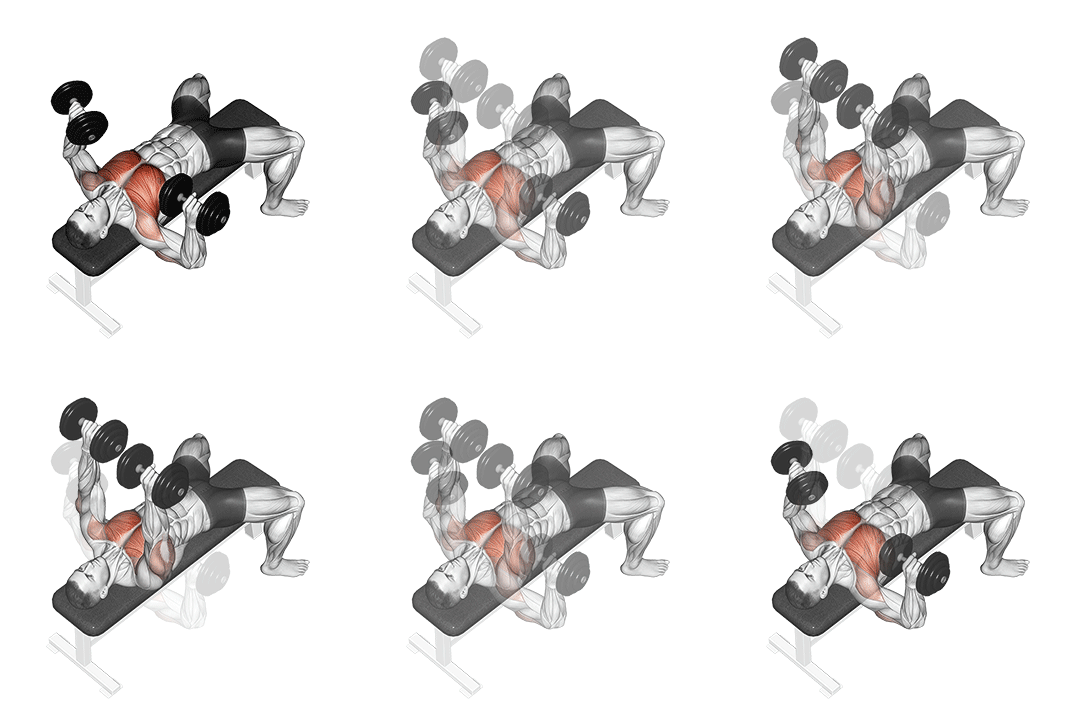
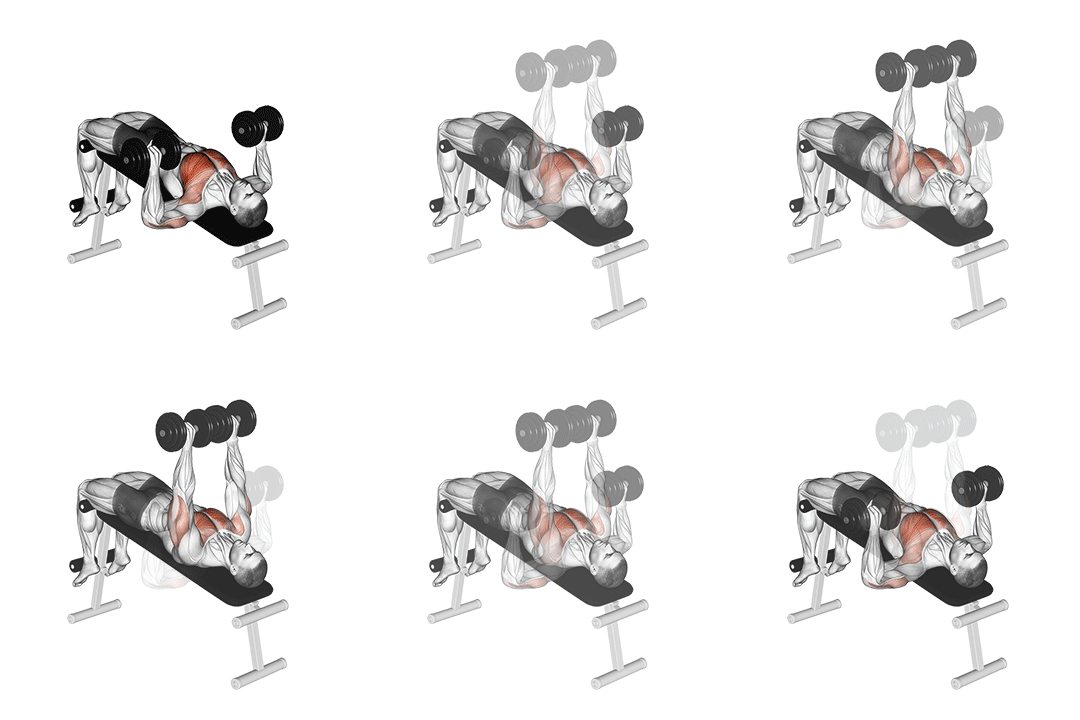
Dumbbell Bench Press
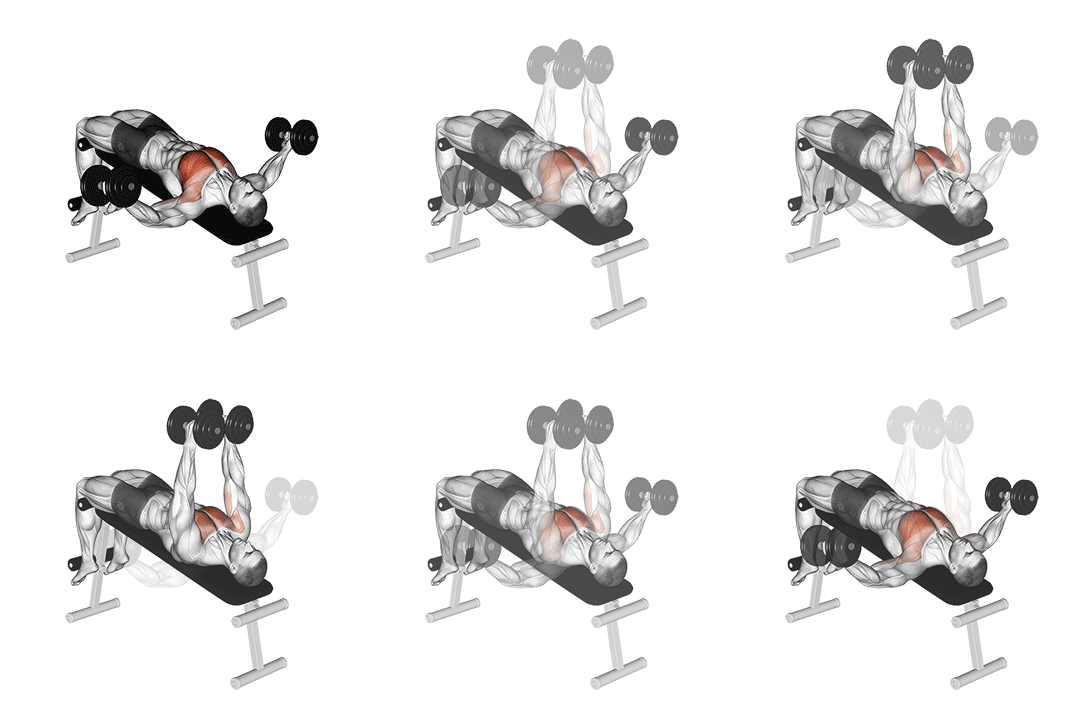
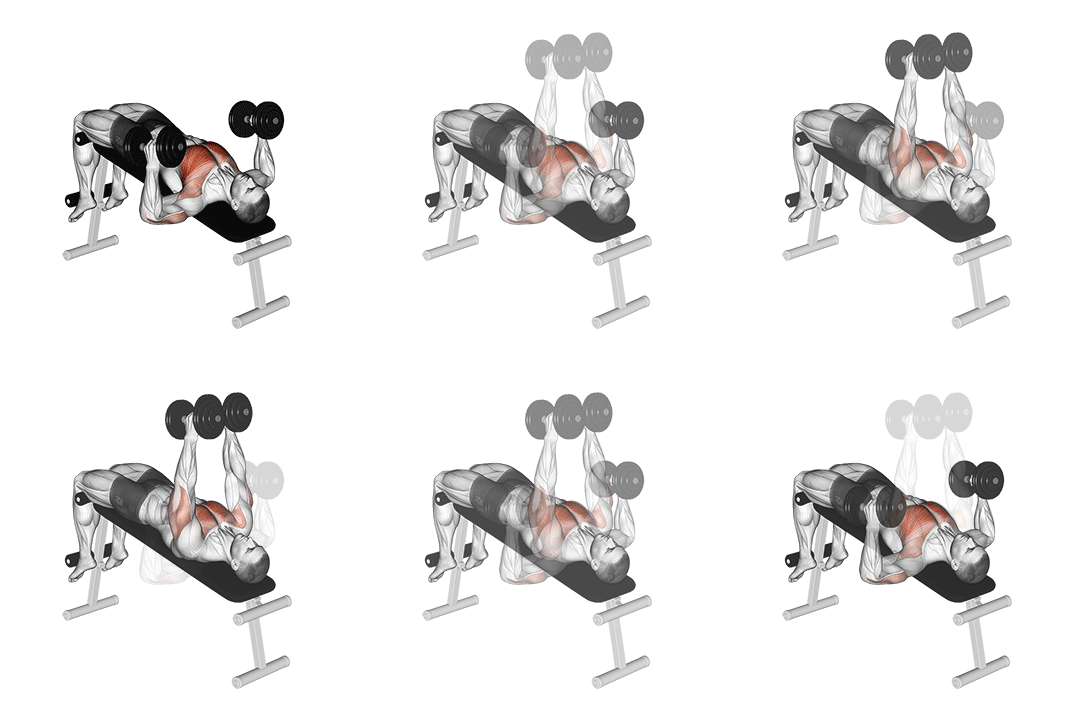
Dumbbell Decline Fly
Head-to-Head Comparison
| Attribute | Dumbbell Bench Press | Dumbbell Decline Fly |
|---|---|---|
| Target Muscle |
Pectorals
|
Pectorals
|
| Body Part |
Chest
|
Chest
|
| Equipment |
Dumbbell
|
Dumbbell
|
| Difficulty |
Intermediate
|
Beginner
|
| Movement Type |
Compound
|
Isolation
|
| Secondary Muscles |
2
|
1
|
Secondary Muscles Activated
Dumbbell Bench Press
Dumbbell Decline Fly
Visual Comparison
Overview
Dumbbell Bench Press vs Dumbbell Decline Fly — if you want fuller chest development you should choose exercises that match your goals and skill level. In this guide you get a direct comparison of how each move stresses the pectorals, what secondary muscles pick up the load, core and setup requirements, and clear technique cues to use in the gym. I will cover biomechanics like force vectors and length tension, practical rep ranges and progression strategies, and when to use each exercise in a chest training session.
Key Differences
- Dumbbell Bench Press is a compound movement, while Dumbbell Decline Fly is an isolation exercise.
- Difficulty levels differ: Dumbbell Bench Press is intermediate, while Dumbbell Decline Fly is beginner.
- Both exercises target the Pectorals using Dumbbell. The main differences are in their movement patterns and muscle activation angles.
Pros & Cons
Dumbbell Bench Press
+ Pros
- Builds overall chest strength and allows heavy loading
- Also trains triceps and anterior deltoid, producing compound adaptation
- Easier to progressively overload with higher absolute loads
- Requires only a flat bench and dumbbells, widely accessible
− Cons
- Higher systemic fatigue and CNS demand with heavy sets
- Requires coordinated setup and bracing technique
- Can stress shoulders if elbows flare or scapulae are unstable
Dumbbell Decline Fly
+ Pros
- Isolates the pectorals and increases time under tension
- Lower triceps demand lets you target chest more directly
- Simple movement pattern suitable for pump and detail work
- Gentler on elbow joint since elbow extension torque is minimal
− Cons
- Less effective for building maximal pressing strength
- Decline bench required, which is less common at home
- Higher shoulder strain risk if overloaded or performed with poor control
When Each Exercise Wins
Bench press offers heavier loading and a larger overall stimulus across the chest, triceps, and shoulders. Use 6 to 12 reps with 2 to 3 sets of progressive overload and add flyes for extra time under tension.
As a compound press the bench allows higher absolute loads and neural adaptation in the 3 to 6 rep range. Its multi-joint pattern better transfers to pushing strength than an isolation fly.
Beginners can use light weights to learn chest contraction and scapular stability without coordinating leg drive and heavy loading. Keep reps in the 8 to 12 range and focus on clean arcs and shoulder control.
Most home setups include a flat bench and dumbbells, while decline benches are rare. Bench presses give more bang for your time when equipment is limited.
Frequently Asked Questions
Can I do both Dumbbell Bench Press and Dumbbell Decline Fly in the same workout?
Yes. Start with compound bench press sets while fresh to load heavy, then follow with decline flies as an accessory for 2 to 4 sets of 8 to 15 reps to increase time under tension and target the sternal pecs.
Which exercise is better for beginners?
For raw beginners the decline fly is easier to learn for isolating the chest with light weights, but novices should still learn the bench press early to build pressing strength. Prioritize technique and shoulder stability in both.
How do the muscle activation patterns differ?
Bench press produces higher peak force via combined elbow extension and horizontal push, recruiting triceps and anterior deltoid more. Decline fly maintains continuous pec tension through a wider ROM and emphasizes horizontal adduction with less elbow torque, shifting load to the chest fibers and rotator cuff stabilizers.
Can Dumbbell Decline Fly replace Dumbbell Bench Press?
Not if your goal is maximal pressing strength or heavy hypertrophy across upper body pushing musculature. Flies can replace bench press for isolation or when equipment limits loading, but they should complement rather than fully replace compound presses in most programs.
Expert Verdict
Use the dumbbell bench press as your primary chest mover when you want strength and substantial muscle growth. Its compound nature recruits triceps and shoulders, allows progressive overload with clear rep schemes (3 to 6 for strength, 6 to 12 for hypertrophy), and fits most training programs. Use the dumbbell decline fly as an accessory to emphasize sternal pec fibers, increase time under tension, and add chest shape work; keep decline angle modest at 15 to 30 degrees and use lighter weights with controlled eccentrics. If you only pick one, choose the bench press for overall development; add decline flies for targeted isolation and variety.
Also Compare
More comparisons with Dumbbell Bench Press
More comparisons with Dumbbell Decline Fly
Compare More Exercises
Use our free comparison tool to analyze any two exercises head-to-head.
Compare Exercises