

Dumbbell Bench Press vs Dumbbell Decline One Arm Fly: Complete Comparison Guide
Dumbbell Bench Press vs Dumbbell Decline One Arm Fly — which should you pick for chest development? You’ll get a clear read on how each exercise loads the pectorals, which secondary muscles assist, exact technique cues, and when to program each movement. I’ll cover biomechanics (force vectors and length‑tension), typical rep ranges (6–12 for strength/hypertrophy, 8–15 for isolation work), equipment needs, injury considerations, and practical progressions so you can choose the right move for your goals.
Exercise Comparison
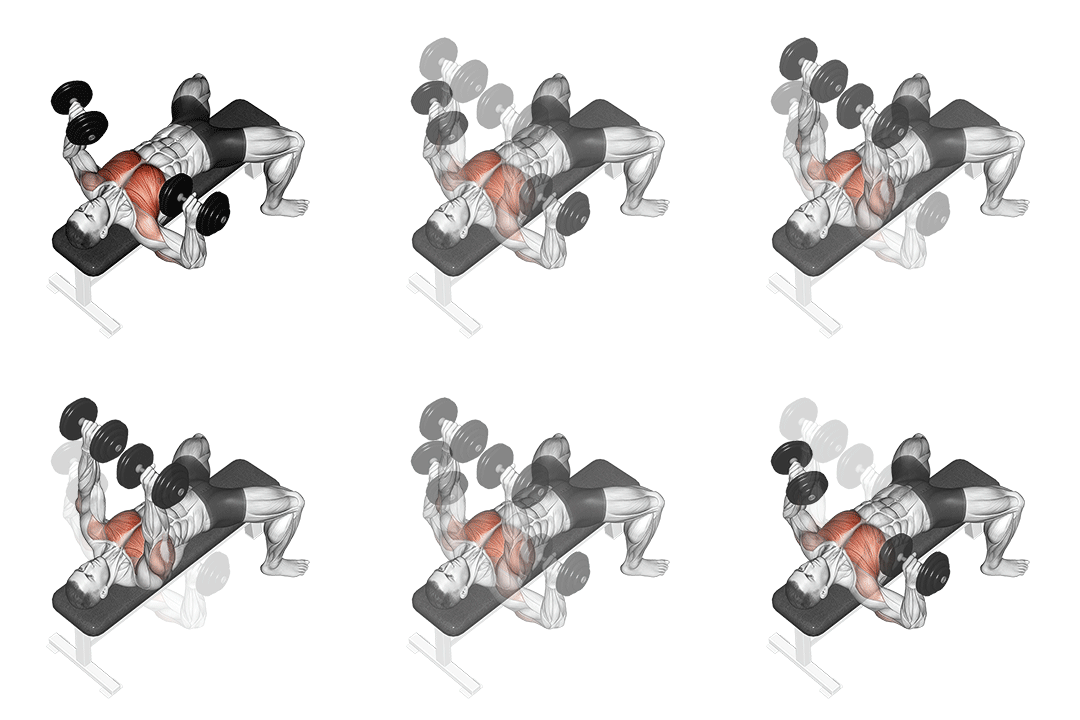
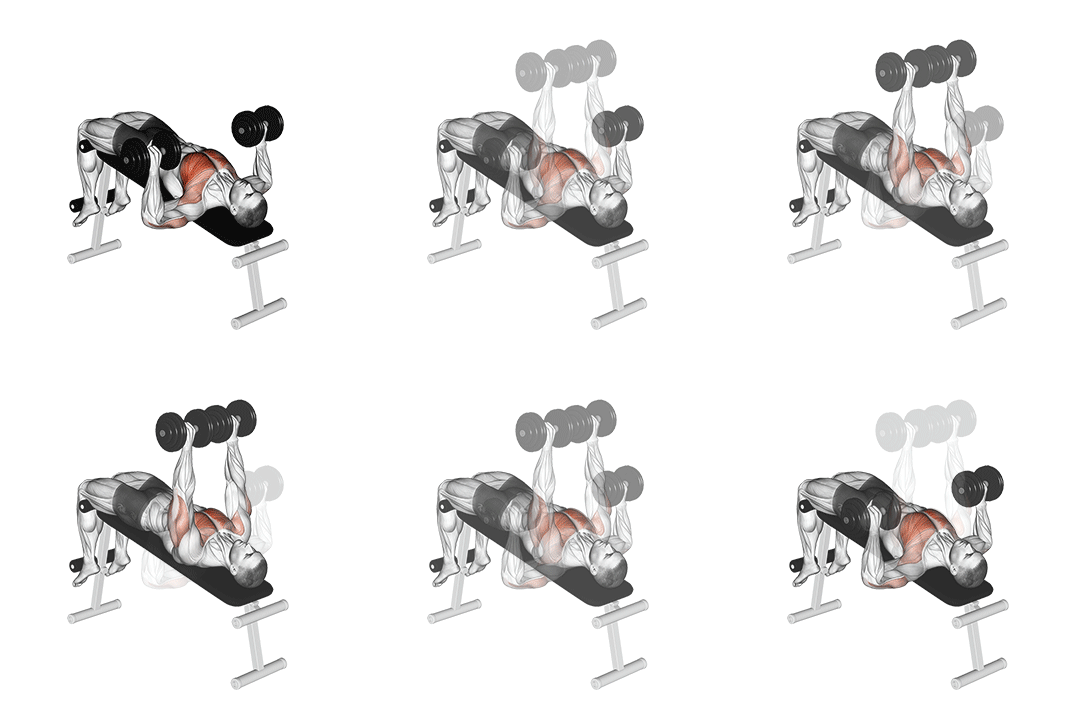
Dumbbell Bench Press
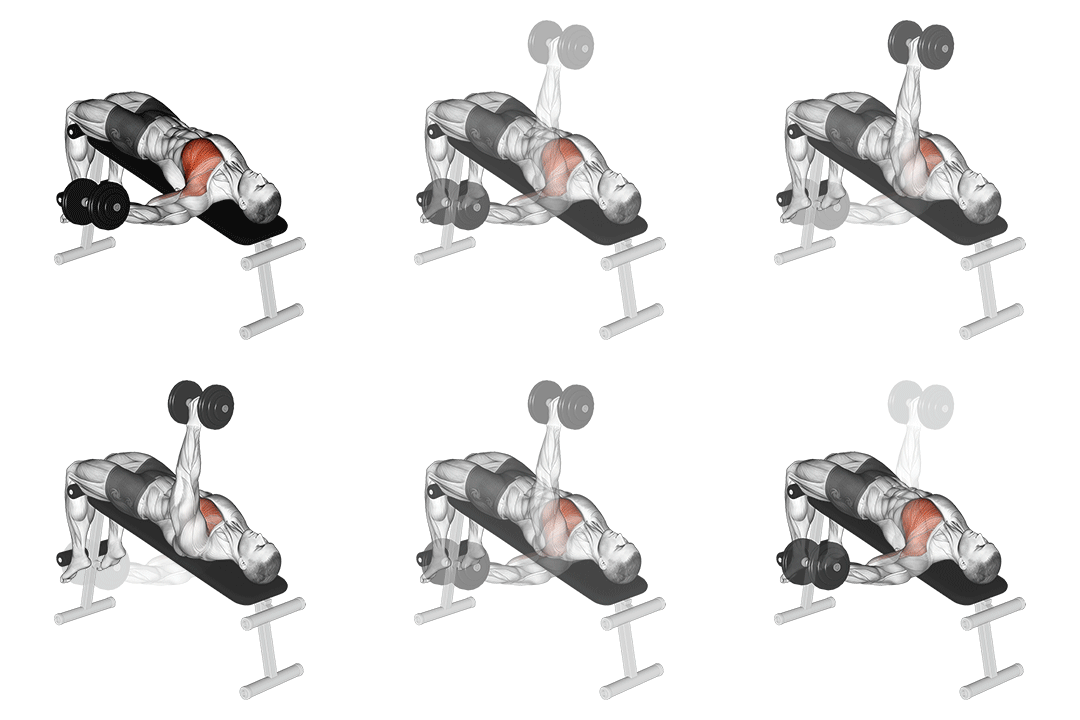
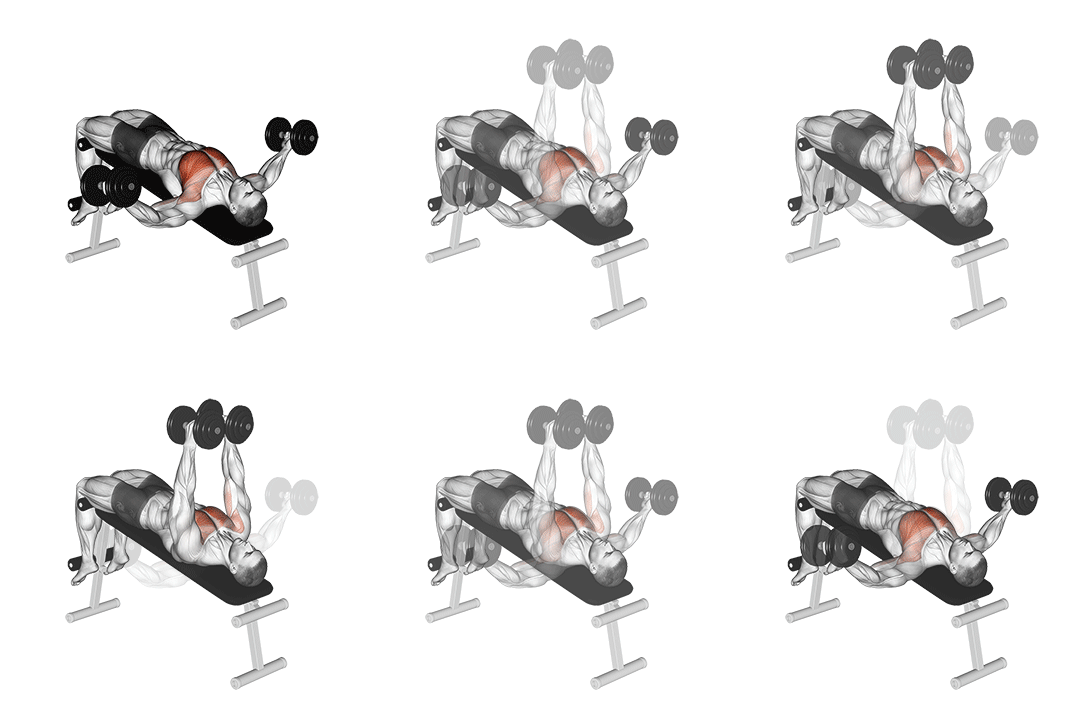
Dumbbell Decline One Arm Fly
Head-to-Head Comparison
| Attribute | Dumbbell Bench Press | Dumbbell Decline One Arm Fly |
|---|---|---|
| Target Muscle |
Pectorals
|
Pectorals
|
| Body Part |
Chest
|
Chest
|
| Equipment |
Dumbbell
|
Dumbbell
|
| Difficulty |
Intermediate
|
Advanced
|
| Movement Type |
Compound
|
Isolation
|
| Secondary Muscles |
2
|
1
|
Secondary Muscles Activated
Dumbbell Bench Press
Dumbbell Decline One Arm Fly
Visual Comparison
Overview
Dumbbell Bench Press vs Dumbbell Decline One Arm Fly — which should you pick for chest development? You’ll get a clear read on how each exercise loads the pectorals, which secondary muscles assist, exact technique cues, and when to program each movement. I’ll cover biomechanics (force vectors and length‑tension), typical rep ranges (6–12 for strength/hypertrophy, 8–15 for isolation work), equipment needs, injury considerations, and practical progressions so you can choose the right move for your goals.
Key Differences
- Dumbbell Bench Press is a compound movement, while Dumbbell Decline One Arm Fly is an isolation exercise.
- Difficulty levels differ: Dumbbell Bench Press is intermediate, while Dumbbell Decline One Arm Fly is advanced.
- Both exercises target the Pectorals using Dumbbell. The main differences are in their movement patterns and muscle activation angles.
Pros & Cons
Dumbbell Bench Press
+ Pros
- Allows heavier loading for overall chest and strength development (6–12 reps)
- Engages triceps and anterior deltoids for compound strength transfer
- Wide progression options: load, tempo, paused reps, incline/decline variations
- Easier to scale for beginners and to modify (floor press, single-arm)
− Cons
- Less isolated lower-pec development compared with decline fly variations
- Can mask unilateral imbalances if you always use two arms
- Requires careful shoulder/elbow positioning to avoid impingement
Dumbbell Decline One Arm Fly
+ Pros
- Stronger lower-pec bias thanks to the decline angle (15–30°)
- Highly effective at creating stretch-mediated tension on the pecs
- Unilateral format improves balance and corrects side-to-side differences
- Minimal triceps contribution lets you isolate the pectorals
− Cons
- Requires a decline bench and advanced shoulder mobility
- Higher risk of pec or rotator cuff strain if overloaded or performed fast
- Limited ability to progress with heavy absolute loads due to stability limits
When Each Exercise Wins
The bench press lets you use heavier loads and combine multi-joint tension with time under tension (6–12 reps). That higher absolute load plus the involvement of triceps and delts drives greater overall chest cross-sectional growth compared with a single-joint fly.
Strength is best developed with compound, high-load lifts. Pressing allows progressive overload (heavier dumbbells, lower reps 3–6) and trains the elbow and shoulder extension patterns needed for pressing strength.
Beginners learn pressing mechanics and can scale load safely using light dumbbells or floor presses. It builds pressing strength and coordination before adding complex unilateral or decline isolation work.
Bench press variations (flat or floor press) are more adaptable to limited equipment. A single pair of adjustable dumbbells covers pressing work; decline one-arm flies usually require a decline bench and more space.
Frequently Asked Questions
Can I do both Dumbbell Bench Press and Dumbbell Decline One Arm Fly in the same workout?
Yes. Pair the press as your primary compound move and follow with 2–4 sets of decline one-arm flies as an isolation finisher. Put the flies after pressing when you want extra stretch/tension on the pecs without compromising your heavy pressing sets.
Which exercise is better for beginners?
Dumbbell Bench Press is better for beginners because it teaches basic pressing mechanics and allows safer progressive overload. Start with light loads and focus on scapular positioning and elbow tracking before adding advanced unilateral or decline fly variations.
How do the muscle activation patterns differ?
The bench press combines elbow extension and horizontal adduction, recruiting triceps and anterior delts along with the pecs; peak chest force is often mid-range. The decline one-arm fly isolates horizontal adduction on a decline plane, increasing pec stretch and end‑range tension while reducing triceps involvement.
Can Dumbbell Decline One Arm Fly replace Dumbbell Bench Press?
Not as a full replacement. Decline one-arm fly is an advanced isolation tool that targets lower-pec fibers and adds stretch stimulus, but it can’t match the bench press for heavy loading, strength transfer, or overall chest mass development. Use flies to complement presses, not replace them.
Expert Verdict
Use the Dumbbell Bench Press as your foundation for chest development and strength: it allows heavier loading, better progression options, and trains pressing mechanics that transfer across lifts. Program it in 3–5 sets of 4–12 reps depending on strength or hypertrophy focus, cueing a slight scapular retraction and tracking dumbbells over the mid-chest. Reserve the Dumbbell Decline One Arm Fly for advanced lifters who need lower-pec isolation, unilateral balance work, or a controlled stretch stimulus—use 3–4 sets of 8–15 reps at a 15–30° decline with a soft elbow bend and slow eccentrics. Prioritize technique and shoulder health when you add flies.
Also Compare
More comparisons with Dumbbell Bench Press
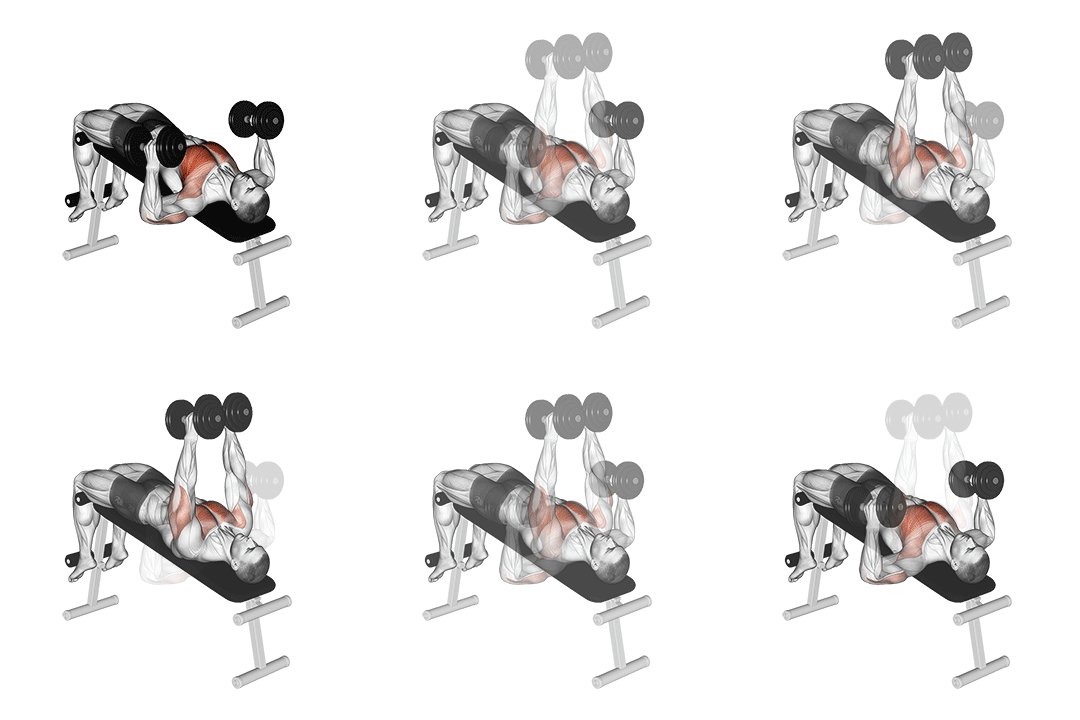
More comparisons with Dumbbell Decline One Arm Fly
Compare More Exercises
Use our free comparison tool to analyze any two exercises head-to-head.
Compare Exercises