

Dumbbell Bench Seated Press vs Dumbbell Cuban Press: Complete Comparison Guide
Dumbbell Bench Seated Press vs Dumbbell Cuban Press — two dumbbell-based shoulder compounds that look similar but load your delts and shoulder mechanics very differently. If you want clearer choices for hypertrophy, strength, shoulder health, or home workouts, this guide breaks it down. You’ll get step-by-step technique cues, a muscle recruitment comparison, equipment needs, how hard each is to learn, risks, and situations where one clearly beats the other. By the end you’ll know which to program for your goals and how to perform each safely.
Exercise Comparison
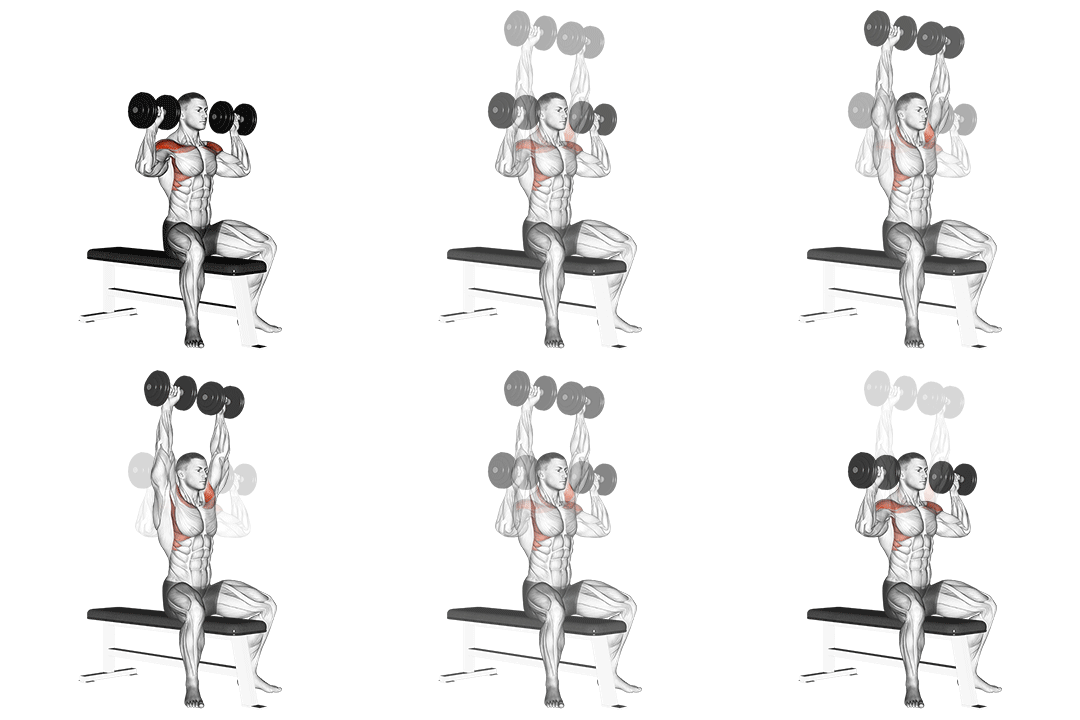
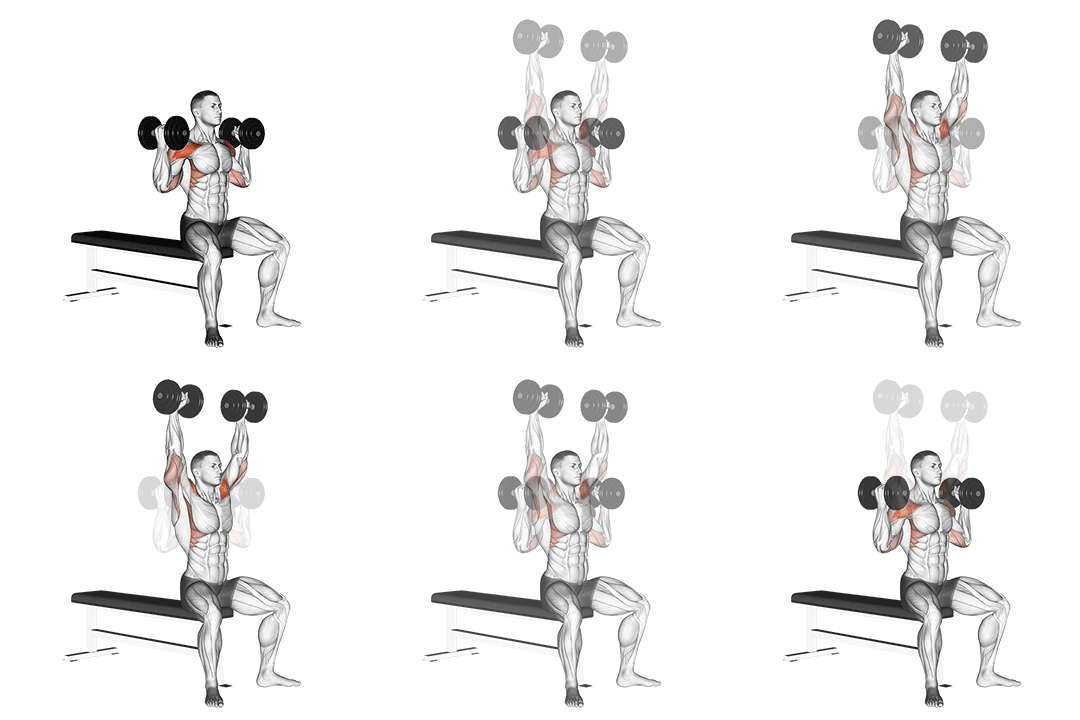
Dumbbell Bench Seated Press
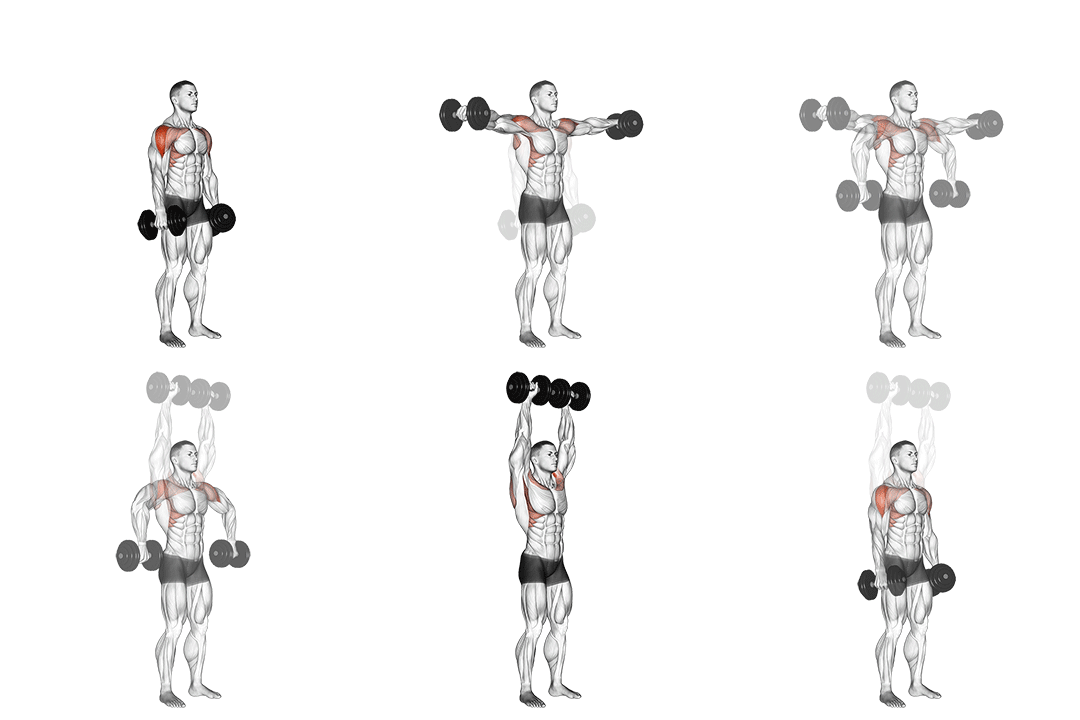
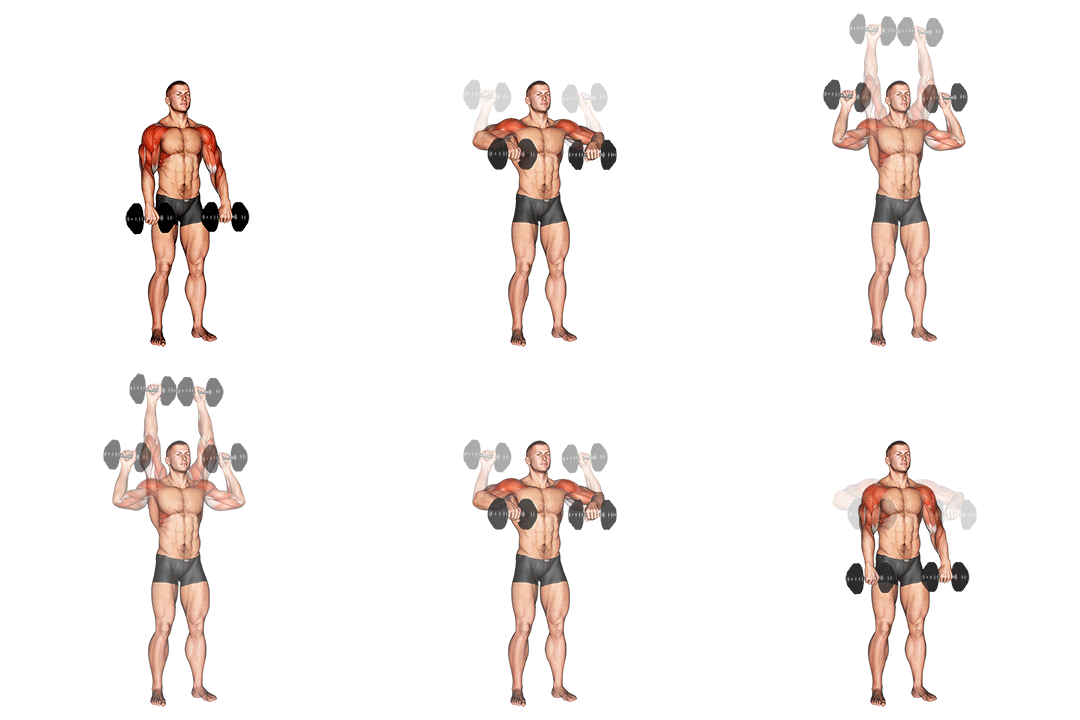
Dumbbell Cuban Press
Head-to-Head Comparison
| Attribute | Dumbbell Bench Seated Press | Dumbbell Cuban Press |
|---|---|---|
| Target Muscle |
Delts
|
Delts
|
| Body Part |
Shoulders
|
Shoulders
|
| Equipment |
Dumbbell
|
Dumbbell
|
| Difficulty |
Intermediate
|
Intermediate
|
| Movement Type |
Compound
|
Compound
|
| Secondary Muscles |
2
|
2
|
Secondary Muscles Activated
Dumbbell Bench Seated Press
Dumbbell Cuban Press
Visual Comparison
Overview
Dumbbell Bench Seated Press vs Dumbbell Cuban Press — two dumbbell-based shoulder compounds that look similar but load your delts and shoulder mechanics very differently. If you want clearer choices for hypertrophy, strength, shoulder health, or home workouts, this guide breaks it down. You’ll get step-by-step technique cues, a muscle recruitment comparison, equipment needs, how hard each is to learn, risks, and situations where one clearly beats the other. By the end you’ll know which to program for your goals and how to perform each safely.
Key Differences
- Both exercises target the Delts using Dumbbell. The main differences are in their movement patterns and muscle activation angles.
Pros & Cons
Dumbbell Bench Seated Press
+ Pros
- Allows heavier loading for hypertrophy and strength
- Stable setup reduces need for balance, easier to overload
- Strong triceps and anterior chest recruitment boosts pressing strength
- Clear progression paths (sets, reps, weight increments)
− Cons
- Places higher compressive load on the shoulder joint under heavy weight
- Less emphasis on posterior deltoid and rotator cuff control
- Requires a bench and more space/equipment
Dumbbell Cuban Press
+ Pros
- Improves rotator cuff strength and scapular control
- Engages posterior deltoid and upper-back stabilizers
- No bench required — more versatile for home workouts
- Lower absolute compressive loading during the rotation phase
− Cons
- Difficult to overload safely — limited heavy progression
- Requires good shoulder external rotation and mobility
- Higher technical demand increases risk of poor form if rushed
When Each Exercise Wins
The bench seated press lets you use heavier loads and longer time under tension on the anterior and lateral delts plus chest. Use 6–12 reps, 3–5 sets with progressive overload to maximize cross-sectional growth.
Its stable position supports heavier dumbbells and lower-rep strength work (3–6 reps, 4–6 sets), making neural and force adaptations easier to train compared to the technically constrained Cuban Press.
The seated press has a simpler vertical pressing pattern and bench support helps novices control posture and load, reducing balance and coordination demands while building pressing strength.
You don’t need a bench and the Cuban Press gives shoulder stability and rotator cuff conditioning using only dumbbells. It’s ideal when space or equipment is limited.
Frequently Asked Questions
Can I do both Dumbbell Bench Seated Press and Dumbbell Cuban Press in the same workout?
Yes — pair them. Use the Cuban Press as a warm-up or prehab exercise: 2–3 sets of 10–15 reps at 30–40% of your working press weight to prime the rotator cuff, then move to heavier bench seated pressing for 3–5 sets of 6–12 reps.
Which exercise is better for beginners?
Beginners should start with the Dumbbell Bench Seated Press because it’s simpler to learn and provides bench support for posture. Focus on 8–12 reps, light to moderate weight, and a 45° elbow tuck to build a stable pressing foundation.
How do the muscle activation patterns differ?
The Bench Seated Press drives anterior and lateral deltoid activation with significant pectoralis and triceps assistance via a straight vertical force vector. The Cuban Press adds an external-rotation phase that shifts activation into posterior delts, trapezius, and rotator cuff muscles while maintaining some lateral delt involvement during the final press.
Can Dumbbell Cuban Press replace Dumbbell Bench Seated Press?
No — not if your goal is heavy pressing or maximum hypertrophy. The Cuban Press is a valuable accessory for shoulder health and motor control but lacks the safe overload potential of the bench seated press. Use it to complement, not replace, heavier pressing.
Expert Verdict
Use the Dumbbell Bench Seated Press when your priority is shoulder size and raw pressing strength — it allows heavier loads and straightforward progression (3–6 reps for strength, 6–12 for hypertrophy). Keep elbows at roughly 45° from the torso, brace your core, and press on a vertical line to protect the joint. Use the Dumbbell Cuban Press as a corrective and accessory movement to build rotator cuff strength, posterior deltoid balance, and scapular control — perform it lighter (30–50% of your press work weight), 2–4 sets of 10–15 with slow, controlled rotation. Program both: bench press as your primary press and Cuban press for health, control, and balanced shoulder development.
Also Compare
More comparisons with Dumbbell Bench Seated Press
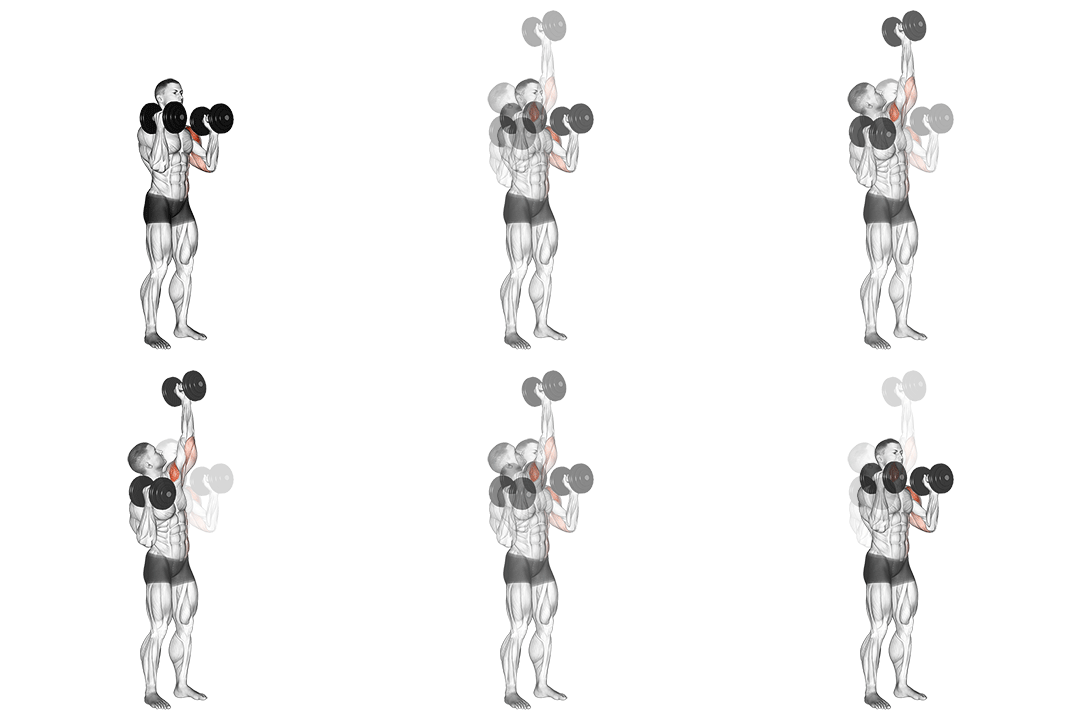
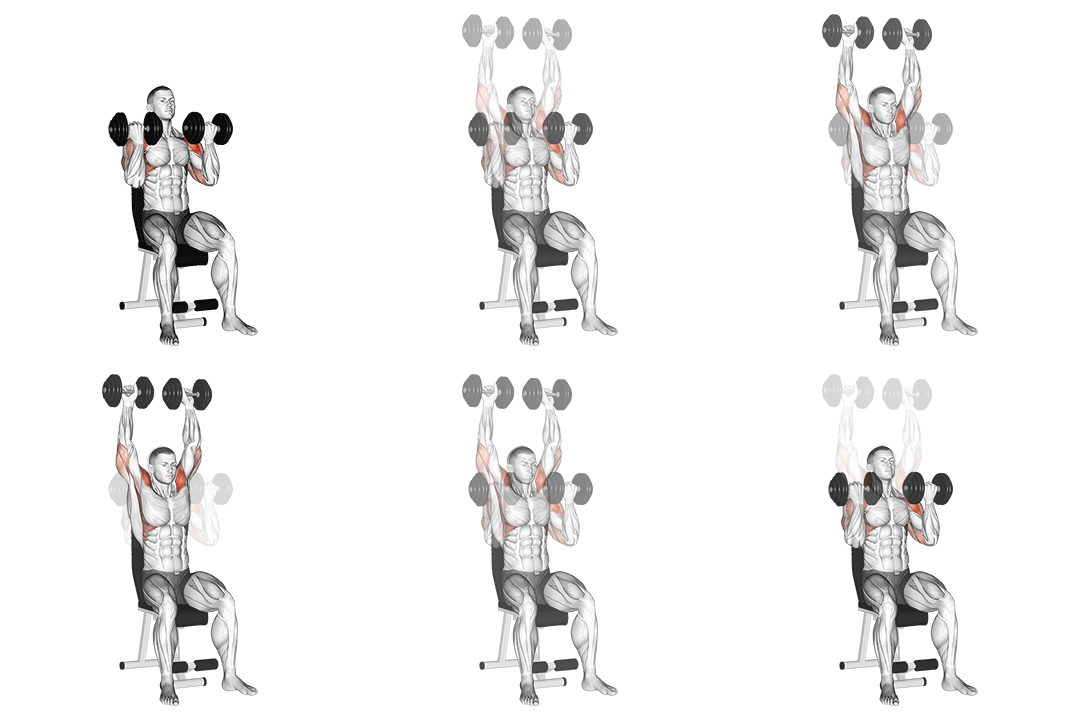
More comparisons with Dumbbell Cuban Press
Compare More Exercises
Use our free comparison tool to analyze any two exercises head-to-head.
Compare Exercises