

Dumbbell Bench Seated Press vs Dumbbell Cuban Press V. 2: Complete Comparison Guide
Dumbbell Bench Seated Press vs Dumbbell Cuban Press V. 2 — two compound dumbbell moves that load the delts but via different paths. You’ll get a clear breakdown of primary and secondary muscle recruitment, technical cues, equipment needs, risk trade-offs, and rep ranges for strength and hypertrophy. Read on to learn which exercise to prioritize for shoulder mass, which protects the rotator cuff, and how to program each into 3–12 rep blocks with concrete cues like elbow position, scapular plane angles, and tempo.
Exercise Comparison
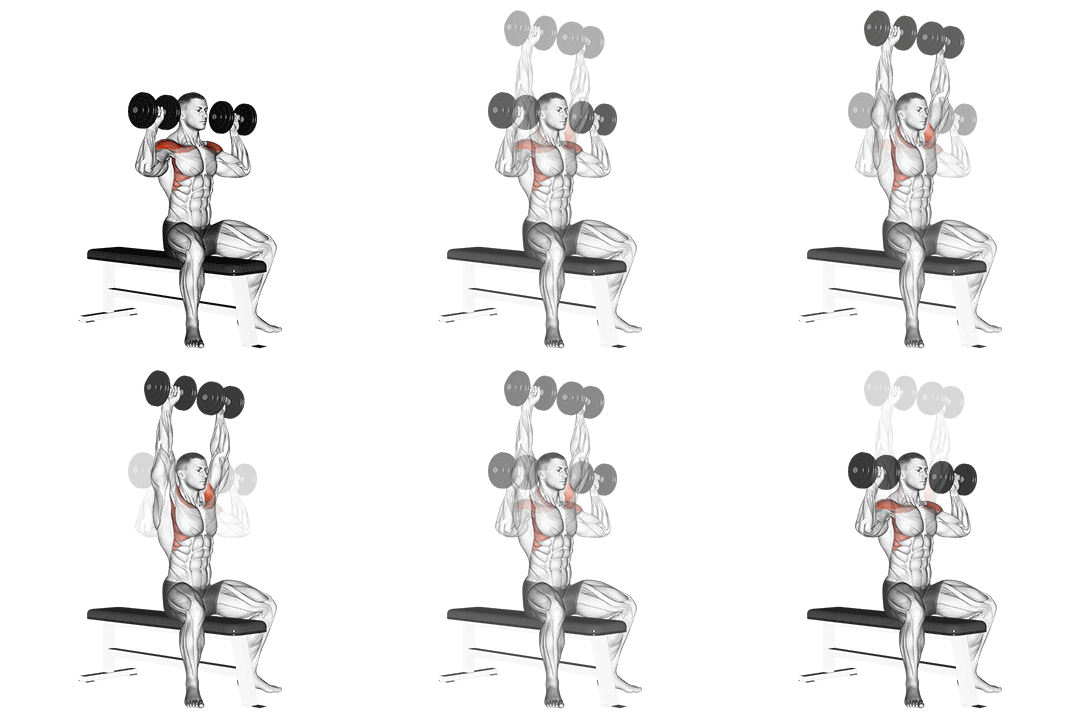
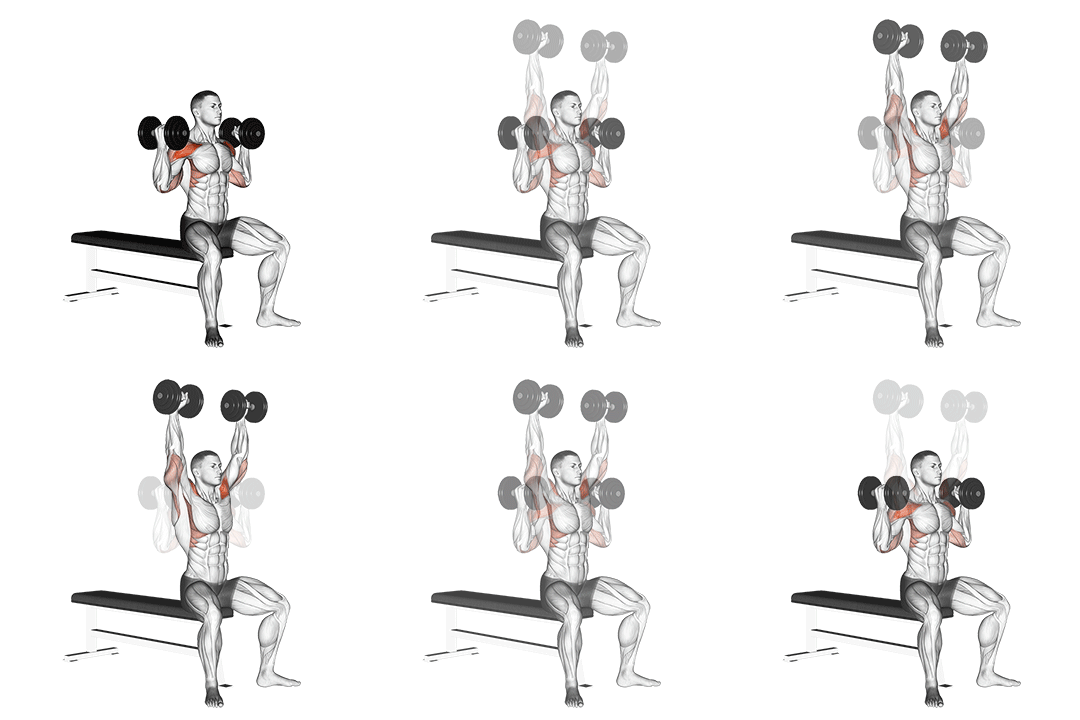
Dumbbell Bench Seated Press
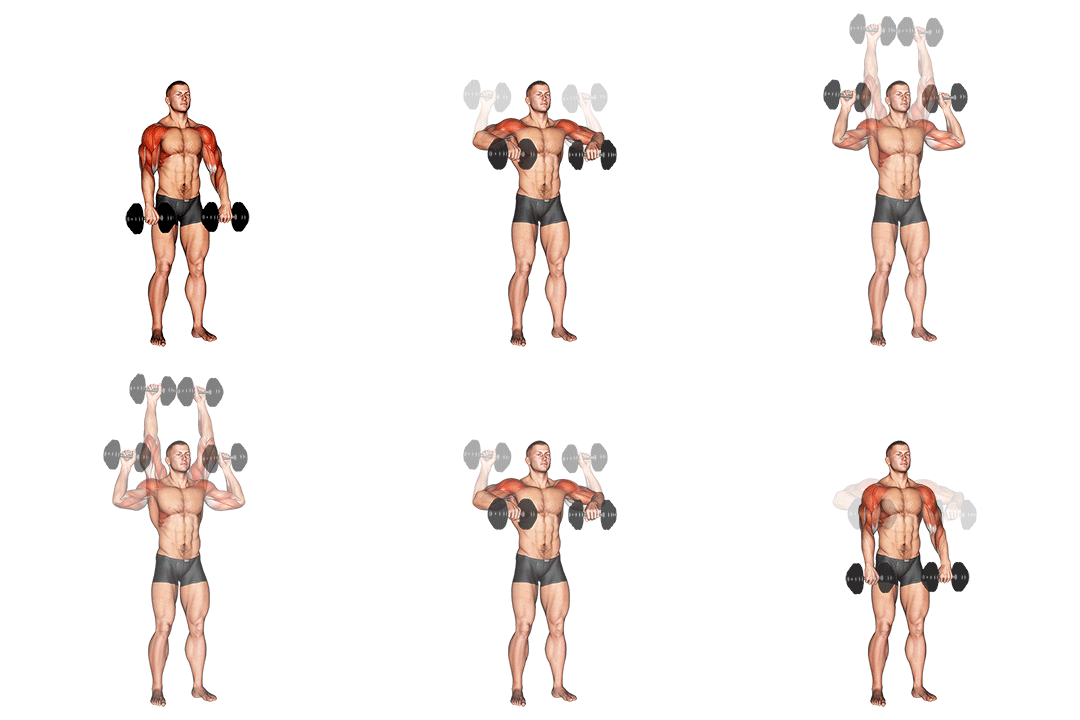
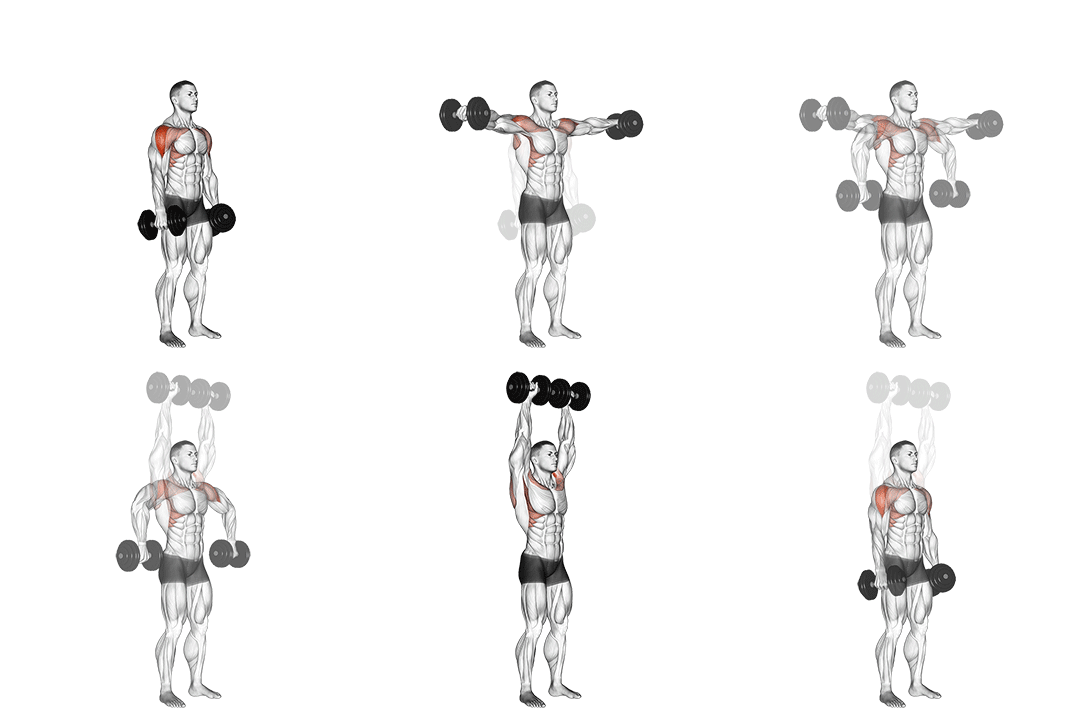
Dumbbell Cuban Press V. 2
Head-to-Head Comparison
| Attribute | Dumbbell Bench Seated Press | Dumbbell Cuban Press V. 2 |
|---|---|---|
| Target Muscle |
Delts
|
Delts
|
| Body Part |
Shoulders
|
Shoulders
|
| Equipment |
Dumbbell
|
Dumbbell
|
| Difficulty |
Intermediate
|
Intermediate
|
| Movement Type |
Compound
|
Compound
|
| Secondary Muscles |
2
|
2
|
Secondary Muscles Activated
Dumbbell Bench Seated Press
Dumbbell Cuban Press V. 2
Visual Comparison
Overview
Dumbbell Bench Seated Press vs Dumbbell Cuban Press V. 2 — two compound dumbbell moves that load the delts but via different paths. You’ll get a clear breakdown of primary and secondary muscle recruitment, technical cues, equipment needs, risk trade-offs, and rep ranges for strength and hypertrophy. Read on to learn which exercise to prioritize for shoulder mass, which protects the rotator cuff, and how to program each into 3–12 rep blocks with concrete cues like elbow position, scapular plane angles, and tempo.
Key Differences
- Both exercises target the Delts using Dumbbell. The main differences are in their movement patterns and muscle activation angles.
Pros & Cons
Dumbbell Bench Seated Press
+ Pros
- Direct vertical overload for delts and long-head triceps
- Easier to progressively load with heavy dumbbells
- Strong carryover to pressing strength and overhead work
- Simple setup: bench plus dumbbells
− Cons
- Less emphasis on rotator-cuff and upper-back activation
- Can overload anterior delts and chest if technique breaks down
- Potential shoulder impingement if elbows flare >60°
Dumbbell Cuban Press V. 2
+ Pros
- Adds rotator-cuff strengthening via external rotation
- Improves scapular control and upper-back recruitment
- Lower equipment need—no bench required
- Useful for prehab and balanced shoulder development
− Cons
- Harder to load heavy due to rotator-cuff limits
- Technique demand is higher—coordination and mobility required
- Not ideal for maximal strength blocks where high absolute loads are needed
When Each Exercise Wins
The vertical pressing vector allows heavier loading and longer time under tension on the anterior and lateral delts; program 6–12 reps, 3–4 sets, 1–2 second pause at mid-range for optimal mechanical tension.
Stronger transfer to strict pressing strength because you can overload with higher absolute dumbbell weight and train in the 3–6 rep range with clear progressive overload.
Its movement path is simpler and safer to scale. Teach upright posture and elbow tracking (45°–60° to torso) before adding heavy weight; Cuban mechanics can confuse novices.
Requires only dumbbells and space, delivers extra rotator-cuff and upper-back stimulus, and lets you work shoulder health and hypertrophy without a bench.
Frequently Asked Questions
Can I do both Dumbbell Bench Seated Press and Dumbbell Cuban Press V. 2 in the same workout?
Yes. Use the Cuban Press as a warm-up or activation/set-up exercise (2–3 sets of 8–12 with light weight) to prime the rotator cuff, then follow with heavier Bench Seated Press sets for 3–4 working sets. Keep total shoulder volume in check to avoid overuse.
Which exercise is better for beginners?
Dumbbell Bench Seated Press is better for most beginners because the pressing pathway is simpler and easier to load safely. Teach upright posture, neutral wrist, and elbow tracking before introducing the rotational complexity of the Cuban Press.
How do the muscle activation patterns differ?
The Bench Seated Press emphasizes vertical force production, loading anterior and lateral delts and triceps during concentric pressing. The Cuban Press V. 2 splits activation: an initial external-rotation/pull phase that loads the rotator cuff and upper-back, followed by a press that shifts some load posteriorly and increases transverse-plane demand.
Can Dumbbell Cuban Press V. 2 replace Dumbbell Bench Seated Press?
Not completely. The Cuban Press can replace some accessory pressing work and improve shoulder health, but due to its rotational limits it won’t match the Bench Seated Press for maximal loading and pure pressing strength. Use the Cuban Press as a complement or rehab-focused substitute, not a full replacement in strength blocks.
Expert Verdict
Choose the Dumbbell Bench Seated Press when your goal is raw shoulder size and pressing strength: it allows heavier loads, straightforward progression, and strong triceps and clavicular-pec involvement. Use the Bench Seated Press for 3–6 reps to build strength and 6–12 reps for hypertrophy, keeping elbows 45°–60° to protect the joint. Choose the Dumbbell Cuban Press V. 2 when you need rotator-cuff strengthening, improved scapular control, or a space-efficient shoulder option. The Cuban Press is excellent for prehab, balanced shoulder development, and as an accessory in higher-rep ranges (8–15) with lighter weight and controlled external rotation.
Also Compare
More comparisons with Dumbbell Bench Seated Press
More comparisons with Dumbbell Cuban Press V. 2
Compare More Exercises
Use our free comparison tool to analyze any two exercises head-to-head.
Compare Exercises