

Dumbbell Bench Seated Press vs Dumbbell Front Raise: Complete Comparison Guide
Dumbbell Bench Seated Press vs Dumbbell Front Raise — two staple shoulder moves that look similar on paper but load your delts differently. You’ll get a clear breakdown of muscle activation, biomechanics, equipment needs, technique cues, and when to pick each exercise based on your goal: hypertrophy, strength, or accessibility. I’ll show the specific ranges (angles, rep schemes) and movement patterns so you can apply the right exercise to your program and avoid common shoulder stressors.
Exercise Comparison
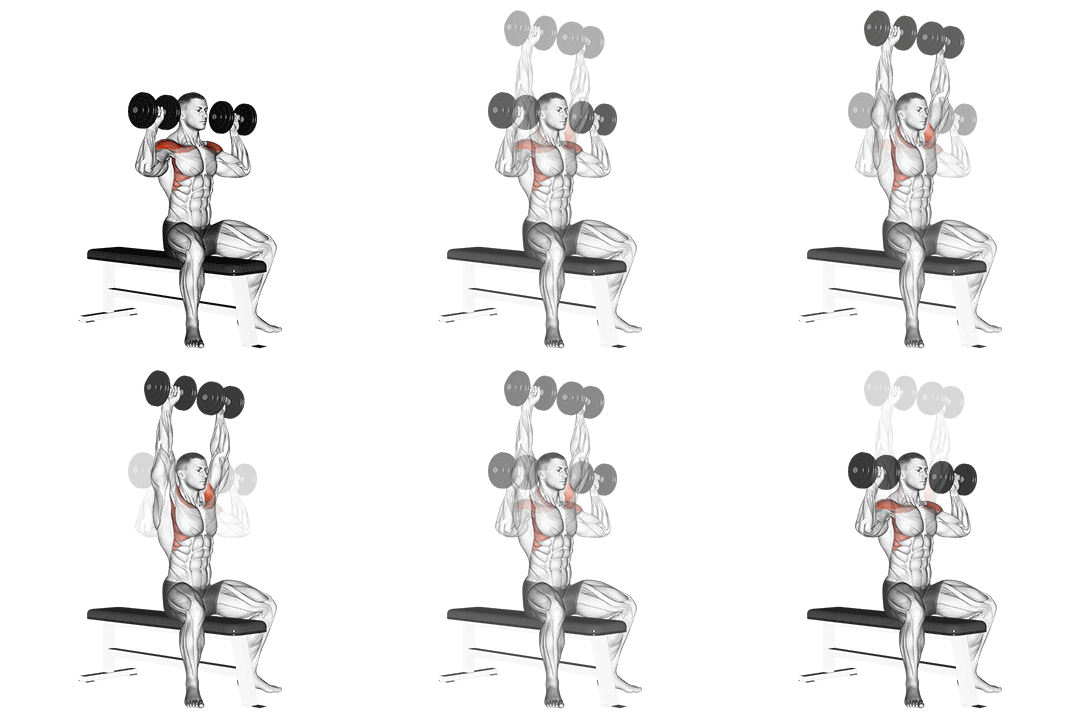
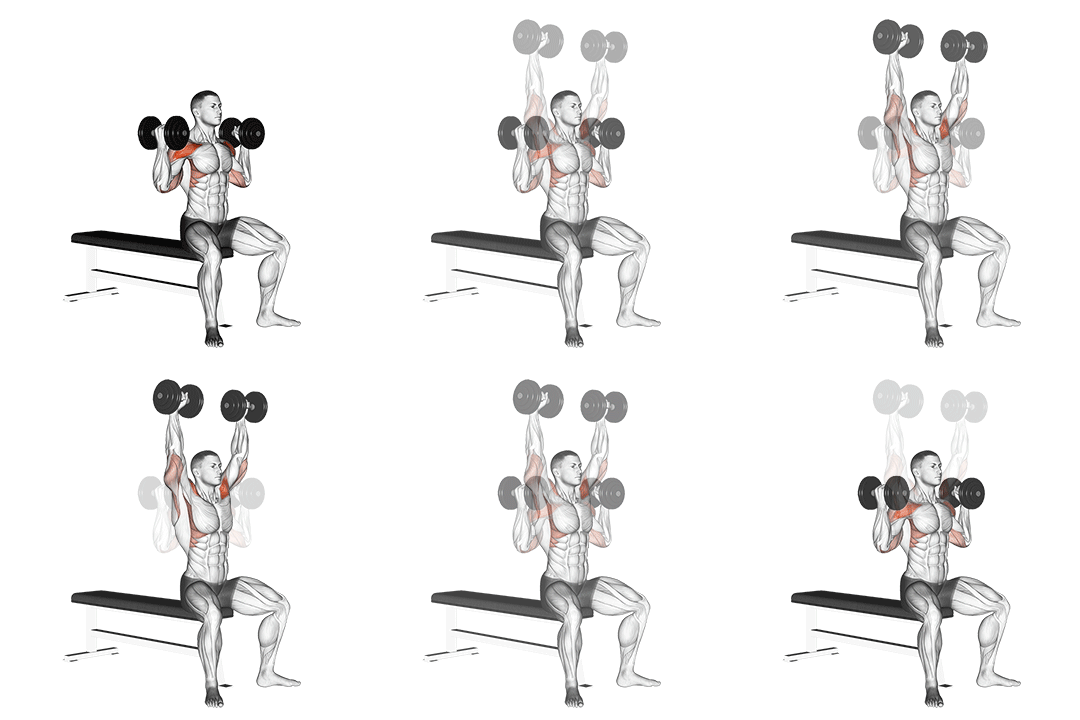
Dumbbell Bench Seated Press
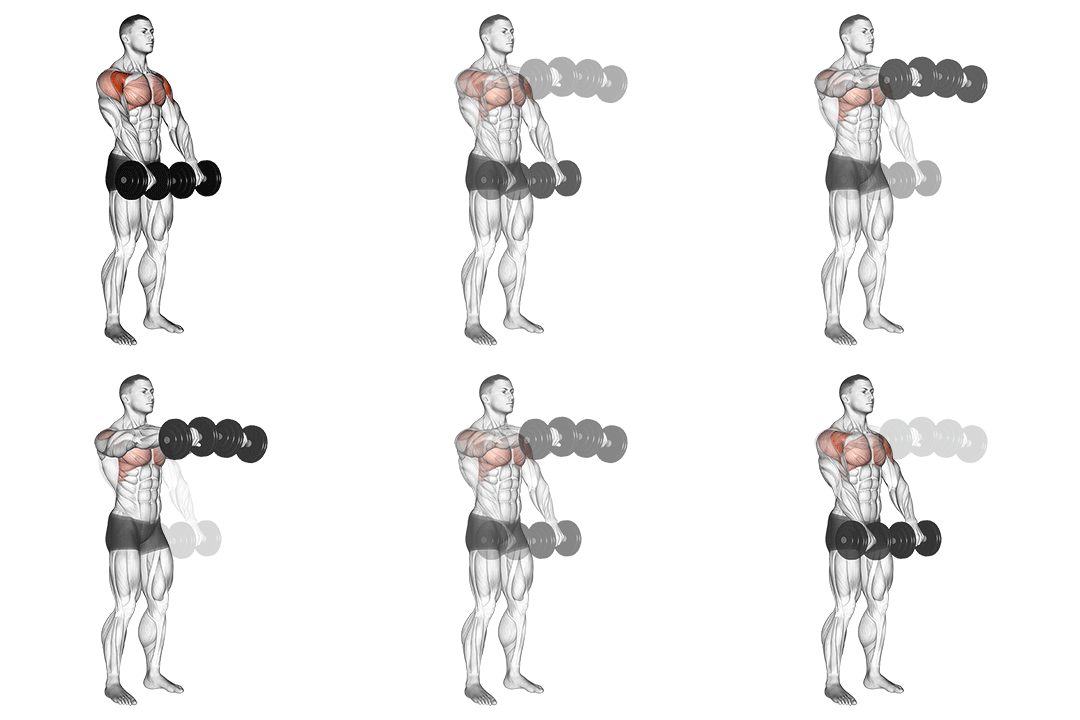
Dumbbell Front Raise
Head-to-Head Comparison
| Attribute | Dumbbell Bench Seated Press | Dumbbell Front Raise |
|---|---|---|
| Target Muscle |
Delts
|
Delts
|
| Body Part |
Shoulders
|
Shoulders
|
| Equipment |
Dumbbell
|
Dumbbell
|
| Difficulty |
Intermediate
|
Beginner
|
| Movement Type |
Compound
|
Isolation
|
| Secondary Muscles |
2
|
2
|
Secondary Muscles Activated
Dumbbell Bench Seated Press
Dumbbell Front Raise
Visual Comparison
Overview
Dumbbell Bench Seated Press vs Dumbbell Front Raise — two staple shoulder moves that look similar on paper but load your delts differently. You’ll get a clear breakdown of muscle activation, biomechanics, equipment needs, technique cues, and when to pick each exercise based on your goal: hypertrophy, strength, or accessibility. I’ll show the specific ranges (angles, rep schemes) and movement patterns so you can apply the right exercise to your program and avoid common shoulder stressors.
Key Differences
- Dumbbell Bench Seated Press is a compound movement, while Dumbbell Front Raise is an isolation exercise.
- Difficulty levels differ: Dumbbell Bench Seated Press is intermediate, while Dumbbell Front Raise is beginner.
- Both exercises target the Delts using Dumbbell. The main differences are in their movement patterns and muscle activation angles.
Pros & Cons
Dumbbell Bench Seated Press
+ Pros
- Loads the shoulder complex with heavier external resistance for progressive overload
- Simultaneously trains triceps and upper chest for efficient upper-body strength
- Improves overhead pressing strength and functional pushing patterns
- Multiple progression levers (weight, set/rep schemes, tempo, unilateral work)
− Cons
- Requires bench/back support and more shoulder stability
- Higher technical demand; poor form can drive lumbar extension or shoulder impingement
- Less isolation of anterior deltoid if you specifically want a single-head stimulus
Dumbbell Front Raise
+ Pros
- Simple sagittal-plane movement ideal for isolating the anterior deltoid
- Requires minimal equipment and space—easy for home workouts
- Low technical barrier; beginners can learn the pattern quickly
- Excellent for high-rep metabolic sets and targeting mid-range torque (30°–60°)
− Cons
- Limited absolute loading — hard to progress heavy for raw strength
- Can irritate the anterior shoulder if taken above 90° or with poor scapular control
- Less carryover to compound pressing strength and overhead performance
When Each Exercise Wins
Seated press lets you use heavier loads and recruit multiple synergists (triceps, pecs) which increases overall mechanical tension—key for hypertrophy. Use 6–12 reps for compound overload and add 8–15 rep front raise sets for extra anterior deltoid finishing work.
Strength is driven by the ability to apply higher external load across joints; the seated press permits larger loads and progressive overload. Train 3–6 sets of 3–6 reps with strict form and scapular stability to build pressing strength.
Front raises have a simpler movement pattern and lower coordination demand, so beginners can load the anterior deltoid safely while learning scapular control. Start with 10–15 reps and focus on 1–2 sec concentric and 2–3 sec eccentric tempo.
Front raises need only dumbbells and little space, making them ideal for home training. They fit body-part or full-body circuits and are effective in higher-rep schemes (12–20 reps) when heavy dumbbells aren’t available.
Frequently Asked Questions
Can I do both Dumbbell Bench Seated Press and Dumbbell Front Raise in the same workout?
Yes — pair them strategically. Do seated presses early as a primary compound (3–5 sets of 4–10 reps) and use front raises as an accessory finisher (2–3 sets of 10–20 reps) to isolate the anterior deltoid without compromising your pressing sets.
Which exercise is better for beginners?
Dumbbell Front Raise is easier to learn due to its single-joint sagittal-plane movement and lower coordination demand. Start with light weight, strict tempo, and work on scapular control before progressing to compound presses.
How do the muscle activation patterns differ?
The seated press distributes activation across anterior deltoid, middle deltoid, triceps and pecs because of its multi-joint vertical push vector, while the front raise concentrates torque on the anterior deltoid in the mid-range (~30°–60°). Presses load a wider muscle cross-section; raises heighten isolated deltoid tension.
Can Dumbbell Front Raise replace Dumbbell Bench Seated Press?
Not entirely — front raises isolate the anterior deltoid but lack the multi-joint load and triceps/chest stimulus of the seated press. If your goal is overhead strength or heavy hypertrophy, keep the seated press in your program and use front raises as a supplementary movement.
Expert Verdict
Use the Dumbbell Bench Seated Press when you want to build overall shoulder size and pressing strength—it’s the better compound choice for progressive overload and functional push patterns (aim for 3–5 sets of 6–12 reps). Reserve Dumbbell Front Raises for targeted anterior deltoid work, prehab/rehab, or high-rep finishers (8–20 reps) when you need an isolation stimulus or limited equipment. If your goal is raw strength and muscle growth, prioritize seated presses and add front raises as accessory work. If you’re a beginner or training at home with light weights, prioritize front raises to develop control and isolate the anterior deltoid safely.
Also Compare
More comparisons with Dumbbell Bench Seated Press
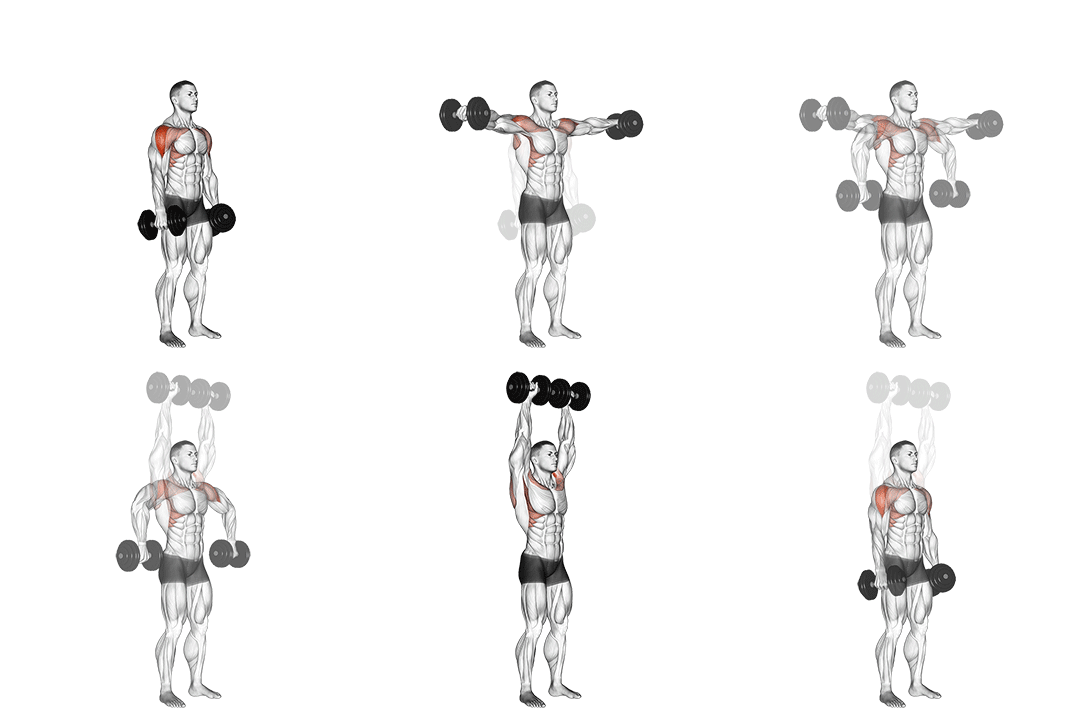
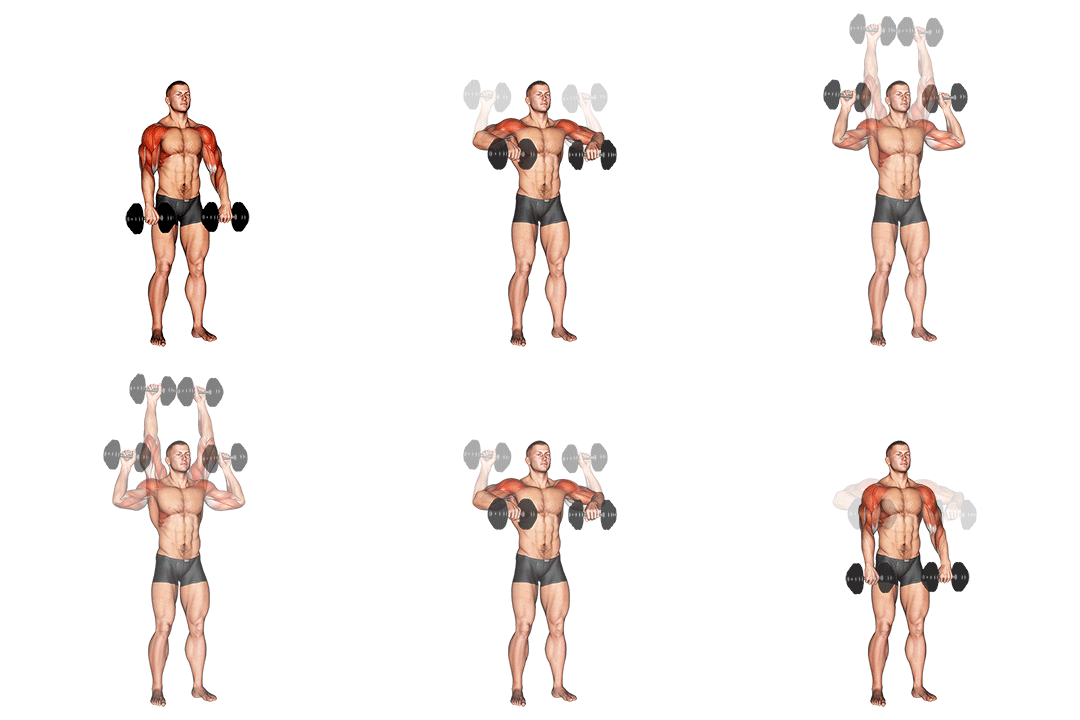
More comparisons with Dumbbell Front Raise
Compare More Exercises
Use our free comparison tool to analyze any two exercises head-to-head.
Compare Exercises