

Dumbbell Bench Seated Press vs Reverse Flyes: Complete Comparison Guide
Dumbbell Bench Seated Press vs Reverse Flyes — if you want stronger, fuller shoulders you need to pick exercises that match your goal. I’ll walk you through how each move stresses the delts, the exact muscle patterns they hit (anterior/mid vs posterior), equipment and space needs, technique cues, and how to program them for hypertrophy or strength. Read on to learn which exercise to prioritize for muscle growth, which to use for balance and posture, and how to stack them in a single workout.
Exercise Comparison
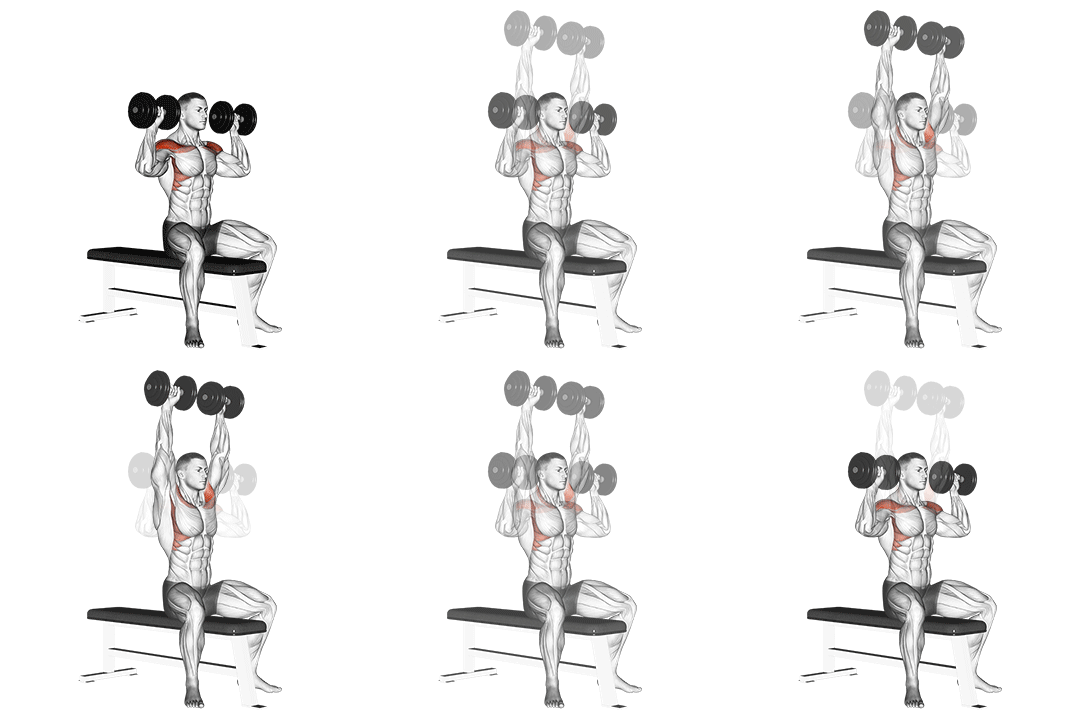
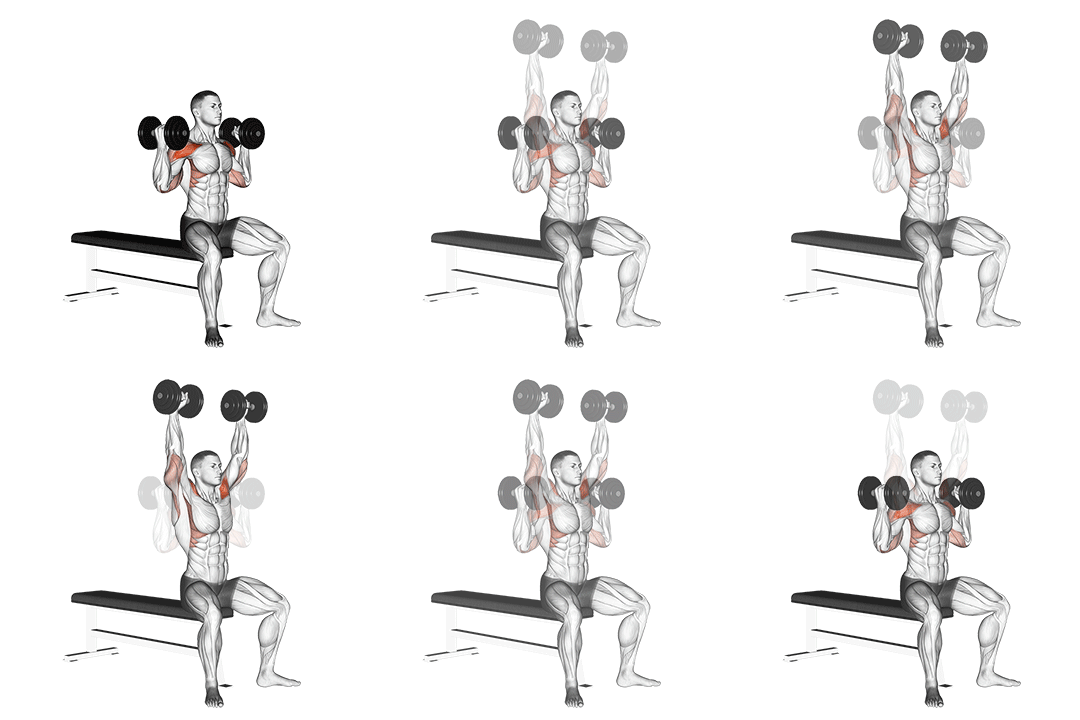
Dumbbell Bench Seated Press
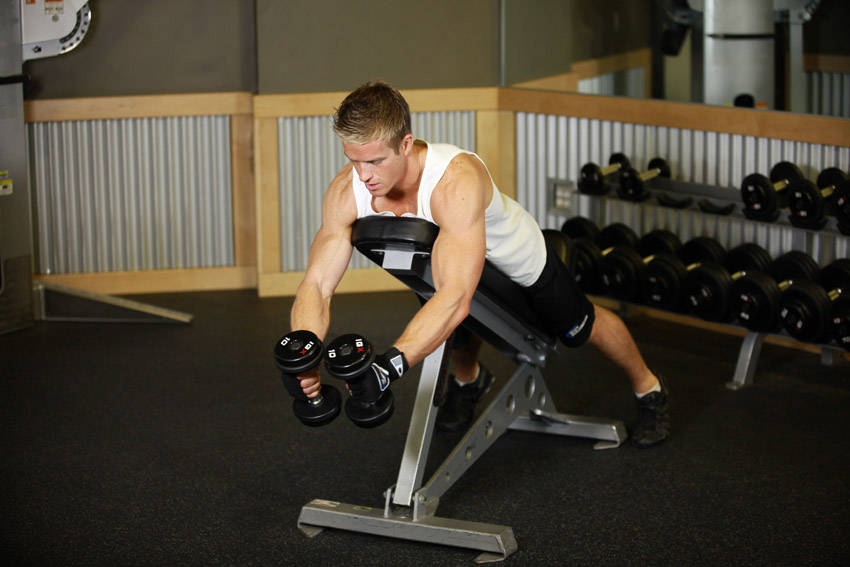
Reverse Flyes
Head-to-Head Comparison
| Attribute | Dumbbell Bench Seated Press | Reverse Flyes |
|---|---|---|
| Target Muscle |
Delts
|
Delts
|
| Body Part |
Shoulders
|
Shoulders
|
| Equipment |
Dumbbell
|
Dumbbell
|
| Difficulty |
Intermediate
|
Beginner
|
| Movement Type |
Compound
|
Isolation
|
| Secondary Muscles |
2
|
0
|
Secondary Muscles Activated
Dumbbell Bench Seated Press
Reverse Flyes
Visual Comparison
Overview
Dumbbell Bench Seated Press vs Reverse Flyes — if you want stronger, fuller shoulders you need to pick exercises that match your goal. I’ll walk you through how each move stresses the delts, the exact muscle patterns they hit (anterior/mid vs posterior), equipment and space needs, technique cues, and how to program them for hypertrophy or strength. Read on to learn which exercise to prioritize for muscle growth, which to use for balance and posture, and how to stack them in a single workout.
Key Differences
- Dumbbell Bench Seated Press is a compound movement, while Reverse Flyes is an isolation exercise.
- Difficulty levels differ: Dumbbell Bench Seated Press is intermediate, while Reverse Flyes is beginner.
- Both exercises target the Delts using Dumbbell. The main differences are in their movement patterns and muscle activation angles.
Pros & Cons
Dumbbell Bench Seated Press
+ Pros
- Builds overall shoulder mass and strength — allows heavy progressive overload
- Recruits triceps and upper chest for compound strength carryover
- Training vector aligns with many pressing sports movements
- Multiple progression paths: load, tempo, unilateral work
− Cons
- Higher shoulder joint load and greater technical demand
- Requires a bench and heavier dumbbells for meaningful progress
- Less specific for posterior delts and scapular stability
Reverse Flyes
+ Pros
- Isolates posterior deltoid and improves shoulder balance
- Requires minimal load and equipment — easy to do anywhere
- Low systemic fatigue; good for higher rep work and rehab
- Improves scapular retraction and posture when performed chest-supported
− Cons
- Limited absolute overload for strength — hard to add heavy progressive load
- Easy to cheat with momentum if posture and hinge are poor
- Less carryover to pressing strength and heavy compound lifts
When Each Exercise Wins
The seated press lets you use heavier loads and fall into classic 6–12 rep ranges that maximize mechanical tension on anterior and middle delts. Pair it with isolation moves (including reverse flyes) to round out hypertrophy across all three heads.
A vertical pressing vector supports low-rep heavy loading and overload progression (3–6 reps), directly improving pressing strength and triceps capacity — qualities reverse flyes can’t match due to limited absolute load.
Reverse flyes teach scapular control and posterior shoulder activation with low load and low technical demand. They reduce risk while improving posture and balanced development before introducing heavy presses.
You can do reverse flyes with light dumbbells or even bands in a small space and still drive posterior deltoid progress. The seated press needs heavier dumbbells and a sturdy bench, which many home setups lack.
Frequently Asked Questions
Can I do both Dumbbell Bench Seated Press and Reverse Flyes in the same workout?
Yes — pair the seated press as your main compound (3–5 sets, lower reps) and follow with 2–4 sets of reverse flyes for posterior work. Do presses first to use maximal load, then use flyes to fatigue the posterior delts and reinforce scapular retraction.
Which exercise is better for beginners?
Reverse Flyes are better for most beginners because they teach scapular control and posterior shoulder activation with low load. Start with chest-supported or bent-over variations before progressing to heavier compound presses once technique and stability improve.
How do the muscle activation patterns differ?
Seated presses generate a vertical force vector that loads anterior and middle deltoid fibers through shoulder flexion/abduction, while reverse flyes create horizontal abduction that preferentially lengthens and activates the posterior deltoid and scapular retractors during the concentric phase.
Can Reverse Flyes replace Dumbbell Bench Seated Press?
No, not if your aim is maximal shoulder strength or overall shoulder mass — reverse flyes are an isolation move with limited overload potential. They can replace presses in a deload or rehab phase, or complement presses to address posterior chain balance.
Expert Verdict
Use the Dumbbell Bench Seated Press when your goal is overall shoulder size and pressing strength — program it for 3–5 sets of 3–12 reps with strict technique (scapula packed, elbows tracking under wrists, slight forward arc). Use Reverse Flyes to correct imbalances, target the posterior deltoid, and improve scapular control; perform 3–4 sets of 8–20 reps, chest-supported if needed to remove momentum. For balanced development, prioritize the seated press as your compound lift and add reverse flyes as an accessory or finishing movement to preserve shoulder health and posture.
Also Compare
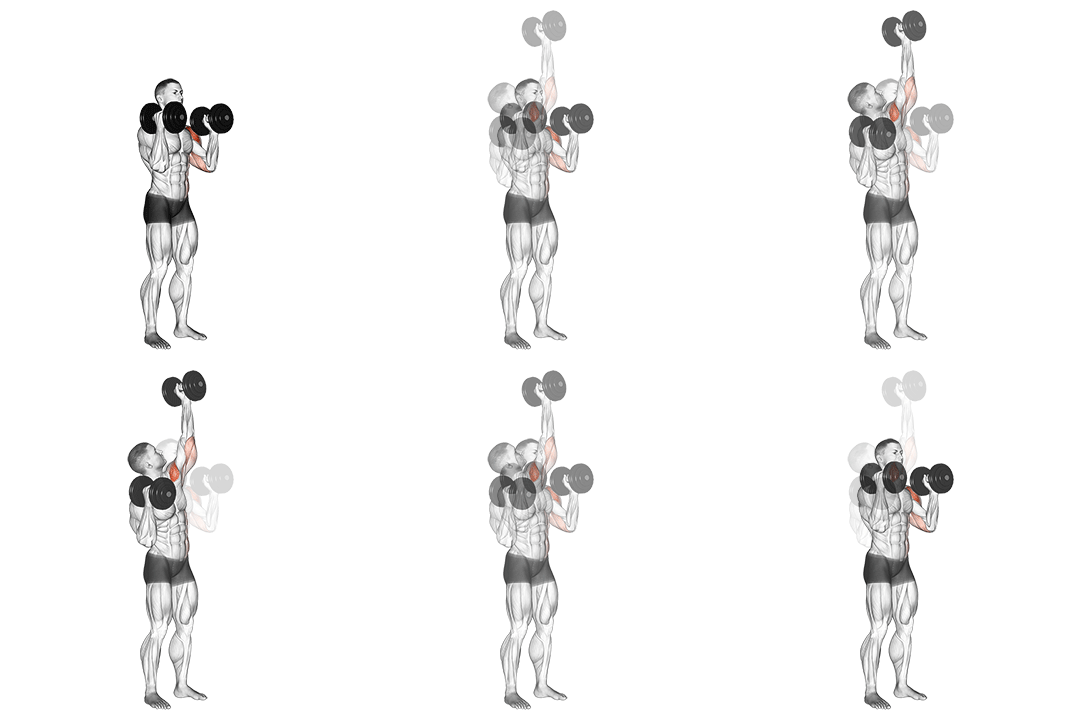
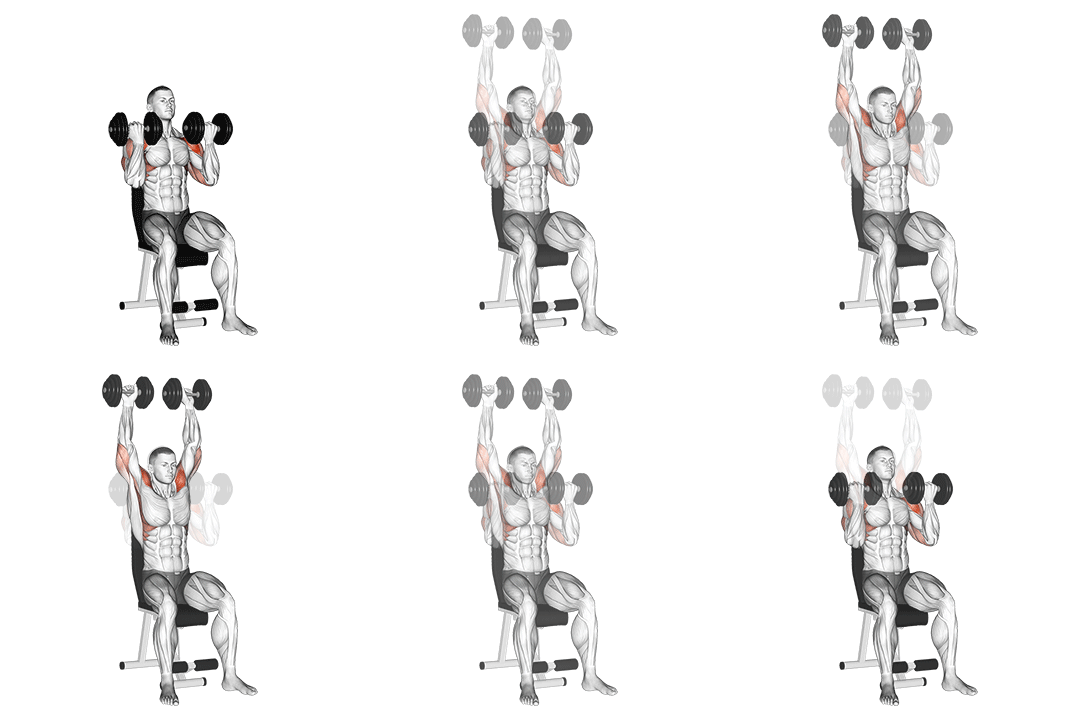
More comparisons with Dumbbell Bench Seated Press
Compare More Exercises
Use our free comparison tool to analyze any two exercises head-to-head.
Compare Exercises