

Dumbbell Bench Squat vs Dumbbell Clean: Complete Comparison Guide
Dumbbell Bench Squat vs Dumbbell Clean — if you're deciding which to add to your program, you want clear differences, technique cues, and programming advice. I'll show you how each exercise loads the glutes and upper-legs, explain the movement mechanics, and give rep ranges and progressions for hypertrophy, strength, and power. You'll get specific coaching cues (foot position, hip hinge, bar path replaced by dumbbell path), common faults to avoid, and quick setups for home or gym use so you can pick the tool that matches your goals.
Exercise Comparison
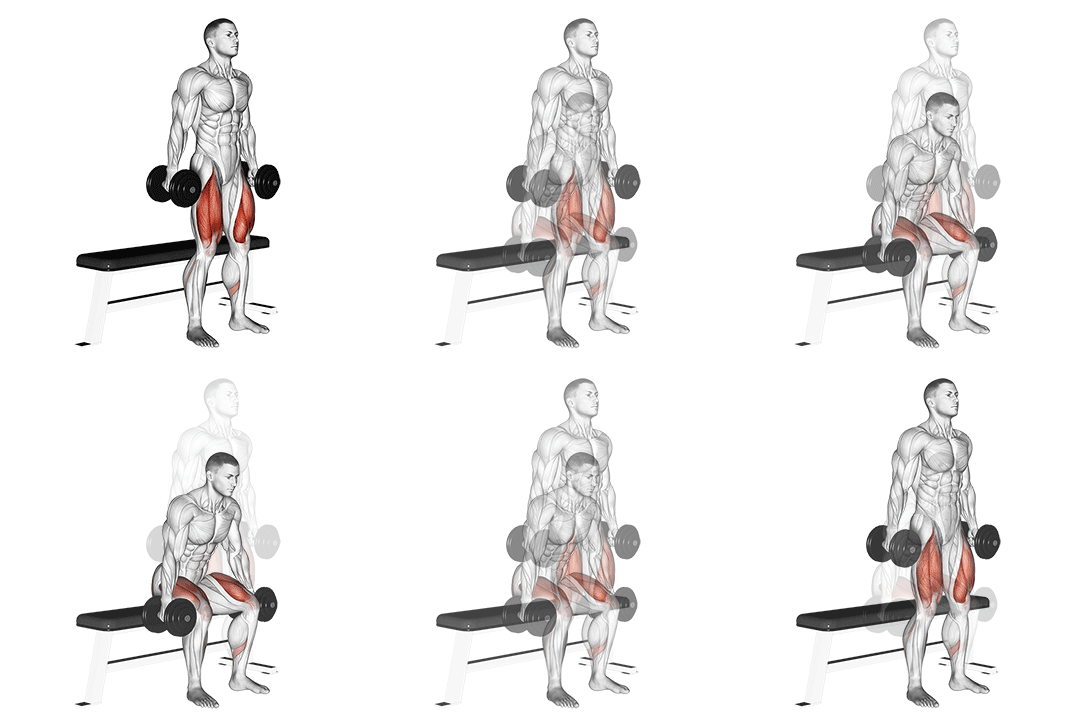
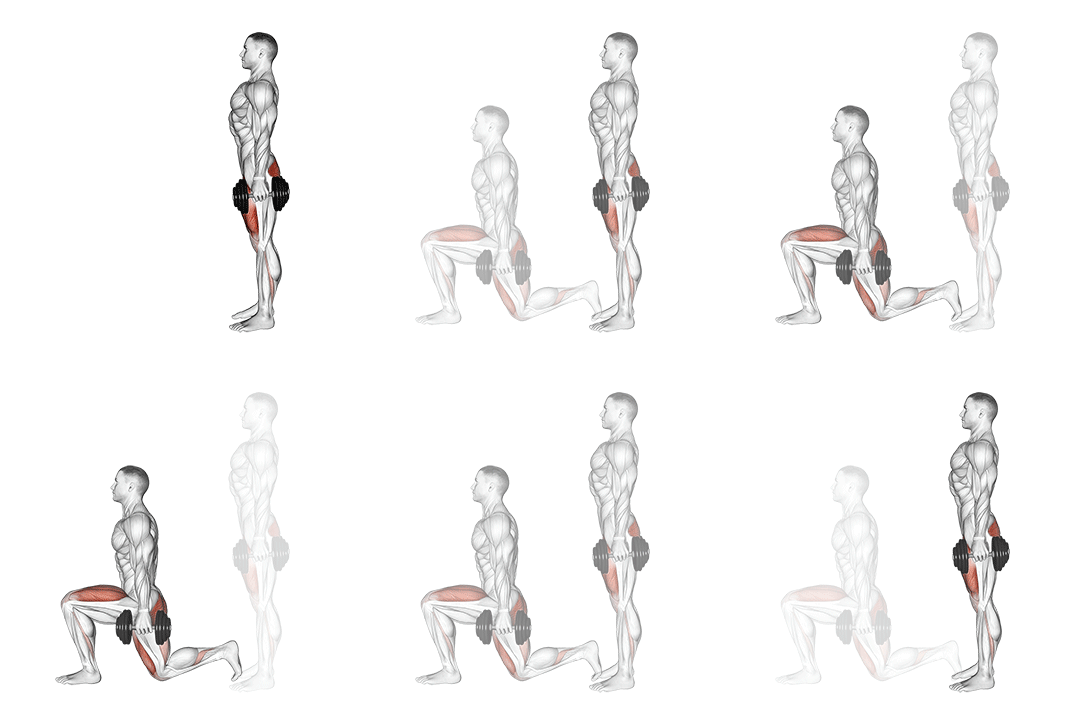
Dumbbell Bench Squat
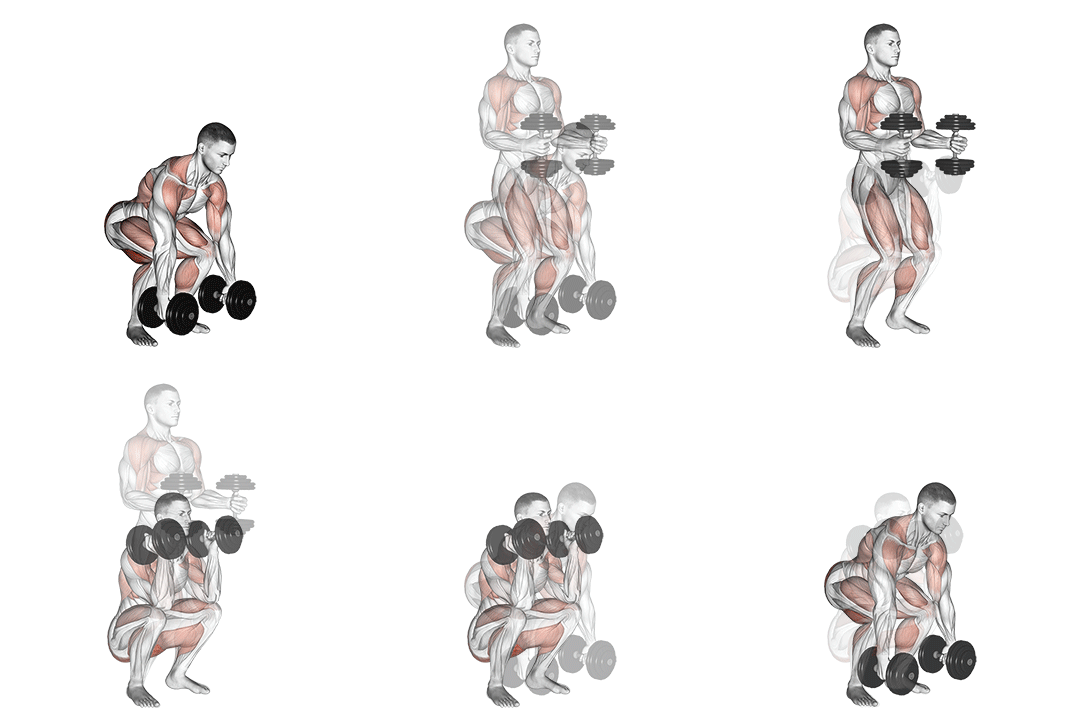
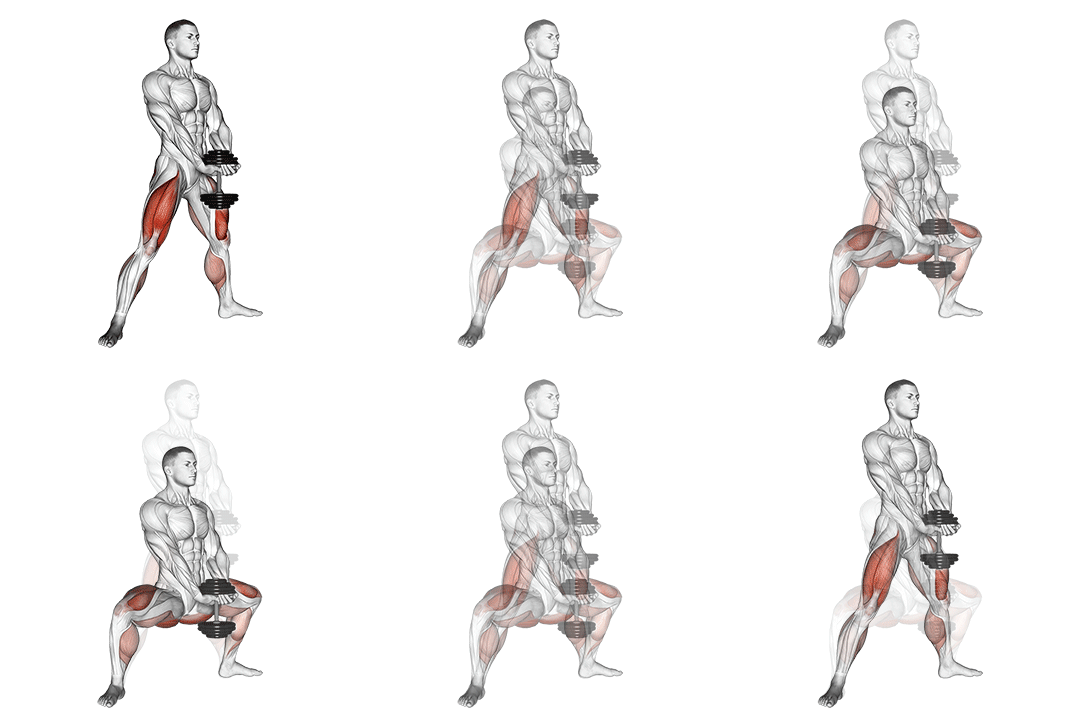
Dumbbell Clean
Head-to-Head Comparison
| Attribute | Dumbbell Bench Squat | Dumbbell Clean |
|---|---|---|
| Target Muscle |
Glutes
|
Glutes
|
| Body Part |
Upper-legs
|
Upper-legs
|
| Equipment |
Dumbbell
|
Dumbbell
|
| Difficulty |
Beginner
|
Advanced
|
| Movement Type |
Compound
|
Compound
|
| Secondary Muscles |
3
|
3
|
Secondary Muscles Activated
Dumbbell Bench Squat
Dumbbell Clean
Visual Comparison
Overview
Dumbbell Bench Squat vs Dumbbell Clean — if you're deciding which to add to your program, you want clear differences, technique cues, and programming advice. I'll show you how each exercise loads the glutes and upper-legs, explain the movement mechanics, and give rep ranges and progressions for hypertrophy, strength, and power. You'll get specific coaching cues (foot position, hip hinge, bar path replaced by dumbbell path), common faults to avoid, and quick setups for home or gym use so you can pick the tool that matches your goals.
Key Differences
- Difficulty levels differ: Dumbbell Bench Squat is beginner, while Dumbbell Clean is advanced.
- Both exercises target the Glutes using Dumbbell. The main differences are in their movement patterns and muscle activation angles.
Pros & Cons
Dumbbell Bench Squat
+ Pros
- Simple setup and low technical demand — easy to teach and scale
- Consistent glute tension across the range of motion for hypertrophy
- Safe to perform at higher rep ranges (6–15) and with pauses for time under tension
- Requires minimal vertical space and bench height adjusts leverage to target quads vs glutes
− Cons
- Limited rate-of-force development; not ideal for power training
- Max load constrained by dumbbell size and balance if using single DB
- Less carryover to explosive athletic movements compared with cleans
Dumbbell Clean
+ Pros
- High rate-of-force development and excellent carryover to power and athleticism
- Engages posterior chain dynamically (glutes, hamstrings, calves) with a short time under tension
- Improves coordination, timing, and full-body athletic strength
- Scalable to advanced variations (one-arm, hang, alternating) for unilateral development
− Cons
- Steep technical learning curve; needs practice and coaching for safe execution
- Higher acute injury risk if posture or timing are poor
- Requires more space and control, and may fatigue grip and upper back quickly
When Each Exercise Wins
Choose bench squats for hypertrophy because they provide longer time under tension and easier load progression in the 6–12 rep range. You can manipulate bench height, stance, and tempo to bias glutes or quads and maximize mechanical tension.
For raw strength and rate-of-force development, cleans demand explosive hip extension and full-body coordination, building strength that's expressed quickly. Use heavy, low-rep sets (3–5 reps) and progressive overload while prioritizing technique.
Beginners benefit from the bench squat's repeatable mechanics and lower coordination demand; it's easier to teach proper hip hinge, knee tracking, and bracing. Start with 3 sets of 8–12 reps and focus on depth (around 90° hip flexion) and neutral spine.
Bench squats need less vertical clearance, less technical coaching, and can be done safely with a single dumbbell and a household bench or box. They scale well with higher reps and tempo changes for effective at-home sessions.
Frequently Asked Questions
Can I do both Dumbbell Bench Squat and Dumbbell Clean in the same workout?
Yes — pair them smartly: do cleans early when fresh to train power (1–5 reps), then follow with bench squats for hypertrophy (6–12 reps). Separate them by 4–6 minutes rest or place them on different training days to avoid technique breakdown from fatigue.
Which exercise is better for beginners?
Dumbbell Bench Squat is better for beginners because it reinforces basic squat mechanics, knee tracking, and bracing with minimal coordination demand. Start with bench height at hip crease around 90° and progress depth and load before attempting cleans.
How do the muscle activation patterns differ?
Bench squats produce sustained glute and quad activation through controlled eccentric–concentric phases with peak glute force near full extension. Cleans trigger a rapid, high-amplitude glute and hamstring activation during the explosive second pull and use the stretch–shortening cycle for power.
Can Dumbbell Clean replace Dumbbell Bench Squat?
Not completely — cleans can replace bench squats if your goal is power and athleticism, but they won't match the consistent time under tension and mechanical stress needed for maximal hypertrophy. Use cleans to supplement or rotate in phases focused on speed-strength rather than as a direct hypertrophy substitute.
Expert Verdict
Use the Dumbbell Bench Squat when your priority is reliable glute and quad hypertrophy, repeatable technique, and low technical risk—program it for 3–5 sets of 6–12 reps with tempo and pause variations to increase mechanical tension. Choose the Dumbbell Clean when you want to develop explosive hip extension, athletic power, and high rate-of-force production; program it for low-rep sets (1–5 reps), focus on technique drills (hang pull, high pull), and progress load carefully. If you train alone at home or are new to resistance training, favor bench squats. If you have coaching access and need power carryover for sport, prioritize cleans.
Also Compare
More comparisons with Dumbbell Bench Squat
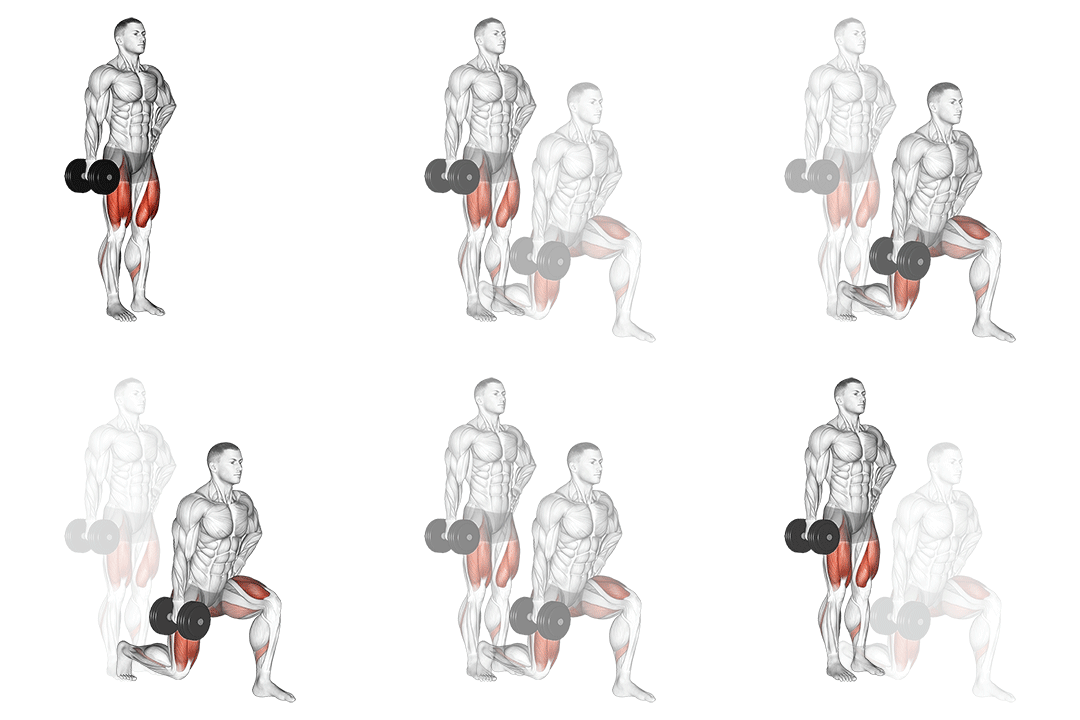
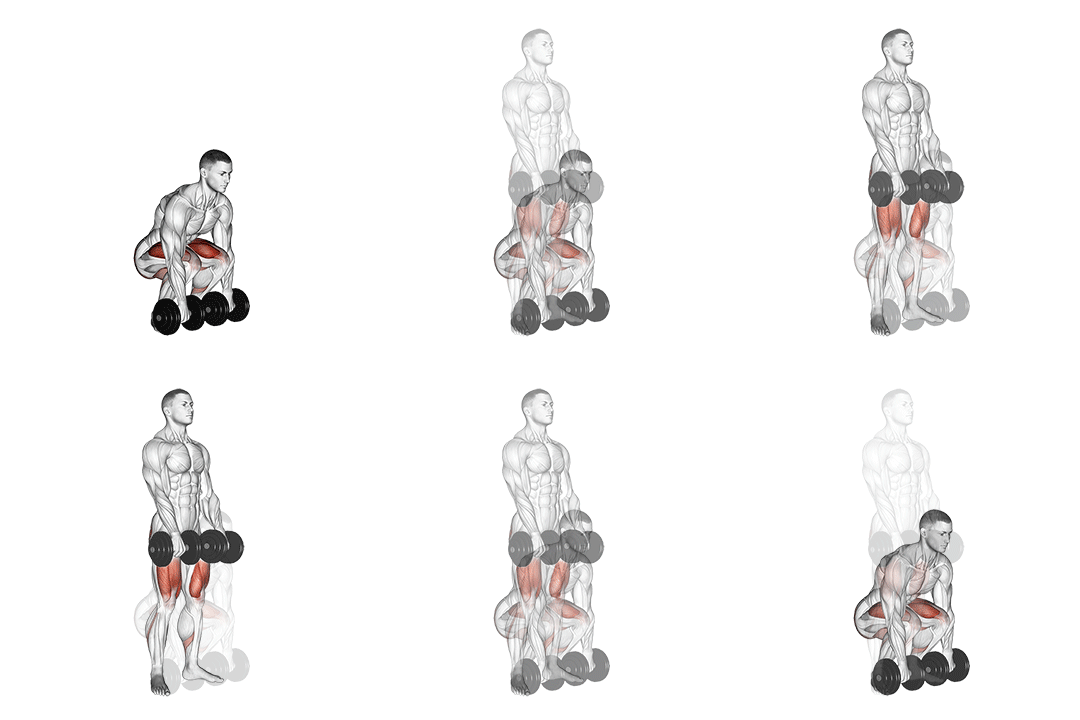
Compare More Exercises
Use our free comparison tool to analyze any two exercises head-to-head.
Compare Exercises