

Dumbbell Bench Squat vs Dumbbell Contralateral Forward Lunge: Complete Comparison Guide
Dumbbell Bench Squat vs Dumbbell Contralateral Forward Lunge — two compound, dumbbell-based moves that both target the glutes and upper-legs but do so through different mechanics. If you want clear guidance on which to choose for muscle growth, unilateral stability, equipment needs, and programming, you’re in the right place. I’ll break down movement patterns, muscle activation, equipment and difficulty, plus concrete technique cues and rep ranges so you can pick the best option for your goals and training stage.
Exercise Comparison
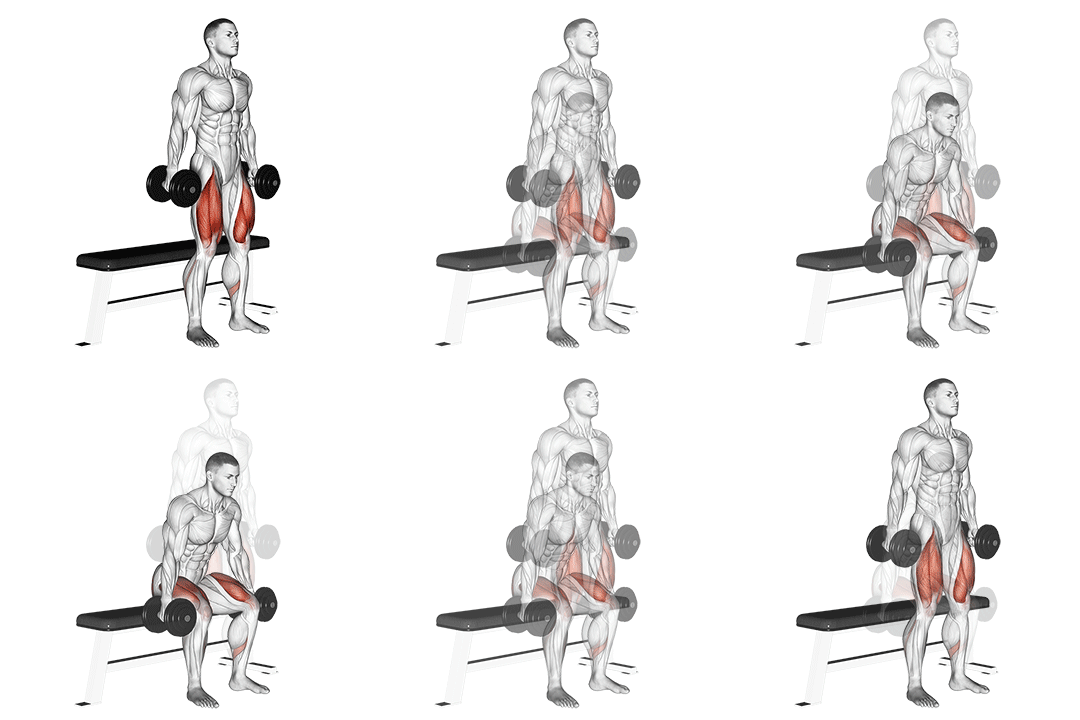
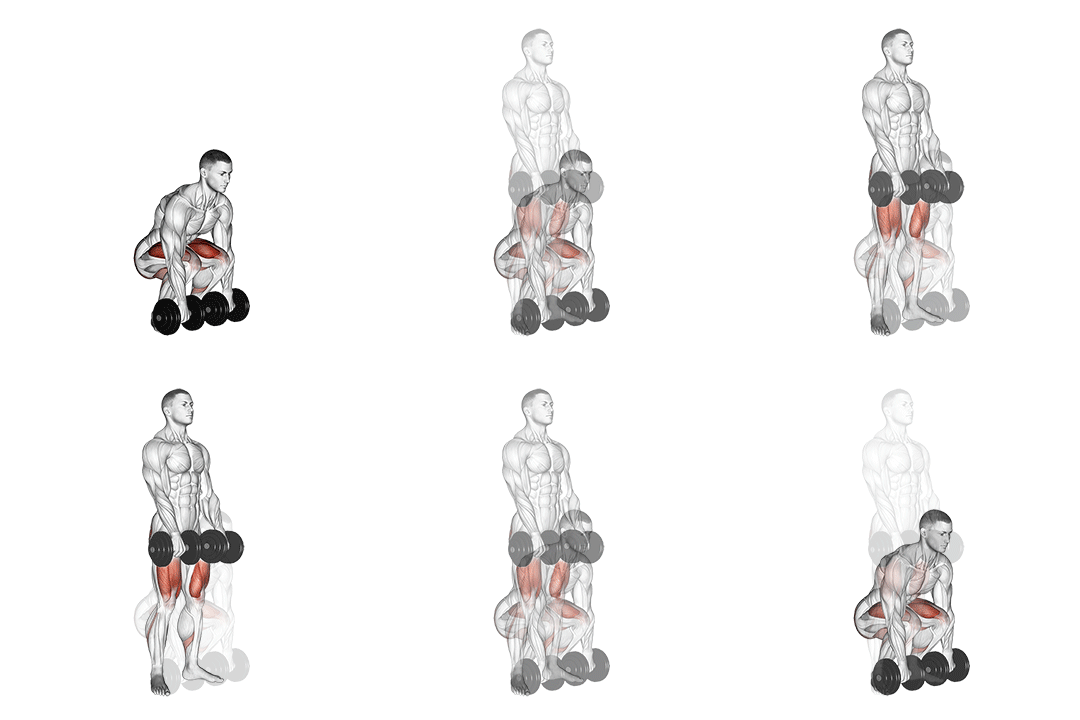
Dumbbell Bench Squat
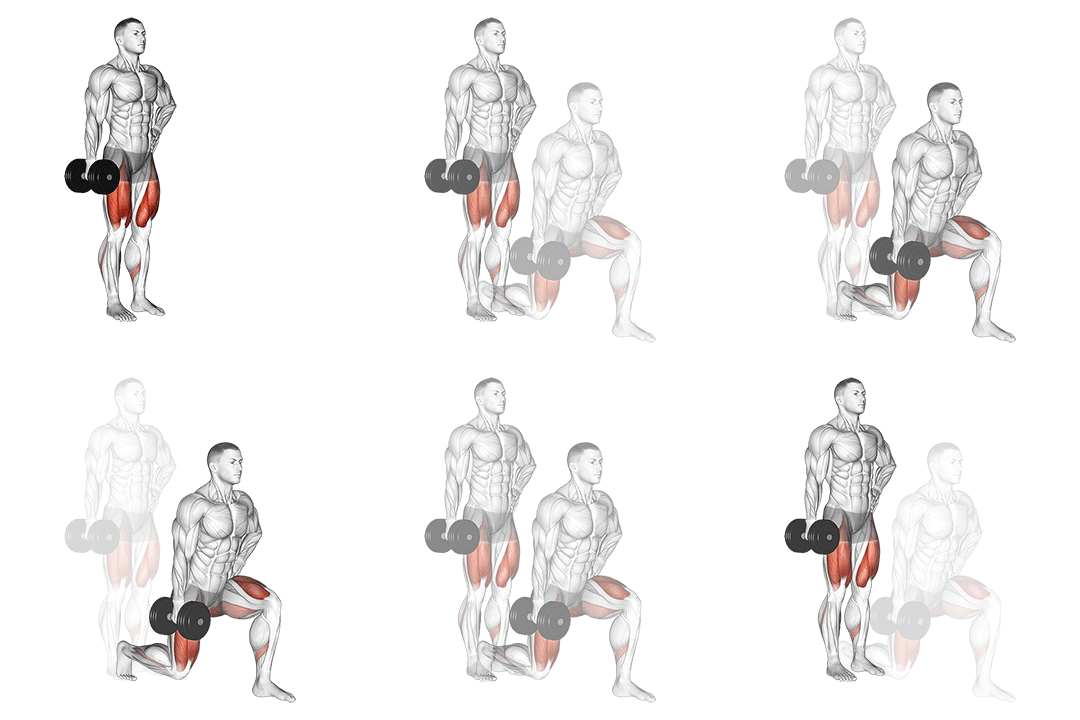
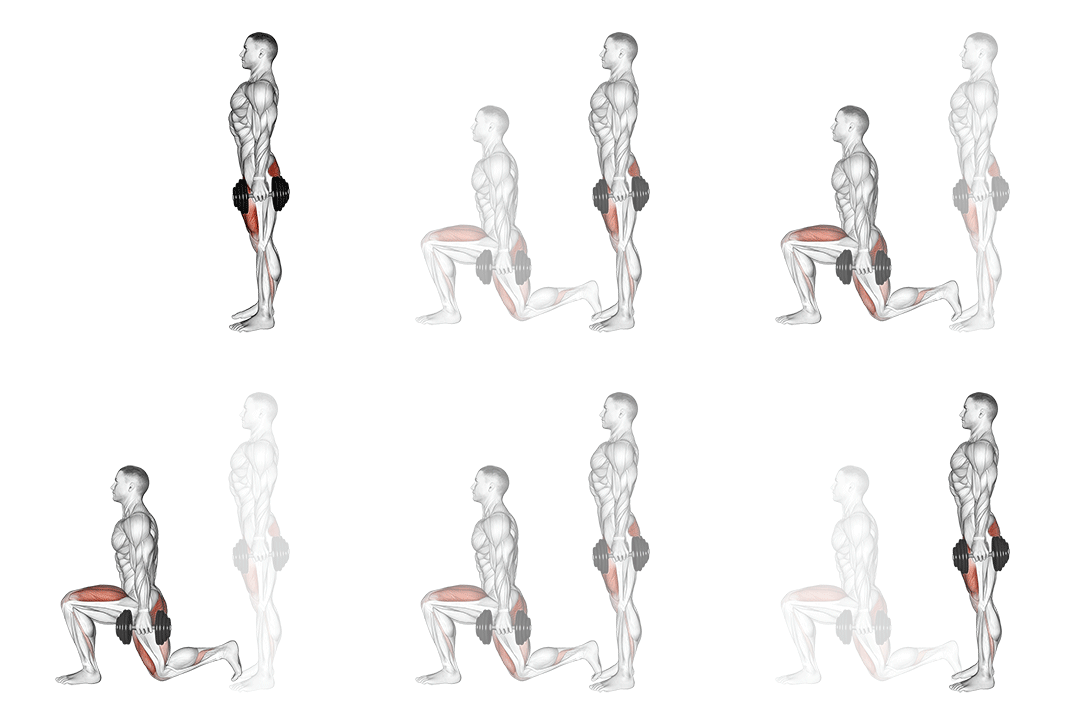
Dumbbell Contralateral Forward Lunge
Head-to-Head Comparison
| Attribute | Dumbbell Bench Squat | Dumbbell Contralateral Forward Lunge |
|---|---|---|
| Target Muscle |
Glutes
|
Glutes
|
| Body Part |
Upper-legs
|
Upper-legs
|
| Equipment |
Dumbbell
|
Dumbbell
|
| Difficulty |
Beginner
|
Intermediate
|
| Movement Type |
Compound
|
Compound
|
| Secondary Muscles |
3
|
3
|
Secondary Muscles Activated
Dumbbell Bench Squat
Dumbbell Contralateral Forward Lunge
Visual Comparison
Overview
Dumbbell Bench Squat vs Dumbbell Contralateral Forward Lunge — two compound, dumbbell-based moves that both target the glutes and upper-legs but do so through different mechanics. If you want clear guidance on which to choose for muscle growth, unilateral stability, equipment needs, and programming, you’re in the right place. I’ll break down movement patterns, muscle activation, equipment and difficulty, plus concrete technique cues and rep ranges so you can pick the best option for your goals and training stage.
Key Differences
- Difficulty levels differ: Dumbbell Bench Squat is beginner, while Dumbbell Contralateral Forward Lunge is intermediate.
- Both exercises target the Glutes using Dumbbell. The main differences are in their movement patterns and muscle activation angles.
Pros & Cons
Dumbbell Bench Squat
+ Pros
- Easier to learn and coach with simple sit-back and chest-up cues
- Stable bilateral loading allows faster progressive overload
- Good for hypertrophy with 8–15 rep ranges and short rest (60–90s)
- Minimal balance requirement makes it gym- and home-friendly
− Cons
- Less unilateral balance and stability carryover
- Can undertrain frontal-plane stabilizers like glute med
- Limited core anti-rotation challenge compared with contralateral loading
Dumbbell Contralateral Forward Lunge
+ Pros
- Stronger unilateral stimulus for correcting side-to-side imbalances
- Greater gluteus medius and core anti-rotation activation
- Improves dynamic balance, deceleration, and step mechanics
- Versatile progressions (tempo, step length, loaded or walking variations)
− Cons
- Harder to learn—requires coordination and balance
- Higher technical demand increases early fatigue and form breakdown
- Needs more floor space and attention to knee tracking
When Each Exercise Wins
The bench squat lets you load both legs simultaneously and accumulate volume efficiently in the 8–15 rep range with predictable mechanics, which maximizes time-under-tension for the glutes and quads. Use controlled 2–1–2 tempos and short rests to increase metabolic stress.
Because it supports heavier absolute loading and consistent bilateral force production, the bench squat is better for building raw hip- and knee-extension strength. Progress with lower-rep sets (4–6) and heavier dumbbells while maintaining braced torso posture.
Beginners learn the squat pattern faster with a bench backstop and lower balance demand; this builds basic hip and knee extension strength safely before introducing unilateral complexity.
The bench squat is more space- and equipment-efficient—just a bench and a set of dumbbells—and is easier to perform in tight spaces without risking missteps or joint stress from uneven surfaces.
Frequently Asked Questions
What is the difference between Dumbbell Bench Squat and Dumbbell Contralateral Forward Lunge?
Dumbbell Bench Squat primarily targets the Glutes, while Dumbbell Contralateral Forward Lunge focuses on the Glutes. They also differ in equipment requirements: Dumbbell Bench Squat uses Dumbbell, while Dumbbell Contralateral Forward Lunge requires Dumbbell.
Which is better: Dumbbell Bench Squat or Dumbbell Contralateral Forward Lunge?
Neither exercise is universally better - it depends on your goals. Choose Dumbbell Bench Squat to emphasize the Glutes. Choose Dumbbell Contralateral Forward Lunge for focus on the Glutes. Many training programs include both for balanced development.
Can I do Dumbbell Bench Squat and Dumbbell Contralateral Forward Lunge in the same workout?
Yes, you can perform both exercises in the same workout. Since they target the same muscle group (Glutes), consider spacing them apart or doing them on different days for optimal recovery.
Which exercise is harder: Dumbbell Bench Squat or Dumbbell Contralateral Forward Lunge?
Dumbbell Bench Squat is rated as beginner difficulty, while Dumbbell Contralateral Forward Lunge is intermediate. Difficulty can vary based on your experience and the weight used.
Expert Verdict
Use the Dumbbell Bench Squat when your priority is rapid hypertrophy or increasing absolute load with minimal technical overhead. Its bilateral force vector and stable setup let you push heavier, track progress, and safely accumulate volume in 6–15 rep ranges. Choose the Dumbbell Contralateral Forward Lunge when you need unilateral development, better gluteus medius activation, and improved balance and anti-rotation strength—program 6–12 reps per leg with controlled 2–3s eccentrics. For most lifters, start with bench squats to build baseline strength, then add contralateral lunges 1–2 times weekly to fix imbalances and improve single-leg control.
Also Compare
More comparisons with Dumbbell Bench Squat
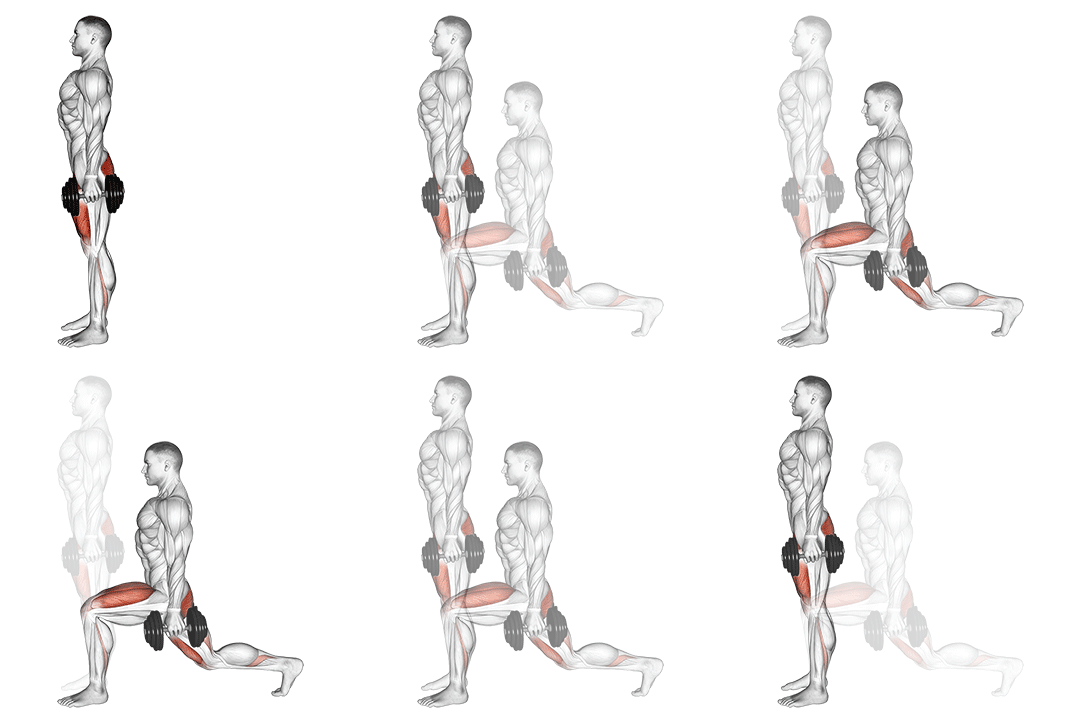
More comparisons with Dumbbell Contralateral Forward Lunge
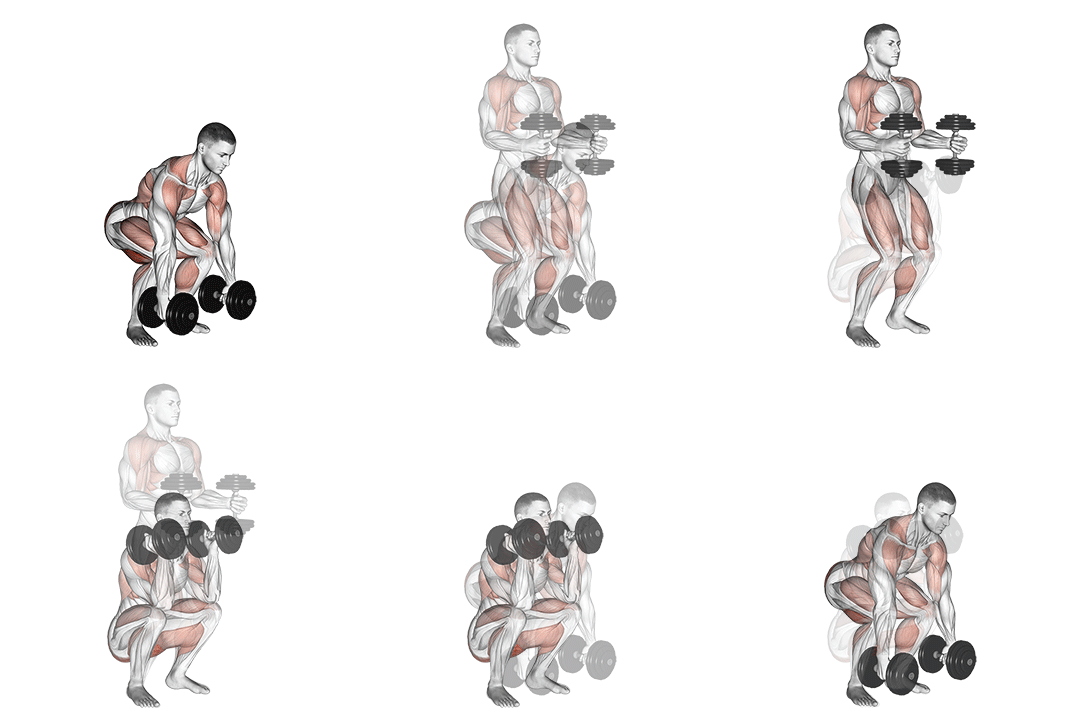
Compare More Exercises
Use our free comparison tool to analyze any two exercises head-to-head.
Compare Exercises