

Dumbbell Bench Squat vs Dumbbell Deadlift: Complete Comparison Guide
Dumbbell Bench Squat vs Dumbbell Deadlift — both train your glutes and upper-legs, but they load those muscles very differently. If you want clear guidance on which to use for muscle growth, strength, or home training, this comparison has your back. You'll get side-by-side muscle analysis, equipment needs, technique cues (including joint angles and rep ranges), progression tips, and injury-risk notes so you can pick the lift that matches your goals and training experience.
Exercise Comparison
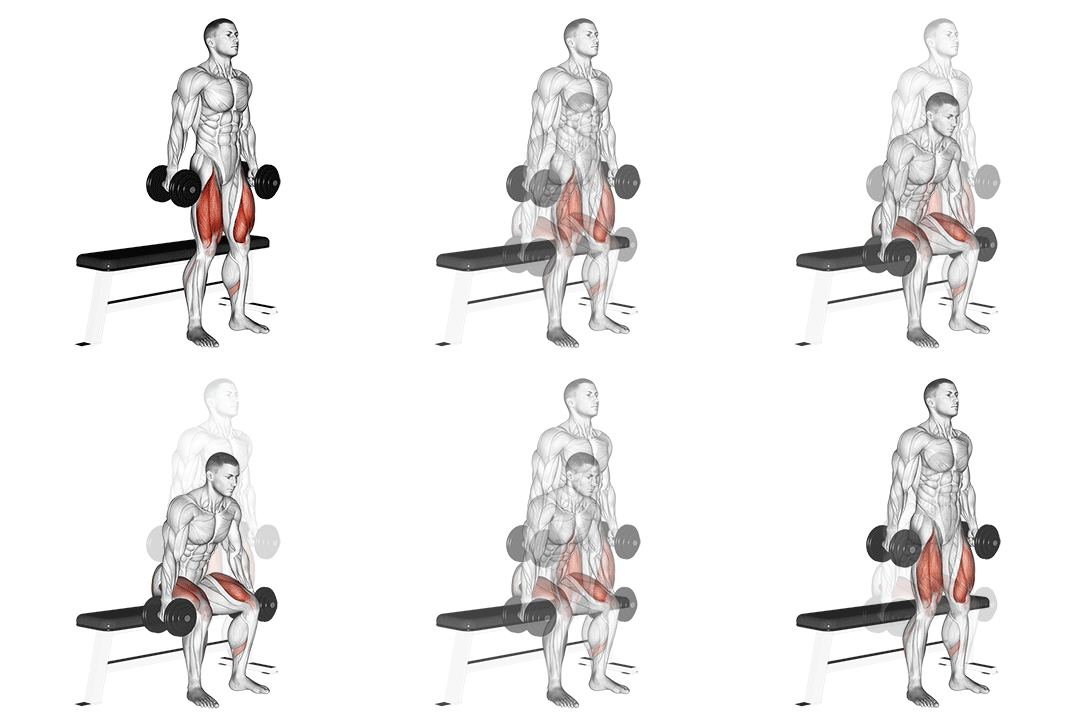
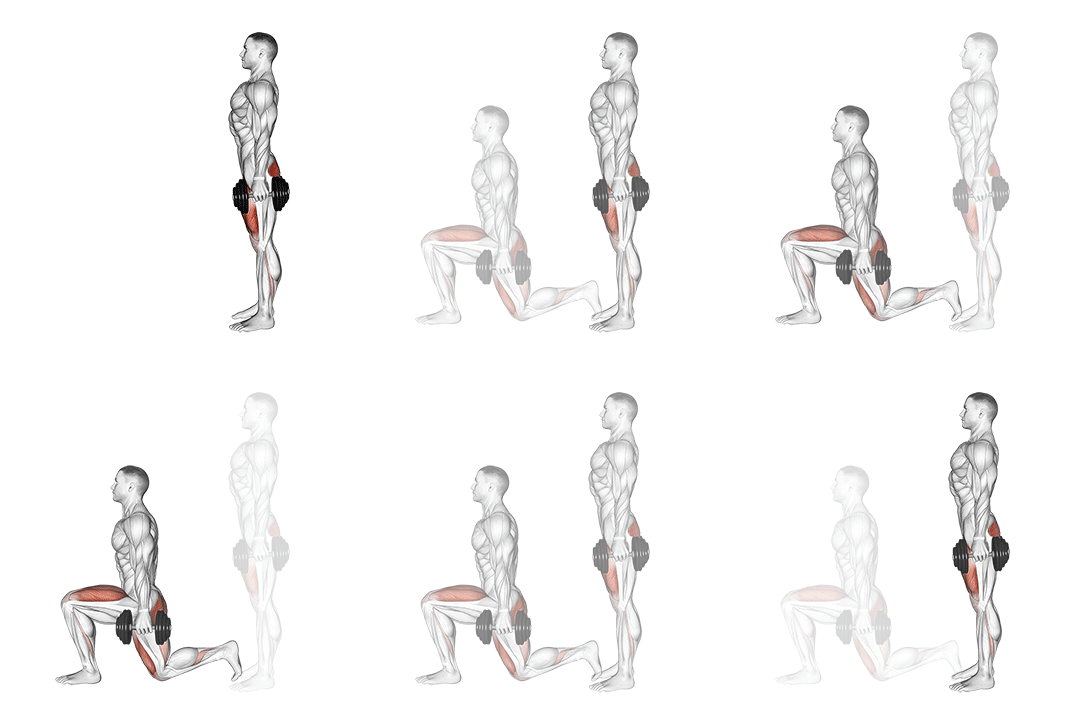
Dumbbell Bench Squat
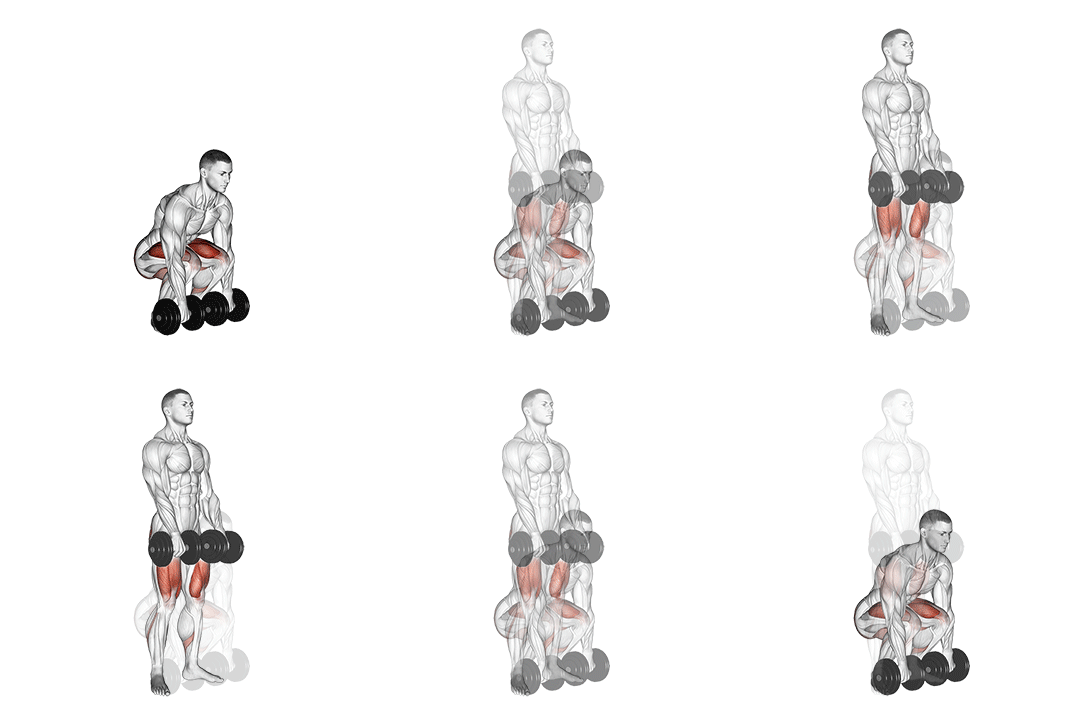
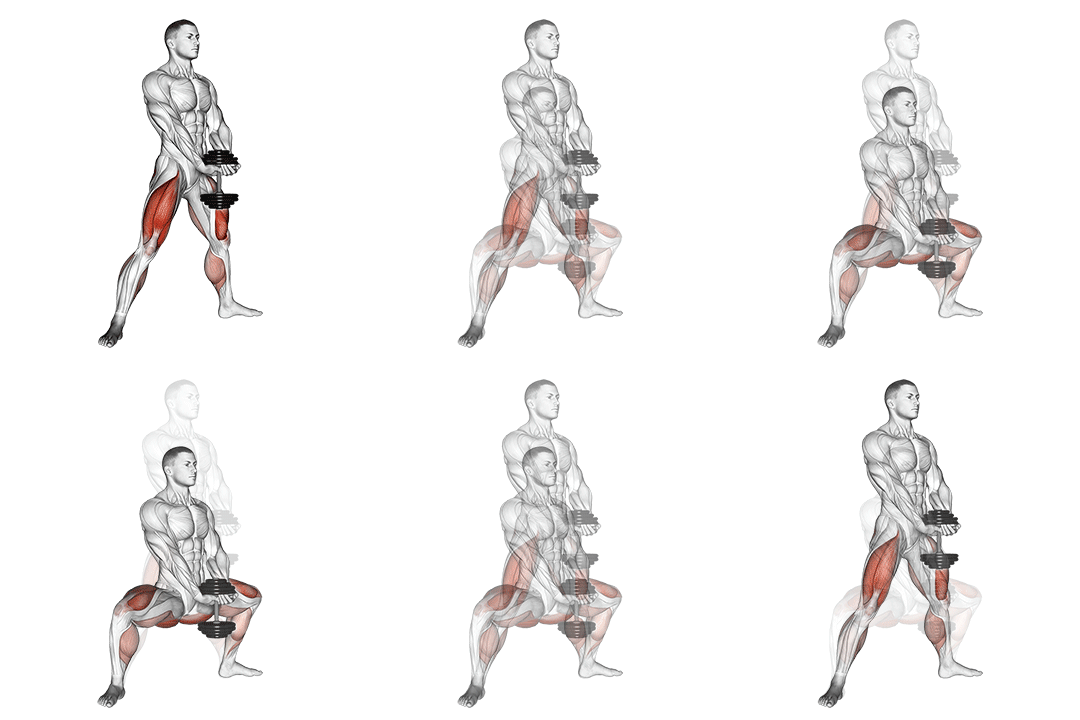
Dumbbell Deadlift
Head-to-Head Comparison
| Attribute | Dumbbell Bench Squat | Dumbbell Deadlift |
|---|---|---|
| Target Muscle |
Glutes
|
Glutes
|
| Body Part |
Upper-legs
|
Upper-legs
|
| Equipment |
Dumbbell
|
Dumbbell
|
| Difficulty |
Beginner
|
Intermediate
|
| Movement Type |
Compound
|
Compound
|
| Secondary Muscles |
3
|
2
|
Secondary Muscles Activated
Dumbbell Bench Squat
Dumbbell Deadlift
Visual Comparison
Overview
Dumbbell Bench Squat vs Dumbbell Deadlift — both train your glutes and upper-legs, but they load those muscles very differently. If you want clear guidance on which to use for muscle growth, strength, or home training, this comparison has your back. You'll get side-by-side muscle analysis, equipment needs, technique cues (including joint angles and rep ranges), progression tips, and injury-risk notes so you can pick the lift that matches your goals and training experience.
Key Differences
- Difficulty levels differ: Dumbbell Bench Squat is beginner, while Dumbbell Deadlift is intermediate.
- Both exercises target the Glutes using Dumbbell. The main differences are in their movement patterns and muscle activation angles.
Pros & Cons
Dumbbell Bench Squat
+ Pros
- Teaches a simple sit-to-stand pattern that’s beginner-friendly
- Consistent depth reduces mobility variables and helps progressive overload
- Strong quad and glute stimulus ideal for hypertrophy with 8–15 reps
- Can be performed safely in small spaces with light to moderate weights
− Cons
- Limited top-end loading with dumbbells compared to barbell or deadlift
- Less hamstring and posterior chain recruitment than deadlifts
- May under-train hinge mechanics crucial for athletic posterior strength
Dumbbell Deadlift
+ Pros
- Excellent posterior chain development — glutes, hamstrings, and lower back
- High potential for increasing absolute strength and hip-hinge power
- Transfers well to athletic movements that require hip drive
- Multiple variations (Romanian, deficit, single-leg) for specific adaptations
− Cons
- Higher technical demand — must master hip hinge and spinal bracing
- Greater lumbar loading increases injury risk if form breaks down
- Requires heavier dumbbells or alternative loading to progress strength optimally
When Each Exercise Wins
Bench squats let you target glutes and quads with consistent depth and higher rep ranges (8–15). The vertical force vector produces large knee extensor torque, making it easy to overload the quads while still hitting glutes effectively for hypertrophy.
Deadlifts load the posterior chain under high tension and allow heavier, low-rep work (3–6 reps). The longer hip moment arm and ability to progressively increase load make them superior for building maximal hip extension strength.
The bench enforces depth and reduces balance and hinge requirements, so you can focus on safe movement and build work capacity. It’s easier to teach and scale with lighter weights and higher reps.
You only need a bench or sturdy box plus moderate dumbbells, and the movement is safer in tight spaces. Deadlifts require heavier dumbbells to be equally effective and introduce higher technique demands.
Frequently Asked Questions
Can I do both Dumbbell Bench Squat and Dumbbell Deadlift in the same workout?
Yes — pair them strategically. Put deadlifts early in the session if you’re training maximal strength (low reps), and use bench squats later for higher-rep hypertrophy. Monitor overall volume to avoid excessive fatigue in the posterior chain and lower back.
Which exercise is better for beginners?
Dumbbell Bench Squat is better for most beginners because it enforces depth, reduces hinge mechanics, and is easier to cue. Start with 2–4 sets of 8–12 reps and focus on knee tracking and upright torso before adding heavier loads.
How do the muscle activation patterns differ?
Bench squats create peak quad activation during early ascent and strong glute firing near lockout due to dominant knee-extension torque at ~90° knee flexion. Deadlifts produce simultaneous hip and knee extension with sustained glute and hamstring activation because the hip moment arm is longer and the hamstrings work at greater length.
Can Dumbbell Deadlift replace Dumbbell Bench Squat?
Not entirely — deadlifts replace much posterior-chain work but under-emphasize knee extensor loading compared with bench squats. If your goal is balanced quad and glute development, keep both in your program or substitute with targeted quad variations when needed.
Expert Verdict
Use Dumbbell Bench Squat when you want a simple, repeatable lift that reliably targets glutes and quads with low technical demand — ideal for hypertrophy work at 8–15 reps and for beginners or tight spaces. Choose Dumbbell Deadlift when your priority is posterior chain strength, hip-hinge proficiency, and heavier loading in the 3–6 rep range; it produces greater hamstring and lumbar recruitment and translates to higher force outputs. If your goal is balanced development, rotate both: use bench squats for high-volume blocks and deadlifts for strength-focused phases, while managing load and technique to minimize injury risk.
Also Compare
More comparisons with Dumbbell Bench Squat
Compare More Exercises
Use our free comparison tool to analyze any two exercises head-to-head.
Compare Exercises