

Dumbbell Bench Squat vs Dumbbell Lunge: Complete Comparison Guide
Dumbbell Bench Squat vs Dumbbell Lunge is a showdown between a beginner-friendly, stable bilateral lift and a more challenging unilateral movement. You’ll get clear cues, biomechanics, and rep-range recommendations so you can pick the one that fits your goals. I’ll cover primary and secondary muscle activation, equipment needs, learning curve, injury risk, and when to use each exercise in your program. Expect specific technique tips (bench height, step length, knee angles) and decisive recommendations for hypertrophy, strength, beginners, and home workouts.
Exercise Comparison
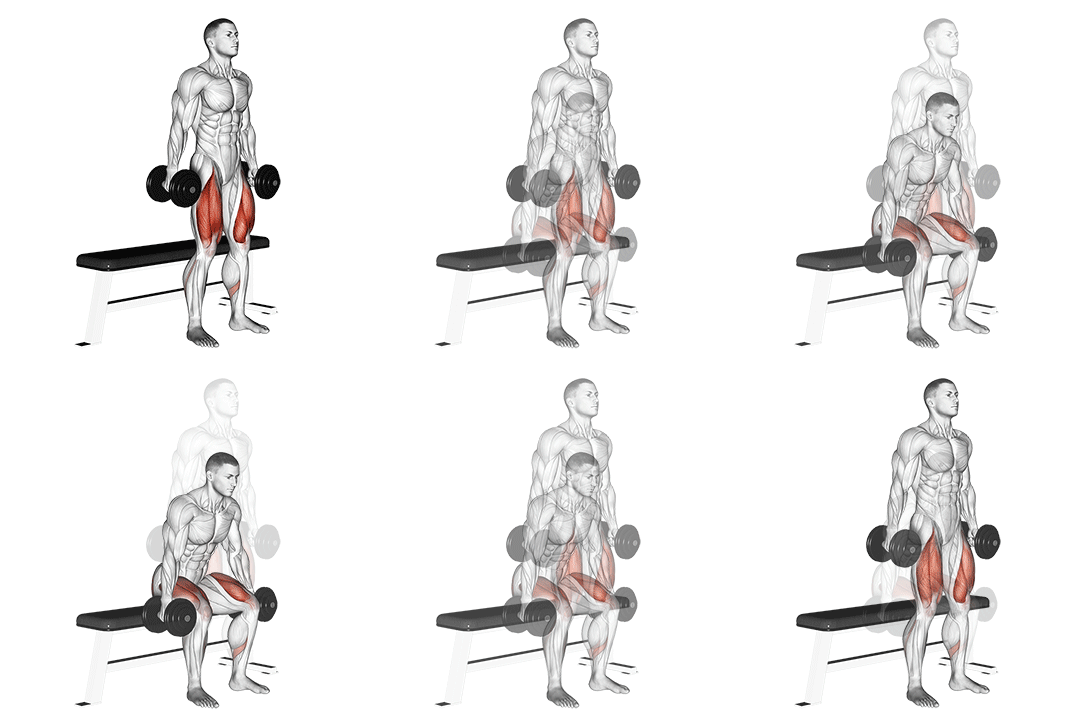
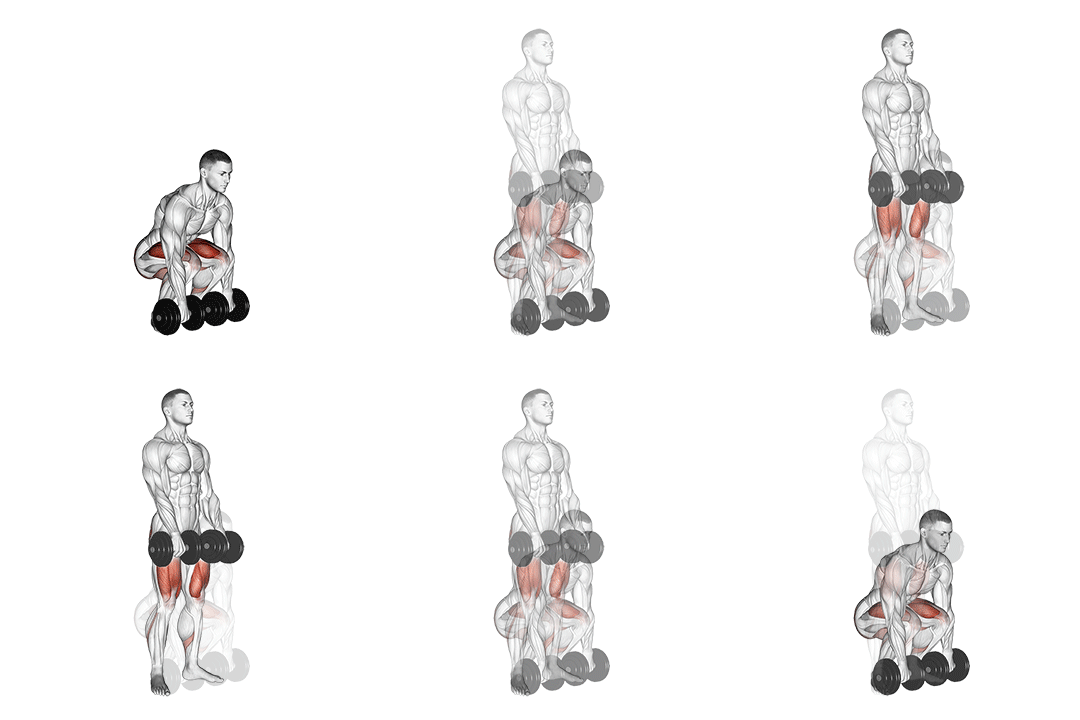
Dumbbell Bench Squat
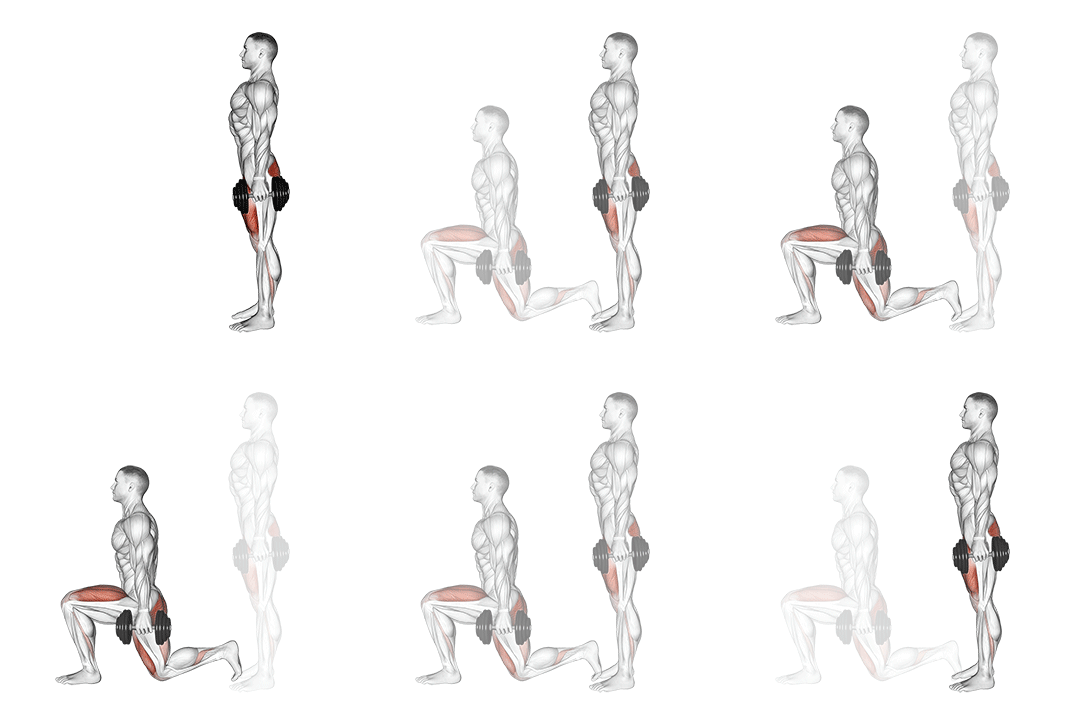
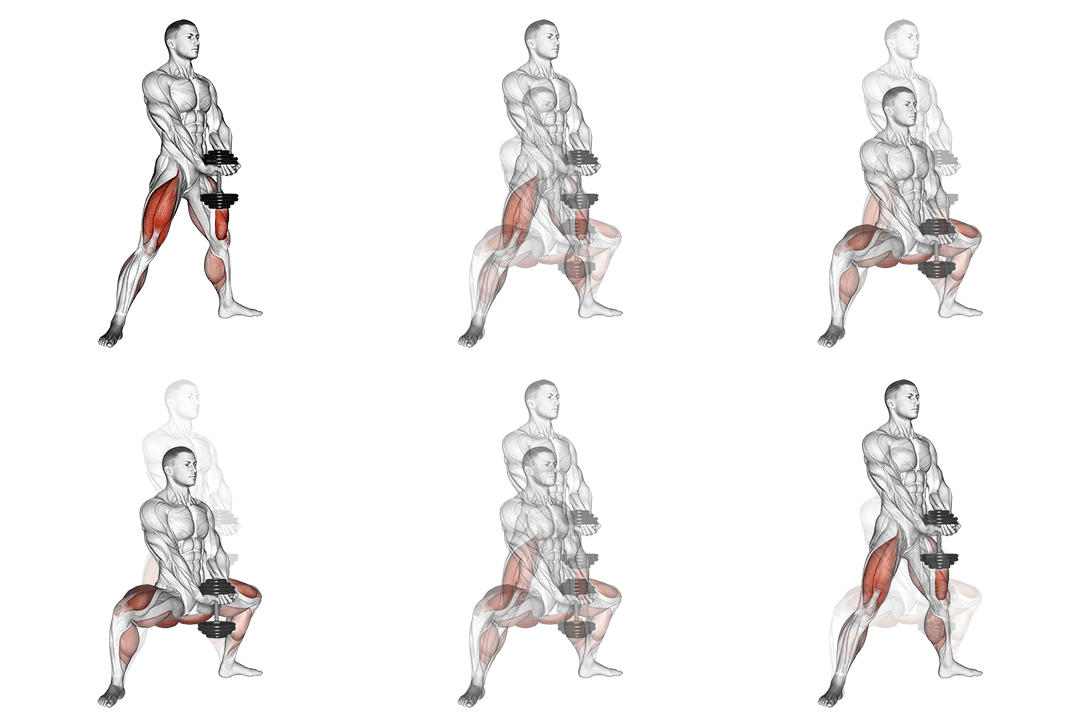
Dumbbell Lunge
Head-to-Head Comparison
| Attribute | Dumbbell Bench Squat | Dumbbell Lunge |
|---|---|---|
| Target Muscle |
Glutes
|
Glutes
|
| Body Part |
Upper-legs
|
Upper-legs
|
| Equipment |
Dumbbell
|
Dumbbell
|
| Difficulty |
Beginner
|
Intermediate
|
| Movement Type |
Compound
|
Compound
|
| Secondary Muscles |
3
|
3
|
Secondary Muscles Activated
Dumbbell Bench Squat
Dumbbell Lunge
Visual Comparison
Overview
Dumbbell Bench Squat vs Dumbbell Lunge is a showdown between a beginner-friendly, stable bilateral lift and a more challenging unilateral movement. You’ll get clear cues, biomechanics, and rep-range recommendations so you can pick the one that fits your goals. I’ll cover primary and secondary muscle activation, equipment needs, learning curve, injury risk, and when to use each exercise in your program. Expect specific technique tips (bench height, step length, knee angles) and decisive recommendations for hypertrophy, strength, beginners, and home workouts.
Key Differences
- Difficulty levels differ: Dumbbell Bench Squat is beginner, while Dumbbell Lunge is intermediate.
- Both exercises target the Glutes using Dumbbell. The main differences are in their movement patterns and muscle activation angles.
Pros & Cons
Dumbbell Bench Squat
+ Pros
- Beginner-friendly with consistent depth thanks to the bench
- Stable bilateral loading lets you use heavier absolute load
- Easier to teach and cue (sit back, chest up, press through heels)
- Lower balance requirement reduces risk for novices
− Cons
- Limited unilateral development and single-leg stability carryover
- Smaller hip extension range compared to long-stride lunges
- Requires a bench or box, which reduces pure home accessibility
Dumbbell Lunge
+ Pros
- Higher unilateral glute activation and improved muscle balance
- No bench required—excellent for home and minimalist setups
- Versatile progressions (walking, reverse, Bulgarian split)
- Improves stability, coordination, and single-leg strength
− Cons
- Harder to master balance and step-length mechanics
- Greater technique demand increases risk of knee strain if form breaks down
- Typically limits absolute load compared to bilateral lifts
When Each Exercise Wins
Dumbbell Lunge wins because unilateral loading and the longer hip extension range place the glute under higher peak tension and better length-tension angles. Use 8–12 reps, 3–5 sets, and vary step length to emphasize stretch and contraction for progressive muscle growth.
Dumbbell Bench Squat allows more stable bilateral force production and heavier absolute loads, which is better for developing lower-body strength. Focus on lower rep ranges (3–6) and slow eccentrics to build force capacity while maintaining a solid torso angle.
Dumbbell Bench Squat is simpler to learn because the bench enforces depth and reduces balance demands. Cue a neutral spine, sit back to lightly touch the bench at ~90° knee flexion, and press through the heels to minimize technical errors.
Dumbbell Lunge requires minimal equipment—just dumbbells and space—so it’s superior for home training. Use reverse or stationary lunges if ceiling height or space limits walking lunges.
Frequently Asked Questions
Can I do both Dumbbell Bench Squat and Dumbbell Lunge in the same workout?
Yes. Pair them by using the bench squat as your heavy bilateral compound (3–6 reps) and lunges later for unilateral volume (8–12 reps). Keep total weekly volume in mind to avoid excessive fatigue—alternate emphasis across sessions if needed.
Which exercise is better for beginners?
Dumbbell Bench Squat is better for most beginners because the bench enforces depth and reduces balance demands. Start with light weight, a neutral spine, and a controlled sit-back to build motor patterning before adding unilateral work.
How do the muscle activation patterns differ?
Bench squats produce symmetrical bilateral force and steady glute tension through concentric hip extension, while lunges produce higher unilateral peak glute contractions during push-off and require more eccentric control. Changes in step length and torso angle shift force vectors and muscle emphasis.
Can Dumbbell Lunge replace Dumbbell Bench Squat?
Lunges can replace bench squats if your goal is unilateral hypertrophy and you have limited equipment, but they don’t fully substitute for the maximal bilateral force stimulus that bench squats provide. For strength-focused cycles, keep bilateral loading in the program.
Expert Verdict
Choose the Dumbbell Bench Squat when you want a safe, repeatable bilateral lift that’s easy to cue and scale for strength. It’s ideal for beginners and programs emphasizing heavy bilateral loading or high-frequency training because the bench limits depth and balance issues. Pick the Dumbbell Lunge when your priority is unilateral muscle growth, single-leg strength, and functional balance. Lunges put the glute into a longer length-tension range and demand more stabilizer recruitment. For most lifters, a mixed approach—bench squats for strength blocks and lunges for hypertrophy or corrective phases—gives the most complete development.
Also Compare
More comparisons with Dumbbell Bench Squat
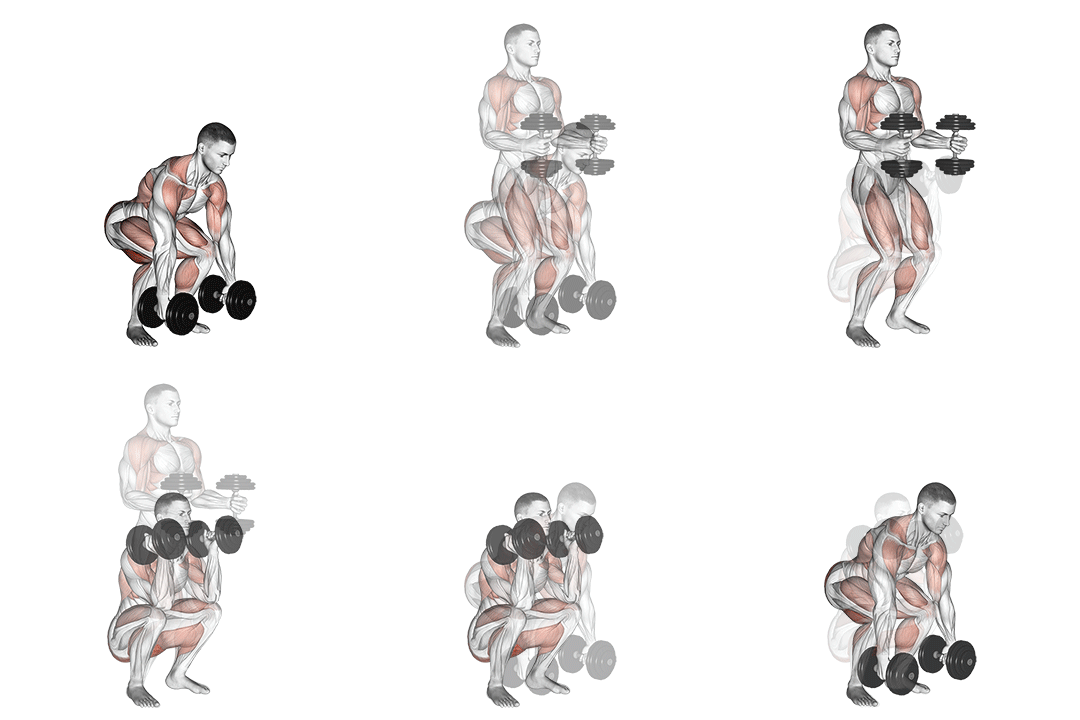
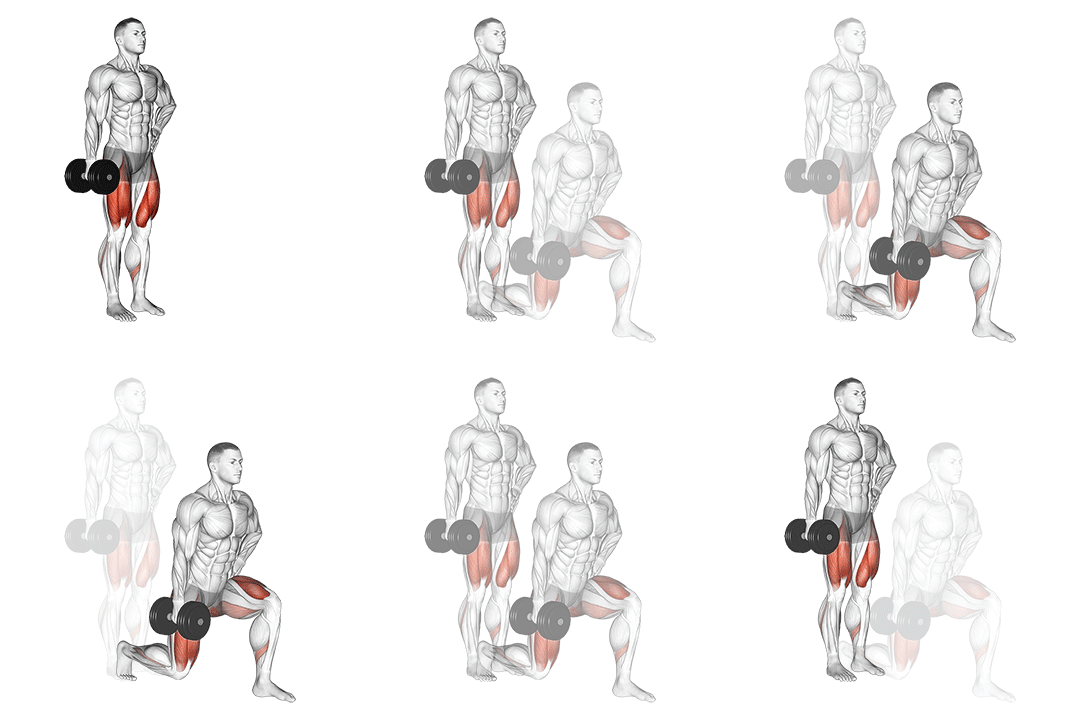
Compare More Exercises
Use our free comparison tool to analyze any two exercises head-to-head.
Compare Exercises