

Dumbbell Bench Squat vs Dumbbell Plyo Squat: Complete Comparison Guide
Dumbbell Bench Squat vs Dumbbell Plyo Squat — two loaded, compound moves that both target your glutes and upper legs but produce very different outcomes. You’ll get a clear side-by-side breakdown of muscle emphasis, equipment needs, learning curve, and when to pick each for hypertrophy, strength, power, or home workouts. I’ll give specific technique cues (joint angles, rep ranges, tempo), explain the biomechanics (length-tension, force vectors, stretch-shortening cycle), and end with decisive recommendations so you can choose the right move for your goals.
Exercise Comparison
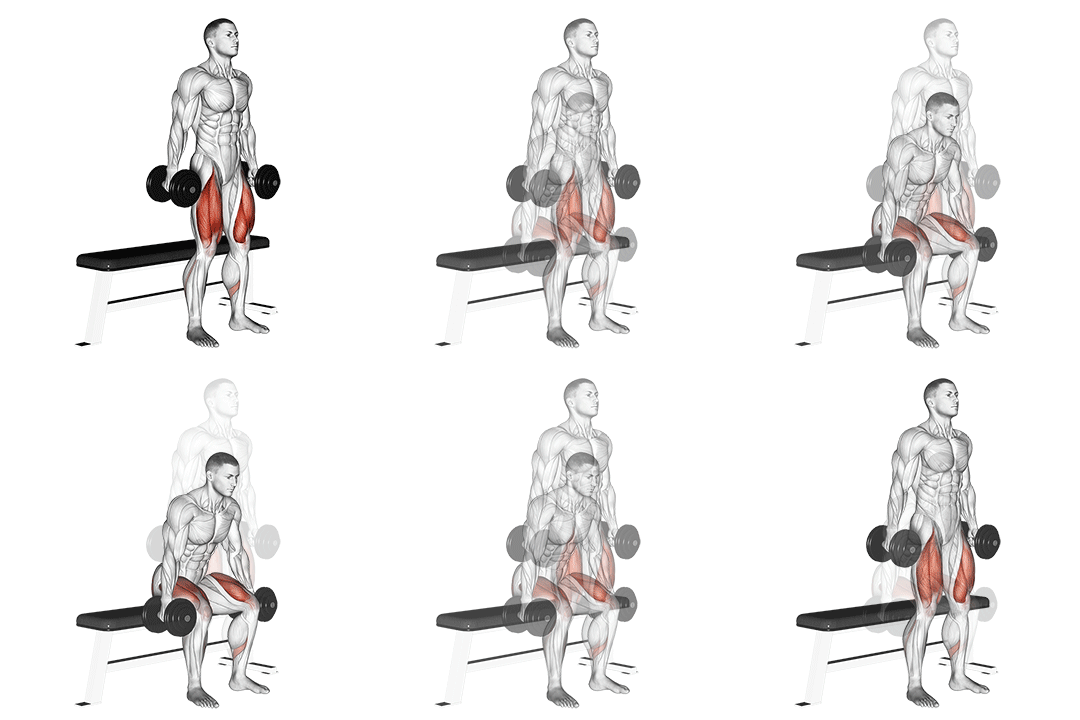
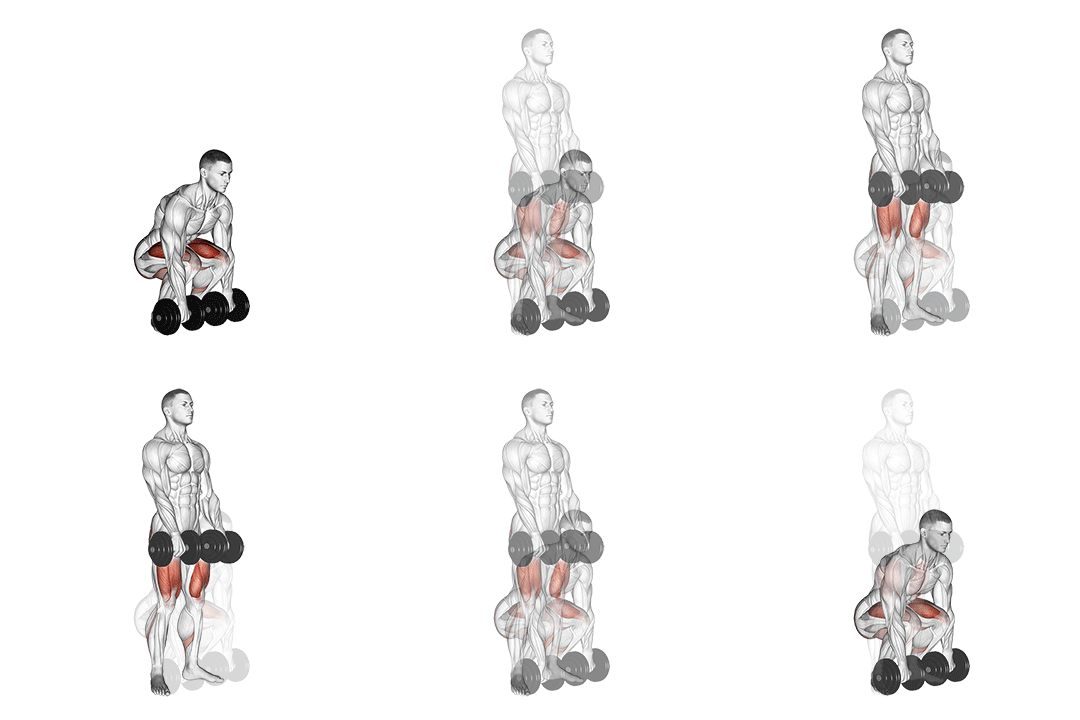
Dumbbell Bench Squat
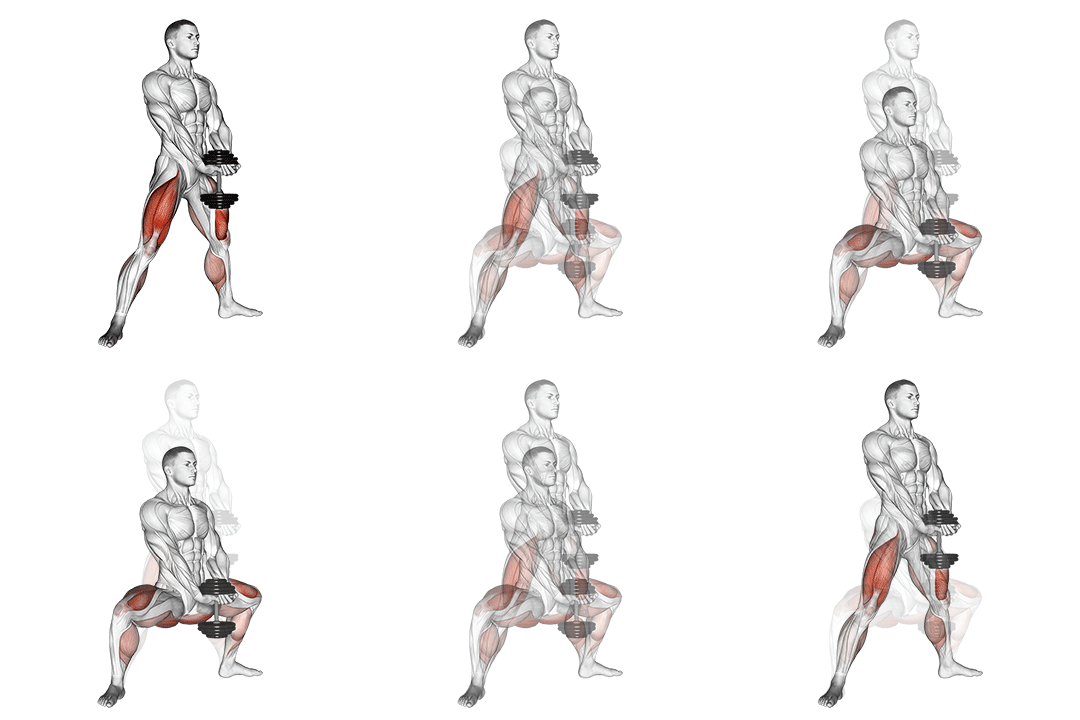
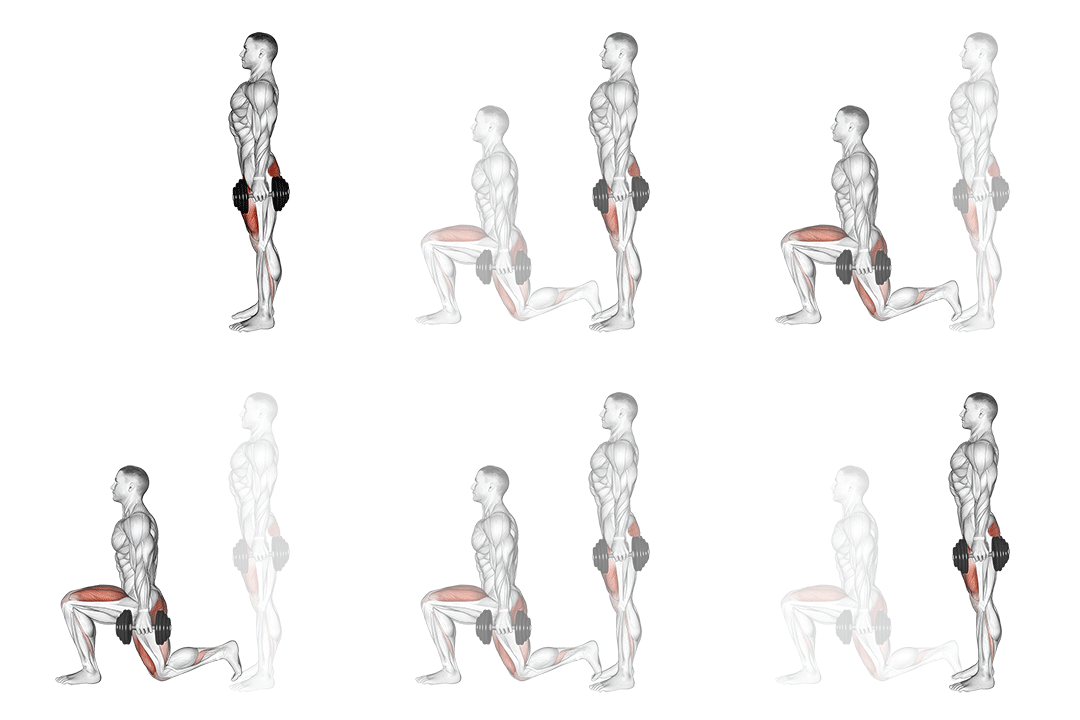
Dumbbell Plyo Squat
Head-to-Head Comparison
| Attribute | Dumbbell Bench Squat | Dumbbell Plyo Squat |
|---|---|---|
| Target Muscle |
Glutes
|
Glutes
|
| Body Part |
Upper-legs
|
Upper-legs
|
| Equipment |
Dumbbell
|
Dumbbell
|
| Difficulty |
Beginner
|
Advanced
|
| Movement Type |
Compound
|
Compound
|
| Secondary Muscles |
3
|
3
|
Secondary Muscles Activated
Dumbbell Bench Squat
Dumbbell Plyo Squat
Visual Comparison
Overview
Dumbbell Bench Squat vs Dumbbell Plyo Squat — two loaded, compound moves that both target your glutes and upper legs but produce very different outcomes. You’ll get a clear side-by-side breakdown of muscle emphasis, equipment needs, learning curve, and when to pick each for hypertrophy, strength, power, or home workouts. I’ll give specific technique cues (joint angles, rep ranges, tempo), explain the biomechanics (length-tension, force vectors, stretch-shortening cycle), and end with decisive recommendations so you can choose the right move for your goals.
Key Differences
- Difficulty levels differ: Dumbbell Bench Squat is beginner, while Dumbbell Plyo Squat is advanced.
- Both exercises target the Glutes using Dumbbell. The main differences are in their movement patterns and muscle activation angles.
Pros & Cons
Dumbbell Bench Squat
+ Pros
- Easy to learn and scale by weight or bench height
- Excellent for glute and quad hypertrophy due to controlled time under tension
- Lower impact—sits you to a fixed depth to protect knees and teach depth control
- Clear progression options: heavier dumbbells, slower tempo, paused reps
− Cons
- Less carryover to explosive power and rate of force development
- Limited ankle and calf engagement compared with plyometrics
- Can encourage a more upright torso if you don’t cue a proper hip hinge
Dumbbell Plyo Squat
+ Pros
- Builds power and rate of force development via the stretch-shortening cycle
- Higher recruitment of fast-twitch fibers for athletic performance
- Improves reactive strength and plyometric capacity
- Adds conditioning value and trains coordinated triple extension
− Cons
- Higher impact and greater injury risk without good landing mechanics
- Harder to load progressively with heavy dumbbells for pure hypertrophy
- Requires more space, better flooring, and advanced motor control
When Each Exercise Wins
The bench squat gives more controlled time under tension and allows heavier, slower reps (6–12 reps, 3–5 sets) with a consistent depth (~90° knee angle). That sustained concentric loading and the ability to manipulate tempo drives greater mechanical tension for muscle growth.
Strength improves best with heavier, controlled loading and full-range hip extension. Bench squats let you steadily increase dumbbell load and include paused or tempo variations, which better build maximal force than short, explosive plyo sets.
Beginners benefit from the fixed depth and lower-impact nature of the bench squat while learning hip-hinge mechanics and knee tracking. Use cues: chest up, knees tracking toes, sit to ~90° then drive through heels.
Most homes have a stable chair or bench and a small footprint for the move; plyo squats need more clearance, flooring, and landing control. Bench squats can be safely scaled with house dumbbells or a backpack for progressive overload.
Frequently Asked Questions
Can I do both Dumbbell Bench Squat and Dumbbell Plyo Squat in the same workout?
Yes. Pair them strategically: do bench squats earlier if your goal is strength or hypertrophy (3–5 sets of 6–12), then use plyo squats later for power (3–6 sets of 3–6 explosive reps). Allow 48–72 hours between intense sessions to recover tendons and central nervous system.
Which exercise is better for beginners?
Dumbbell Bench Squat is better for beginners because it enforces depth, reduces impact, and simplifies load progression. Learn proper hip hinge, knee tracking, and chest position before attempting high-velocity plyometric work.
How do the muscle activation patterns differ?
Bench squats emphasize sustained concentric and eccentric tension with peak glute activation at full extension and steady quadriceps torque across the concentric. Plyo squats stress rapid eccentric-to-concentric transitions, increasing rate of force development and recruiting more fast-twitch motor units, with extra calf involvement on takeoff and hamstring braking on landing.
Can Dumbbell Plyo Squat replace Dumbbell Bench Squat?
No—plyo squats complement but don’t fully replace bench squats. Plyos build power and explosiveness, while bench squats provide controlled mechanical tension and a clearer path to progressive overload for muscle growth and maximal strength.
Expert Verdict
Use the Dumbbell Bench Squat when your goal is consistent muscle growth, strength, or when you need a low-impact, easy-to-teach movement. It lets you control depth (about 90° knee flexion), load the glutes and quads deliberately, and manipulate tempo (try 3s descent, 1s pause, explosive 1s up for hypertrophy). Choose the Dumbbell Plyo Squat when you want to develop power, reactive strength, and sport-specific explosiveness—use short sets (3–6 sets of 3–8 explosive reps), focus on soft, hip-and-knee-dominant landings, and ensure a safe surface. In practice, prioritize bench squats for base strength and add plyo squats later to convert that strength into speed and power.
Also Compare
More comparisons with Dumbbell Bench Squat
Compare More Exercises
Use our free comparison tool to analyze any two exercises head-to-head.
Compare Exercises