

Dumbbell Bench Squat vs Dumbbell Rear Lunge: Complete Comparison Guide
Dumbbell Bench Squat vs Dumbbell Rear Lunge — you’re choosing between a supported bilateral movement and a dynamic unilateral pattern. I’ll walk you through how each targets the glutes and upper-legs, compare muscle activation and biomechanics, list equipment and difficulty, and give actionable technique cues and rep ranges so you can pick the better option for hypertrophy, strength, beginners, or home workouts.
Exercise Comparison
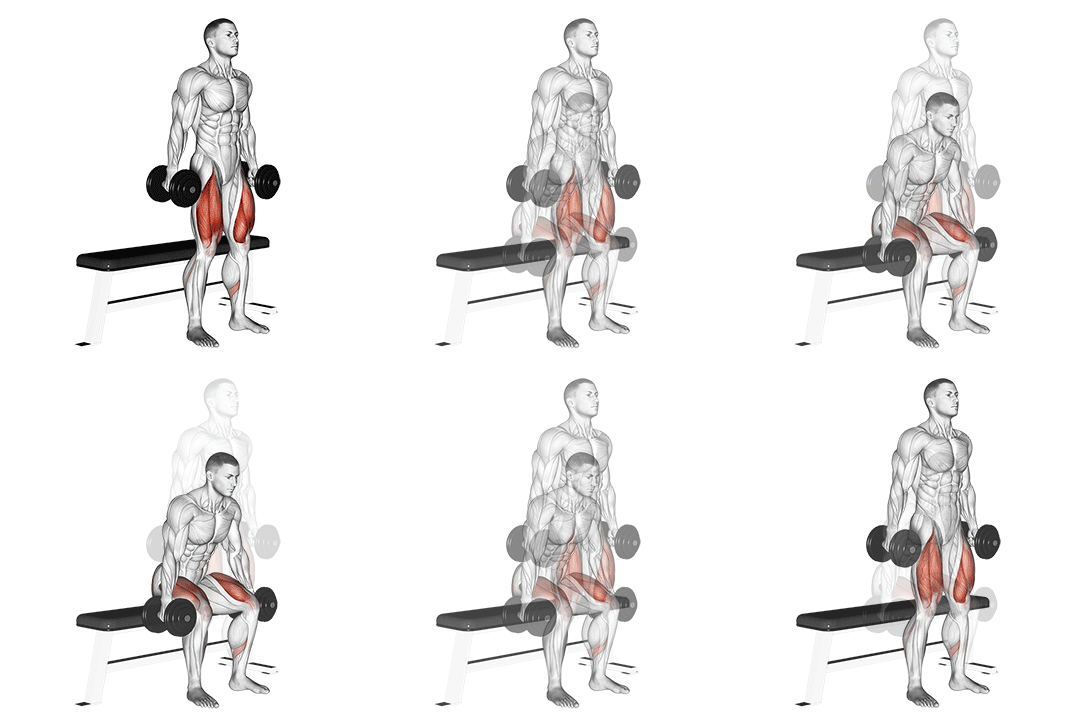
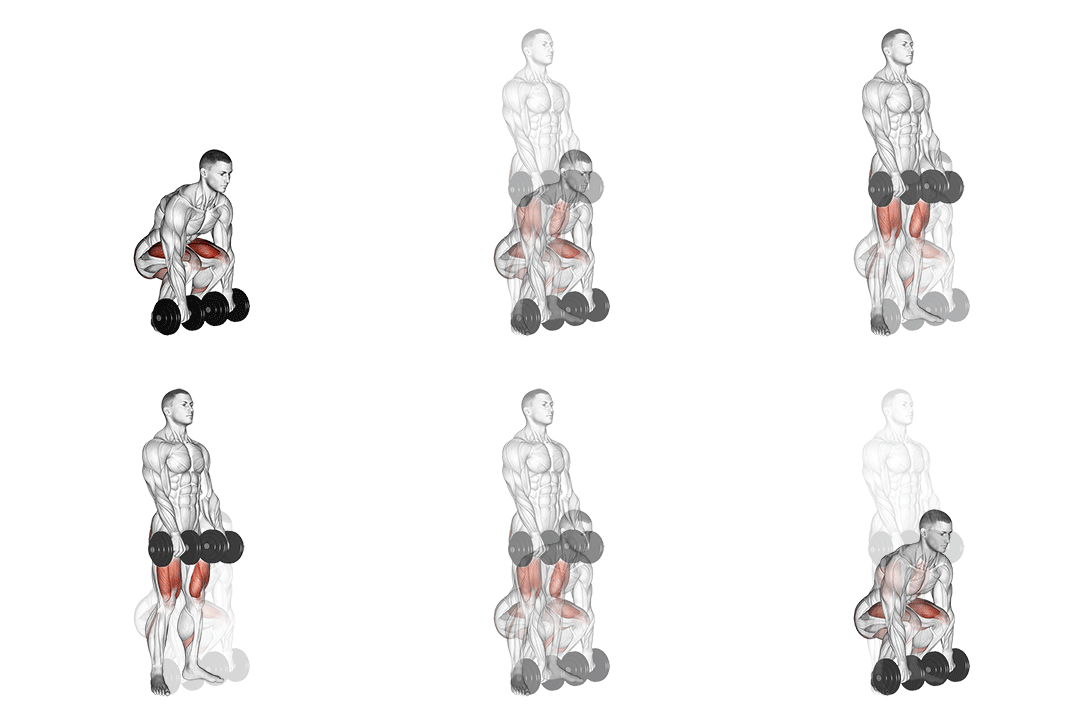
Dumbbell Bench Squat
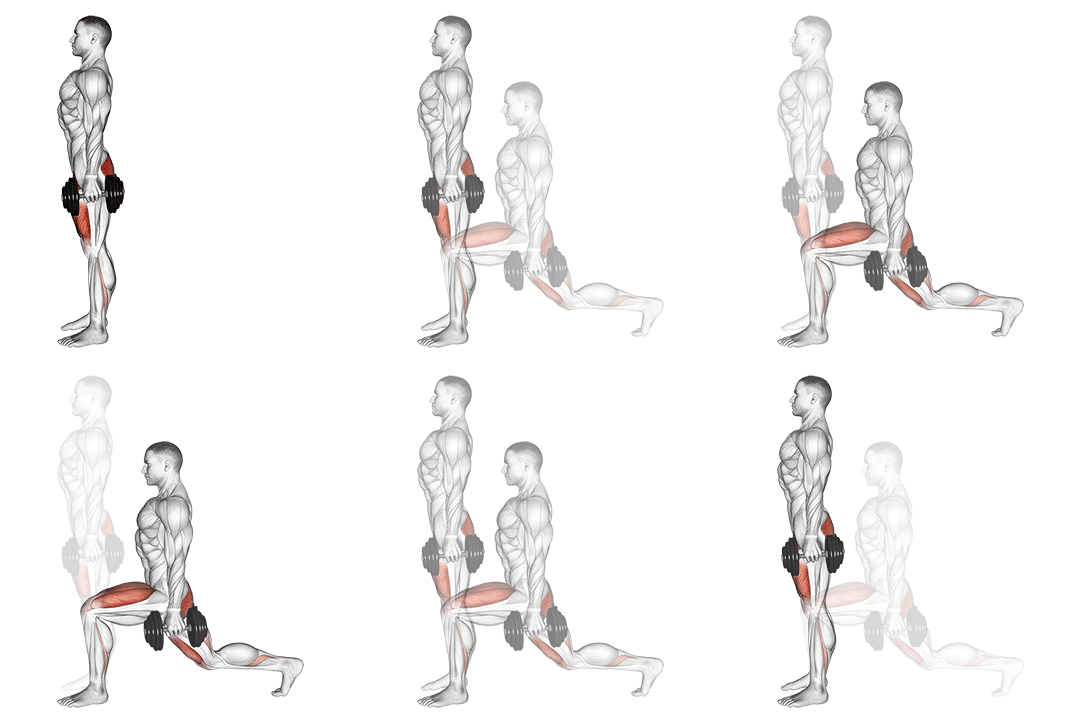
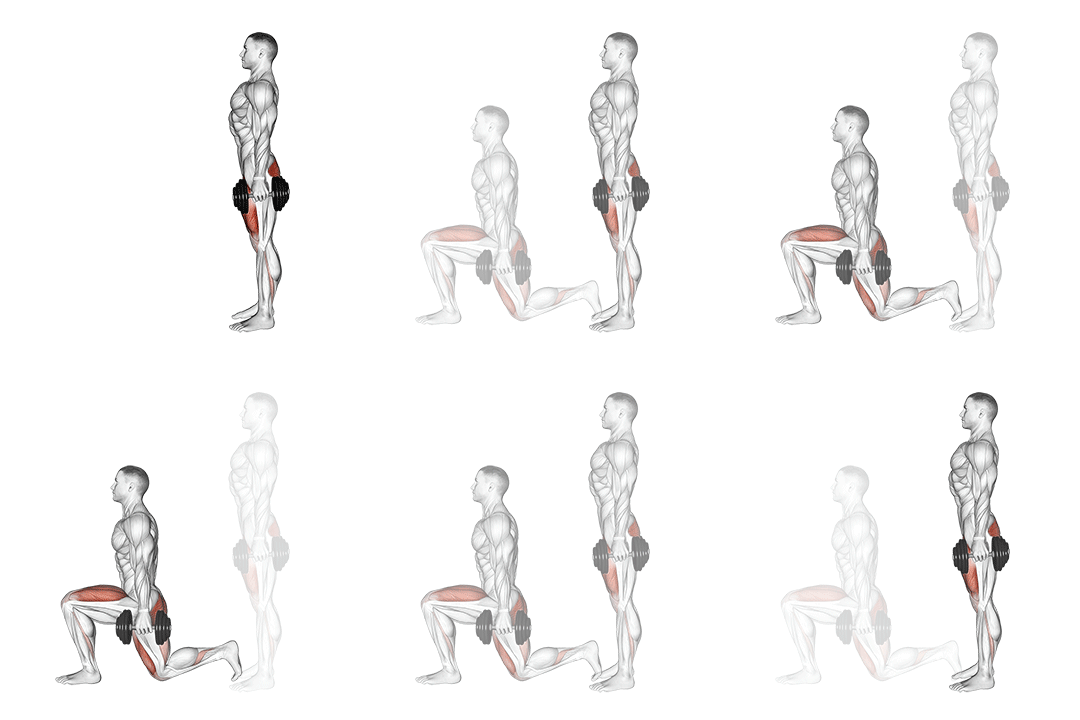
Dumbbell Rear Lunge
Head-to-Head Comparison
| Attribute | Dumbbell Bench Squat | Dumbbell Rear Lunge |
|---|---|---|
| Target Muscle |
Glutes
|
Glutes
|
| Body Part |
Upper-legs
|
Upper-legs
|
| Equipment |
Dumbbell
|
Dumbbell
|
| Difficulty |
Beginner
|
Intermediate
|
| Movement Type |
Compound
|
Compound
|
| Secondary Muscles |
3
|
3
|
Secondary Muscles Activated
Dumbbell Bench Squat
Dumbbell Rear Lunge
Visual Comparison
Overview
Dumbbell Bench Squat vs Dumbbell Rear Lunge — you’re choosing between a supported bilateral movement and a dynamic unilateral pattern. I’ll walk you through how each targets the glutes and upper-legs, compare muscle activation and biomechanics, list equipment and difficulty, and give actionable technique cues and rep ranges so you can pick the better option for hypertrophy, strength, beginners, or home workouts.
Key Differences
- Difficulty levels differ: Dumbbell Bench Squat is beginner, while Dumbbell Rear Lunge is intermediate.
- Both exercises target the Glutes using Dumbbell. The main differences are in their movement patterns and muscle activation angles.
Pros & Cons
Dumbbell Bench Squat
+ Pros
- Stable, repeatable depth (bench forces ~90° knee flexion)
- Easier to learn and coach — good for beginners
- Allows safer bilateral loading for heavier weight
- Better for consistent hypertrophy work with controlled tempo (6–12 reps)
− Cons
- Less challenge to single-leg stability and glute-med activation
- Requires a bench or sturdy box
- Can bias quads if torso is too upright, reducing hip-dominant stimulus
Dumbbell Rear Lunge
+ Pros
- Strong unilateral glute activation and balance training
- Improves asymmetries and single-leg stability
- Requires minimal equipment — great for home use
- Easily progressed via range, tempo, and unilateral overload (8–15 reps per leg)
− Cons
- Higher technical and balance demands — harder for beginners
- Increased risk of inconsistent depth and knee tracking
- Harder to load very heavily compared to bilateral movements
When Each Exercise Wins
The bench squat lets you use heavier bilateral loads and consistent depth, producing greater total mechanical tension per rep — the primary driver of muscle growth. Use 6–12 reps, 3–5 sets, slow 2–3s eccentrics to maximize time under tension.
Bilateral patterns allow higher absolute loading and better transfer to maximal strength. Perform lower-rep sets (4–6) with heavier dumbbells and focus on concentric drive and hip/knee extension force production.
Beginners benefit from the bench’s depth control and reduced balance requirements, letting you learn hip-hinge and knee-extension mechanics safely while training glutes and quads.
Rear lunges require only dumbbells and minimal space, delivering high glute and stabilizer activation without a bench. They’re scalable for progressive overload with tempo, added reps, or unilateral weight increases.
Frequently Asked Questions
Can I do both Dumbbell Bench Squat and Dumbbell Rear Lunge in the same workout?
Yes — pairing them works well: start with heavy Dumbbell Bench Squats for bilateral load and strength (4–6 or 6–12 reps), then add Dumbbell Rear Lunges as a unilateral accessory (8–12 reps per leg) to address imbalances and boost glute-med activation.
Which exercise is better for beginners?
Dumbbell Bench Squat is easier for beginners because the bench enforces depth and reduces balance demands, allowing you to learn hip and knee extension patterns safely before progressing to unilateral work.
How do the muscle activation patterns differ?
Bench squats create a more symmetric activation with higher knee-extension torque and vertical force, favoring quads and bilateral glute drive. Rear lunges impose a longer eccentric stretch and greater unilateral hip-extension demand, increasing front-leg glute and gluteus medius activation plus stabilizer recruitment.
Can Dumbbell Rear Lunge replace Dumbbell Bench Squat?
Not entirely — rear lunges can replace bench squats for unilateral strength, stability, and home training, but they’re harder to load maximally. For pure bilateral strength and maximal mechanical tension per rep, keep the bench squat in your program.
Expert Verdict
Use the Dumbbell Bench Squat when you want a beginner-friendly, bilateral lift that reliably hits the glutes and quads with consistent depth and heavier loading — ideal for hypertrophy (6–12 reps) and raw strength (4–6 reps). Choose the Dumbbell Rear Lunge when you need unilateral strength, improved balance, and glute-med activation; program 8–15 reps per leg and emphasize controlled eccentric lengthening and hip extension. Biomechanically, bench squats bias vertical force and knee torque, while rear lunges lengthen the glute through a longer hip-extension arc and add stabilizer demand. Combine both across training blocks: use bench squats for load-based phases and rear lunges for unilateral and corrective phases.
Also Compare
More comparisons with Dumbbell Bench Squat
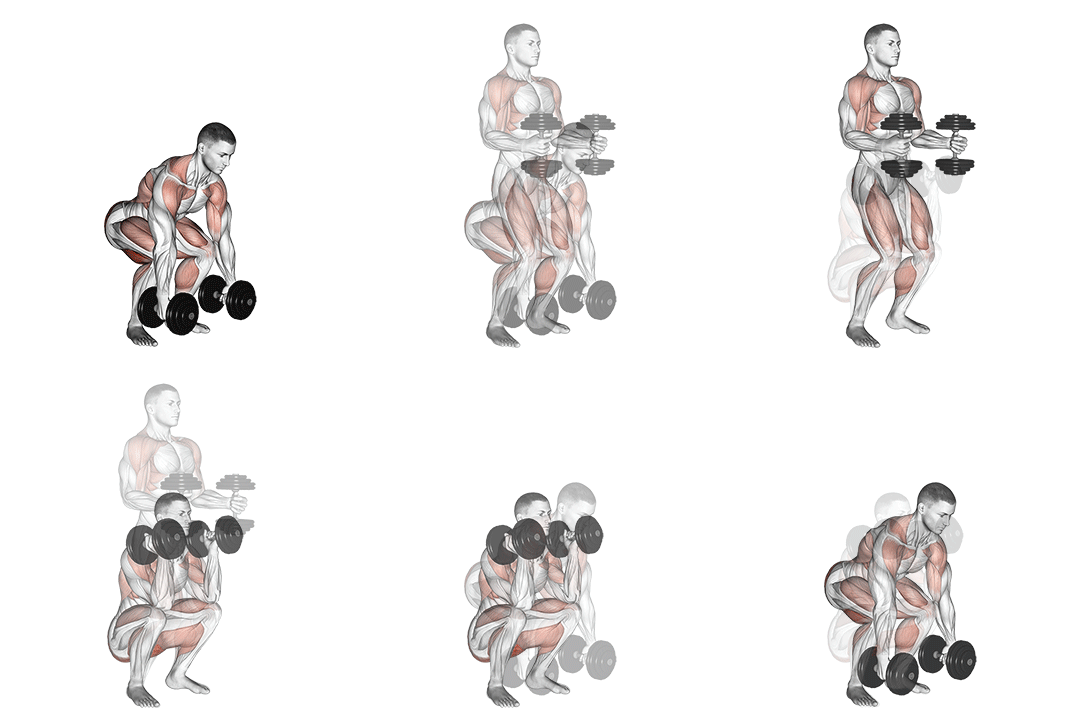
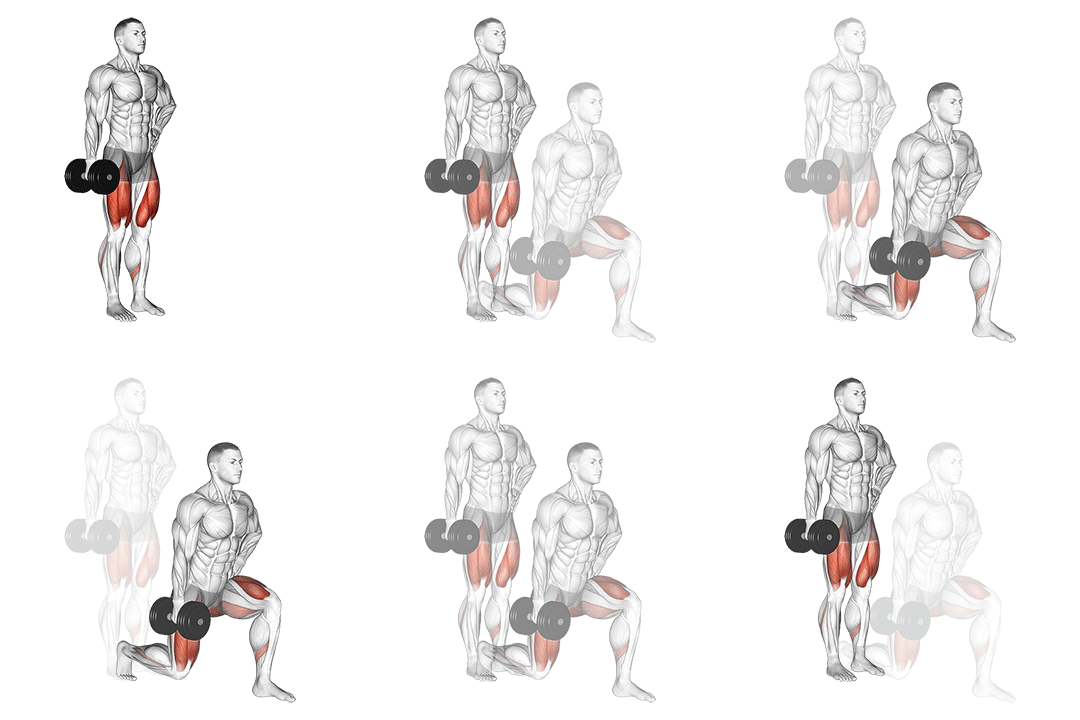
Compare More Exercises
Use our free comparison tool to analyze any two exercises head-to-head.
Compare Exercises