

Dumbbell Burpee vs Recumbent Bike: Complete Comparison Guide
Dumbbell Burpee vs Recumbent Bike is a useful matchup if you want to choose between explosive, full-body conditioning and steady, joint-friendly quad work. You’ll get clear comparisons of muscle activation, biomechanics, equipment needs, learning curve, and injury risk so you can pick the right tool for your goals. I’ll break down how each exercise loads the quads, how secondary muscles behave, practical rep ranges and progression ideas, plus who should favor each option for muscle growth, strength, endurance, or rehab-friendly training.
Exercise Comparison
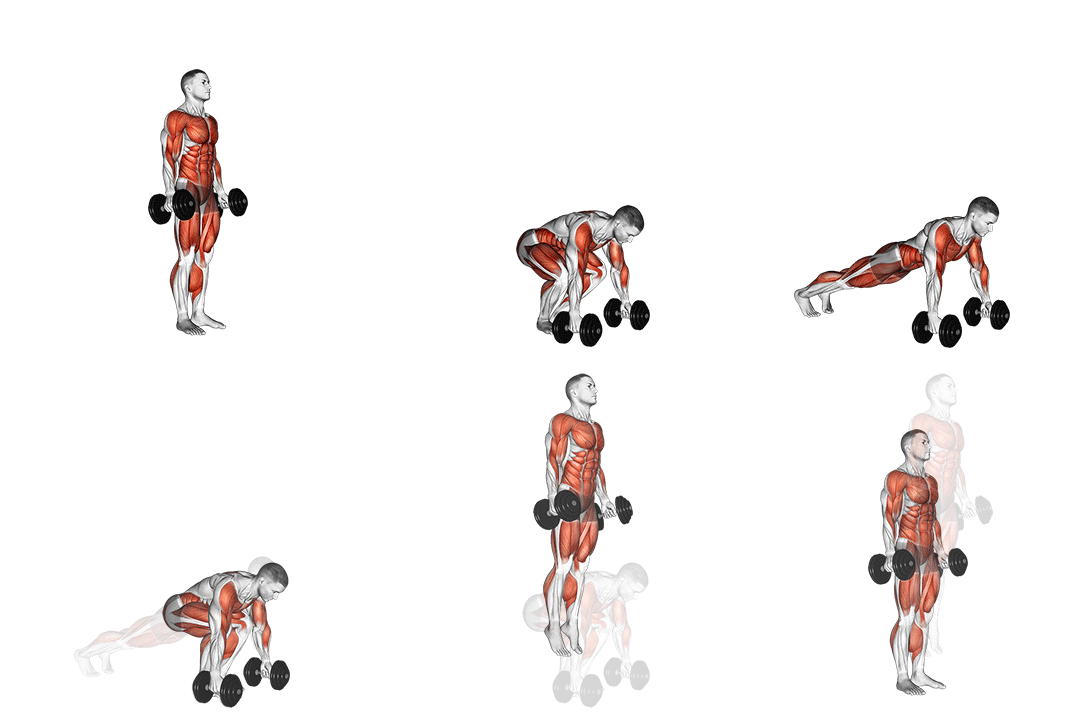
Dumbbell Burpee
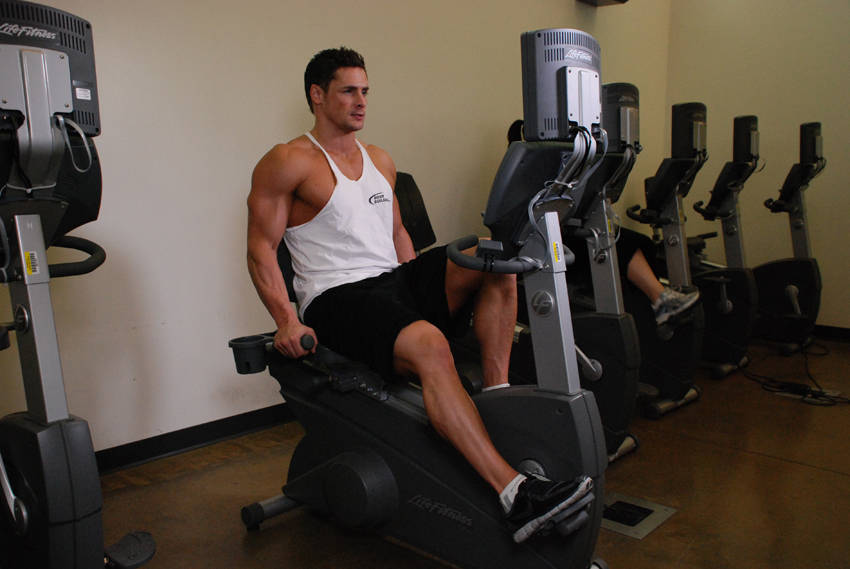
Recumbent Bike
Head-to-Head Comparison
| Attribute | Dumbbell Burpee | Recumbent Bike |
|---|---|---|
| Target Muscle |
Quads
|
Quads
|
| Body Part |
Cardio
|
Cardio
|
| Equipment |
Dumbbell
|
Machine
|
| Difficulty |
Advanced
|
Beginner
|
| Movement Type |
Compound
|
Compound
|
| Secondary Muscles |
6
|
3
|
Secondary Muscles Activated
Dumbbell Burpee
Recumbent Bike
Visual Comparison
Overview
Dumbbell Burpee vs Recumbent Bike is a useful matchup if you want to choose between explosive, full-body conditioning and steady, joint-friendly quad work. You’ll get clear comparisons of muscle activation, biomechanics, equipment needs, learning curve, and injury risk so you can pick the right tool for your goals. I’ll break down how each exercise loads the quads, how secondary muscles behave, practical rep ranges and progression ideas, plus who should favor each option for muscle growth, strength, endurance, or rehab-friendly training.
Key Differences
- Equipment differs: Dumbbell Burpee uses Dumbbell, while Recumbent Bike requires Machine.
- Difficulty levels differ: Dumbbell Burpee is advanced, while Recumbent Bike is beginner.
Pros & Cons
Dumbbell Burpee
+ Pros
- High systemic metabolic and neuromuscular stimulus for conditioning and power.
- Engages shoulders, triceps, core and posterior chain along with quads for full-body training.
- Easy to scale intensity via heavier dumbbells, tempo changes, or added reps (e.g., 6–12 strength reps or 8–20 conditioning reps).
- Requires minimal equipment and space for home workouts.
− Cons
- High technical demand and coordination requirement.
- Higher impact and greater acute injury risk, especially to knees, shoulders, and low back.
- Harder to target quads in isolation or maintain consistent, measurable loading for hypertrophy.
Recumbent Bike
+ Pros
- Low-impact, joint-friendly way to load quads with consistent resistance and long time-under-tension.
- Very easy to control intensity with resistance levels and cadence for precise conditioning or hypertrophy-style work.
- Minimal technical skill required; seat adjustments ensure repeatable biomechanics.
- Excellent for steady-state cardio and interval training with predictable cardiovascular load.
− Cons
- Limited upper-body and core engagement compared to burpees.
- Requires access to a machine and more space/cost than a single dumbbell.
- Can be monotonous and offers fewer options for explosive power development.
When Each Exercise Wins
Recumbent biking allows long sets (20–40+ minutes or high-rep intervals) and consistent resistance, producing greater time-under-tension for the quads and more precise load progression for muscle growth.
Burpees develop multi-joint strength, explosive power, and rate of force development through high-torque, multi-planar movements; loading with heavier dumbbells or weighted vests drives functional strength adaptations.
The bike has a low learning curve, adjustable resistance, and minimal impact, letting beginners build quad conditioning and cardiovascular fitness safely.
With a single dumbbell and a small floor area you can replicate intense conditioning and full-body work at home without investing in bulky equipment.
Frequently Asked Questions
Can I do both Dumbbell Burpee and Recumbent Bike in the same workout?
Yes. Use Dumbbell Burpees early to train power and high-intensity strength (3–6 sets of 6–12 reps) and finish on the Recumbent Bike for controlled quad volume or low-impact intervals (10–20 minutes or 6–10 x 1-minute efforts). Alternate order if you want the bike as active recovery between burpee sets.
Which exercise is better for beginners?
Recumbent Bike is better for beginners because it reduces technical demand and impact while allowing gradual resistance progression. Start with 10–20 minute sessions at moderate cadence and adjust seat position to avoid knee overextension.
How do the muscle activation patterns differ?
Burpees create short, high-amplitude activation bursts with rapid concentric-eccentric cycles and significant shoulder and core involvement. The recumbent bike produces cyclic, lower-amplitude but continuous quad contractions with predictable joint angles and minimal spinal loading.
Can Recumbent Bike replace Dumbbell Burpee?
Not fully. The bike can replace burpees for low-impact quad conditioning and hypertrophy work, but it won’t replicate the upper-body, core engagement, or explosive plyometric stimulus that burpees provide. Match the tool to your goal: endurance/hypertrophy choose bike, power/conditioning choose burpees.
Expert Verdict
Choose the Recumbent Bike when your priority is controlled quad overload, long-duration conditioning, or rehabilitation — it provides repeatable joint angles, adjustable resistance, and low impact for sustained time-under-tension. Pick Dumbbell Burpees when you want explosive power, multi-joint coordination, and a metabolic conditioning tool that also taxes shoulders, triceps, hamstrings, calves, and core. For muscle growth specifically in the quads, prioritize the bike or a heavy resistance protocol (30–60 minute rides or high-resistance intervals); for strength and athleticism, program burpee variations with 3–6 sets of 6–12 challenging reps or short 15–60 second all-out intervals.
Also Compare
More comparisons with Dumbbell Burpee
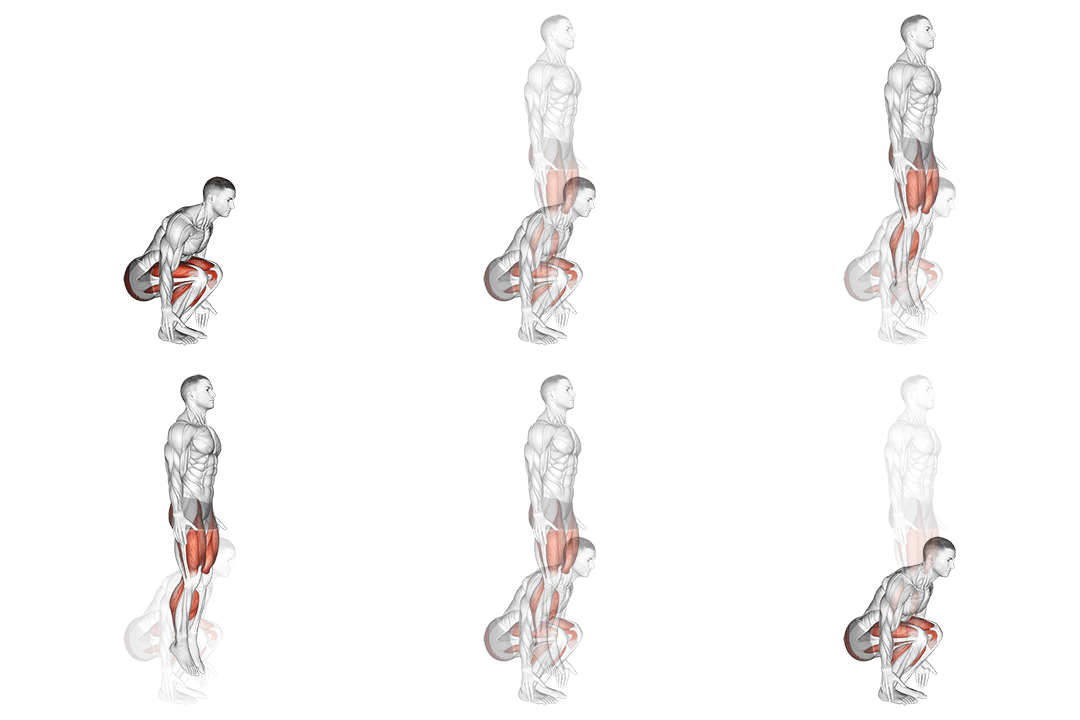

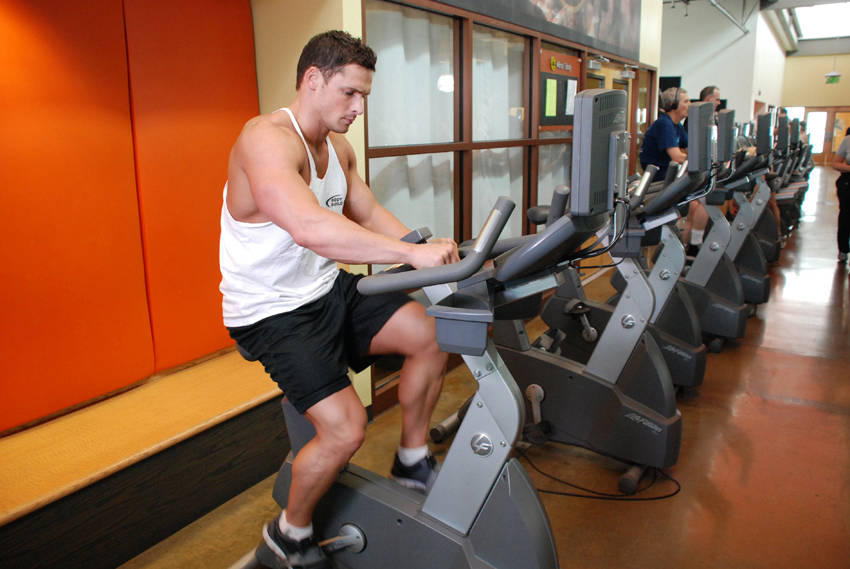

Compare More Exercises
Use our free comparison tool to analyze any two exercises head-to-head.
Compare Exercises