

Dumbbell Burpee vs Semi Squat Jump (male): Complete Comparison Guide
Dumbbell Burpee vs Semi Squat Jump (male) — pick the move that fits your goals. You want conditioning that also taxes the quads, and this comparison cuts through the noise. I’ll show you how each move loads the quads, how the force vectors and joint mechanics differ, what equipment you need, and which drill to use for hypertrophy, strength, or conditioning. You’ll get specific technique cues (hip hinge, neutral spine, knee angle targets), rep ranges (6–12 for strength/hypertrophy, 8–20 for conditioning), and clear winner scenarios so you can decide quickly.
Exercise Comparison
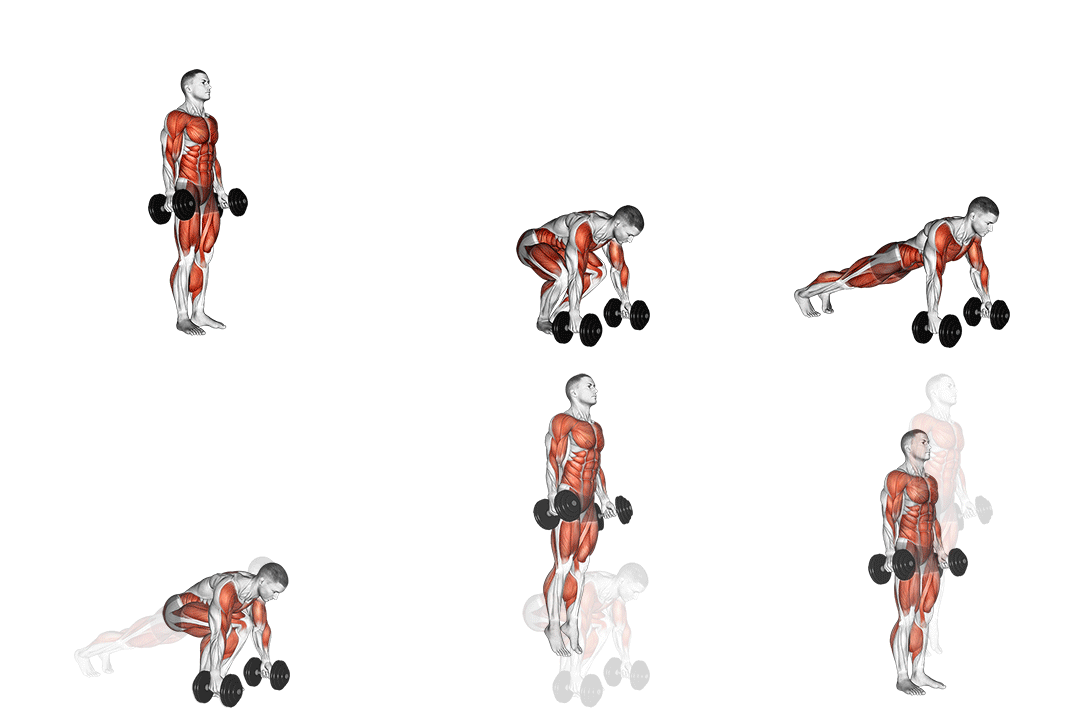
Dumbbell Burpee
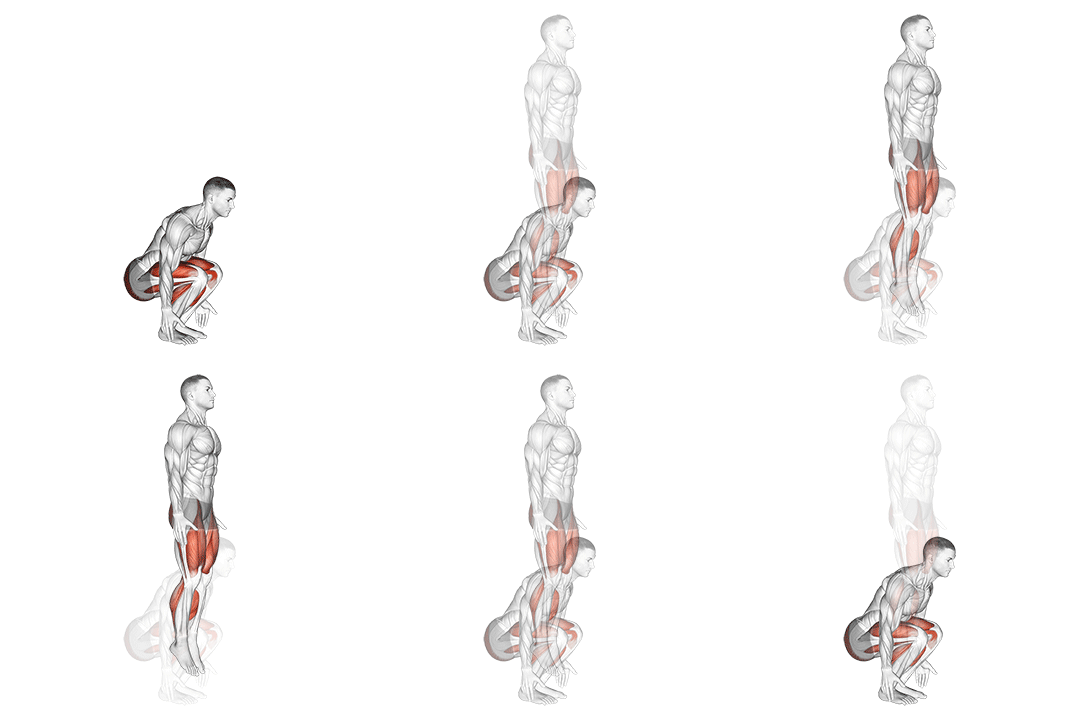
Semi Squat Jump (male)
Head-to-Head Comparison
| Attribute | Dumbbell Burpee | Semi Squat Jump (male) |
|---|---|---|
| Target Muscle |
Quads
|
Quads
|
| Body Part |
Cardio
|
Cardio
|
| Equipment |
Dumbbell
|
Body-weight
|
| Difficulty |
Advanced
|
Intermediate
|
| Movement Type |
Compound
|
Compound
|
| Secondary Muscles |
6
|
3
|
Secondary Muscles Activated
Dumbbell Burpee
Semi Squat Jump (male)
Visual Comparison
Overview
Dumbbell Burpee vs Semi Squat Jump (male) — pick the move that fits your goals. You want conditioning that also taxes the quads, and this comparison cuts through the noise. I’ll show you how each move loads the quads, how the force vectors and joint mechanics differ, what equipment you need, and which drill to use for hypertrophy, strength, or conditioning. You’ll get specific technique cues (hip hinge, neutral spine, knee angle targets), rep ranges (6–12 for strength/hypertrophy, 8–20 for conditioning), and clear winner scenarios so you can decide quickly.
Key Differences
- Equipment differs: Dumbbell Burpee uses Dumbbell, while Semi Squat Jump (male) requires Body-weight.
- Difficulty levels differ: Dumbbell Burpee is advanced, while Semi Squat Jump (male) is intermediate.
Pros & Cons
Dumbbell Burpee
+ Pros
- Full-body conditioning plus quad overload through added external load
- Greater progression options by increasing dumbbell mass or complexity
- Higher core and upper-body recruitment for integrated strength
- Longer time under tension aids muscle growth when programmed (6–12 rep ranges)
− Cons
- Higher technical demand — complex transitions increase error risk
- Requires dumbbells and safe space
- Greater potential for lumbar or shoulder strain if form breaks
Semi Squat Jump (male)
+ Pros
- No equipment — highly accessible for home or field work
- Excellent for explosive power and improving rate of force development
- Lower technical overhead — simpler pattern to coach
- Easier to program for high-rep conditioning sets (8–20+ reps)
− Cons
- Limited load progression for maximal strength or hypertrophy
- Higher repeated-impact stress on knees and ankles
- Less upper-body and core stimulus compared with a loaded burpee
When Each Exercise Wins
Dumbbell Burpee lets you add external load and increase time under tension, targeting quads with both eccentric and concentric phases — aim for 6–12 reps per set with controlled tempo to maximize quad hypertrophy.
Because you can progressively overload with heavier dumbbells and manipulate leverage, the Dumbbell Burpee provides better mechanical tension for strength development across knees, hips, and shoulders.
Semi Squat Jump has a simpler movement pattern and lower technical barriers; teach a controlled 45°–60° squat start and soft landing to build quad power and confidence before adding complex load-bearing moves.
No equipment and minimal space make the Semi Squat Jump ideal for home sessions. You still get substantial quad and cardio stimulus without needing dumbbells or extra gear.
Frequently Asked Questions
Can I do both Dumbbell Burpee and Semi Squat Jump (male) in the same workout?
Yes — pair them strategically. Use Semi Squat Jumps early in the session as a power primer (2–4 sets of 3–6 explosive reps), then perform Dumbbell Burpees later for loaded conditioning or hypertrophy. Monitor fatigue to avoid form breakdown on loaded reps.
Which exercise is better for beginners?
Semi Squat Jump (male) is better for most beginners because it has fewer technical demands. Start with bodyweight jumps, focus on a soft landing and knee alignment, then progress to loaded or more complex movements as strength and coordination improve.
How do the muscle activation patterns differ?
Semi Squat Jump prioritizes rapid concentric knee extension and plantarflexion with high rate of force development; muscle activation spikes briefly. Dumbbell Burpee produces longer time under tension with alternating eccentric, isometric and concentric phases, increasing sustained quad, core, and shoulder activity.
Can Semi Squat Jump (male) replace Dumbbell Burpee?
It can replace Dumbbell Burpee when your goal is power or conditioning without equipment, but not when you need progressive overload for hypertrophy or upper-body conditioning. Choose replacement only if you accept lower upper-body stimulus and limited absolute load progression.
Expert Verdict
Use the Dumbbell Burpee when you want a loaded, full-body conditioning movement that also drives quad hypertrophy and upper-body strength — program it in sets of 4–6 with 6–12 reps for muscle growth or 3–5 sets of 4–8 reps for strength, keeping spine neutral during transitions. Choose the Semi Squat Jump when your priority is explosive power, conditioning, or limited equipment — perform 3–6 sets of 6–12 reps or higher-rep AMRAP intervals, cueing a 45°–60° start, rapid knee extension, and soft landing to manage impact. Both moves have value; pick the one that matches your load options, technical skill, and joint resilience.
Also Compare
More comparisons with Dumbbell Burpee
Compare More Exercises
Use our free comparison tool to analyze any two exercises head-to-head.
Compare Exercises