

Dumbbell Clean vs Dumbbell Contralateral Forward Lunge: Complete Comparison Guide
Dumbbell Clean vs Dumbbell Contralateral Forward Lunge puts an explosive hip-dominant lift against a unilateral, control-focused lunge. If you want clearer choices for glute development, power, balance, and programming, you’re in the right place. I’ll break down primary and secondary muscle activation, biomechanics (force vectors, joint angles, length-tension), equipment needs, learning curve, progression routes, and practical rep ranges so you can pick the best move for your goals.
Exercise Comparison
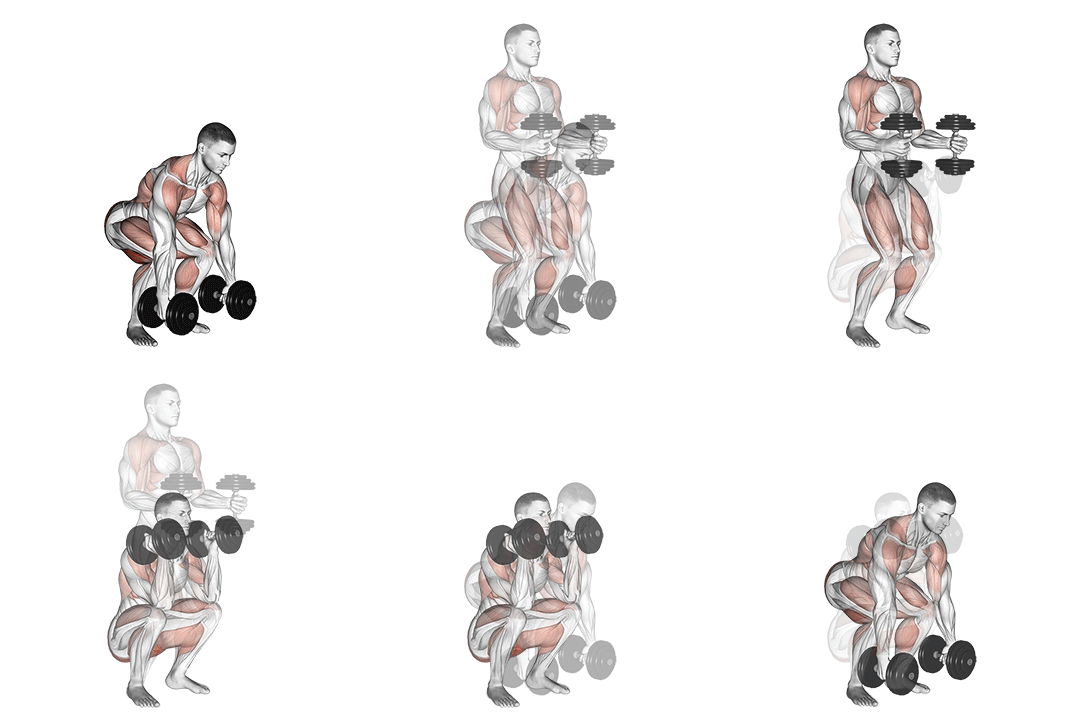
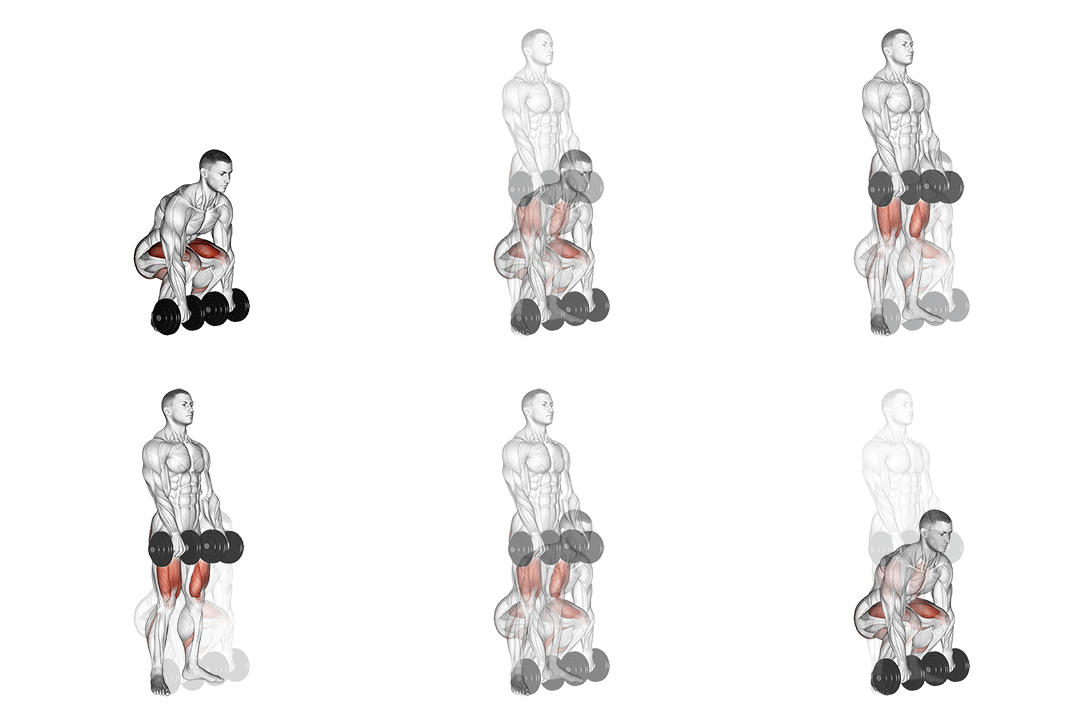
Dumbbell Clean
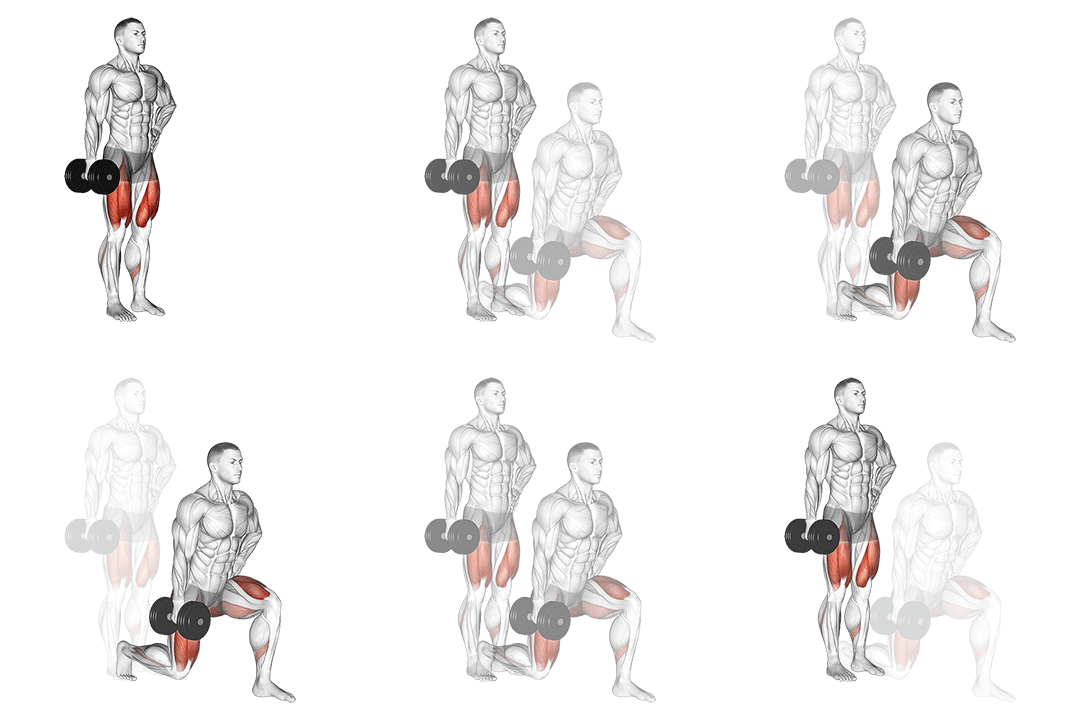
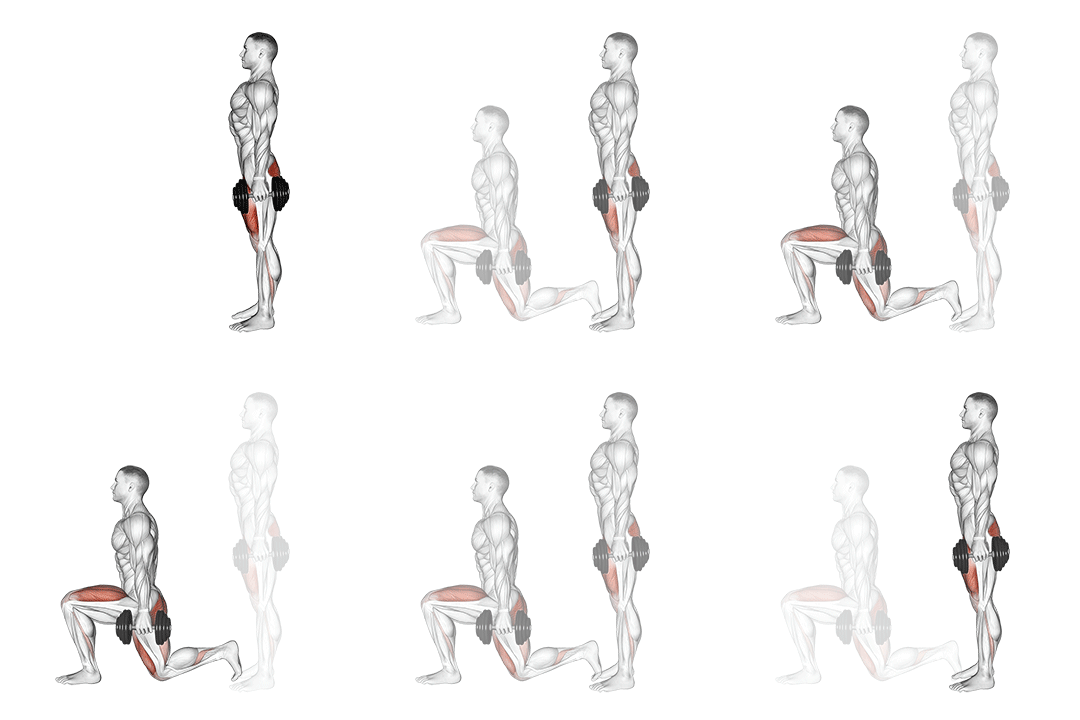
Dumbbell Contralateral Forward Lunge
Head-to-Head Comparison
| Attribute | Dumbbell Clean | Dumbbell Contralateral Forward Lunge |
|---|---|---|
| Target Muscle |
Glutes
|
Glutes
|
| Body Part |
Upper-legs
|
Upper-legs
|
| Equipment |
Dumbbell
|
Dumbbell
|
| Difficulty |
Advanced
|
Intermediate
|
| Movement Type |
Compound
|
Compound
|
| Secondary Muscles |
3
|
3
|
Secondary Muscles Activated
Dumbbell Clean
Dumbbell Contralateral Forward Lunge
Visual Comparison
Overview
Dumbbell Clean vs Dumbbell Contralateral Forward Lunge puts an explosive hip-dominant lift against a unilateral, control-focused lunge. If you want clearer choices for glute development, power, balance, and programming, you’re in the right place. I’ll break down primary and secondary muscle activation, biomechanics (force vectors, joint angles, length-tension), equipment needs, learning curve, progression routes, and practical rep ranges so you can pick the best move for your goals.
Key Differences
- Difficulty levels differ: Dumbbell Clean is advanced, while Dumbbell Contralateral Forward Lunge is intermediate.
- Both exercises target the Glutes using Dumbbell. The main differences are in their movement patterns and muscle activation angles.
Pros & Cons
Dumbbell Clean
+ Pros
- Develops high hip extension power and rate-of-force development
- Strong posterior chain recruitment (glutes, hamstrings, calves)
- Efficient compound for metabolic and neuromuscular stimulus
- Versatile for complexes and power-focused sets (3–6 reps)
− Cons
- Advanced technique with steeper learning curve
- Higher risk of lumbar or shoulder strain with poor form
- Less time under tension per rep for hypertrophy
Dumbbell Contralateral Forward Lunge
+ Pros
- Excellent unilateral glute and quad stimulus with long time under tension
- Lower technical demand and easier to scale safely
- Builds balance, core anti-rotation, and corrects side-to-side imbalances
- Works well for hypertrophy rep ranges (6–12 per leg)
− Cons
- Less development of explosive hip extension velocity
- Can stress the knee joint if form is poor
- Slower systemic power carryover to athletic movements
When Each Exercise Wins
The lunge gives greater time under tension through 60–90° of knee flexion and allows strict unilateral overload (6–12 reps per leg), which produces more localized mechanical tension in the glute and quad for muscle growth.
If your goal is hip-extension strength and rate-of-force development, the clean trains rapid force production and posterior chain coordination; use heavy, low-rep sets (3–6 reps) to overload neural and power qualities.
The lunge is simpler to teach and perform, lets you focus on knee tracking and hip drive, and scales with bodyweight or light dumbbells without the timing demands of an explosive clean.
Requires minimal space and no coaching to perform safely; you can progress with household weights or a vest and still get strong unilateral and glute-focused stimulus.
Frequently Asked Questions
Can I do both Dumbbell Clean and Dumbbell Contralateral Forward Lunge in the same workout?
Yes. Pair the clean early in the session for power work (3–5 sets of 3–6 reps) and use the lunge later for hypertrophy or unilateral strength (3–4 sets of 6–12 reps per leg). Manage fatigue by separating them with other lifts or using the clean on a different training day.
Which exercise is better for beginners?
The Dumbbell Contralateral Forward Lunge is better for beginners because it has a simpler motor pattern and lower technical demand. Start with bodyweight or light dumbbells and emphasize knee tracking and hip drive before adding heavy load.
How do the muscle activation patterns differ?
The clean produces high, brief glute and hamstring activation during rapid hip extension and triple extension, prioritizing velocity and neural drive. The contralateral lunge creates prolonged glute activation through controlled hip extension and requires greater quad eccentric control on the front leg and anti-rotation demand in the core.
Can Dumbbell Contralateral Forward Lunge replace Dumbbell Clean?
If your goal is hypertrophy, unilateral strength, or safer home training, the lunge can replace the clean. If you need power, RFD, or posterior chain velocity, the dumbbell clean remains the superior choice and should be kept in the program.
Expert Verdict
Use the Dumbbell Clean when you want to develop explosive hip extension, athletic power, and posterior chain coordination—program it for low reps (3–6), short sets, and focus on technical drills for the hip hinge, shrug, and pull. Choose the Dumbbell Contralateral Forward Lunge when your priority is targeted glute hypertrophy, unilateral strength, balance, and safer, scalable loading—use 6–12 reps per leg, controlled tempo, and variations (offset load, Bulgarian split) to increase mechanical tension. Both have a place: clean for power and rate-of-force, lunge for hypertrophy and rehab-friendly unilateral strength.
Also Compare
More comparisons with Dumbbell Clean
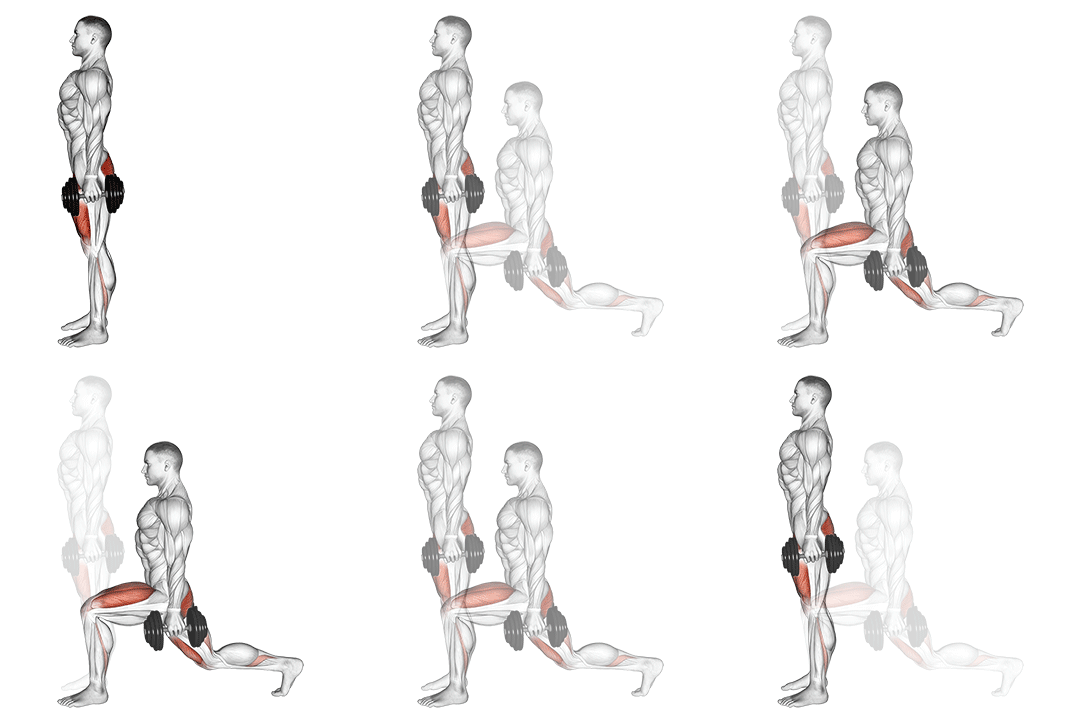
More comparisons with Dumbbell Contralateral Forward Lunge
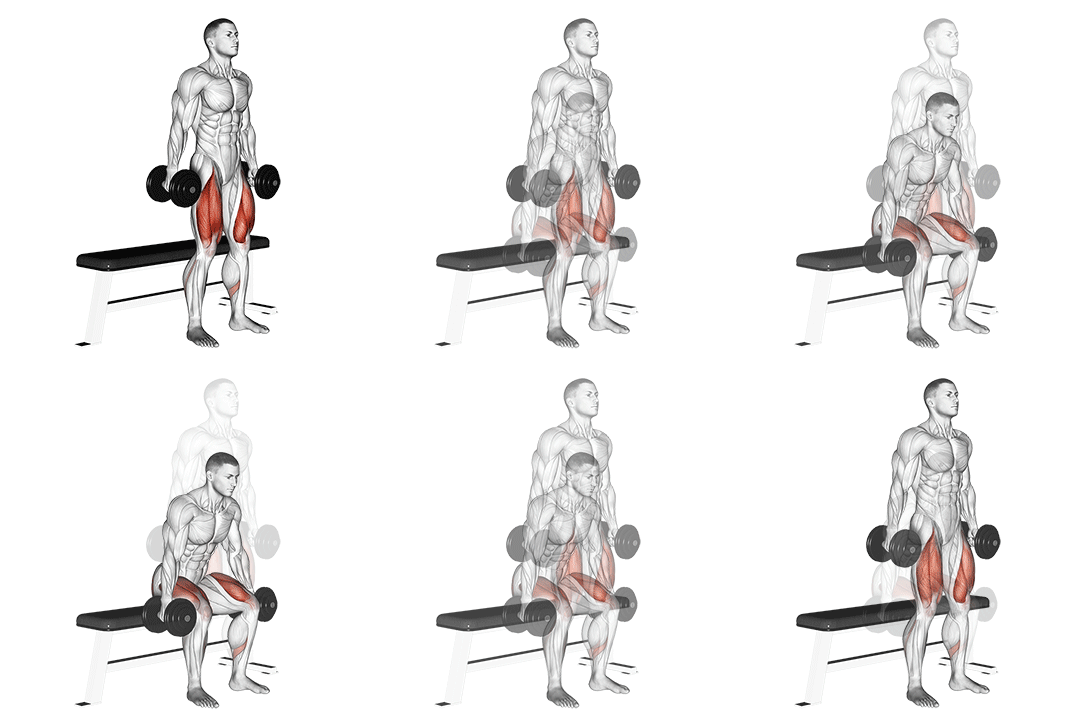
Compare More Exercises
Use our free comparison tool to analyze any two exercises head-to-head.
Compare Exercises