

Dumbbell Clean vs Dumbbell Deadlift: Complete Comparison Guide
Dumbbell Clean vs Dumbbell Deadlift — two compound moves that both hammer the glutes but do it with different mechanics. If you want clear guidance on which to choose, this guide breaks down movement patterns, muscle activation, equipment needs, learning curve, and rep ranges so you can pick the right tool for strength, hypertrophy, or power. I’ll give you technique cues (hip hinge, triple extension, neutral spine), biomechanics notes (force vectors, length-tension), and practical sets/reps so you can use either exercise safely and effectively.
Exercise Comparison
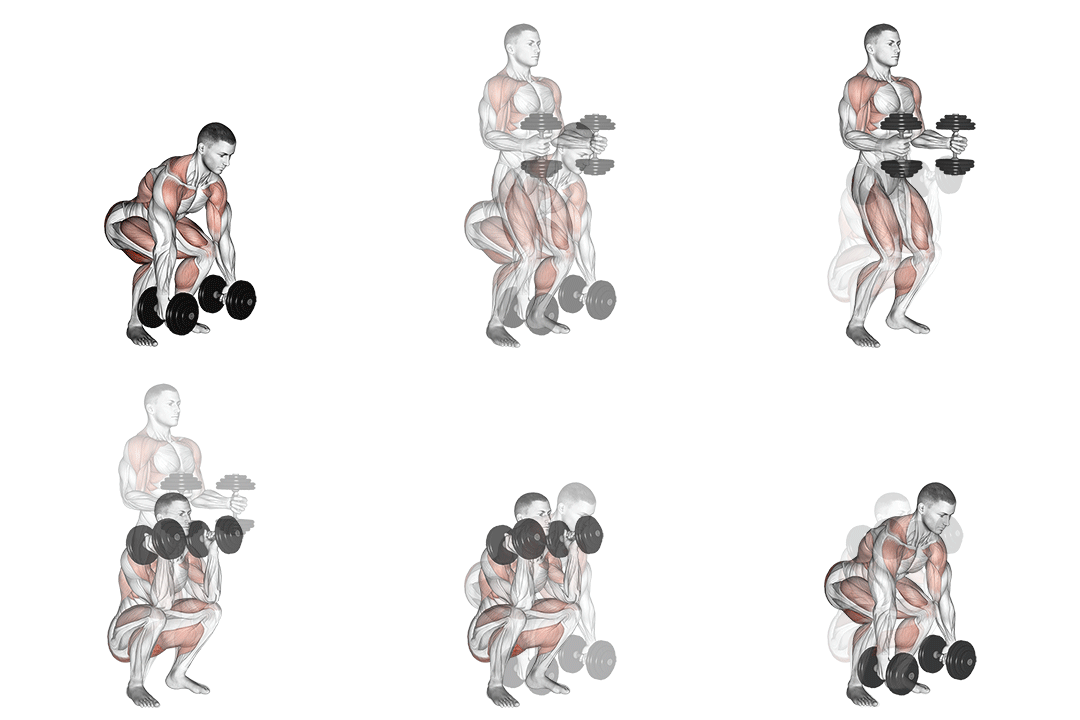
Dumbbell Clean
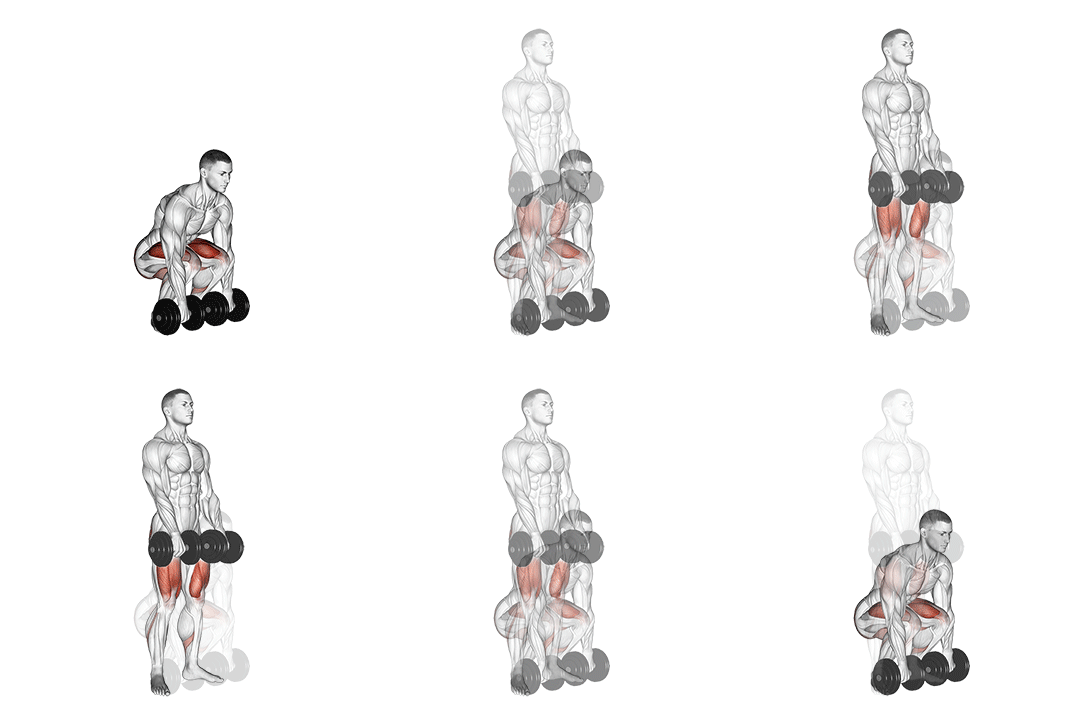
Dumbbell Deadlift
Head-to-Head Comparison
| Attribute | Dumbbell Clean | Dumbbell Deadlift |
|---|---|---|
| Target Muscle |
Glutes
|
Glutes
|
| Body Part |
Upper-legs
|
Upper-legs
|
| Equipment |
Dumbbell
|
Dumbbell
|
| Difficulty |
Advanced
|
Intermediate
|
| Movement Type |
Compound
|
Compound
|
| Secondary Muscles |
3
|
2
|
Secondary Muscles Activated
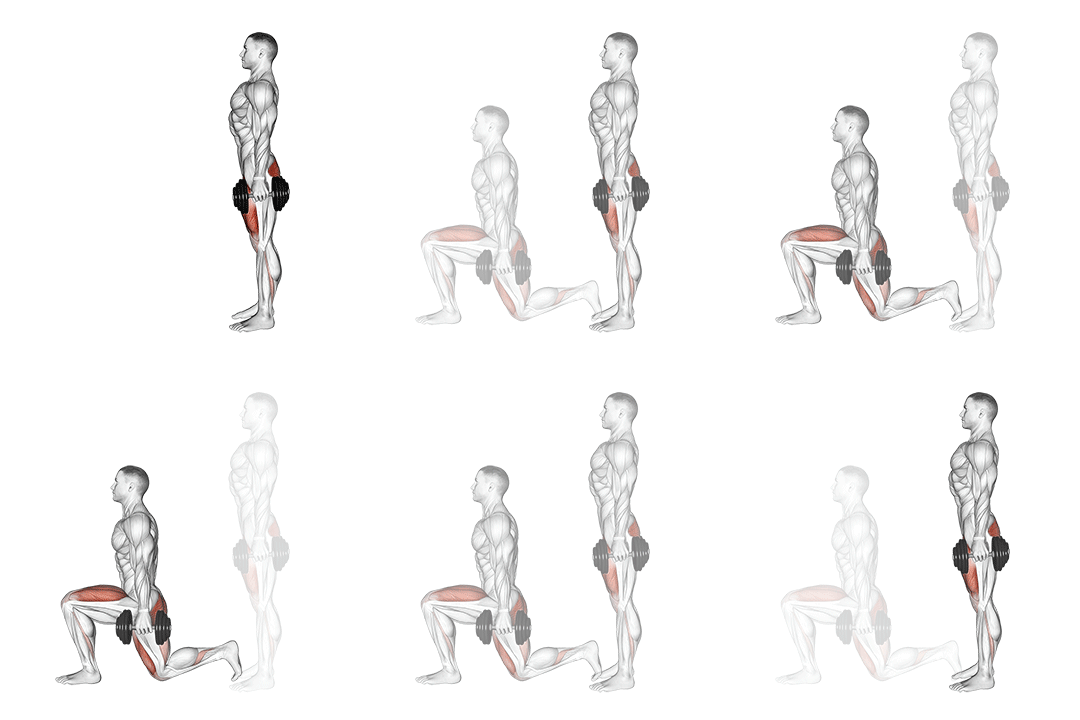
Dumbbell Clean
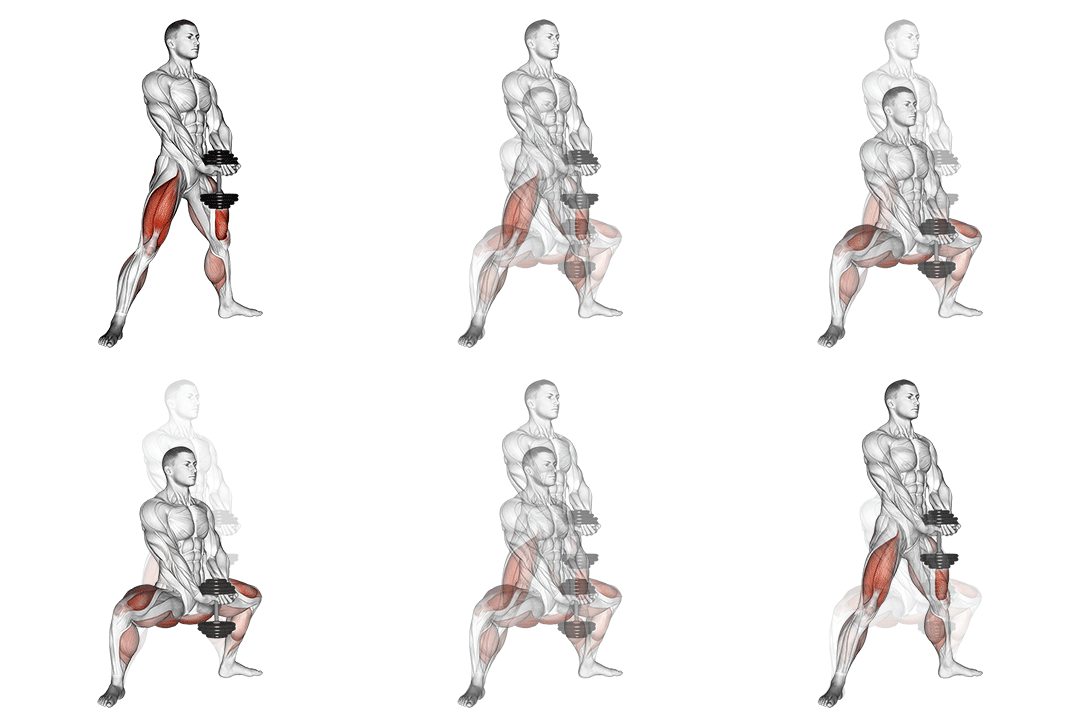
Dumbbell Deadlift
Visual Comparison
Overview
Dumbbell Clean vs Dumbbell Deadlift — two compound moves that both hammer the glutes but do it with different mechanics. If you want clear guidance on which to choose, this guide breaks down movement patterns, muscle activation, equipment needs, learning curve, and rep ranges so you can pick the right tool for strength, hypertrophy, or power. I’ll give you technique cues (hip hinge, triple extension, neutral spine), biomechanics notes (force vectors, length-tension), and practical sets/reps so you can use either exercise safely and effectively.
Key Differences
- Difficulty levels differ: Dumbbell Clean is advanced, while Dumbbell Deadlift is intermediate.
- Both exercises target the Glutes using Dumbbell. The main differences are in their movement patterns and muscle activation angles.
Pros & Cons
Dumbbell Clean
+ Pros
- High peak power and rate of force development for athletic transfer
- Engages quads, calves, hamstrings and glutes dynamically through triple extension
- Good for conditioning and explosive strength when programmed as low-rep sets (1–6 reps)
- Can be done with one or two dumbbells; space-efficient for power work
− Cons
- Steep technical learning curve; timing and mobility required
- Less ability to load maximally for raw strength work
- Higher acute risk to wrists/shoulders if catching incorrectly
Dumbbell Deadlift
+ Pros
- Simple hip-hinge pattern with fast learning curve
- Easily loaded for progressive overload and hypertrophy (6–12 reps) or strength (3–6 reps)
- Places consistent tension on glutes and hamstrings through the range
- Requires minimal mobility and equipment
− Cons
- Lower peak power output compared with cleans
- Can stress the lower back if form breaks down under heavy loads
- Less carryover to explosive, triple-extension athletic movements
When Each Exercise Wins
Deadlifts provide longer time under tension and allow heavier loading, which favors muscle growth in the glutes and hamstrings. Use 6–12 rep ranges, 3–4 sets, and controlled eccentric tempos (2–3 seconds) to maximize hypertrophy.
You can progressively add mechanical load more safely with deadlifts, which makes them better for increasing maximal hip extension strength. Program heavy sets of 3–6 reps with full recovery to build strength.
Deadlifts teach the hip-hinge and load the posterior chain without complex timing or catching mechanics. Start with light loads, focus on neutral spine and hip-drive, then increase weight as your technique solidifies.
Deadlifts need minimal coaching and space and let you progressively overload with a pair of dumbbells. They’re versatile for strength, hypertrophy, and conditioning with simple set/rep tweaks.
Frequently Asked Questions
Can I do both Dumbbell Clean and Dumbbell Deadlift in the same workout?
Yes. Sequence them wisely: perform cleans early when you’re fresh to train power (sets of 1–5 reps), then use deadlifts later for strength or hypertrophy with heavier or higher-rep sets. Keep total volume in check to avoid nervous system and muscle fatigue.
Which exercise is better for beginners?
Dumbbell Deadlift is better for beginners because it teaches the hip-hinge and allows progressive overload with lower technical demand. Start with light weights, nail neutral spine and hip movement, then advance to cleans once your technique and mobility are solid.
How do the muscle activation patterns differ?
Deadlifts emphasize sustained eccentric-concentric loading of glutes and hamstrings with high time-under-tension, while cleans generate rapid concentric force via triple extension, shifting more relative load to quads and calves during the explosive phase. Cleans also produce higher peak power and RFD.
Can Dumbbell Deadlift replace Dumbbell Clean?
For strength and hypertrophy, deadlifts can replace cleans because they load the posterior chain more consistently and are easier to progress. If your goal is power, speed, or sport-specific explosiveness, cleans offer unique benefits that deadlifts don’t replicate.
Expert Verdict
Use Dumbbell Deadlifts as your foundational posterior-chain builder: they’re easier to learn, let you load progressively, and are superior for hypertrophy and raw strength when you work in 3–12 rep ranges with controlled tempo. Choose Dumbbell Cleans when your goal is power, explosiveness, or athletic transfer; perform them for low reps (1–6) and prioritize technique—hip-drive into triple extension, quick elbow turnover, and a soft catch. If you have limited coaching time or are new to loaded lifts, prioritize deadlifts first, then add cleans as your mobility and timing improve to train rate of force development.
Also Compare
More comparisons with Dumbbell Clean
Compare More Exercises
Use our free comparison tool to analyze any two exercises head-to-head.
Compare Exercises