

Dumbbell Clean vs Dumbbell Lunge: Complete Comparison Guide
Dumbbell Clean vs Dumbbell Lunge — both target your glutes and upper legs but they do it in very different ways. You’ll get a clear look at muscle activation, equipment needs, difficulty, and programming so you can pick the right move for your goals. I’ll cover exercise mechanics, specific technique cues (hip hinge, knee tracking, trunk angle), rep ranges (3–6 for power, 8–15 for hypertrophy), and when to pair them in a workout. Read on to learn which exercise gives you more posterior chain power versus isolated glute and quad development.
Exercise Comparison
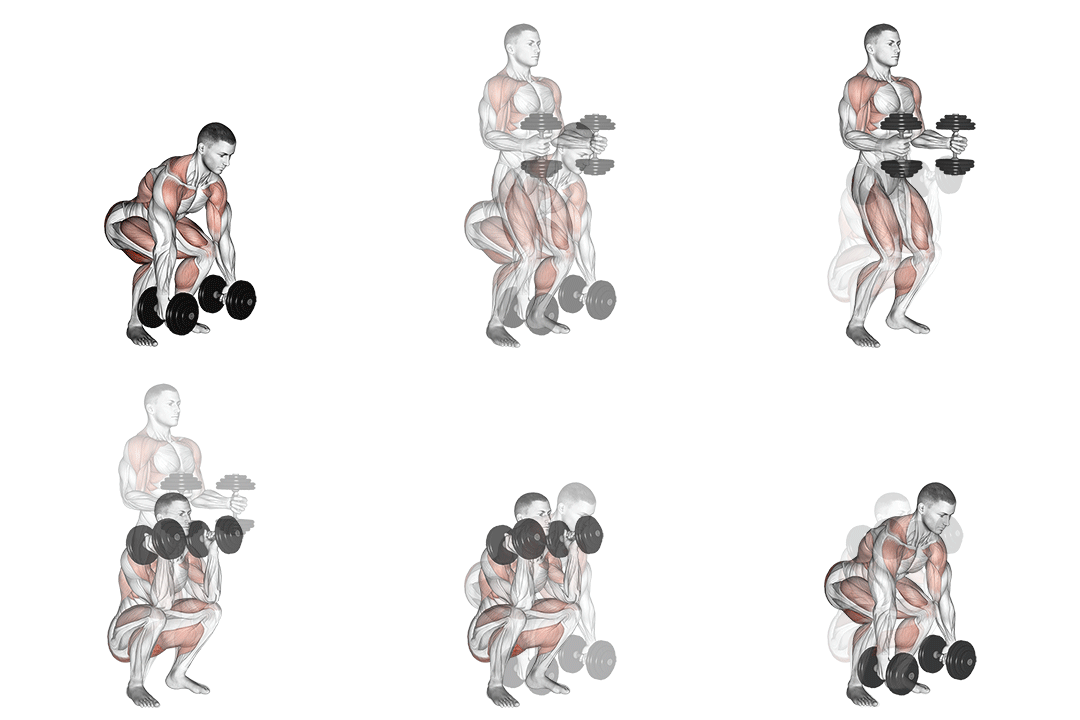
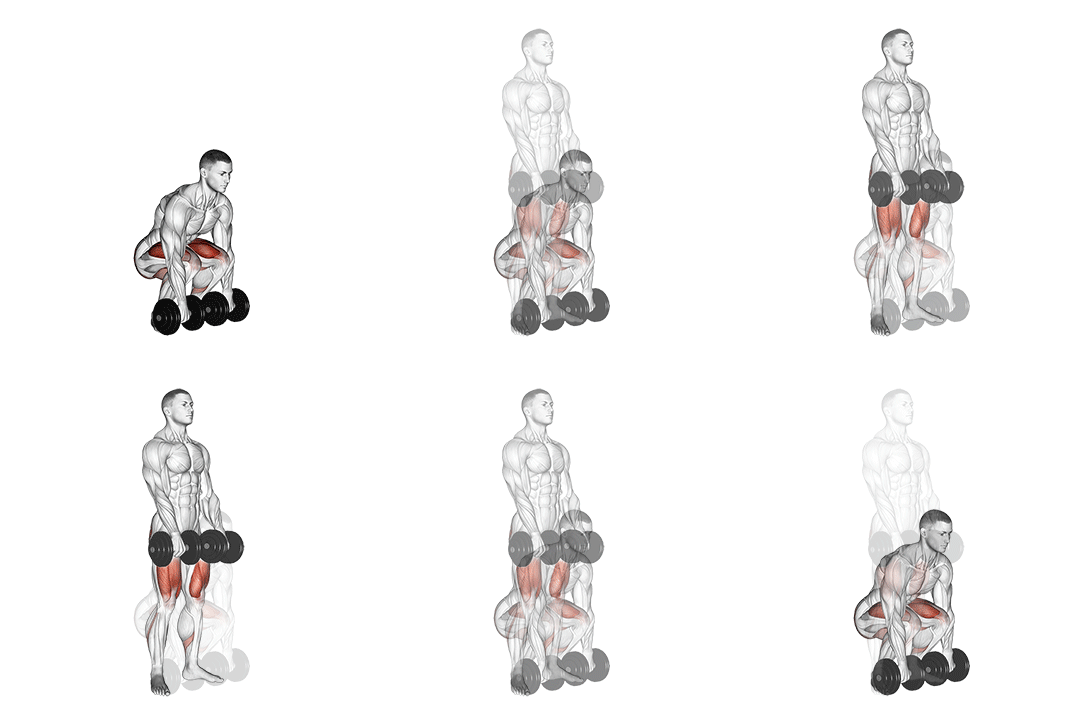
Dumbbell Clean
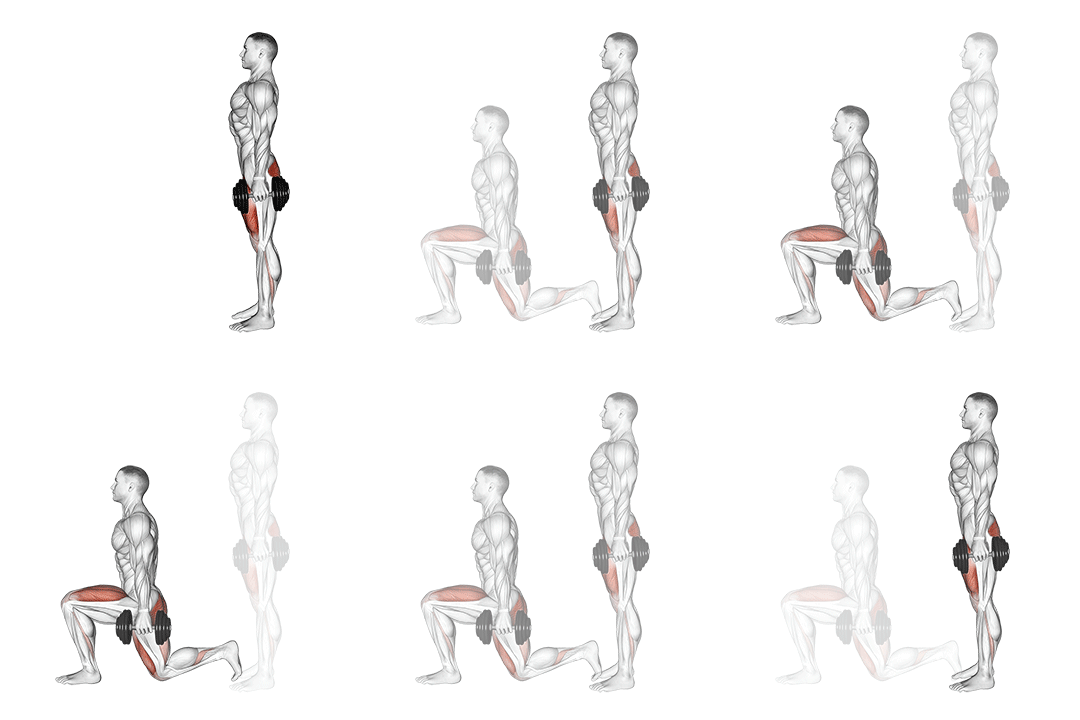
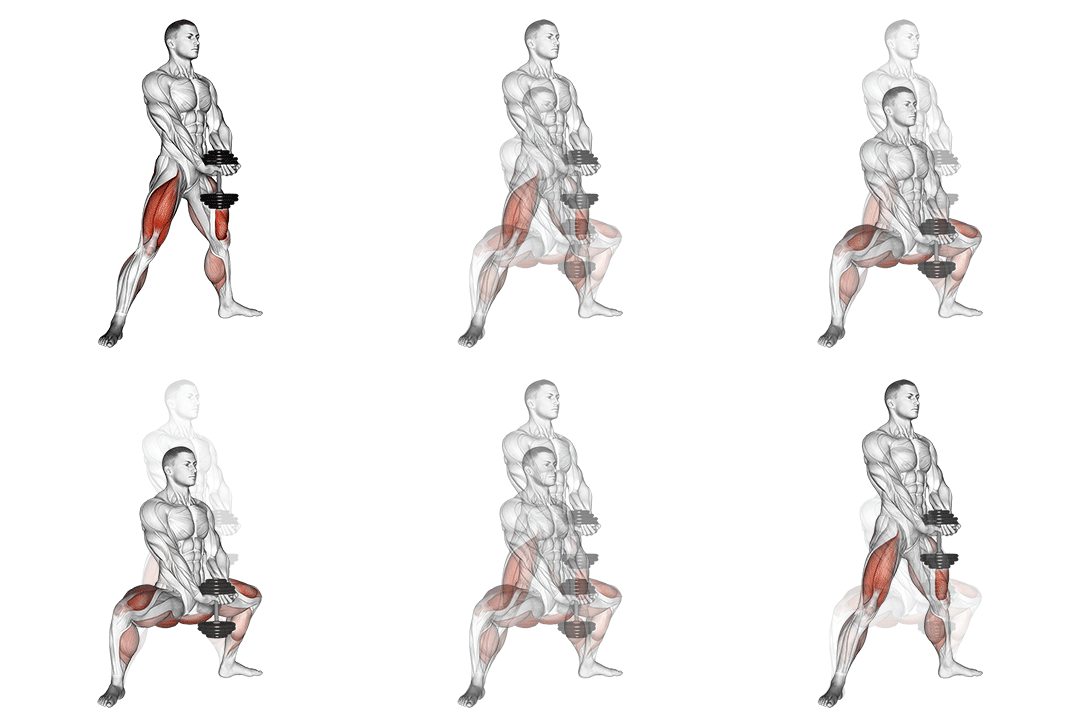
Dumbbell Lunge
Head-to-Head Comparison
| Attribute | Dumbbell Clean | Dumbbell Lunge |
|---|---|---|
| Target Muscle |
Glutes
|
Glutes
|
| Body Part |
Upper-legs
|
Upper-legs
|
| Equipment |
Dumbbell
|
Dumbbell
|
| Difficulty |
Advanced
|
Intermediate
|
| Movement Type |
Compound
|
Compound
|
| Secondary Muscles |
3
|
3
|
Secondary Muscles Activated
Dumbbell Clean
Dumbbell Lunge
Visual Comparison
Overview
Dumbbell Clean vs Dumbbell Lunge — both target your glutes and upper legs but they do it in very different ways. You’ll get a clear look at muscle activation, equipment needs, difficulty, and programming so you can pick the right move for your goals. I’ll cover exercise mechanics, specific technique cues (hip hinge, knee tracking, trunk angle), rep ranges (3–6 for power, 8–15 for hypertrophy), and when to pair them in a workout. Read on to learn which exercise gives you more posterior chain power versus isolated glute and quad development.
Key Differences
- Difficulty levels differ: Dumbbell Clean is advanced, while Dumbbell Lunge is intermediate.
- Both exercises target the Glutes using Dumbbell. The main differences are in their movement patterns and muscle activation angles.
Pros & Cons
Dumbbell Clean
+ Pros
- High posterior-chain power and rate-of-force development
- Efficient full-body compound pattern that builds explosive strength
- Engages hamstrings, calves, and core dynamically
- Great for low-rep strength and power blocks (3–6 reps)
− Cons
- Technically demanding with a steep learning curve
- Higher injury risk if executed with poor timing
- Less time under tension for hypertrophy compared to lunges
Dumbbell Lunge
+ Pros
- Excellent for unilateral glute and quad development
- Lower technical barrier; easy to scale and program
- Longer eccentric phase favors hypertrophy (8–15+ reps)
- Minimal space and equipment required
− Cons
- Less emphasis on explosive power and triple extension
- Can create knee discomfort if step length or tracking is poor
- Harder to load extremely heavy while maintaining clean mechanics
When Each Exercise Wins
The lunge produces longer eccentric phases and consistent mechanical tension across 8–15+ reps, which favors muscle growth in the glutes and quads. You can also manipulate tempo and unilateral overload to target imbalances.
Cleans develop high hip-extension torque and rate of force development, improving overall lower-body strength and athletic power when trained at 3–6 reps with progressive loading.
Lunges teach hip and knee coordination with lower technical demand and allow gradual loading while keeping spinal load low. You can progress balance, depth, and weight safely in short steps.
Lunges need minimal space and handle a wide range of loads safely, including bodyweight variations, making them ideal for small home setups without instruction-heavy technique.
Frequently Asked Questions
Can I do both Dumbbell Clean and Dumbbell Lunge in the same workout?
Yes. Pair them by placing Dumbbell Cleans early for power (3–6 reps) and follow with lunges for hypertrophy (8–12 reps) to avoid fatigue-related technique breakdown during explosive lifts. Keep total volume manageable and separate by 4–6 minutes of rest if using heavy cleans.
Which exercise is better for beginners?
Dumbbell Lunge is better for most beginners because it has a simpler motor pattern and lower peak forces. Start with bodyweight or light dumbbells and focus on knee tracking and a 90° front-knee position.
How do the muscle activation patterns differ?
Cleans produce a rapid concentric burst from hip extension and higher peak power, engaging hamstrings and calves during triple extension, while lunges create longer eccentric loading and repeated concentric drives that bias quads and glutes over many reps. The force vectors in cleans are more vertical and explosive versus the lunges' mixed vertical and horizontal force across single-leg stance.
Can Dumbbell Lunge replace Dumbbell Clean?
No if your goal is power and rate-of-force development—lunges won’t replicate the rapid hip extension and triple-extension pattern of cleans. For hypertrophy or unilateral strength, lunges can substitute cleans within a general program, but you’ll miss out on the clean’s explosive transfer to athletic tasks.
Expert Verdict
Choose the Dumbbell Clean when your goal is to build posterior-chain power, athleticism, and rate-of-force development; program it in short sets (3–6 reps), focus on hang variations and technique drills, and use lighter loads until your timing and hip hinge are solid. Choose the Dumbbell Lunge when you want targeted glute and quad hypertrophy, unilateral balance work, or a safe, easy-to-scale exercise for home and beginner programs—use 8–15 reps with controlled 2–4 second eccentrics. Both can complement each other: use cleans for power-focused blocks and lunges for volume and corrective work.
Also Compare
More comparisons with Dumbbell Clean
Compare More Exercises
Use our free comparison tool to analyze any two exercises head-to-head.
Compare Exercises