

Dumbbell Clean vs Dumbbell Plyo Squat: Complete Comparison Guide
Dumbbell Clean vs Dumbbell Plyo Squat — two advanced, compound moves that load the glutes and upper-legs but ask different things of your body. You’ll learn how each exercise loads the hip hinge versus vertical jump pattern, which muscles light up first, and the exact rep ranges and progressions to use for power, strength, or hypertrophy. I’ll walk you through technique cues (stance, hip angle, wrist position), biomechanics (force vectors, length-tension, rate of force development), and smart program choices so you can pick the right one for your goals.
Exercise Comparison
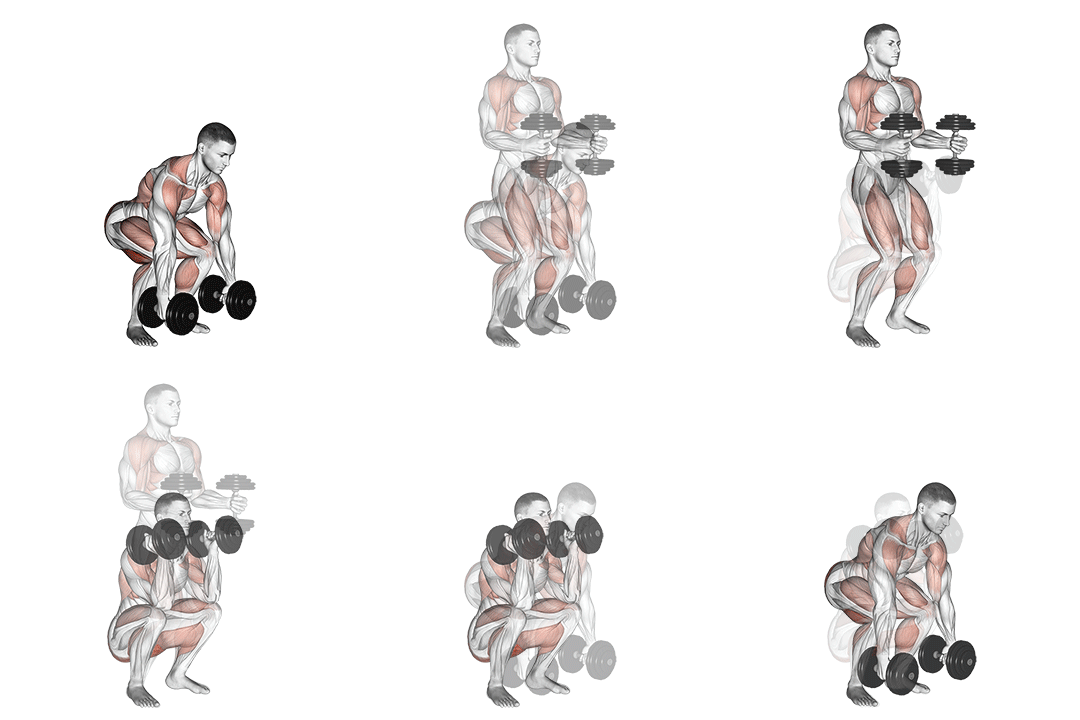
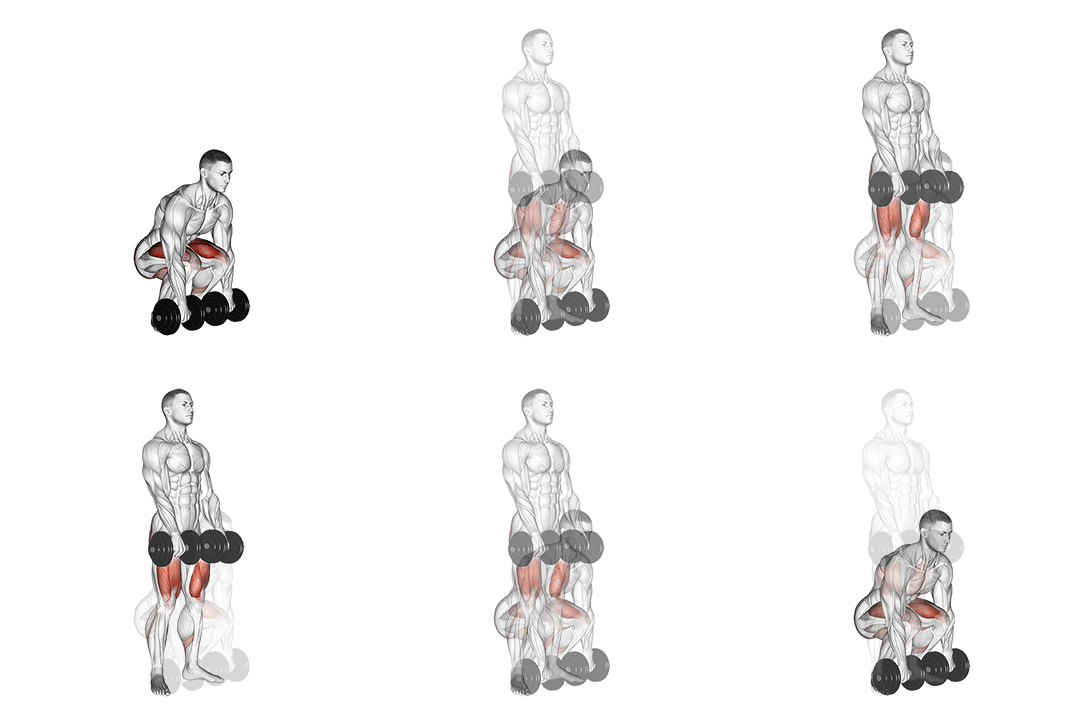
Dumbbell Clean
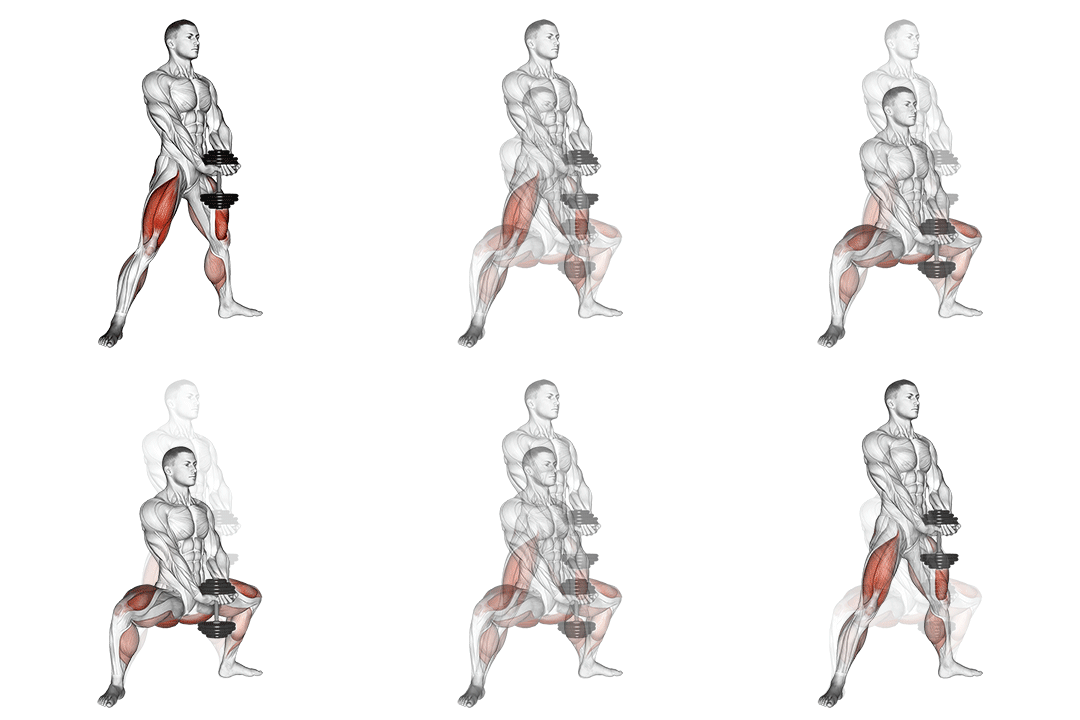
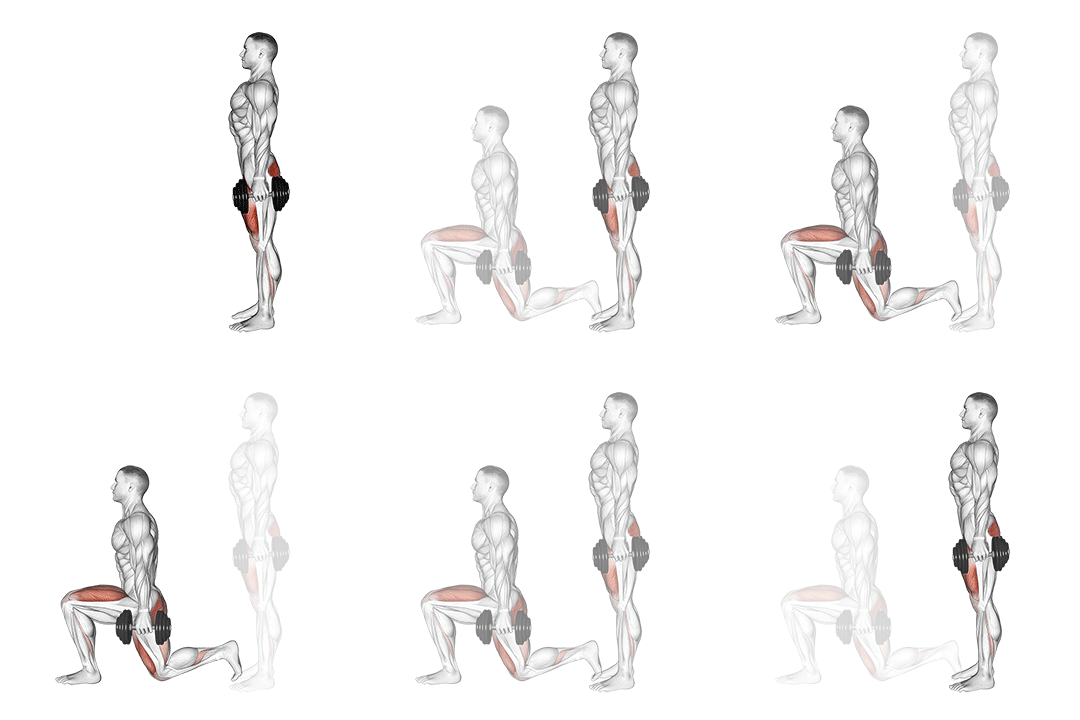
Dumbbell Plyo Squat
Head-to-Head Comparison
| Attribute | Dumbbell Clean | Dumbbell Plyo Squat |
|---|---|---|
| Target Muscle |
Glutes
|
Glutes
|
| Body Part |
Upper-legs
|
Upper-legs
|
| Equipment |
Dumbbell
|
Dumbbell
|
| Difficulty |
Advanced
|
Advanced
|
| Movement Type |
Compound
|
Compound
|
| Secondary Muscles |
3
|
3
|
Secondary Muscles Activated
Dumbbell Clean
Dumbbell Plyo Squat
Visual Comparison
Overview
Dumbbell Clean vs Dumbbell Plyo Squat — two advanced, compound moves that load the glutes and upper-legs but ask different things of your body. You’ll learn how each exercise loads the hip hinge versus vertical jump pattern, which muscles light up first, and the exact rep ranges and progressions to use for power, strength, or hypertrophy. I’ll walk you through technique cues (stance, hip angle, wrist position), biomechanics (force vectors, length-tension, rate of force development), and smart program choices so you can pick the right one for your goals.
Key Differences
- Both exercises target the Glutes using Dumbbell. The main differences are in their movement patterns and muscle activation angles.
Pros & Cons
Dumbbell Clean
+ Pros
- Develops rapid hip extension and rate of force development useful for power and athleticism
- Loads posterior chain (glutes, hamstrings, erectors) efficiently in a compound pattern
- Easy to progress to heavier loads or technical variations (hang clean, power clean)
- Improves coordination, timing, and explosive strength
− Cons
- High technical demand; poor form increases low-back and wrist risk
- Less time under tension for hypertrophy compared to controlled squatting patterns
- Limited by dumbbell weight and grip strength unless technique is altered
Dumbbell Plyo Squat
+ Pros
- Greater eccentric preload and stretch-shortening cycle for muscle tension and hypertrophy
- Simpler movement pattern to teach and scale (bodyweight → loaded)
- Loads quadriceps and glutes together, improving vertical power and jump mechanics
- Safer to progress at home with lower technical barrier
− Cons
- Repetitive plyometrics increase impact on knees and Achilles without proper landing mechanics
- Less posterior-chain pulling stimulus compared to cleans
- Explosive jumps can fatigue quickly, limiting heavy loading for raw strength work
When Each Exercise Wins
Plyo squats provide a larger eccentric phase and longer time under tension across 0–90° hip and knee ranges, which drives sarcomeric stress and metabolic fatigue. Use 8–15 reps or controlled eccentric sets to maximize glute and quad growth.
Cleans train rapid triple extension and high-rate force development, improving neural drive and maximal hip torque. Program 3–6 explosive reps with heavier loads (or progress to barbell variants) to build stronger, more forceful hip extension.
Plyo squats are easier to learn and scale—start with squat jumps and progress load as technique improves. Cleans require precise timing and hip-hinge mechanics that typically need coaching before heavy use.
Plyo squats need only one dumbbell or bodyweight and minimal coaching, plus you can regress to safer, lower-impact variants. Cleans are technically demanding and benefit from a coach or mirror feedback.
Frequently Asked Questions
Can I do both Dumbbell Clean and Dumbbell Plyo Squat in the same workout?
Yes — pair them strategically: use Dumbbell Clean early for 3–6 explosive reps to train power, then perform 3–4 sets of Plyo Squats for 6–12 reps to tax muscle fatigue. Leave 2–3 minutes rest after cleans to preserve RFD and reduce injury risk.
Which exercise is better for beginners?
Dumbbell Plyo Squat is generally better for beginners because it has a simpler pattern and scales from bodyweight. Beginners should master soft landings, knee alignment, and a confident squat jump before attempting cleans.
How do the muscle activation patterns differ?
Cleans emphasize a rapid concentric burst with peak glute activity at the second pull and catch, prioritizing RFD. Plyo squats create higher eccentric loading and longer concentric time under tension, engaging glutes and quads across a broader joint-angle window.
Can Dumbbell Plyo Squat replace Dumbbell Clean?
For hypertrophy and general fitness, yes—the Plyo Squat can replace cleans and often does a better job of creating muscle tension. For power-specific goals or sport transfer, cleans remain the preferred choice due to their training of rate of force development.
Expert Verdict
Choose the Dumbbell Clean when your primary goal is developing explosive hip power and improving rate of force development for athletic performance; it’s the better pick for low-rep, high-intensity training and transfers to lifts and sprints. Choose the Dumbbell Plyo Squat when you want hypertrophy, easier progression, or a safer home-friendly option—its larger eccentric load and stretch-shortening cycle deliver sustained glute and quad activation. If you have limited coaching, start with plyo progressions and add cleans later once your hinge, posture, and explosive timing are solid.
Also Compare
More comparisons with Dumbbell Clean
Compare More Exercises
Use our free comparison tool to analyze any two exercises head-to-head.
Compare Exercises