

Dumbbell Clean vs Dumbbell Rear Lunge: Complete Comparison Guide
Dumbbell Clean vs Dumbbell Rear Lunge — you’re choosing between a power-focused compound and a unilateral strength-builder. If you want clear guidance, this comparison breaks down muscle targets, biomechanics, difficulty, equipment needs, and when to use each in your program. You’ll get technique cues for safer reps, rep-range recommendations (3-6 for power, 6-12 per leg for hypertrophy), and practical progressions. I’ll show how each exercise loads the glutes and upper-legs differently so you can pick the move that matches your goals and training experience.
Exercise Comparison
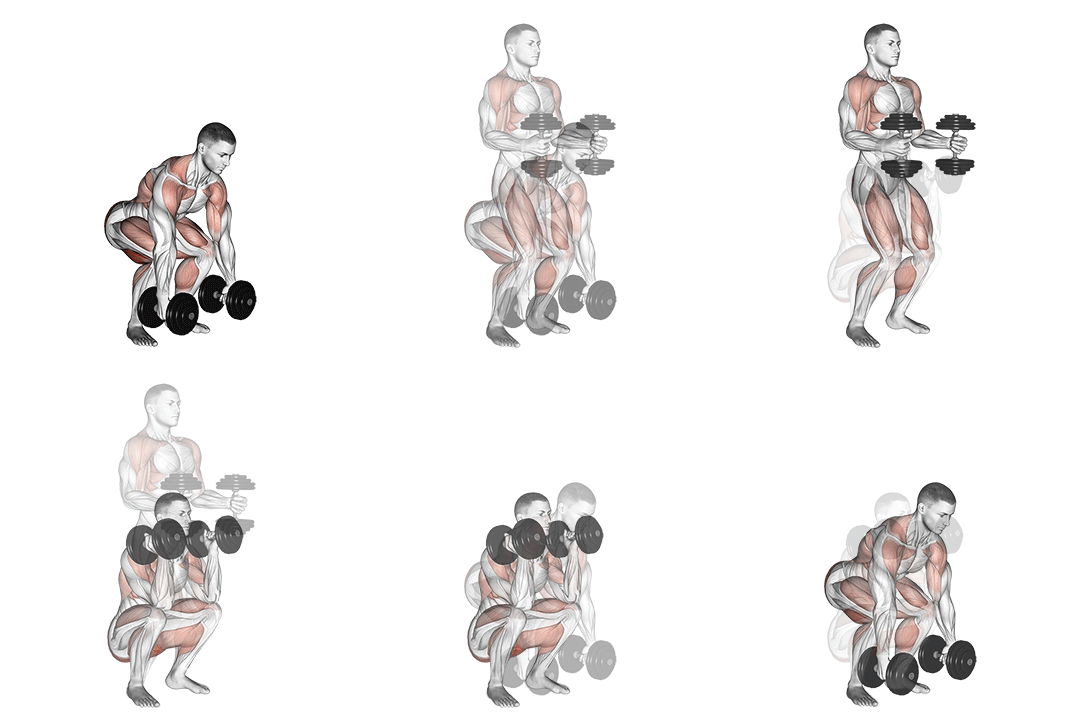
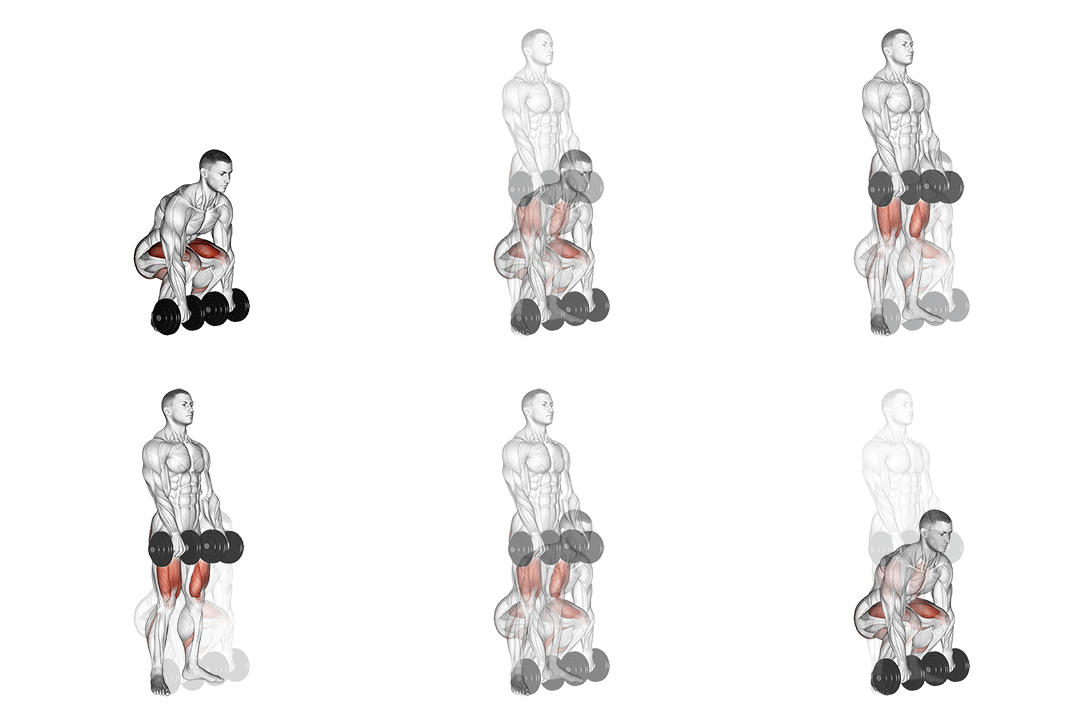
Dumbbell Clean
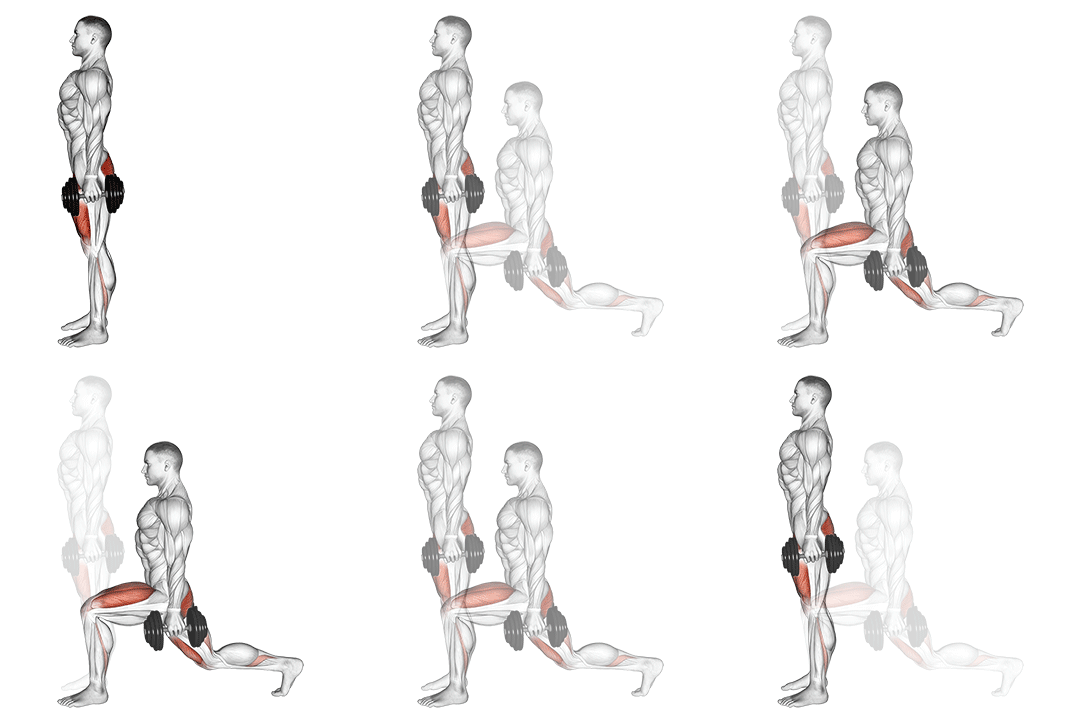
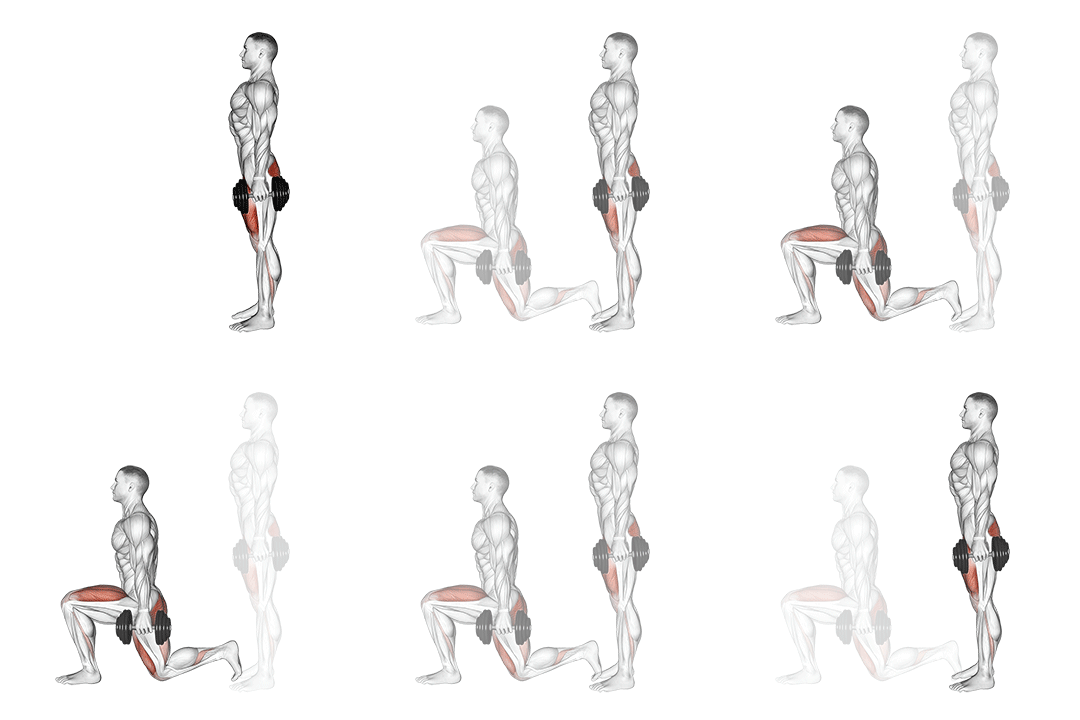
Dumbbell Rear Lunge
Head-to-Head Comparison
| Attribute | Dumbbell Clean | Dumbbell Rear Lunge |
|---|---|---|
| Target Muscle |
Glutes
|
Glutes
|
| Body Part |
Upper-legs
|
Upper-legs
|
| Equipment |
Dumbbell
|
Dumbbell
|
| Difficulty |
Advanced
|
Intermediate
|
| Movement Type |
Compound
|
Compound
|
| Secondary Muscles |
3
|
3
|
Secondary Muscles Activated
Dumbbell Clean
Dumbbell Rear Lunge
Visual Comparison
Overview
Dumbbell Clean vs Dumbbell Rear Lunge — you’re choosing between a power-focused compound and a unilateral strength-builder. If you want clear guidance, this comparison breaks down muscle targets, biomechanics, difficulty, equipment needs, and when to use each in your program. You’ll get technique cues for safer reps, rep-range recommendations (3-6 for power, 6-12 per leg for hypertrophy), and practical progressions. I’ll show how each exercise loads the glutes and upper-legs differently so you can pick the move that matches your goals and training experience.
Key Differences
- Difficulty levels differ: Dumbbell Clean is advanced, while Dumbbell Rear Lunge is intermediate.
- Both exercises target the Glutes using Dumbbell. The main differences are in their movement patterns and muscle activation angles.
Pros & Cons
Dumbbell Clean
+ Pros
- Develops explosive hip extension and rate of force development
- Strong posterior-chain recruitment (glutes, hamstrings, calves)
- High power-to-weight transfer useful for athletic performance
- Progresses into fast, heavy variations for strength and conditioning
− Cons
- High technical demand and coordination required
- Greater risk of low-back strain or poor catch mechanics
- Less time under tension for pure hypertrophy
Dumbbell Rear Lunge
+ Pros
- Excellent unilateral glute stimulation and balance training
- Longer time under tension aids hypertrophy (8–15 reps per leg)
- Easy to scale and perform in small spaces
- Lower technical skill threshold; quick to teach and coach
− Cons
- Less emphasis on explosive power and rate of force development
- Can expose side-to-side strength asymmetries
- Anterior knee stress if technique allows excessive forward knee travel
When Each Exercise Wins
Rear lunges provide longer time under tension and controlled eccentric loading, which drives sarcomere remodeling in the glute and quadriceps. Use 8–15 reps per leg with pauses at 2–3 seconds on the descent to maximize hypertrophy.
Cleans train explosive hip extension and high rate of force development, transferring to stronger hip hinge and vertical force production — key for posterior-chain strength. Work sets of 3–6 reps with near-maximal intent to build strength and power.
The rear lunge has simpler mechanics, easier motor patterning, and lower injury risk, so beginners can safely build glute and quad strength. Focus on knee tracking, upright torso, and controlled 90° rear knee flexion.
Requires minimal space and equipment and scales well with a single dumbbell or household weight. It delivers targeted glute work without the technical demands and open area needed for cleans.
Frequently Asked Questions
Can I do both Dumbbell Clean and Dumbbell Rear Lunge in the same workout?
Yes. Pair cleans early in the session to train power (3–6 reps) and follow with rear lunges for hypertrophy or unilateral work (8–12 reps per leg). Keep total volume and fatigue in check so the explosive technique on cleans stays crisp.
Which exercise is better for beginners?
Dumbbell Rear Lunge is better for beginners because it has simpler mechanics, lower injury risk, and immediate loading options. Teach knee alignment and torso control before adding heavy weight or speed.
How do the muscle activation patterns differ?
Cleans produce brief, high-amplitude glute activation during rapid hip extension and use the stretch-shortening cycle; rear lunges produce lower-amplitude but longer-duration glute activation through controlled lengthening and concentric phases, optimizing time under tension and length-tension relationships.
Can Dumbbell Rear Lunge replace Dumbbell Clean?
It can replace cleans if your goal is hypertrophy, balance, or limited space, but not if you need explosive power or high-rate force development. If you want both outcomes, program cleans for power and rear lunges for volume within the same week.
Expert Verdict
Use Dumbbell Cleans when your goal is power, posterior-chain strength, and explosive athletic development. They demand precise timing: explosive hip drive, short ground contact, and a vertical force vector. Use sets of 3–6 reps with full recovery to prioritize rate of force development. Choose Dumbbell Rear Lunges when you want targeted glute hypertrophy, unilateral balance, and low-tech progressions. Train 8–15 reps per leg with controlled 2–4 second eccentrics. If you must pick one: choose rear lunges for beginners and hypertrophy, and cleans for trained athletes chasing power and heavy posterior-chain strength.
Also Compare
More comparisons with Dumbbell Clean
Compare More Exercises
Use our free comparison tool to analyze any two exercises head-to-head.
Compare Exercises