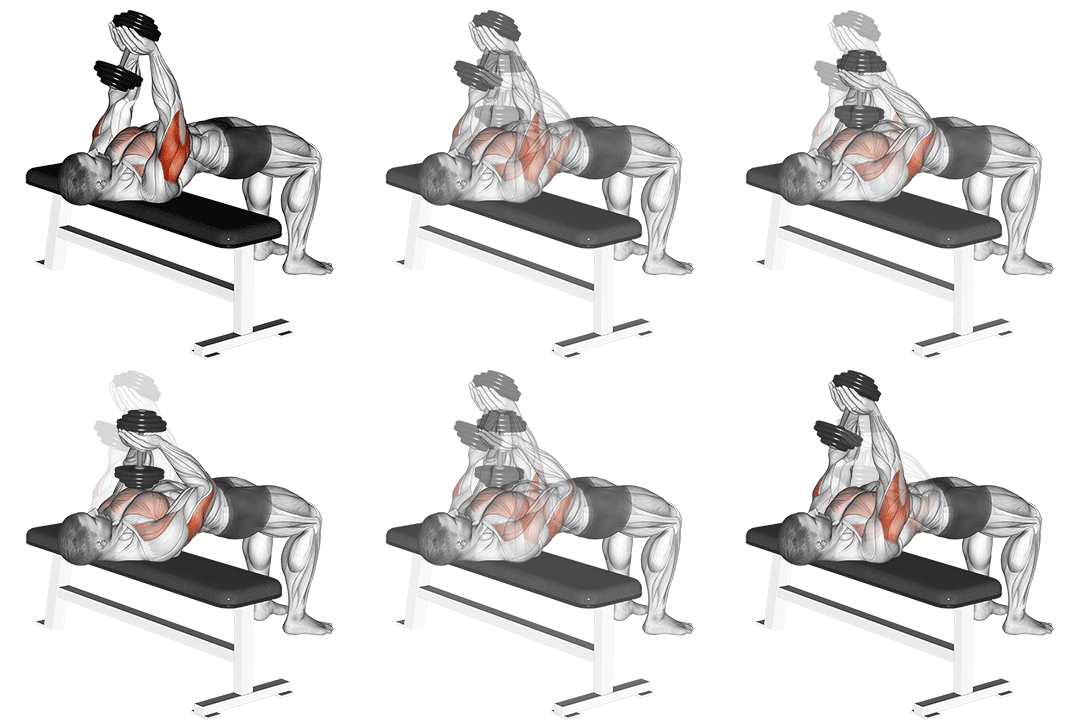
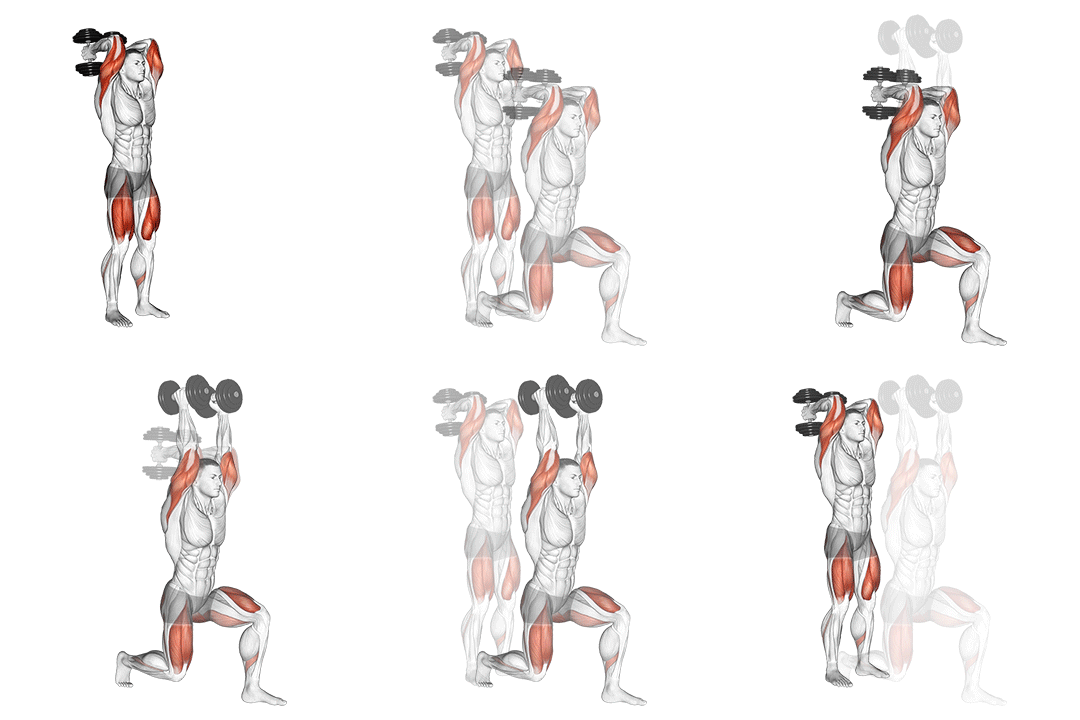
Dumbbell Close-grip Press vs Dumbbell Forward Lunge Triceps Extension
Compare target muscles, equipment, difficulty, movement type, and secondary muscles for Dumbbell Close-grip Press and Dumbbell Forward Lunge Triceps Extension.

Change comparison Share

Get comparison link

Select the link and use your device's Copy command.

Comparison overview

AI-generated
Dumbbell Close-grip Press vs Dumbbell Forward Lunge Triceps Extension — two compound dumbbell moves that both target the triceps but place stress on your upper arms in very different ways. If you want clear guidance on which to use for muscle growth, strength, or practical home training, you’re in the right place. I’ll compare primary and secondary muscle activation, movement mechanics (force vectors and length-tension), equipment needs, difficulty, risk, and give rep ranges and technique cues so you can pick the right exercise for your goals.
Exercise Comparison

Exercise A
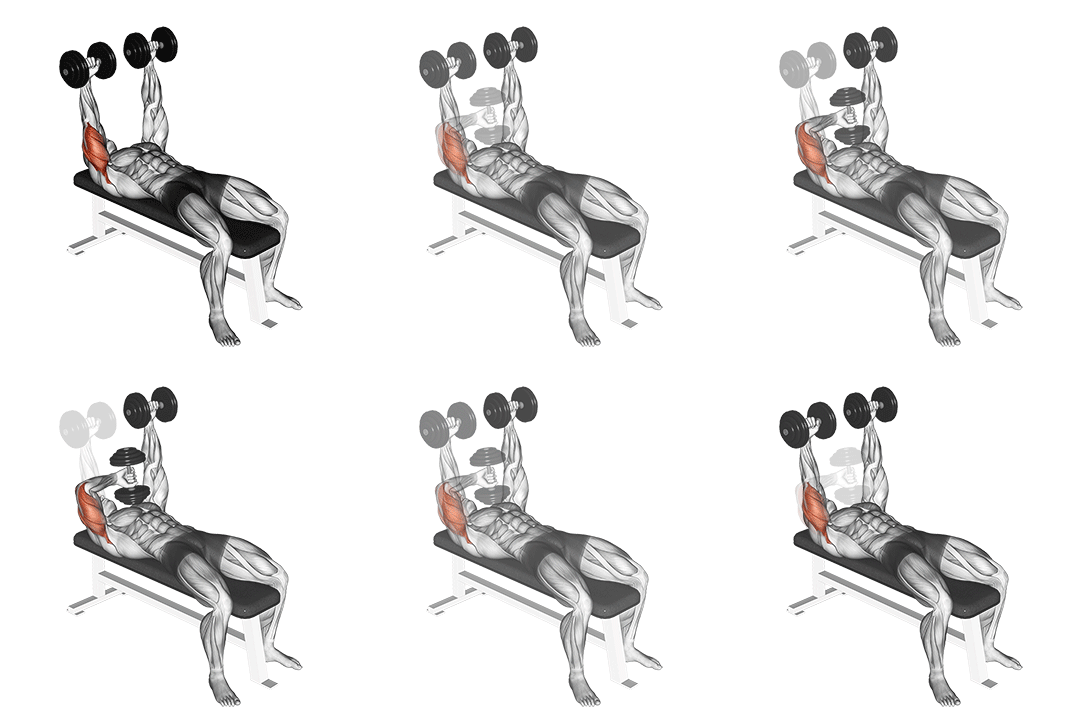
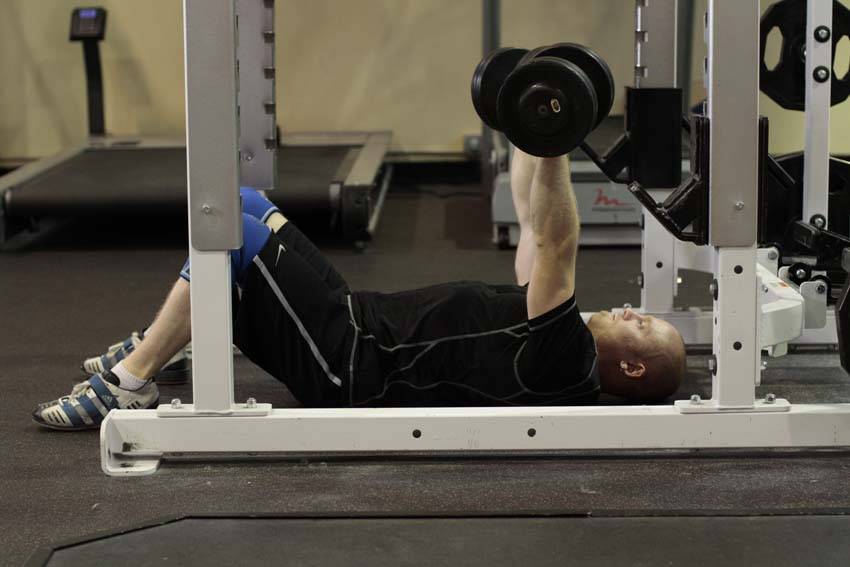
Dumbbell Close-grip Press demonstration

Dumbbell Close-grip Press

Target Triceps
Equipment Dumbbell
Body Part Upper-arms
Difficulty Intermediate
Movement Compound
Secondary Muscles
Chest Shoulders
VS
Exercise B
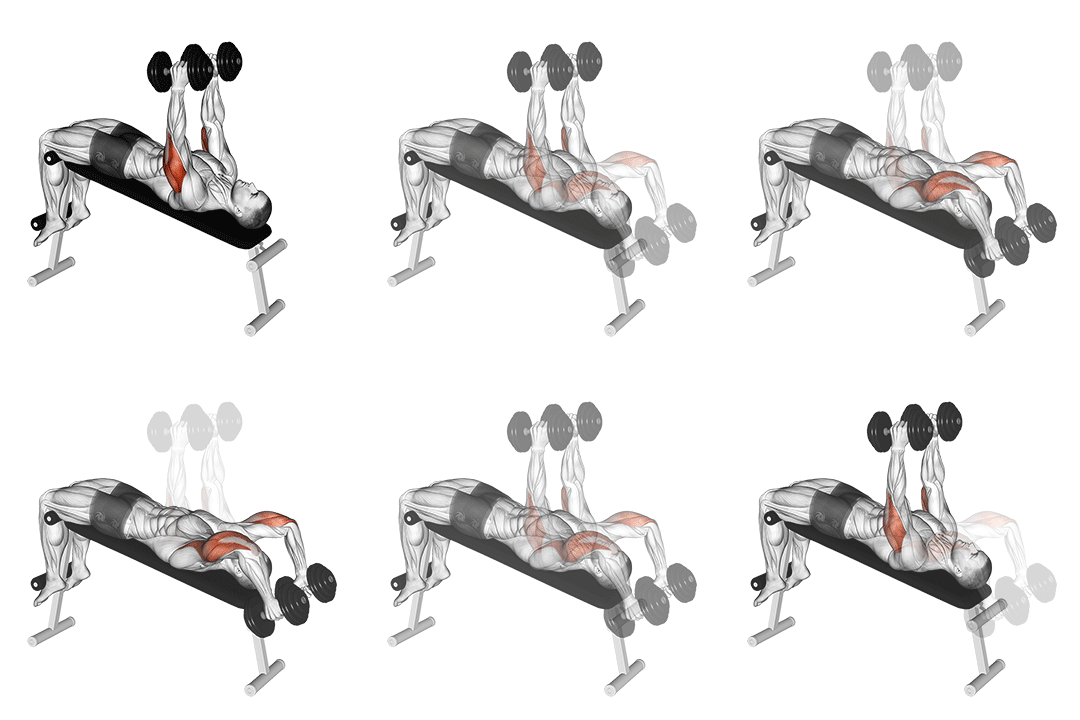
Dumbbell Forward Lunge Triceps Extension demonstration
Dumbbell Forward Lunge Triceps Extension
Target Triceps
Equipment Dumbbell
Body Part Upper-arms
Difficulty Intermediate
Movement Compound
Secondary Muscles
Shoulders Core

Head-to-Head Comparison

Different values are marked. These are catalogue attributes, not performance scores.

Muscles used

Listed target and secondary muscles, shown on the body. Locations, not activation or strength scores.

  • Target
  • Secondary
  • Not highlighted

Dumbbell Close-grip Press

Front
Dumbbell Close-grip Press: front muscle locationsSolid: listed target. Striped: listed secondary. Grey: not highlighted. Locations, not activation or strength scores. See the muscle names below.
Back
Dumbbell Close-grip Press: back muscle locationsSolid: listed target. Striped: listed secondary. Grey: not highlighted. Locations, not activation or strength scores. See the muscle names below.
Target
Triceps
Secondary
Chest, Shoulders

Not shown on diagram: Shoulders. These labels do not identify a precise region on this map.

Dumbbell Forward Lunge Triceps Extension

Front
Dumbbell Forward Lunge Triceps Extension: front muscle locationsSolid: listed target. Striped: listed secondary. Grey: not highlighted. Locations, not activation or strength scores. See the muscle names below.
Back
Dumbbell Forward Lunge Triceps Extension: back muscle locationsSolid: listed target. Striped: listed secondary. Grey: not highlighted. Locations, not activation or strength scores. See the muscle names below.
Target
Triceps
Secondary
Shoulders, Core

Not shown on diagram: Shoulders, Core. These labels do not identify a precise region on this map.

Grey does not mean a muscle is unused. The diagrams show only the mapped catalogue labels.

Attribute Dumbbell Close-grip Press Dumbbell Forward Lunge Triceps Extension
Target Muscle
Triceps
Triceps
Body Part
Upper-arms
Upper-arms
Equipment
Dumbbell
Dumbbell
Difficulty
Intermediate
Intermediate
Movement Type
Compound
Compound
Secondary Muscles Different
Chest, Shoulders
Shoulders, Core

Visual Comparison

An illustrative 1–10 profile derived from catalog difficulty, equipment, and listed-muscle fields—not measured performance or muscle activation.

Key Differences

  • Both exercises target the Triceps using Dumbbell. The catalogue does not establish which exercise is better for an individual goal.

Muscle comparison

Shared target muscles

Both exercises place primary load on the triceps brachii, but they do so through different vectors. The Dumbbell Close-grip Press emphasizes triceps long- and lateral-head torque under a horizontal press vector, allowing high mechanical tension at mid-range elbow angles (20–45 degrees vertical displacement). The Dumbbell Forward Lunge Triceps Extension shifts the triceps work to a more vertical/overhead extension vector (if performed overhead), increasing long-head stretch at the shoulder and emphasizing the long head through greater length-tension at the bottom of the movement.

Secondary muscle differences

Close-grip Press recruits chest (pectoralis major) and anterior deltoids strongly because the pressing vector has a horizontal component; you’ll feel sternocostal chest drive on the concentric. The Forward Lunge Triceps Extension brings in unilateral leg and hip stabilizers, plus core anti-rotation and more shoulder stabilizer activity (especially the rotator cuff and deltoids) to keep the torso upright during the lunge.

Muscle involvement analysis

During the Close-grip Press the triceps produce strong concentric elbow extension with a high horizontal force component; peak triceps torque occurs near mid-range (elbow ~30–60° from full extension). In the Lunge Triceps Extension, the long head works through a larger length-change because the shoulder is in flexion; peak tension shifts closer to end-range elbow extension while the core and glute medius provide stabilization throughout the lunge stride.

Equipment and setup

Dumbbell Close-grip Press: setup

Dumbbell Close-grip Press: one or two dumbbells and a flat bench or floor. You can perform it on the floor to reduce shoulder range-of-motion needs.

Dumbbell Forward Lunge Triceps Extension: setup

Dumbbell Forward Lunge Triceps Extension: one dumbbell (single-arm or two-handed), an open floor area for stepping, and enough space to stabilize. No bench required.

Access and practicality

Dumbbell Close-grip Press is more accessible overall because you can perform it on the floor or bench and load bilaterally to progress easily. The lunge variation needs balance and space, which can limit accessibility for some users.

Learning and progression

Learning the movements

Dumbbell Close-grip Press is easier to learn: the motor pattern is a controlled horizontal press with fixed torso support (especially on the floor), so you primarily manage pressing mechanics and elbow tuck (about 20–30° from the torso). The Forward Lunge Triceps Extension has a steeper learning curve because it combines single-leg balance, hip mechanics, and a fixed-elbow extension pattern.

Progression considerations

Close-grip Press offers clearer progression: increase load, add reps (6–12 for hypertrophy, 3–6 for strength), or use paused reps near lockout. The Lunge Triceps Extension provides progression via load, increased range-of-motion, tempo, or more challenging lunge variants but is limited by unilateral stability before pure triceps overload becomes limiting.

Limitations and precautions

Relative injury risk is slightly higher for the Forward Lunge Triceps Extension due to balance and knee/hip loading; poor knee tracking or trunk collapse increases risk. Close-grip Press poses shoulder or elbow risk if you flare elbows or hyperextend the elbows but is generally lower-risk when performed on the floor with elbows tucked.

Pros & Cons

Dumbbell Close-grip Press

+ Pros

  • Allows heavier bilateral loading for maximum mechanical tension
  • Strong transfer to horizontal pressing strength
  • Easier to control elbow path and reduce shoulder stress (elbow tucked ~20–30°)
  • Simple progression with heavier dumbbells or sets of 3–6 reps for strength

− Cons

  • Less core and unilateral stability carryover
  • Chest and anterior deltoids share load, reducing isolated triceps stress
  • May still stress wrists or elbows if technique is poor

Dumbbell Forward Lunge Triceps Extension

+ Pros

  • Combines triceps work with unilateral leg and core stability
  • Places extra stretch on the triceps long head for different hypertrophy stimulus
  • No bench needed; converts a leg movement into upper-arm training
  • Improves coordination and functional single-leg strength

− Cons

  • Harder to overload triceps purely due to stability limits
  • Higher skill requirement—balance and knee tracking matter
  • Greater potential knee/hip strain if lunge form is poor

When Each Exercise Wins

1
For muscle hypertrophy: Dumbbell Close-grip Press

Close-grip Press lets you increase mechanical tension more reliably by using heavier bilateral loads and controlled rep ranges (6–12). It targets triceps with a strong horizontal force vector while still allowing progressive overload and tempo manipulation.

2
For strength gains: Dumbbell Close-grip Press

Close-grip Press supports heavier absolute loads and lower-rep strength phases (3–6 reps) and mimics pressing mechanics used in compound strength moves, making it the clearer choice for increasing elbow-extension force production.

3
For beginners: Dumbbell Close-grip Press

Beginners benefit from the simpler, supported pressing pattern with fewer coordination demands. Floor or bench variations reduce shoulder ROM and let you focus on elbow tuck and solid technique.

4
For home workouts: Dumbbell Forward Lunge Triceps Extension

If you lack a bench or want a single-dumbbell, space-efficient option that also trains core and legs, the lunge variation fits home setups. It gives more functional carryover when equipment is limited.

Frequently Asked Questions

Can I do both Dumbbell Close-grip Press and Dumbbell Forward Lunge Triceps Extension in the same workout?

Yes. Start with Close-grip Press as your primary heavy triceps movement (3–6 or 6–12 reps) and follow with the lunge-extension for 2–4 sets of 8–15 reps to add metabolic stress and stability work. Sequence them so the heavier bilateral pressing isn’t compromised by prior unilateral fatigue.

Which exercise is better for beginners?

The Dumbbell Close-grip Press is better for most beginners because it has a simpler motor pattern and easier load progression. Beginners can perform it on the floor to limit shoulder ROM and focus on elbow tuck and safe loading.

How do the muscle activation patterns differ?

Close-grip Press produces high triceps activation under a horizontal press vector with peak torque in mid-range elbow angles, while the Lunge Triceps Extension increases long-head stretch due to shoulder flexion, moving peak tension toward end-range extension and recruiting more shoulder stabilizers and core musculature.

Can Dumbbell Forward Lunge Triceps Extension replace Dumbbell Close-grip Press?

Not entirely. The lunge-extension provides excellent unilateral and long-head stimulus but is limited in pure overload potential. If your goal is maximum triceps mechanical tension and strength, keep the Close-grip Press as the primary lift and use the lunge variation as a complementary exercise.

Comparison Summary

Use the Dumbbell Close-grip Press when your priority is progressive overload, raw triceps mechanical tension, and transfer to pressing strength. It’s the go-to when you want heavier loading, cleaner elbow mechanics (tuck ~20–30°), and simple low-rep strength cycles (3–6) or classic hypertrophy ranges (6–12). Choose the Dumbbell Forward Lunge Triceps Extension when you want a compound, functional option that challenges unilateral stability, core control, and stretches the triceps long head through an overhead/extended shoulder position. Pair the two across a program: emphasize Close-grip Press for primary triceps development and use Lunge Triceps Extension as a secondary or conditioning accessory to build stability and varied length-tension stimulus.

Exercise instructions

Steps from the exercise catalogue. Read the full sequence before starting.

Dumbbell Close-grip Press

  1. Sit on a flat bench with a dumbbell in each hand, resting on your thighs.
  2. Using your thighs to help raise the dumbbells, lift the dumbbells one at a time so that you can hold them in front of you at shoulder width.
  3. Once at shoulder width, rotate your wrists forward so that the palms of your hands are facing away from you. This will be your starting position.
Read remaining steps for Dumbbell Close-grip Press
  1. As you breathe in, slowly lower the dumbbells to your side until they are about level with your chest.
  2. As you exhale, use your triceps to lift the dumbbells back to the starting position.
  3. Repeat for the desired number of repetitions.

Dumbbell Forward Lunge Triceps Extension

  1. Stand with your feet shoulder-width apart, holding a dumbbell in each hand.
  2. Take a step forward with your right foot, lowering your body into a lunge position.
  3. Keep your back straight and your chest up.
Read remaining steps for Dumbbell Forward Lunge Triceps Extension
  1. Extend your arms straight overhead, keeping your elbows close to your ears.
  2. Lower the dumbbells behind your head by bending your elbows.
  3. Pause for a moment, then straighten your arms to return to the starting position.
  4. Repeat the movement for the desired number of repetitions, then switch legs and repeat.

Also Compare

Compare another pair

Choose two exercises to see their differences side by side.

Compare Exercises