

Dumbbell Contralateral Forward Lunge vs Dumbbell Deadlift: Complete Comparison Guide
Dumbbell Contralateral Forward Lunge vs Dumbbell Deadlift is a head-to-head you need if you want stronger, fuller glutes. I’ll walk you through which movement loads the glute maximus more, how each stresses quads, hamstrings, and lower back, and the exact technique cues to use—step length, torso angle, and rep ranges (8–12 for hypertrophy, 4–6 for strength). You’ll get clear programming advice, injury-risk comparisons, and scenarios showing when to pick one over the other so you can choose the right exercise for your goals.
Exercise Comparison
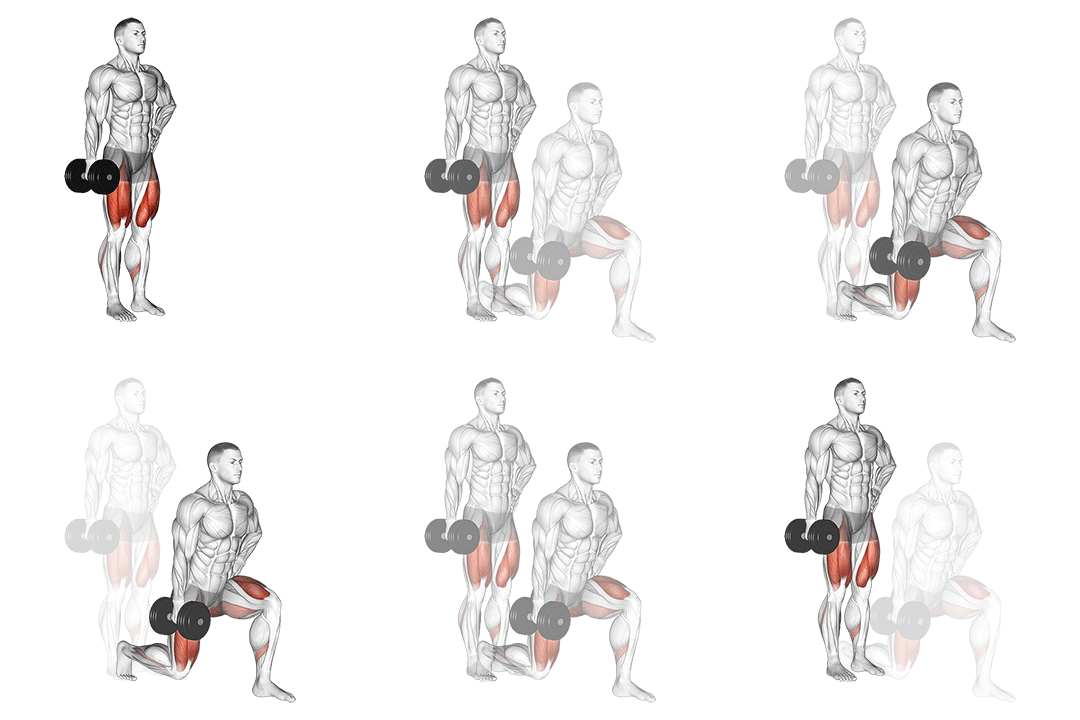
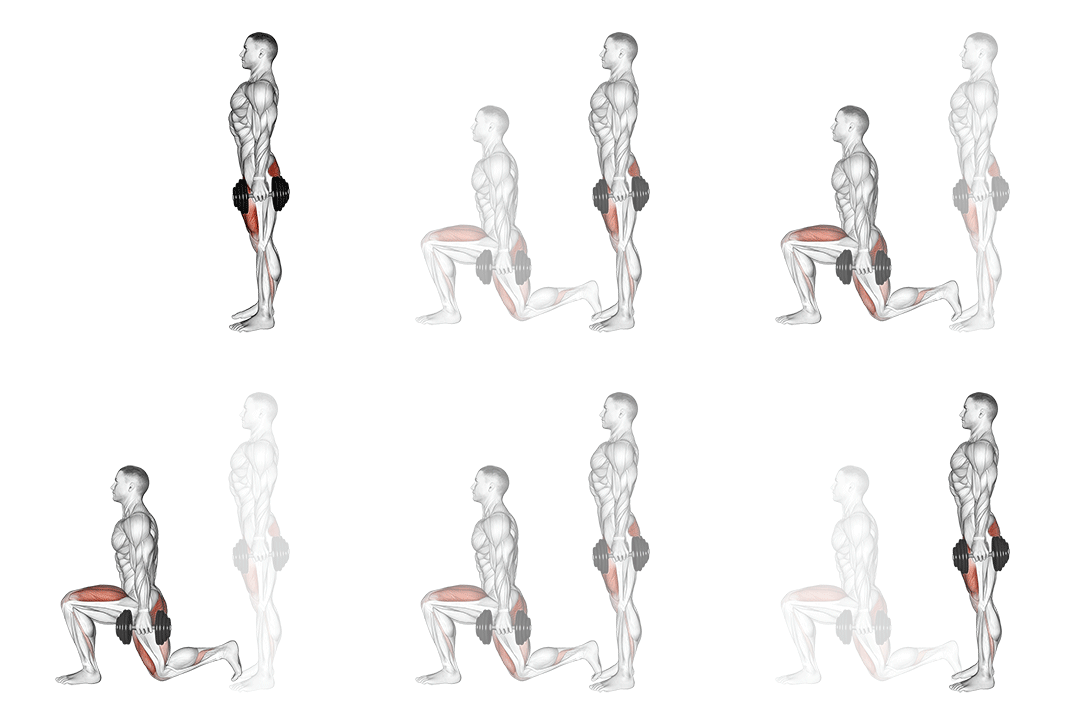
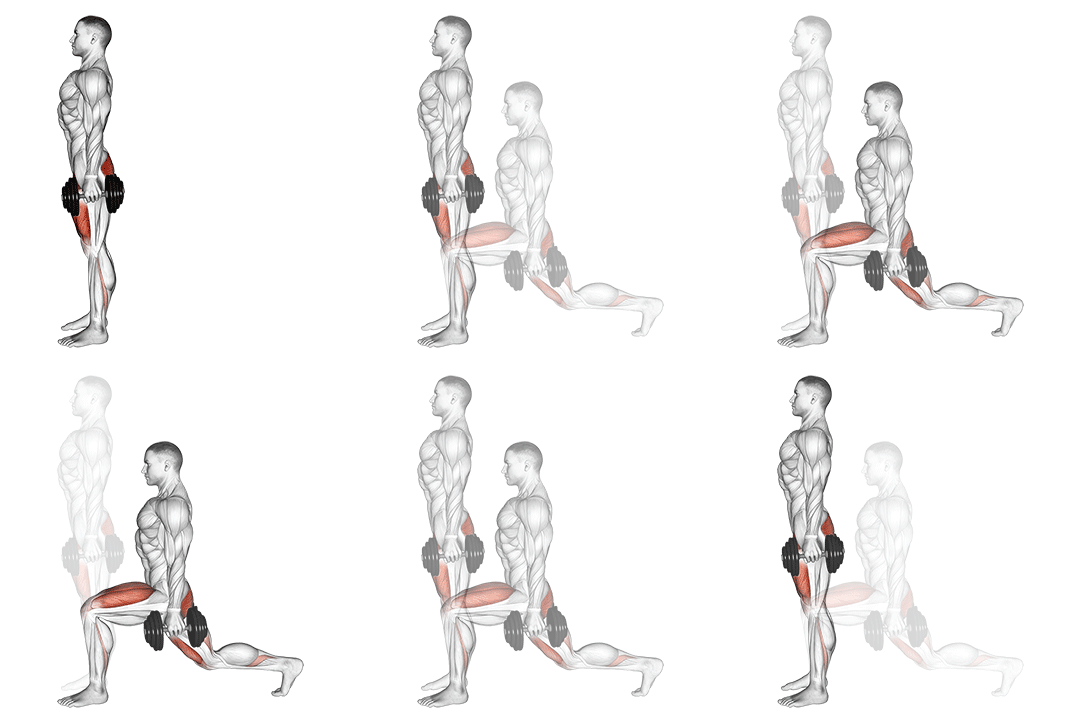
Dumbbell Contralateral Forward Lunge
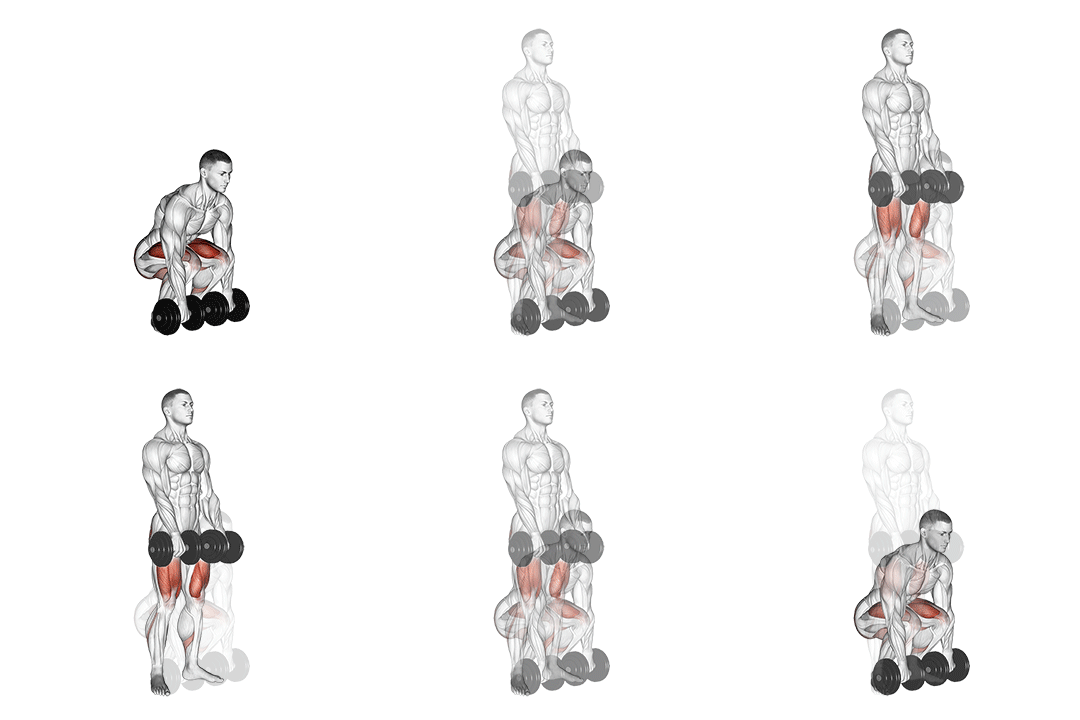
Dumbbell Deadlift
Head-to-Head Comparison
| Attribute | Dumbbell Contralateral Forward Lunge | Dumbbell Deadlift |
|---|---|---|
| Target Muscle |
Glutes
|
Glutes
|
| Body Part |
Upper-legs
|
Upper-legs
|
| Equipment |
Dumbbell
|
Dumbbell
|
| Difficulty |
Intermediate
|
Intermediate
|
| Movement Type |
Compound
|
Compound
|
| Secondary Muscles |
3
|
2
|
Secondary Muscles Activated
Dumbbell Contralateral Forward Lunge
Dumbbell Deadlift
Visual Comparison
Overview
Dumbbell Contralateral Forward Lunge vs Dumbbell Deadlift is a head-to-head you need if you want stronger, fuller glutes. I’ll walk you through which movement loads the glute maximus more, how each stresses quads, hamstrings, and lower back, and the exact technique cues to use—step length, torso angle, and rep ranges (8–12 for hypertrophy, 4–6 for strength). You’ll get clear programming advice, injury-risk comparisons, and scenarios showing when to pick one over the other so you can choose the right exercise for your goals.
Key Differences
- Both exercises target the Glutes using Dumbbell. The main differences are in their movement patterns and muscle activation angles.
Pros & Cons
Dumbbell Contralateral Forward Lunge
+ Pros
- Superior unilateral training that corrects side-to-side imbalances
- High time-under-tension for glute hypertrophy when paced (2–3 s eccentric)
- Minimal equipment and lower absolute load requirement
- Improves frontal-plane stability and ankle dorsiflexion control
− Cons
- Requires more balance and coordination, harder to load heavily
- Front-knee stress if alignment is poor (avoid valgus and track over toes)
- Contralateral load creates rotational torque that may challenge beginners
Dumbbell Deadlift
+ Pros
- Strong posterior-chain stimulus allowing heavier loads and strength progressions
- Simple hip-hinge pattern that transfers to deadlift and squat strength
- Consistent glute and hamstring loading across the ROM
- Easier to scale tempo and overload (heavier dumbbells, slow eccentrics)
− Cons
- Greater lower-back demand—technique breakdown increases lumbar load
- Less unilateral challenge for correcting imbalances
- Grip strength can become the limiting factor with dumbbells
When Each Exercise Wins
For targeted glute hypertrophy the lunge wins because unilateral loading increases time under tension and allows a stronger peak contraction at the end range. Use 8–12 reps per leg with a 2–3 second eccentric and brief pause at the bottom to maximize stretch on the glute.
Deadlifts allow higher absolute loads and train the hip hinge under heavy tension, which increases maximal hip extension strength. Aim for 4–6 reps with progressive overload and controlled eccentrics to build raw posterior-chain force.
The deadlift uses a single dominant hinge pattern that’s easier to teach and scale, with fewer balance demands. Start with light dumbbells focusing on hip-hinge cues (neutral spine, hinge from hips) before increasing weight.
Lunges deliver big glute stimulus without heavy weights and need only one dumbbell or bodyweight. They also improve balance and unilateral strength, making them ideal when equipment is limited.
Frequently Asked Questions
Can I do both Dumbbell Contralateral Forward Lunge and Dumbbell Deadlift in the same workout?
Yes. Structure them so heavier, higher-load deadlifts come first (strength priority), then lunges as a hypertrophy or accessory movement (8–12 reps). Alternatively, alternate them across sessions to avoid cumulative fatigue on the posterior chain.
Which exercise is better for beginners?
Dumbbell Deadlift is generally better for beginners because the hip-hinge is easier to cue and scale. Start light, master a neutral spine and hip drive, then add lunges once balance and single-leg control improve.
How do the muscle activation patterns differ?
Lunges emphasize eccentric control at the knee and hip with peak glute activation on the final ascent; they recruit quads strongly. Deadlifts produce larger hip torque and more continuous hamstring and lumbar activation due to a greater hip flexion angle and posterior force vector during the hinge.
Can Dumbbell Deadlift replace Dumbbell Contralateral Forward Lunge?
Not entirely. Deadlifts can substitute for general posterior-chain work, but they don’t address unilateral stability or the same quad contribution that lunges provide. If your goal is bilateral strength only, deadlifts suffice; for imbalance correction or targeted glute shaping, include lunges.
Expert Verdict
Use both exercises, but prioritize based on your goal: pick Dumbbell Contralateral Forward Lunge when your priority is glute-focused hypertrophy, unilateral balance, and correcting asymmetries—program 8–12 reps per leg with controlled eccentric. Choose Dumbbell Deadlift when your aim is posterior-chain strength and higher loading—focus on 4–6 heavy reps or 6–8 with tempo for strength-endurance. If you train at home with light dumbbells, favor lunges; if you have heavier weights and need to build hip-hinge strength, favor deadlifts. Either way, cue neutral spine, proper knee tracking, and progressive overload for consistent muscle growth and reduced injury risk.
Also Compare
More comparisons with Dumbbell Contralateral Forward Lunge
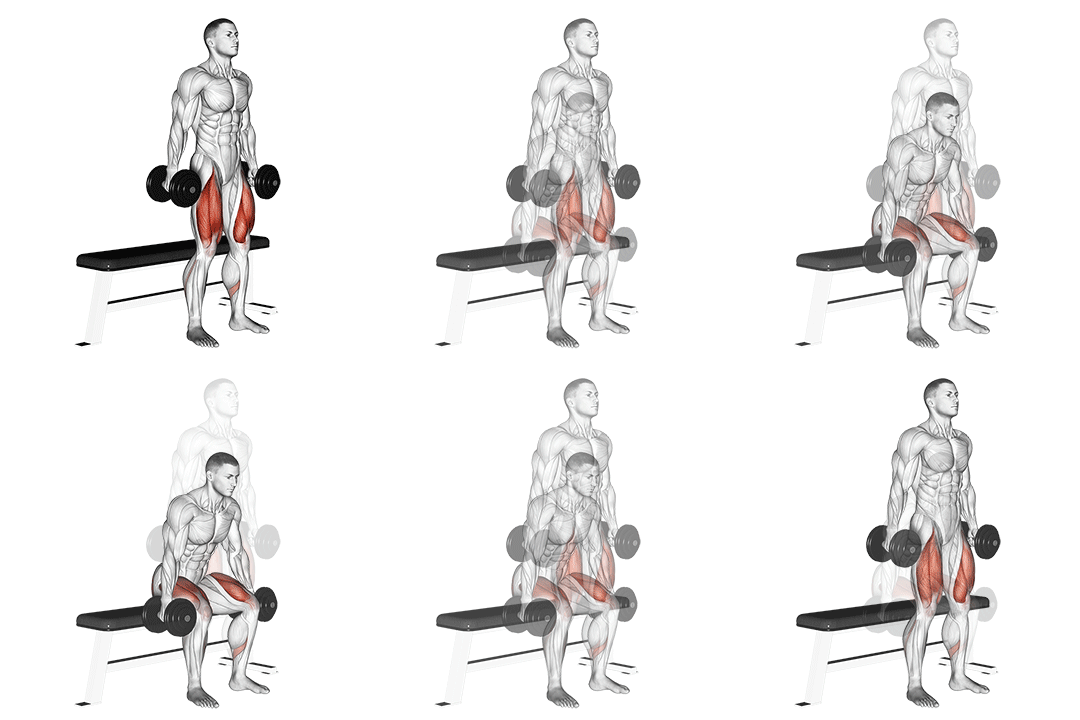
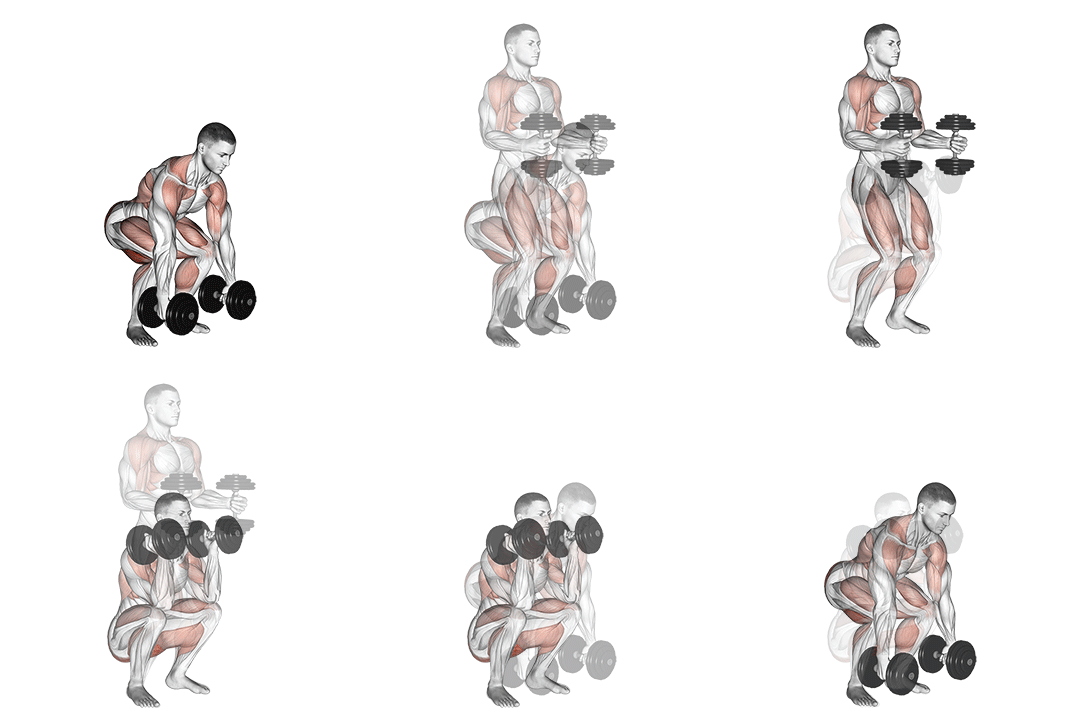
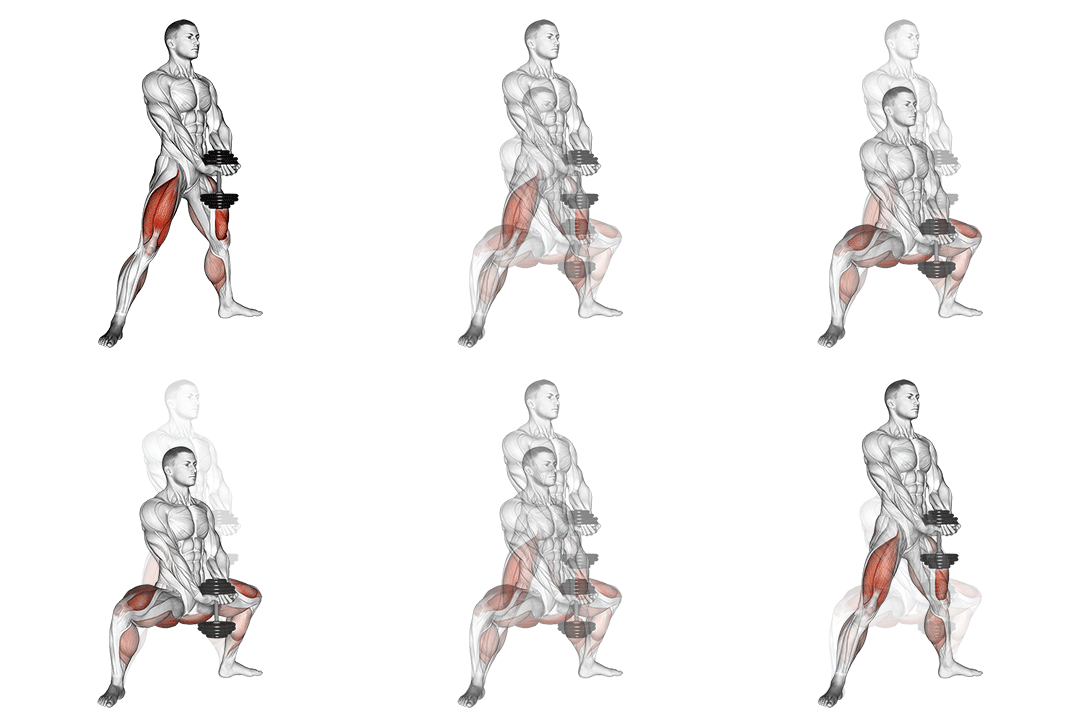
Compare More Exercises
Use our free comparison tool to analyze any two exercises head-to-head.
Compare Exercises