

Dumbbell Contralateral Forward Lunge vs Dumbbell Lunge: Complete Comparison Guide
Dumbbell Contralateral Forward Lunge vs Dumbbell Lunge — you’re choosing between two solid unilateral leg builders that both target the glutes and upper-legs. In this guide you’ll get a direct comparison of muscle activation, movement mechanics, equipment needs, difficulty, and programming recommendations (rep ranges: 6–12 for hypertrophy, 4–6 for strength). I’ll give clear technique cues, explain the biomechanics (force vectors, length-tension relationships, anti-rotation demands), and recommend when to use each exercise in your training week.
Exercise Comparison
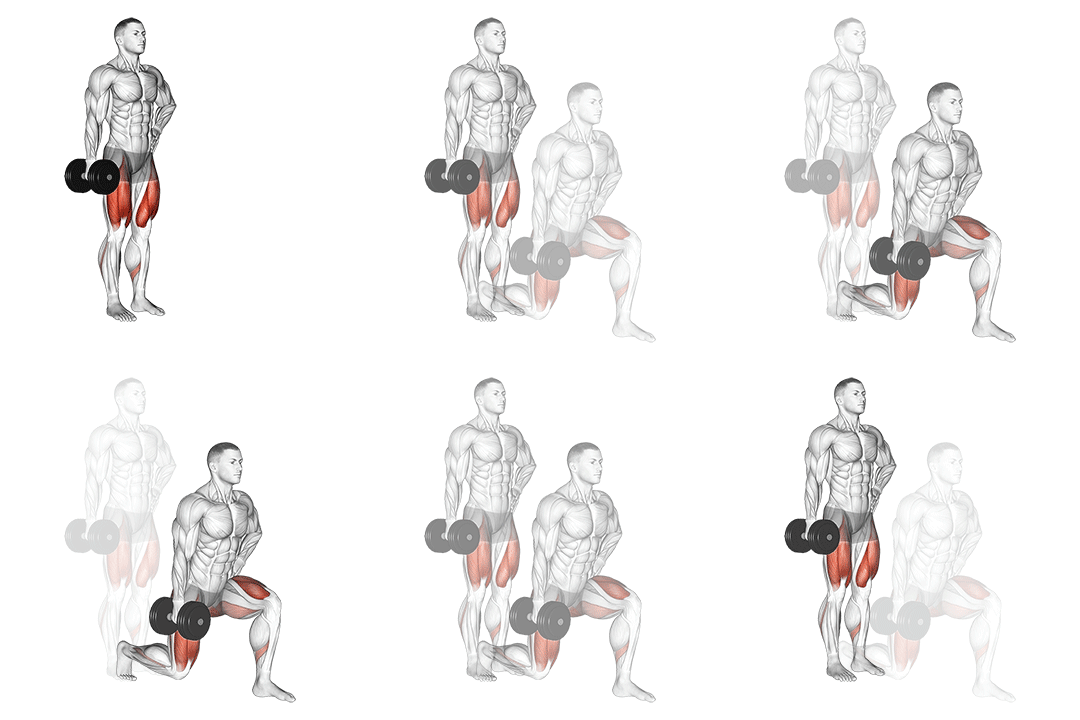
Dumbbell Contralateral Forward Lunge
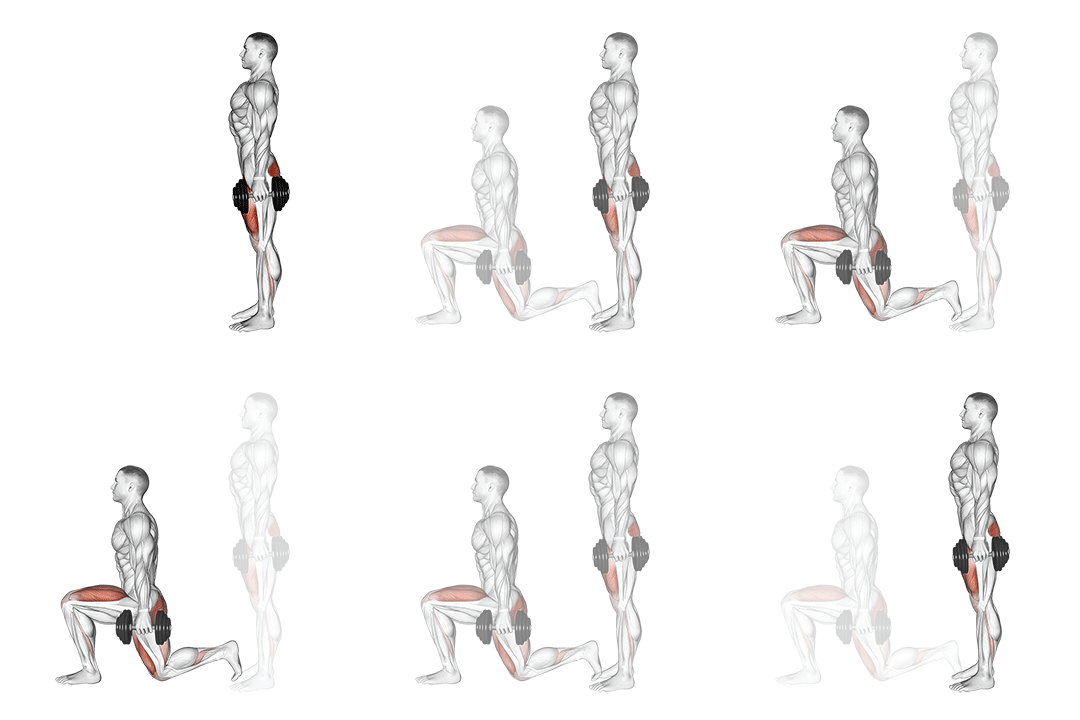
Dumbbell Lunge
Head-to-Head Comparison
| Attribute | Dumbbell Contralateral Forward Lunge | Dumbbell Lunge |
|---|---|---|
| Target Muscle |
Glutes
|
Glutes
|
| Body Part |
Upper-legs
|
Upper-legs
|
| Equipment |
Dumbbell
|
Dumbbell
|
| Difficulty |
Intermediate
|
Intermediate
|
| Movement Type |
Compound
|
Compound
|
| Secondary Muscles |
3
|
3
|
Secondary Muscles Activated
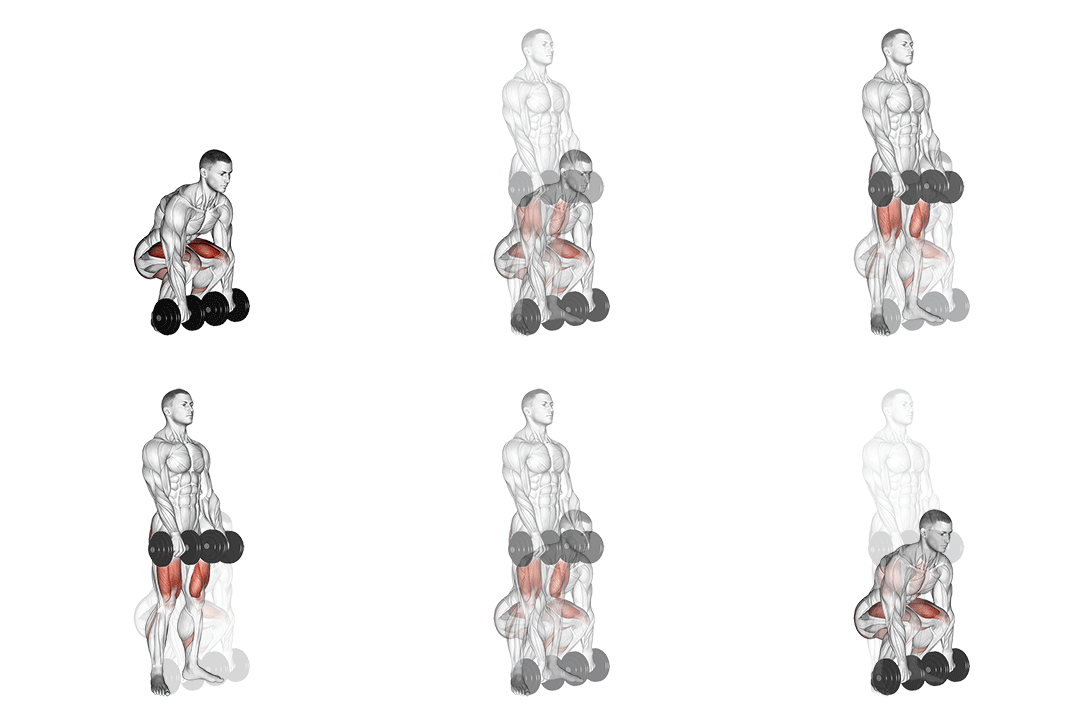
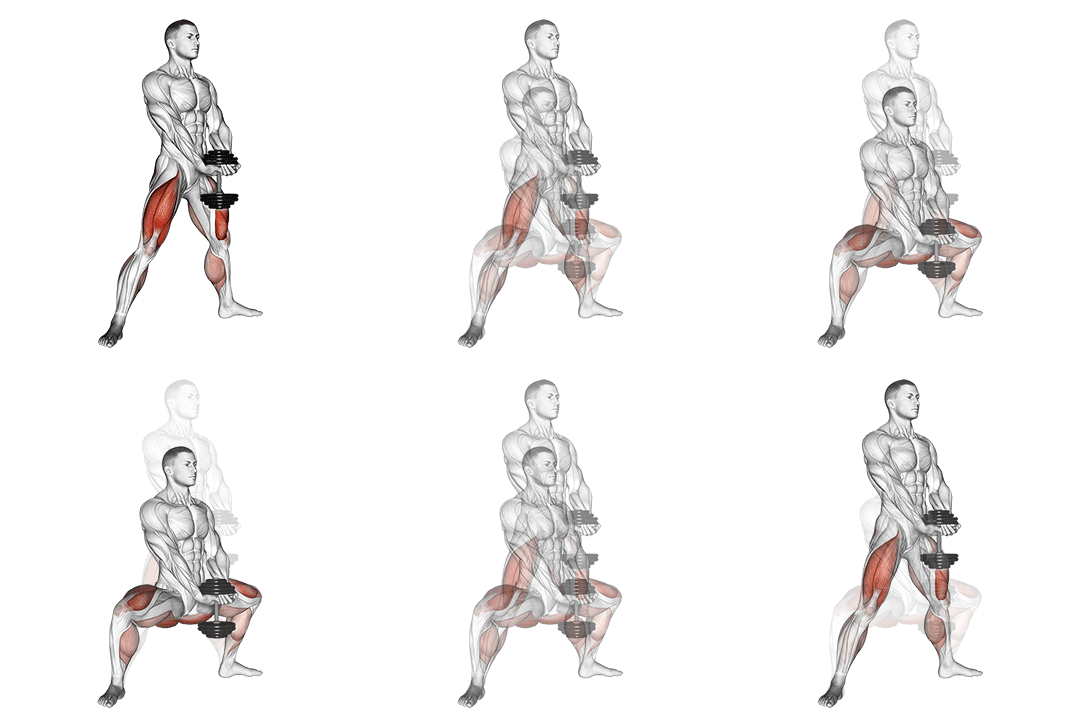
Dumbbell Contralateral Forward Lunge
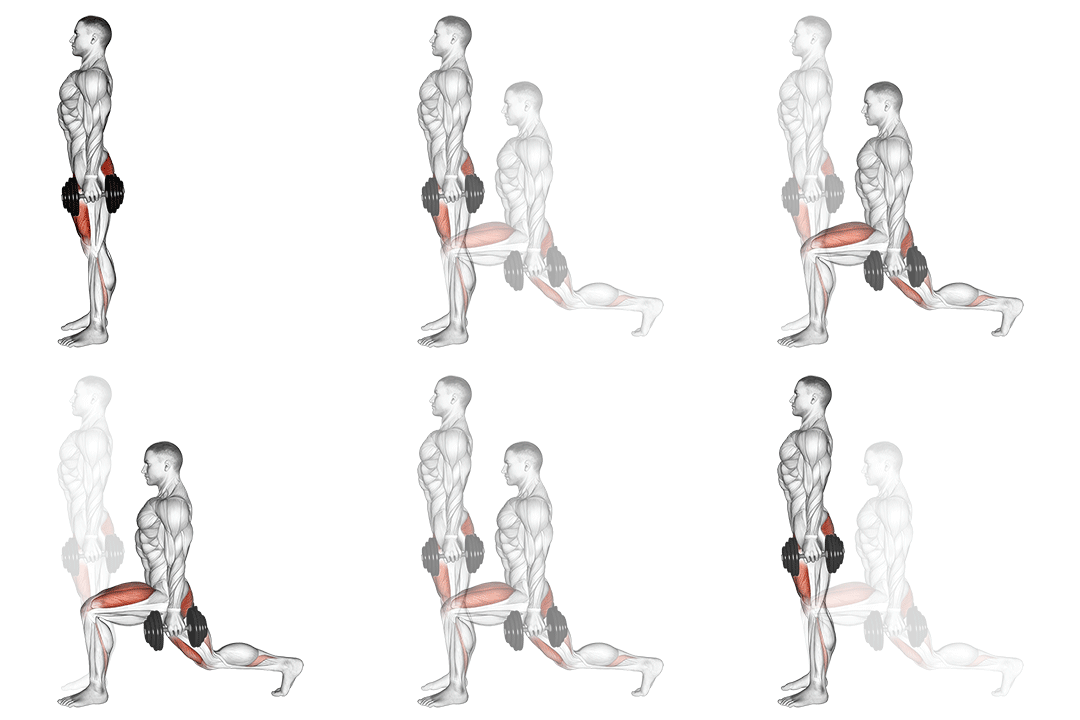
Dumbbell Lunge
Visual Comparison
Overview
Dumbbell Contralateral Forward Lunge vs Dumbbell Lunge — you’re choosing between two solid unilateral leg builders that both target the glutes and upper-legs. In this guide you’ll get a direct comparison of muscle activation, movement mechanics, equipment needs, difficulty, and programming recommendations (rep ranges: 6–12 for hypertrophy, 4–6 for strength). I’ll give clear technique cues, explain the biomechanics (force vectors, length-tension relationships, anti-rotation demands), and recommend when to use each exercise in your training week.
Key Differences
- Both exercises target the Glutes using Dumbbell. The main differences are in their movement patterns and muscle activation angles.
Pros & Cons
Dumbbell Contralateral Forward Lunge
+ Pros
- Increases anti-rotation and frontal-plane stability, engaging obliques and glute medius
- More carryover to single-leg athletic movements and loaded walking variations
- Maintains strong glute activation while challenging core stability
- Easy to progress via heavier contralateral loads or longer steps
− Cons
- Higher coordination and stability demand — steeper learning curve
- Can increase lateral knee and low-back stress if technique breaks down
- Slightly harder to maintain consistent sagittal-plane force vector for pure quad emphasis
Dumbbell Lunge
+ Pros
- Simpler load position — easier balance and faster to teach
- Strong sagittal-plane force vector promotes higher quad torque when desired
- Versatile: can be done with single or double dumbbells, goblet, or racked
- Lower immediate core/anti-rotation demand — good for loading safely early in programs
− Cons
- Less challenge to hip abductors and anti-rotation strength
- Can become 'too easy' for stability progression without creative loading
- If step length is short, may bias quads excessively and limit glute recruitment
When Each Exercise Wins
The standard Dumbbell Lunge lets you create a more consistent sagittal force vector and higher knee torque, which typically produces greater quadriceps loading and measurable hypertrophy when using 6–12 reps and progressive overload. Use longer steps and slow eccentrics to bias glute hypertrophy.
For raw single-leg strength the neutral-load Dumbbell Lunge is easier to load progressively (heavier dumbbells or weighted vests) and allows you to focus on force production in the sagittal plane, making 4–6 rep sets more practical without stability limiting load.
Beginners benefit from the simpler balance and load position of the standard lunge while learning 90° knee angles and hip-hinge patterns. It reduces anti-rotation demands so you can build strength before adding contralateral complexity.
At home with limited equipment, the contralateral carry adds stability and core stimulus without extra tools — one dumbbell provides unilateral load and makes workouts more time-efficient by training multiple movement patterns in one exercise.
Frequently Asked Questions
Can I do both Dumbbell Contralateral Forward Lunge and Dumbbell Lunge in the same workout?
Yes — pair them strategically. Do heavier sets of standard Dumbbell Lunges first for strength (4–6 reps), then add contralateral lunges later for stability and accessory work (8–12 reps) to avoid fatigue-driven breakdown during heavy sets.
Which exercise is better for beginners?
Dumbbell Lunge is better for beginners because the neutral load reduces anti-rotation demands and balance complexity, letting you learn step depth (~90° knee flexion) and hip mechanics before progressing to contralateral variations.
How do the muscle activation patterns differ?
Mechanically, the standard lunge centers the load in the sagittal plane, increasing knee extensor torque and quad activation. The contralateral carry shifts the center of mass laterally, increasing hip abductor and oblique activation to resist rotation while preserving glute maximal activation during hip extension.
Can Dumbbell Lunge replace Dumbbell Contralateral Forward Lunge?
If your priority is pure unilateral strength or hypertrophy, the Dumbbell Lunge can replace the contralateral version. If you need anti-rotation training, improved frontal-plane stability, or sport-specific carryover, keep the contralateral lunge in your program as a complementary exercise.
Expert Verdict
Use the Dumbbell Lunge as your foundational unilateral mover when your goal is to build leg strength and muscle with reliable sagittal-plane loading — it’s easier to learn and to load progressively for 4–12 rep schemes. Choose the Dumbbell Contralateral Forward Lunge when you need extra anti-rotation challenge, improved hip abductor recruitment, or sport-specific single-leg stability; expect greater core and frontal-plane demand. Program both: prioritize the standard lunge for base strength and add contralateral variations later in the week for stability, balance, and functional carryover. Cue 90° knee angles, drive through the front heel, and keep the torso neutral to maximize safety and muscle growth.
Also Compare
More comparisons with Dumbbell Contralateral Forward Lunge
Compare More Exercises
Use our free comparison tool to analyze any two exercises head-to-head.
Compare Exercises