

Dumbbell Contralateral Forward Lunge vs Dumbbell Rear Lunge: Complete Comparison Guide
Dumbbell Contralateral Forward Lunge vs Dumbbell Rear Lunge — both hit the glutes hard, but they do it in different ways. If you want clear guidance on which to use, this comparison walks you through technique cues, biomechanical differences, muscle activation patterns, programming tips (rep ranges and progressions), and practical trade-offs like space and injury risk. Read on and you'll know when to pick the contralateral forward lunge for anti-rotation and balance work, or the rear lunge for safer knee loading and greater hip-extension range.
Exercise Comparison
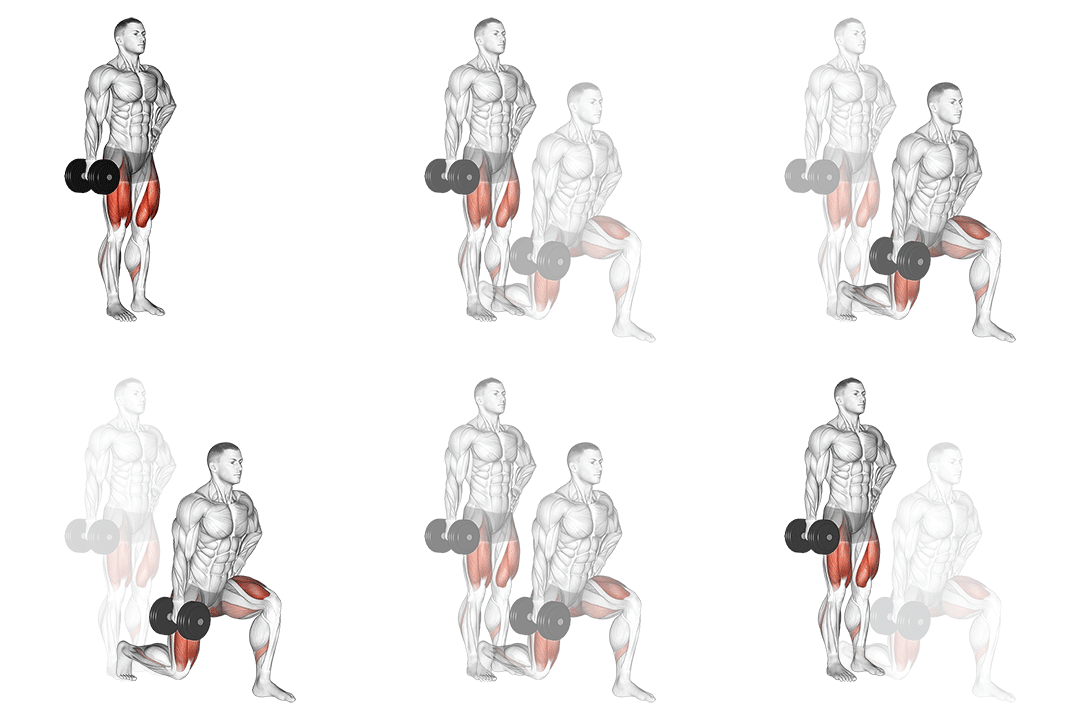
Dumbbell Contralateral Forward Lunge
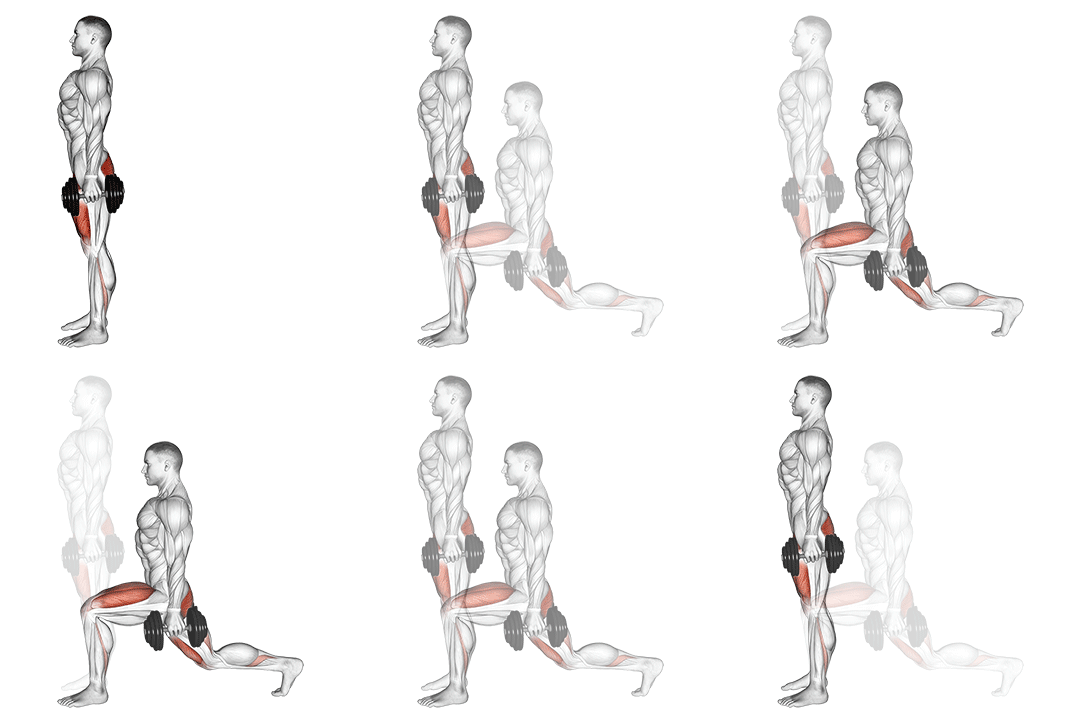
Dumbbell Rear Lunge
Head-to-Head Comparison
| Attribute | Dumbbell Contralateral Forward Lunge | Dumbbell Rear Lunge |
|---|---|---|
| Target Muscle |
Glutes
|
Glutes
|
| Body Part |
Upper-legs
|
Upper-legs
|
| Equipment |
Dumbbell
|
Dumbbell
|
| Difficulty |
Intermediate
|
Intermediate
|
| Movement Type |
Compound
|
Compound
|
| Secondary Muscles |
3
|
3
|
Secondary Muscles Activated
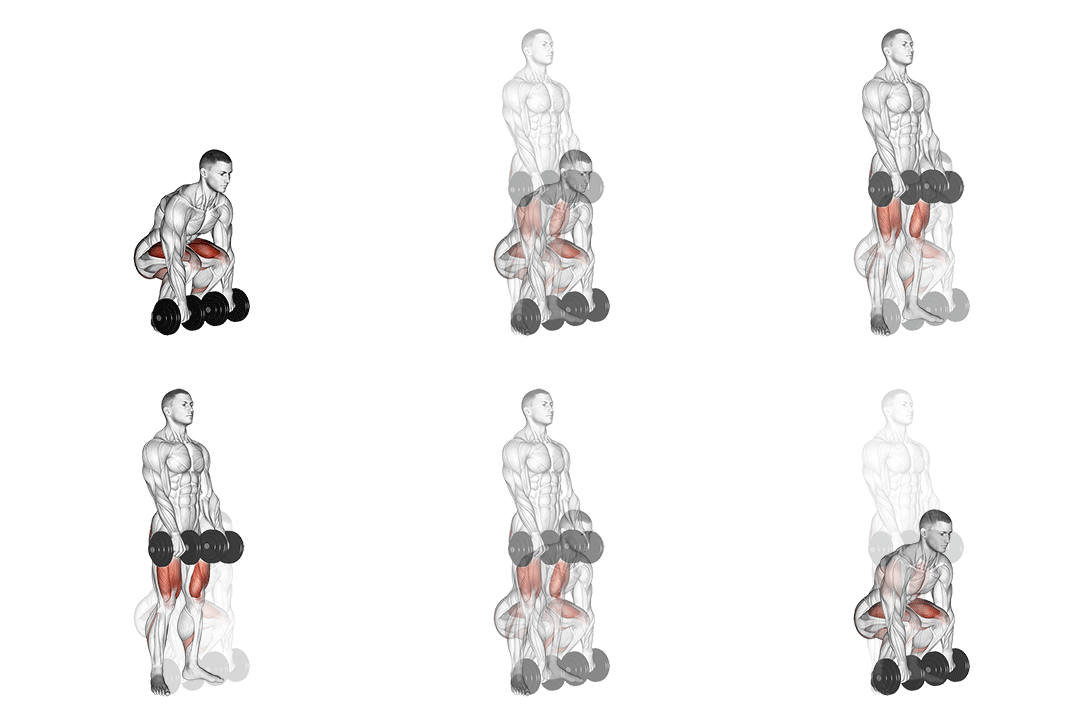
Dumbbell Contralateral Forward Lunge
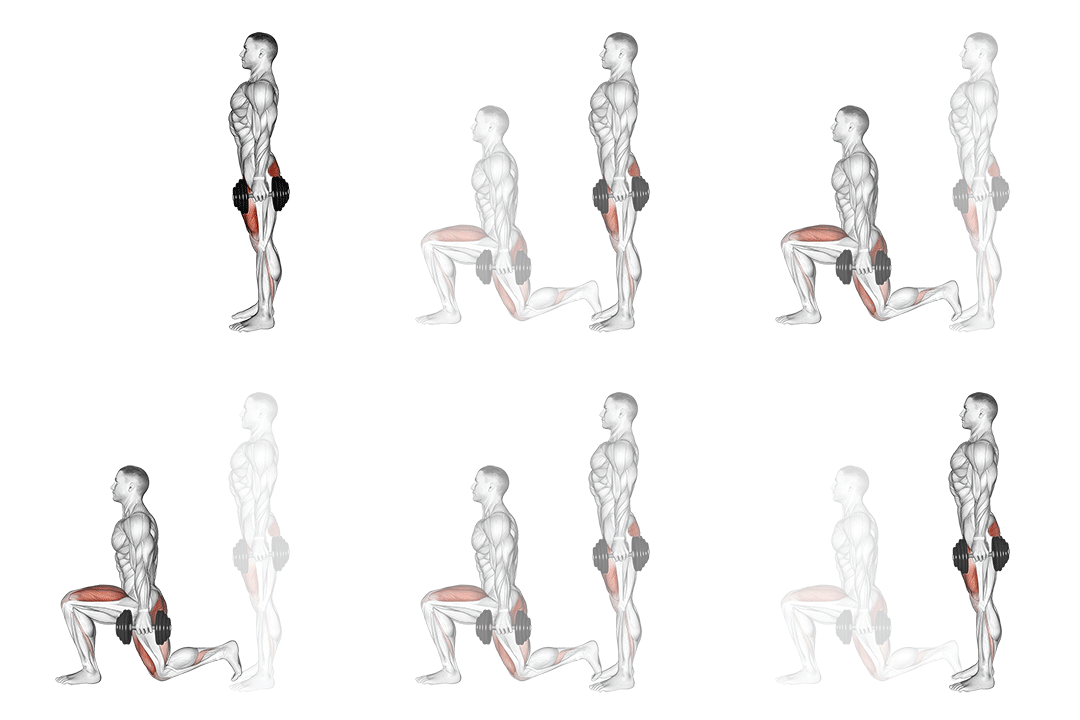
Dumbbell Rear Lunge
Visual Comparison
Overview
Dumbbell Contralateral Forward Lunge vs Dumbbell Rear Lunge — both hit the glutes hard, but they do it in different ways. If you want clear guidance on which to use, this comparison walks you through technique cues, biomechanical differences, muscle activation patterns, programming tips (rep ranges and progressions), and practical trade-offs like space and injury risk. Read on and you'll know when to pick the contralateral forward lunge for anti-rotation and balance work, or the rear lunge for safer knee loading and greater hip-extension range.
Key Differences
- Both exercises target the Glutes using Dumbbell. The main differences are in their movement patterns and muscle activation angles.
Pros & Cons
Dumbbell Contralateral Forward Lunge
+ Pros
- Strong anti-rotation/core challenge that recruits glute medius and obliques
- Better carryover to balance and unilateral athletic movements
- Easy to manipulate tempo and step length for progressive overload
- Good for combining hip and frontal-plane stability training
− Cons
- Higher technical demand — needs solid trunk bracing and balance
- Slightly greater anterior knee shear if step/technique is poor
- Requires more forward space and control to avoid momentum
Dumbbell Rear Lunge
+ Pros
- Safer knee loading with a simpler movement pattern
- Greater hip-extension range for stronger glute max stimulus
- Easier to teach and learn for most trainees
- Works well in small spaces or crowded gyms
− Cons
- Lower anti-rotation/core stimulus compared to contralateral version
- Less challenge to frontal-plane stabilizers
- Can become habitually short-stepped, reducing ROM and stimulus
When Each Exercise Wins
The rear lunge allows a longer hip-extension range and places the glute max at longer muscle lengths, improving length–tension stimulus for hypertrophy. Use 8–12 reps, 3–4 sets, and a controlled 2–3 second eccentric to maximize time under tension.
Contralateral forward lunges demand greater unilateral stability and higher peak hip and knee moments under load, which transfers to single-leg strength. Progress with heavier loads, lower reps (4–6), and paused eccentrics to build maximal force.
Stepping back is mechanically simpler and reduces forward momentum, so beginners can reach proper 90° joint angles faster with less balance training. Start with bodyweight or light dumbbells for 8–15 reps per leg.
Rear lunges need less forward space and are easier to control on a carpet or small room. They let you load the glutes effectively with a single set of dumbbells without special equipment.
Frequently Asked Questions
Can I do both Dumbbell Contralateral Forward Lunge and Dumbbell Rear Lunge in the same workout?
Yes. Pair them strategically: use rear lunges early for volume and glute loading (8–12 reps), then add contralateral forward lunges as a heavier or stability-focused finisher (4–8 reps). Watch total volume to avoid excessive fatigue on the lead leg.
Which exercise is better for beginners?
Dumbbell Rear Lunge is better for beginners because it’s mechanically simpler and places less forward shear on the knee. Begin with bodyweight rear lunges, then add light dumbbells once you can hit consistent 90° knee angles.
How do the muscle activation patterns differ?
The contralateral forward lunge increases glute medius and oblique activation due to anti-rotation demands and higher frontal-plane torque, while the rear lunge increases glute max and hamstring engagement through greater hip extension range and a posterior force vector.
Can Dumbbell Rear Lunge replace Dumbbell Contralateral Forward Lunge?
Yes for general glute development and safer knee loading, but not if you need anti-rotation core work or sport-specific unilateral strength. If those are priorities, keep the contralateral forward lunge in your plan at lower reps or in technique-focused blocks.
Expert Verdict
Choose the Dumbbell Rear Lunge when you want a straightforward, safer way to load the glutes with a long hip-extension range—ideal for hypertrophy, rehab-friendly work, and small spaces. Pick the Dumbbell Contralateral Forward Lunge when your goal is to build unilateral strength, anti-rotation stability, and carryover to athletic movement; it’s better for strength-focused phases and improving balance. Program both: use rear lunges for volume blocks (8–12 reps) and contralateral forward lunges for heavier or skill-focused sessions (4–8 reps, tempo variations). Always prioritize a braced trunk, 90° front-knee position, and controlled eccentric descent to protect joints.
Also Compare
More comparisons with Dumbbell Contralateral Forward Lunge
Compare More Exercises
Use our free comparison tool to analyze any two exercises head-to-head.
Compare Exercises