

Dumbbell Cuban Press V. 2 vs Dumbbell Front Raise: Complete Comparison Guide
Dumbbell Cuban Press V. 2 vs Dumbbell Front Raise — two shoulder moves that look similar on paper but load your delts very differently. You’ll learn how each targets the anterior, lateral, and supporting muscles, which one is safer for rotating shoulders, and clear technique cues so you perform them correctly (e.g., elbow path, external rotation, and ideal lifting angles). I’ll compare equipment needs, learning curve, progression options, and give practical recommendations for hypertrophy, strength, beginners, and home workouts.
Exercise Comparison
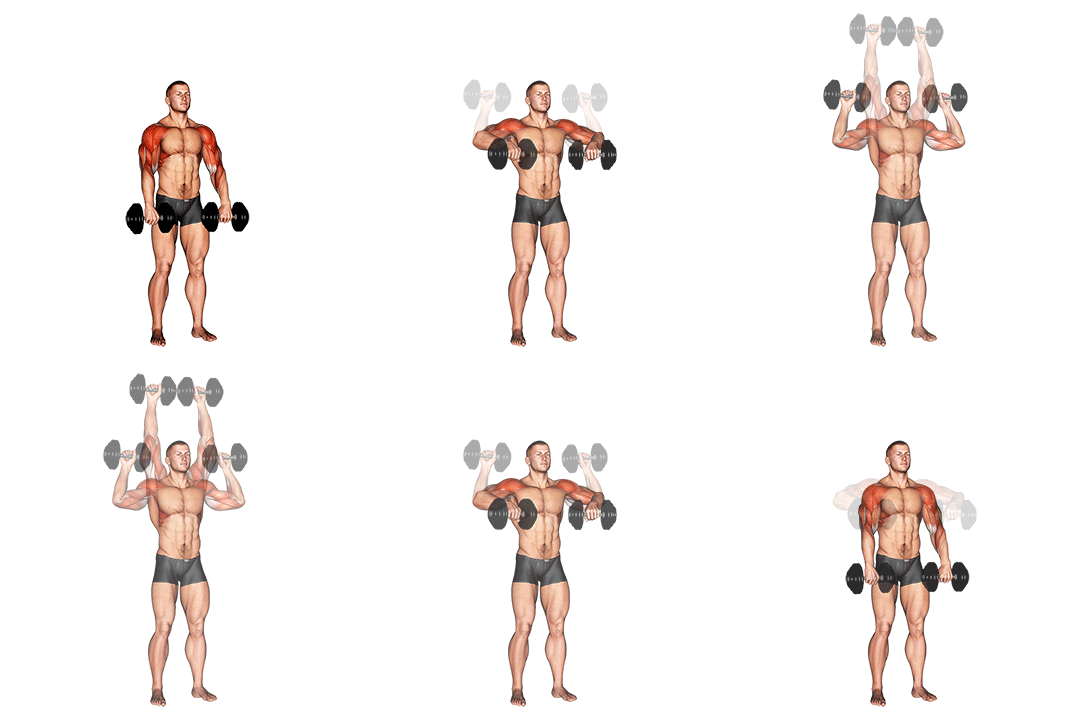
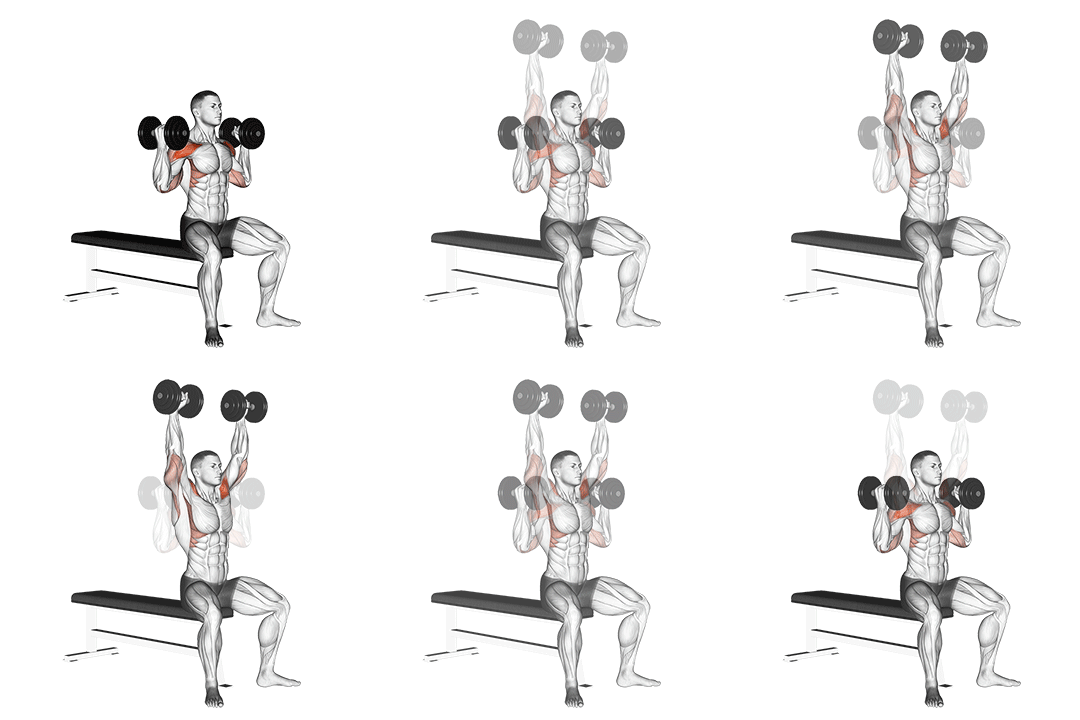
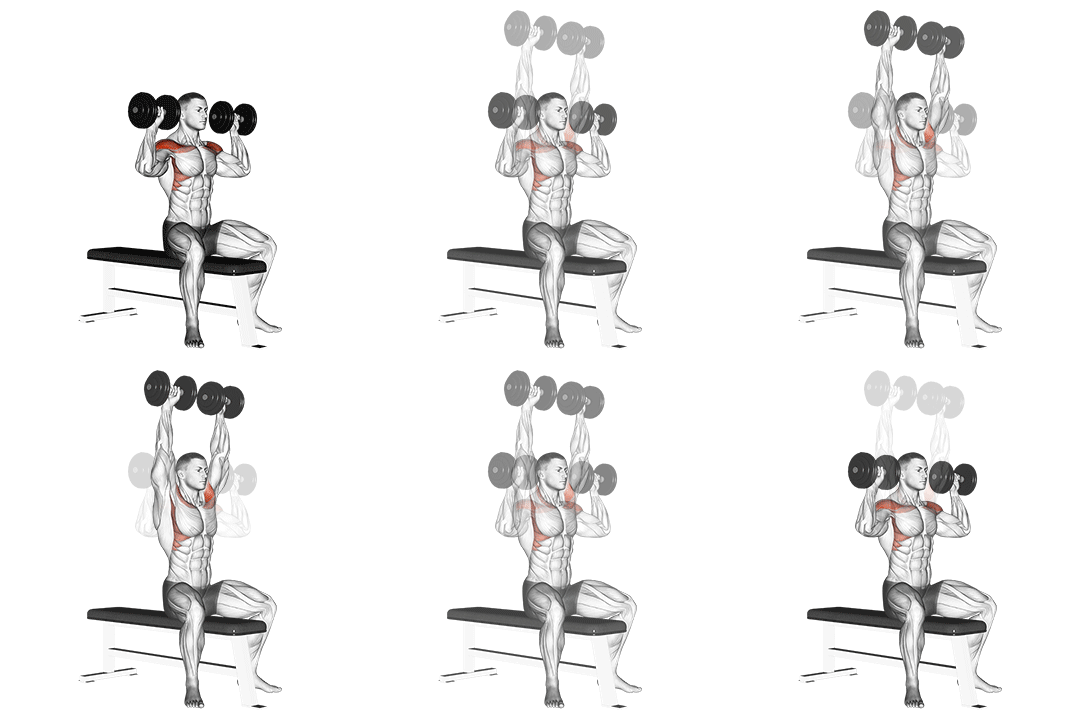
Dumbbell Cuban Press V. 2
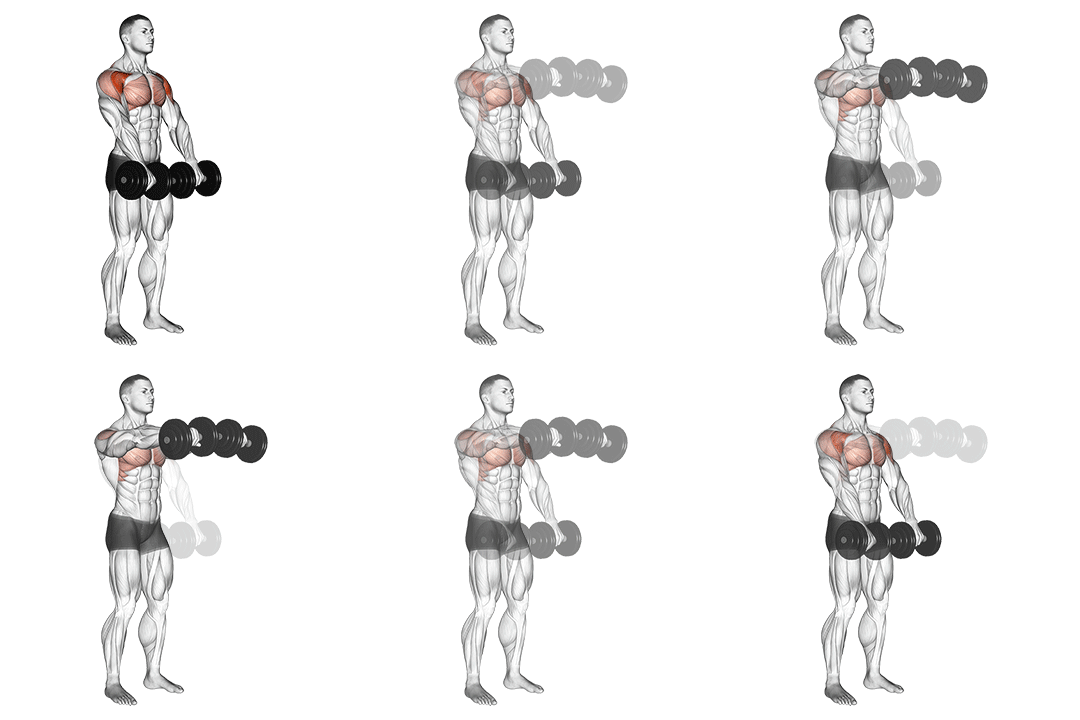
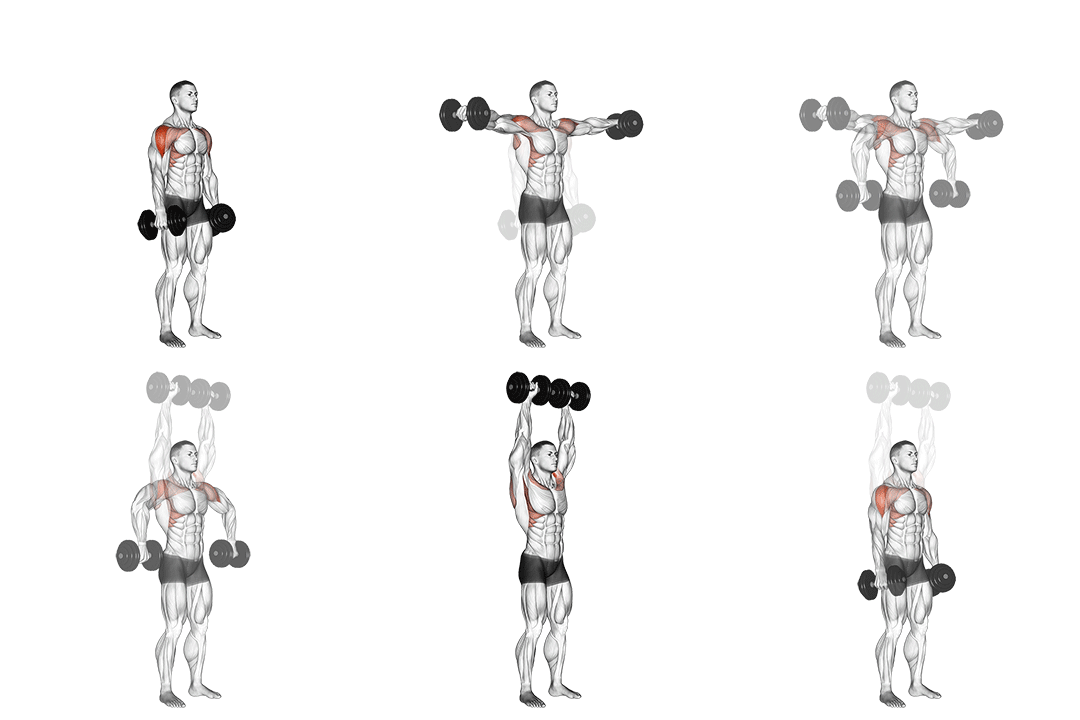
Dumbbell Front Raise
Head-to-Head Comparison
| Attribute | Dumbbell Cuban Press V. 2 | Dumbbell Front Raise |
|---|---|---|
| Target Muscle |
Delts
|
Delts
|
| Body Part |
Shoulders
|
Shoulders
|
| Equipment |
Dumbbell
|
Dumbbell
|
| Difficulty |
Intermediate
|
Beginner
|
| Movement Type |
Compound
|
Isolation
|
| Secondary Muscles |
2
|
2
|
Secondary Muscles Activated
Dumbbell Cuban Press V. 2
Dumbbell Front Raise
Visual Comparison
Overview
Dumbbell Cuban Press V. 2 vs Dumbbell Front Raise — two shoulder moves that look similar on paper but load your delts very differently. You’ll learn how each targets the anterior, lateral, and supporting muscles, which one is safer for rotating shoulders, and clear technique cues so you perform them correctly (e.g., elbow path, external rotation, and ideal lifting angles). I’ll compare equipment needs, learning curve, progression options, and give practical recommendations for hypertrophy, strength, beginners, and home workouts.
Key Differences
- Dumbbell Cuban Press V. 2 is a compound movement, while Dumbbell Front Raise is an isolation exercise.
- Difficulty levels differ: Dumbbell Cuban Press V. 2 is intermediate, while Dumbbell Front Raise is beginner.
- Both exercises target the Delts using Dumbbell. The main differences are in their movement patterns and muscle activation angles.
Pros & Cons
Dumbbell Cuban Press V. 2
+ Pros
- Hits multiple deltoid heads and the rotator cuff for balanced shoulder development
- Compound pattern builds pressing strength and transfers to overhead work
- Stronger progression options: heavier loads, tempo changes, and unilateral variants
- Improves shoulder external rotation strength and scapular control
− Cons
- More technical; poor form can stress the rotator cuff
- Requires overhead clearance and good shoulder mobility
- Higher coordination demand makes it harder to load safely for beginners
Dumbbell Front Raise
+ Pros
- Simple to learn and perform with minimal setup
- Excellent isolation of the anterior deltoid for targeted hypertrophy
- Very accessible for home use and limited-equipment sessions
- Low coordination demand allows for higher reps and metabolic work
− Cons
- Limited transfer to pressing strength since it lacks elbow extension under load
- Can encourage upper-trap compensation and momentum if fatigue sets in
- Narrow stimulus—less overall shoulder and upper-back development compared with compound lifts
When Each Exercise Wins
The Cuban Press engages multiple deltoid heads plus upper back and triceps, allowing heavier loads and varied loading angles (6–12 reps), which creates broader mechanical tension and greater overall muscle stimulus for hypertrophy.
As a compound sequence that ends in an overhead press, it builds pressing strength and scapular control. You can progress load in lower rep ranges (4–8) and get direct carryover to other presses.
The Front Raise is single-plane and easy to cue (slight elbow bend, lift to ~60–90°), so beginners can safely stimulate the anterior deltoid and learn to feel the muscle without complex coordination or high rotator-cuff demand.
Minimal equipment and space make the Front Raise ideal for home sessions. It can be performed with one dumbbell or band, and you don’t need overhead clearance or high shoulder mobility.
Frequently Asked Questions
Can I do both Dumbbell Cuban Press V. 2 and Dumbbell Front Raise in the same workout?
Yes. Pair them smartly: do the Cuban Press earlier as a compound priority lift (3–4 sets) and follow with Front Raises as an isolation finisher (2–3 sets of 8–15 reps). That sequencing uses the Cuban Press for strength and the Front Raise to pump the anterior deltoid.
Which exercise is better for beginners?
Dumbbell Front Raise is better for beginners because it’s single-plane and easier to learn. It builds anterior-delt awareness before introducing the coordination and rotator-cuff demands of the Cuban Press.
How do the muscle activation patterns differ?
Front Raise creates a sagittal flexion force vector that isolates the anterior deltoid with peak torque mid-range. The Cuban Press shifts vectors across three phases—upright pull, external rotation, and press—spreading activation across anterior and lateral delts, rotator cuff, upper traps, and triceps.
Can Dumbbell Front Raise replace Dumbbell Cuban Press V. 2?
It can replace it if your goal is pure anterior-delt isolation or you lack experience/mobility. However, it won’t replace the Cuban Press for overhead strength, rotator-cuff training, or multi-muscle development—use it as a complement rather than a direct substitute.
Expert Verdict
Use the Dumbbell Cuban Press V. 2 when you want compound shoulder work that builds pressing strength, trains external rotation, and recruits upper-back and triceps—aim for 4–12 reps depending on strength vs hypertrophy goals, and prioritize controlled external rotation. Choose the Dumbbell Front Raise when your goal is targeted anterior-delt growth, simple programming, or limited equipment; use strict form, a slight elbow bend, and 8–15 reps with slow eccentrics. If you have shoulder pain or limited mobility, start with Front Raises and progress to the Cuban Press only after you’ve built stability and practiced the external rotation pattern.
Also Compare
More comparisons with Dumbbell Cuban Press V. 2
More comparisons with Dumbbell Front Raise
Compare More Exercises
Use our free comparison tool to analyze any two exercises head-to-head.
Compare Exercises