

Dumbbell Cuban Press V. 2 vs Reverse Flyes: Complete Comparison Guide
Dumbbell Cuban Press V. 2 vs Reverse Flyes gives you a straightforward comparison between a compound, rotational shoulder movement and a straight-up posterior-delt isolation. You’ll learn how each exercise loads the deltoid heads, what secondary muscles fire, and the biomechanics behind the movement patterns. I’ll cover setup and technique cues (like keeping the humerus near 90° in the Cuban rotation and maintaining scapular retraction on reverse flyes), typical rep ranges for hypertrophy and strength, and how to pick the right one for your program or use both in the same session safely.
Exercise Comparison
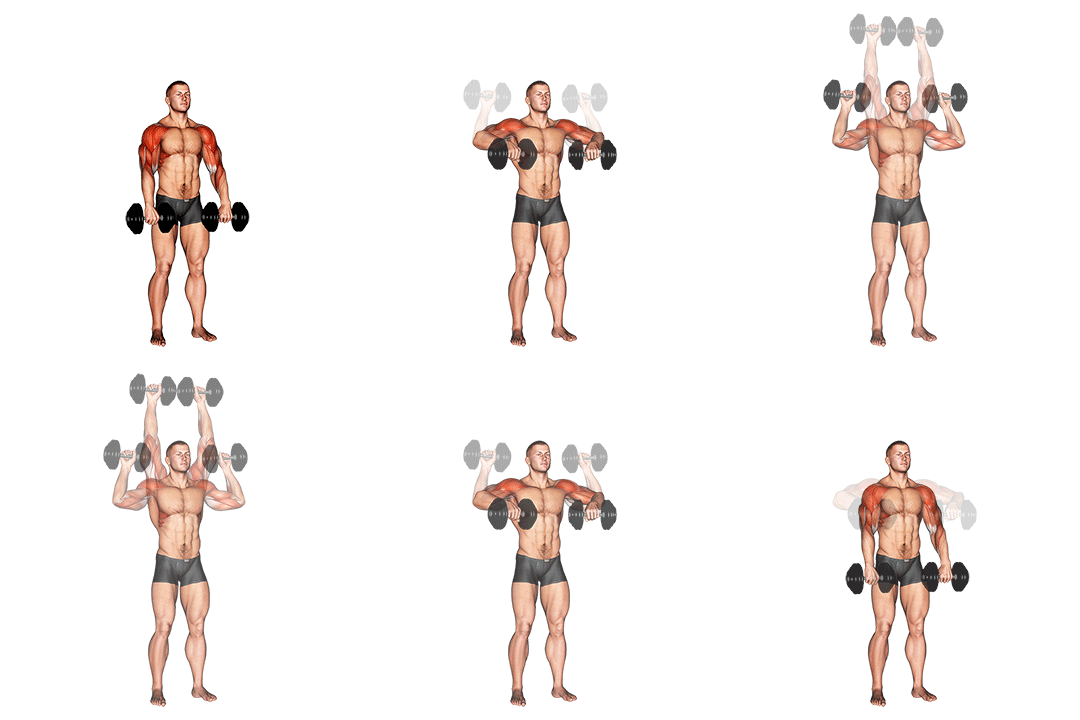
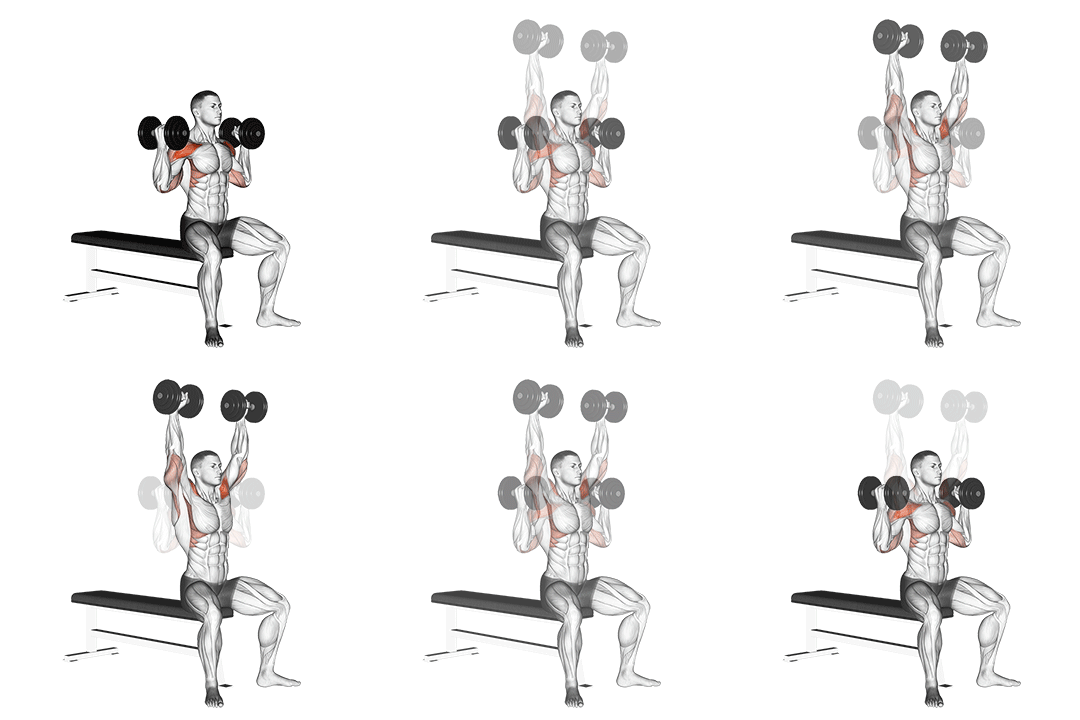
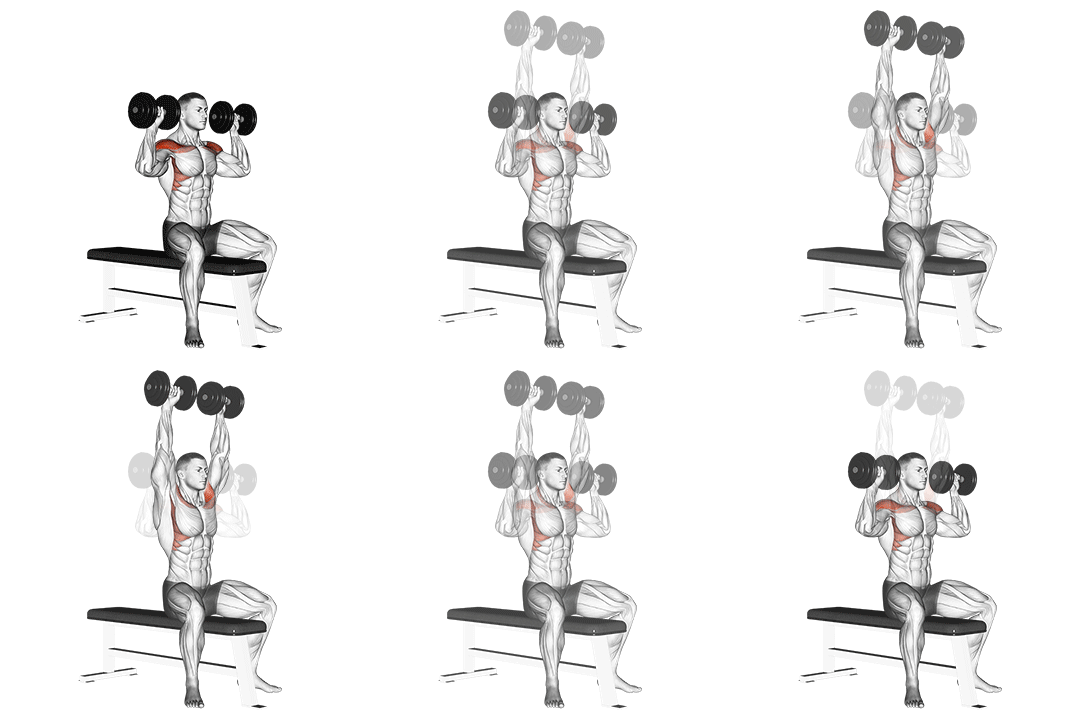
Dumbbell Cuban Press V. 2
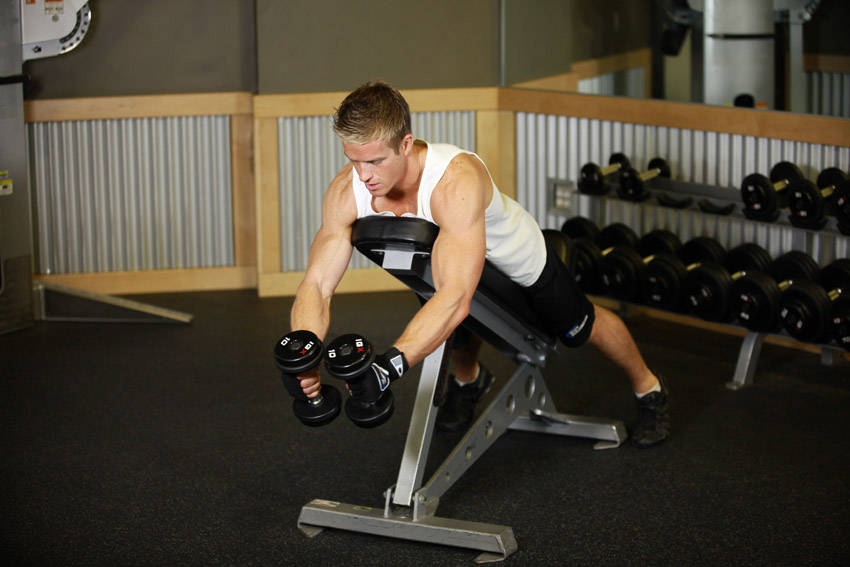
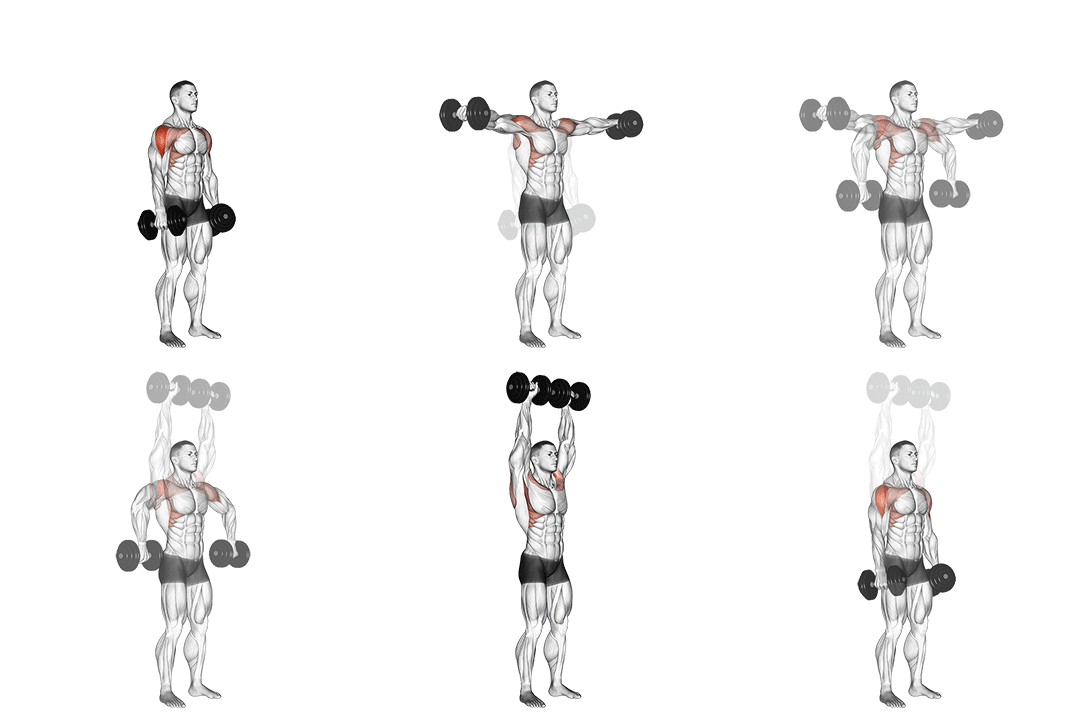
Reverse Flyes
Head-to-Head Comparison
| Attribute | Dumbbell Cuban Press V. 2 | Reverse Flyes |
|---|---|---|
| Target Muscle |
Delts
|
Delts
|
| Body Part |
Shoulders
|
Shoulders
|
| Equipment |
Dumbbell
|
Dumbbell
|
| Difficulty |
Intermediate
|
Beginner
|
| Movement Type |
Compound
|
Isolation
|
| Secondary Muscles |
2
|
0
|
Secondary Muscles Activated
Dumbbell Cuban Press V. 2
Reverse Flyes
Visual Comparison
Overview
Dumbbell Cuban Press V. 2 vs Reverse Flyes gives you a straightforward comparison between a compound, rotational shoulder movement and a straight-up posterior-delt isolation. You’ll learn how each exercise loads the deltoid heads, what secondary muscles fire, and the biomechanics behind the movement patterns. I’ll cover setup and technique cues (like keeping the humerus near 90° in the Cuban rotation and maintaining scapular retraction on reverse flyes), typical rep ranges for hypertrophy and strength, and how to pick the right one for your program or use both in the same session safely.
Key Differences
- Dumbbell Cuban Press V. 2 is a compound movement, while Reverse Flyes is an isolation exercise.
- Difficulty levels differ: Dumbbell Cuban Press V. 2 is intermediate, while Reverse Flyes is beginner.
- Both exercises target the Delts using Dumbbell. The main differences are in their movement patterns and muscle activation angles.
Pros & Cons
Dumbbell Cuban Press V. 2
+ Pros
- Compound movement that trains deltoids plus triceps and upper back
- Builds multi-planar shoulder strength and coordination
- Easy to progress load for overall muscle growth and strength
- Teaches and strengthens external rotation and rotator cuff control
− Cons
- Technically demanding with a steeper learning curve
- Higher rotator cuff stress if performed with too-heavy weights
- Harder to load safely for pure posterior delt isolation
Reverse Flyes
+ Pros
- Direct posterior deltoid isolation with clear mind-muscle link
- Simple technique that beginners can pick up quickly
- Requires minimal setup and works well for home training
- Keeps continuous tension across the rear delt through the range
− Cons
- More limited progressive overload compared with compound presses
- Can lead to upper-trap dominance if scapular retraction is poor
- Less carryover to pressing strength or triceps development
When Each Exercise Wins
For overall shoulder muscle growth, the Cuban press wins because it exposes multiple deltoid heads to mechanical tension and lets you use heavier loads and progressive overload (6–12 reps for hypertrophy). Its compound nature drives more total work per set than an isolation movement.
Strength favors the Cuban press since it trains pressing mechanics and allows heavier loading patterns (3–6 or 4–8 reps) while strengthening rotator cuff control in the external rotation phase.
Reverse flyes are simpler to learn and teach posterior delt activation and scapular retraction without the coordination and rotator-cuff load of the Cuban press, making them safer for new lifters.
Reverse flyes require minimal space and lighter weights, and they can be performed seated, bent-over, or with bands — making them more practical for home setups.
Frequently Asked Questions
Can I do both Dumbbell Cuban Press V. 2 and Reverse Flyes in the same workout?
Yes. Do the Cuban press earlier as a compound movement (3–4 sets of 4–8 or 6–12 reps) and add reverse flyes as finishers (2–4 sets of 8–15) to target the posterior delt and reinforce scapular control without fatiguing your pressing muscles beforehand.
Which exercise is better for beginners?
Reverse Flyes are better for beginners because the single-plane motion is easier to master and poses less rotator-cuff stress. Use light weight, focus on scapular retraction, and progress volume before adding complex rotations like the Cuban press.
How do the muscle activation patterns differ?
The Cuban press starts with external rotation (rotator cuff engagement), shifts load to anterior and lateral delts during the press, and finishes with triceps. Reverse flyes maintain posterior delt tension through horizontal abduction with the mid-traps and rhomboids stabilizing the scapula throughout.
Can Reverse Flyes replace Dumbbell Cuban Press V. 2?
Not completely. Reverse flyes can replace Cuban presses if your goal is pure posterior delt isolation or you lack confidence with the rotation/press pattern, but they won’t provide the same compound pressing overload, triceps carryover, or rotator-cuff strengthening stimulus as the Cuban press.
Expert Verdict
If you want a compound shoulder builder that improves pressing strength and forces rotator-cuff control, prioritize the Dumbbell Cuban Press V. 2. Use it as a primary shoulder exercise for 4–4 sets of 4–8 reps for strength or 3–4 sets of 6–12 reps for overall hypertrophy, keeping external rotation crisp and weights moderate. If your goal is targeted posterior delt development, rehab, or an easy-to-teach accessory, choose Reverse Flyes — 3–4 sets of 8–15 reps with strict scapular retraction. Ideal programming: Cuban press earlier in the session for load, reverse flyes later as isolation work for extra volume and balance.
Also Compare
More comparisons with Dumbbell Cuban Press V. 2
Compare More Exercises
Use our free comparison tool to analyze any two exercises head-to-head.
Compare Exercises