

Dumbbell Cuban Press vs Dumbbell Cuban Press V. 2: Complete Comparison Guide
Dumbbell Cuban Press vs Dumbbell Cuban Press V. 2 — if you want to build fuller delts while improving external-rotation strength, you've come to the right place. I’ll walk you through how each version loads the deltoids, which secondary muscles pick up the work, and the specific technique cues that protect your shoulder joint. Expect clear biomechanics (force vectors, length-tension, scapular rhythm), practical rep ranges (8–12 for hypertrophy, 4–6 for strength), and direct recommendations so you can pick the variation that matches your goals and movement history.
Exercise Comparison
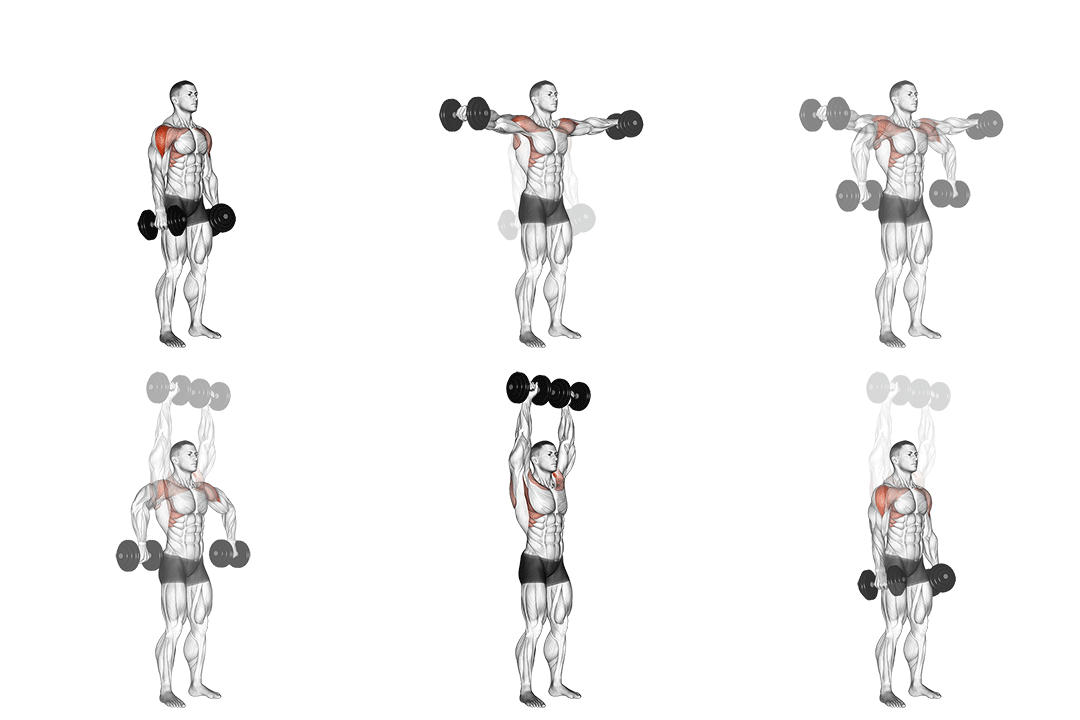
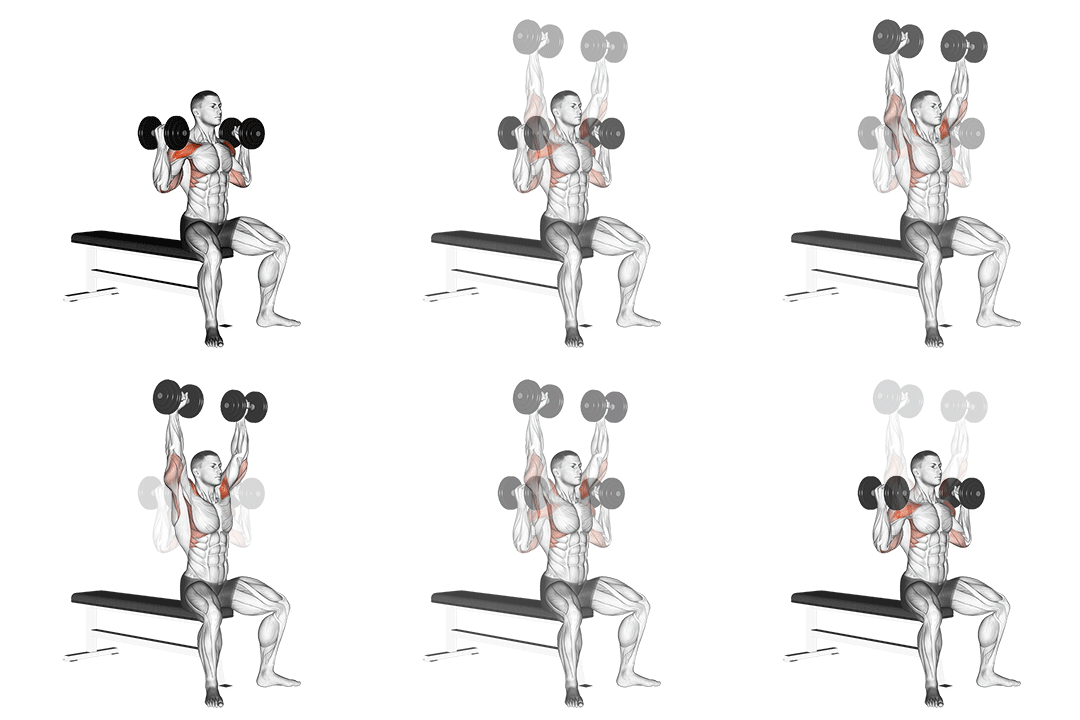
Dumbbell Cuban Press
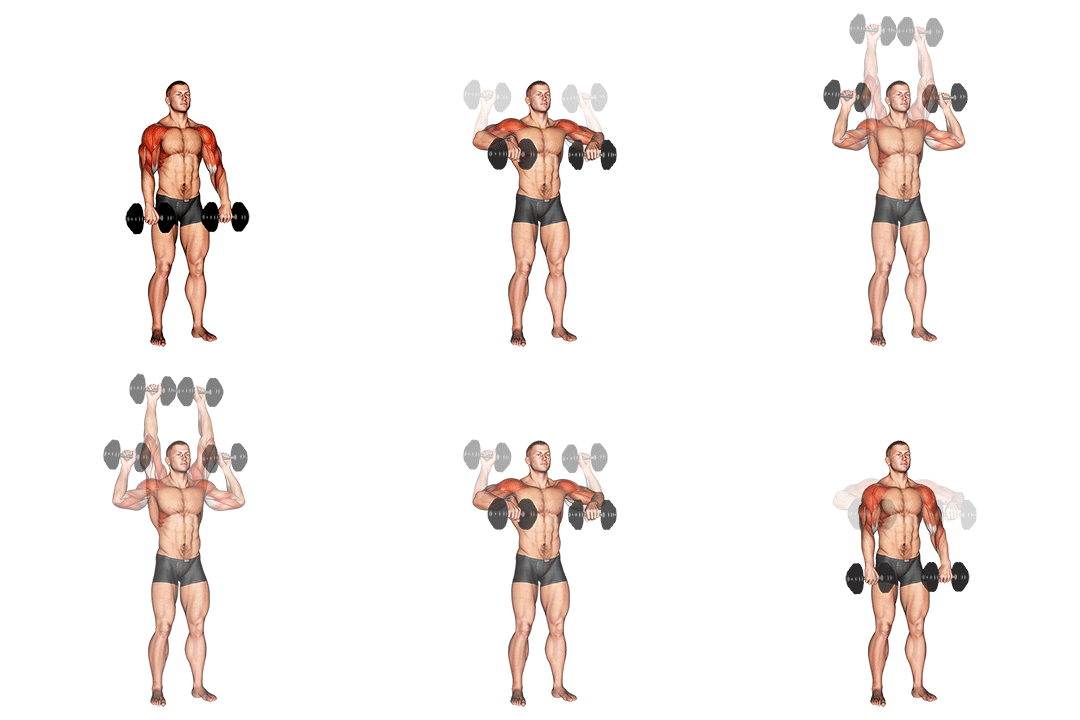
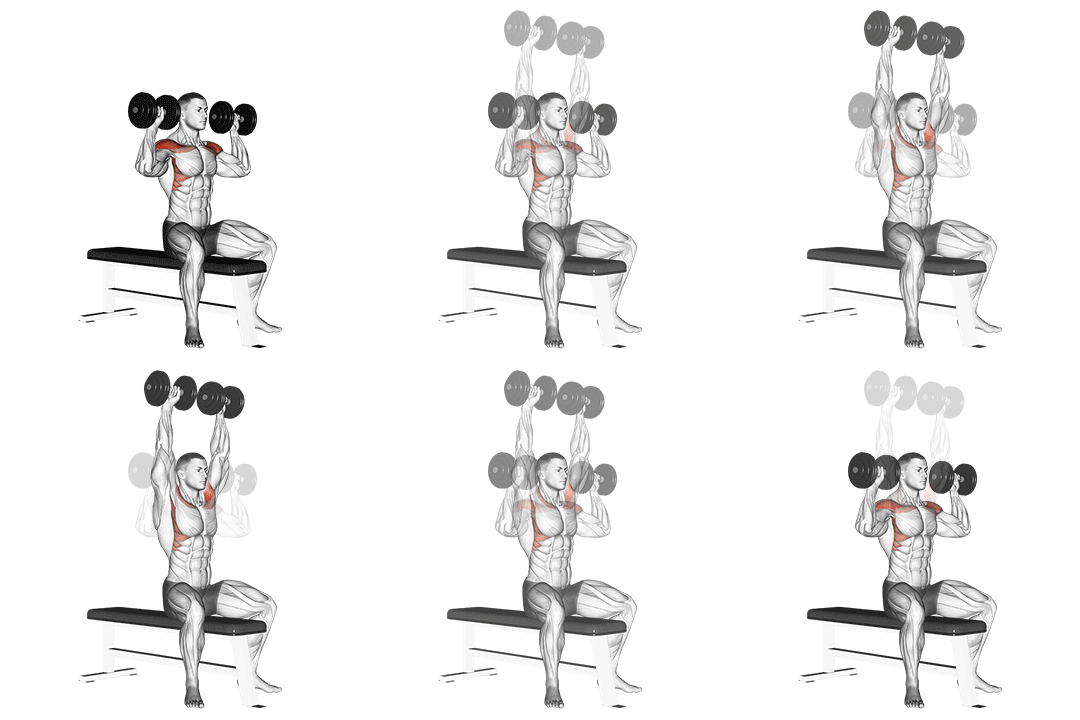
Dumbbell Cuban Press V. 2
Head-to-Head Comparison
| Attribute | Dumbbell Cuban Press | Dumbbell Cuban Press V. 2 |
|---|---|---|
| Target Muscle |
Delts
|
Delts
|
| Body Part |
Shoulders
|
Shoulders
|
| Equipment |
Dumbbell
|
Dumbbell
|
| Difficulty |
Intermediate
|
Intermediate
|
| Movement Type |
Compound
|
Compound
|
| Secondary Muscles |
2
|
2
|
Secondary Muscles Activated
Dumbbell Cuban Press
Dumbbell Cuban Press V. 2
Visual Comparison
Overview
Dumbbell Cuban Press vs Dumbbell Cuban Press V. 2 — if you want to build fuller delts while improving external-rotation strength, you've come to the right place. I’ll walk you through how each version loads the deltoids, which secondary muscles pick up the work, and the specific technique cues that protect your shoulder joint. Expect clear biomechanics (force vectors, length-tension, scapular rhythm), practical rep ranges (8–12 for hypertrophy, 4–6 for strength), and direct recommendations so you can pick the variation that matches your goals and movement history.
Key Differences
- Both exercises target the Delts using Dumbbell. The main differences are in their movement patterns and muscle activation angles.
Pros & Cons
Dumbbell Cuban Press
+ Pros
- Direct overhead press carryover — stronger transfer to heavy pressing
- Allows heavier loading for strength-focused sets (4–6 reps)
- Efficient three-phase pattern engages delts and triceps strongly
- Good for athletes who need rapid transition from pull to press
− Cons
- Higher technical demand — longer learning curve
- Greater shoulder impingement risk if done with poor scapular control
- Harder to perform with very light home weights and maintain tension
Dumbbell Cuban Press V. 2
+ Pros
- Lower peak impingement angles — safer for susceptible shoulders
- Easier to learn and coach due to a simplified elbow path
- Scales well with tempo, making it ideal for volume-based hypertrophy (8–15 reps)
- More accessible for home workouts and limited dumbbell sets
− Cons
- Slightly less direct overload potential for maximal pressing strength
- May shift more work to posterior delts and upper back, reducing pure anterior/middle delt emphasis
- Subtlety of differences can be lost without clear tempo and cueing
When Each Exercise Wins
The original variant lets you transition more quickly into a press, enabling heavier loads and higher mechanical tension on the middle and anterior delts. Use 8–12 reps with 2–3 second eccentrics to maximize length-tension and time under tension.
Its movement pattern accepts heavier dumbbells and a stronger vertical force vector, which translates directly to overhead pressing strength. Build with 4–6 rep sets and progressive load increases while maintaining scapular control.
V.2 shortens the technical transition and emphasizes controlled rotation, making it easier to learn proper scapular retraction and rotator-cuff engagement. Start with 8–12 reps and light weight to master the sequence.
V.2 performs well with lighter, adjustable dumbbells and limited space because it reduces the need for heavy loads while still improving shoulder strength and stability. It scales with tempo and rep volume instead of maximal weight.
Frequently Asked Questions
Can I do both Dumbbell Cuban Press and Dumbbell Cuban Press V. 2 in the same workout?
Yes — pairing them works well: use V.2 as a technique or activation set (2–3 sets of 8–12 reps, slow tempo) then follow with heavier sets of the original for strength (3–5 sets of 4–6 reps). That sequence primes the rotator cuff and minimizes injury risk while allowing overload.
Which exercise is better for beginners?
Dumbbell Cuban Press V.2 is better for beginners because it reduces technical complexity and peak impingement angles, letting you learn scapular retraction and controlled external rotation before adding heavier loads.
How do the muscle activation patterns differ?
Both use a pull → external rotation → press pattern. V.2 prolongs the external-rotation/control phase, increasing rotator-cuff and upper-back activation by an estimated 5–15%, while the original shifts slightly more load to the middle/anterior delts and triceps during the press.
Can Dumbbell Cuban Press V. 2 replace Dumbbell Cuban Press?
Yes, V.2 can replace the original if your priorities are shoulder health, technique learning, or home training with lighter weights. For maximal pressing strength and heavy mechanical tension, the original remains the preferred option.
Expert Verdict
Both variations build delts and strengthen the rotator cuff and upper back, but choose based on your primary goal. If you prioritize raw pressing strength and heavier mechanical tension on the middle/anterior deltoid, use the classic Dumbbell Cuban Press and progress with 4–6 heavy sets and 8–12 hypertrophy sets. If you need a safer, more teachable option — or you're training at home with lighter dumbbells or shoulder sensitivity — use Dumbbell Cuban Press V.2, focusing on tempo, scapular control, and 8–15 rep ranges to build size and resilience. Rotate them across training blocks to balance overload and shoulder health.
Also Compare
More comparisons with Dumbbell Cuban Press
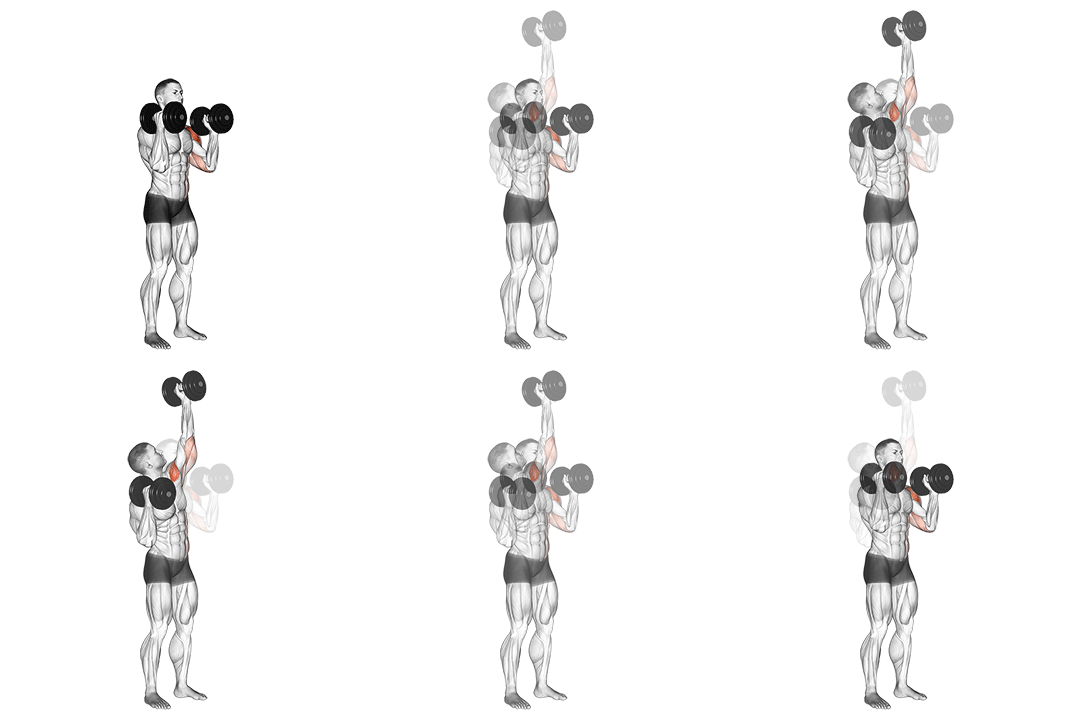
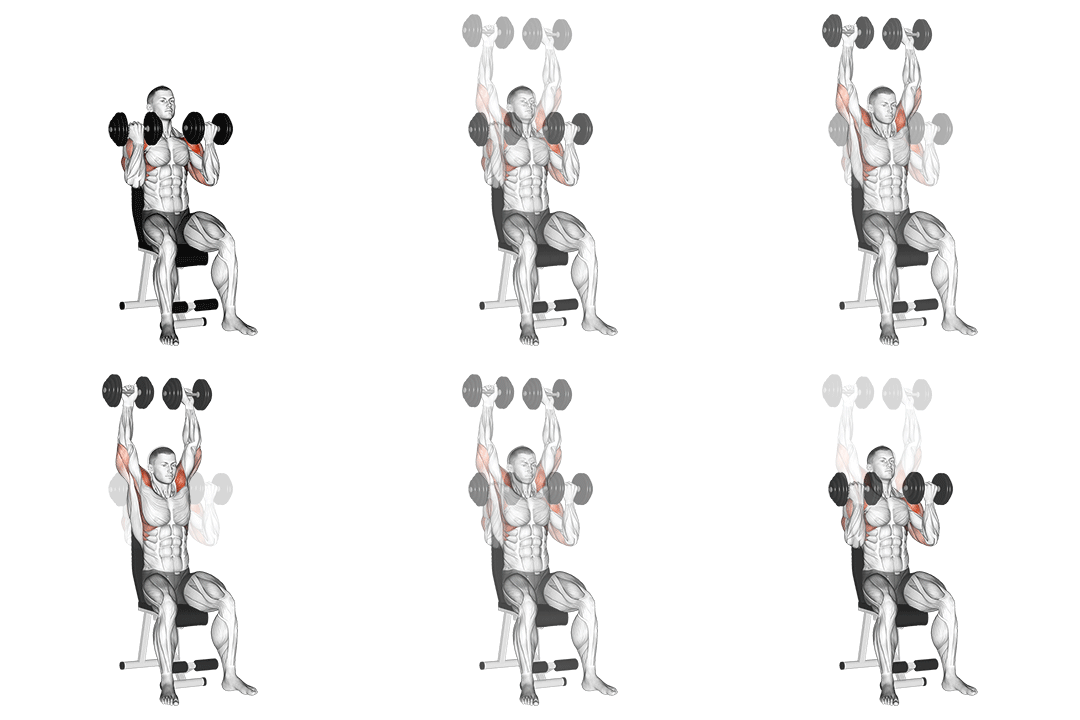
More comparisons with Dumbbell Cuban Press V. 2
Compare More Exercises
Use our free comparison tool to analyze any two exercises head-to-head.
Compare Exercises