

Dumbbell Cuban Press vs Reverse Flyes: Complete Comparison Guide
Dumbbell Cuban Press vs Reverse Flyes — two dumbbell shoulder moves that look similar at a glance but load your delts very differently. You’ll get clear, practical guidance on which exercise to use for hypertrophy, strength, rehab-friendly work, and home routines. I’ll break down muscle activation, technique cues (including joint angles and scapular control), equipment needs, learning curves, and programming tips with rep ranges and progression strategies so you leave with a plan you can use right away.
Exercise Comparison
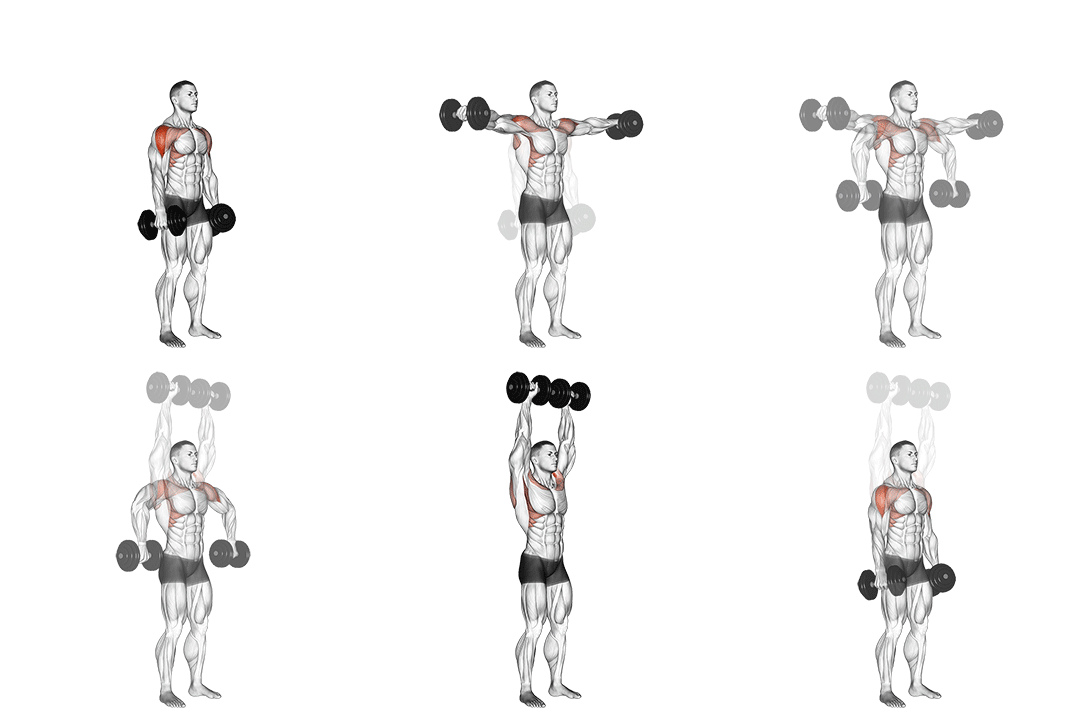
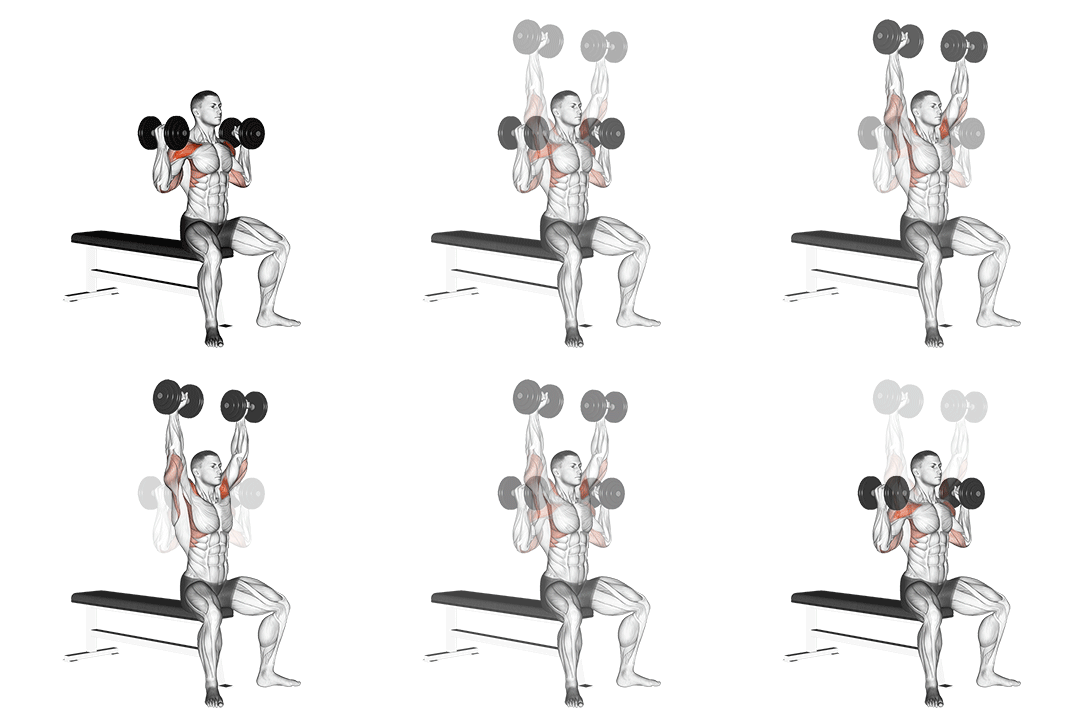
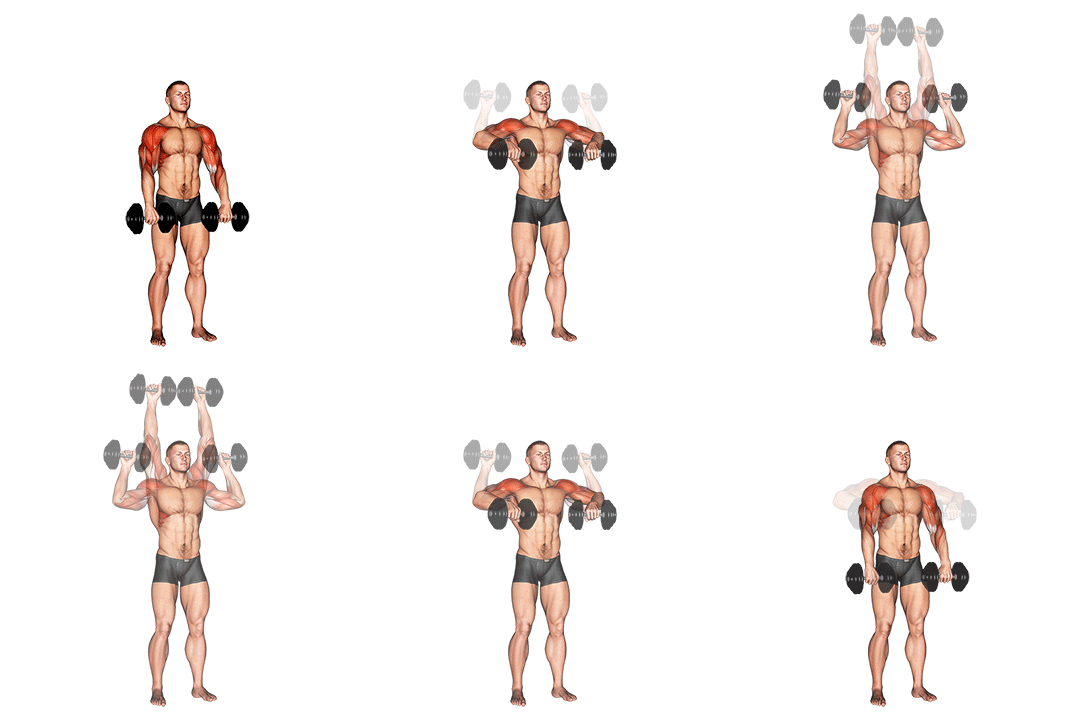
Dumbbell Cuban Press
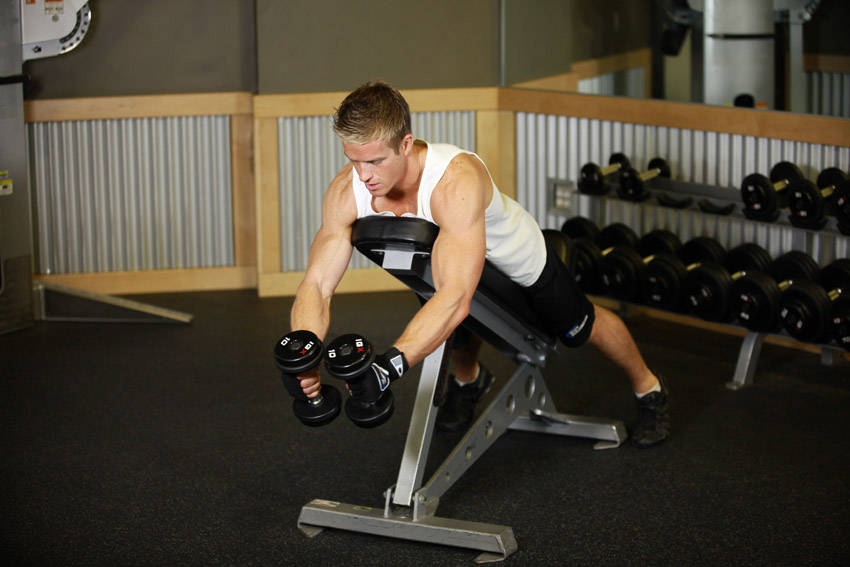
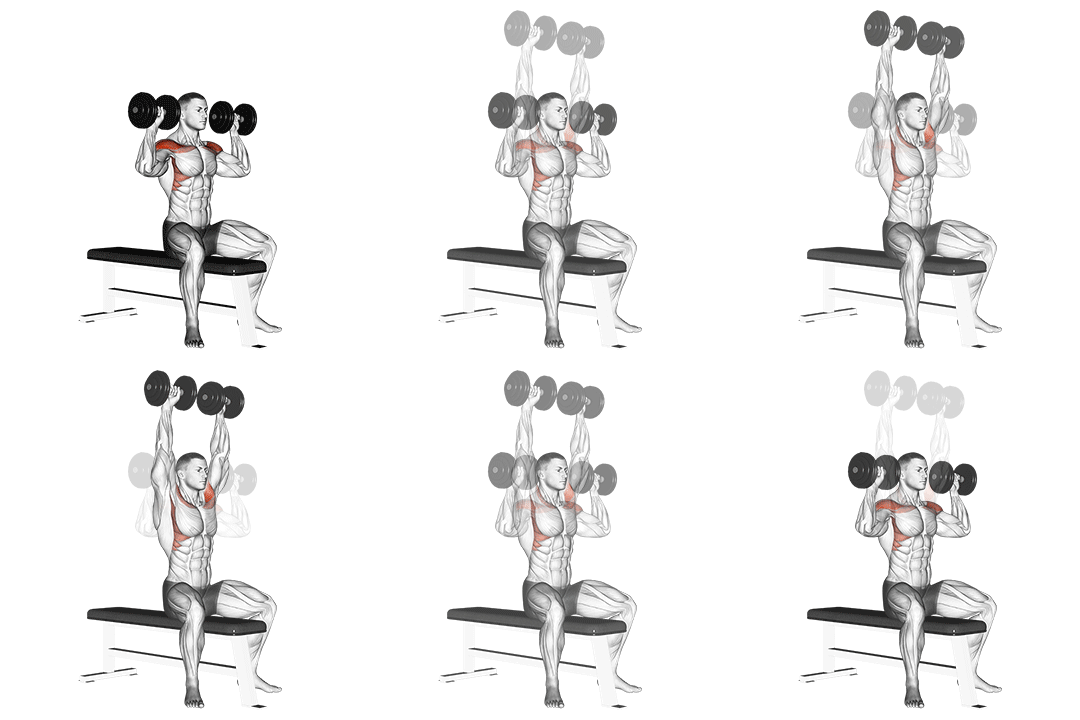
Reverse Flyes
Head-to-Head Comparison
| Attribute | Dumbbell Cuban Press | Reverse Flyes |
|---|---|---|
| Target Muscle |
Delts
|
Delts
|
| Body Part |
Shoulders
|
Shoulders
|
| Equipment |
Dumbbell
|
Dumbbell
|
| Difficulty |
Intermediate
|
Beginner
|
| Movement Type |
Compound
|
Isolation
|
| Secondary Muscles |
2
|
0
|
Secondary Muscles Activated
Dumbbell Cuban Press
Reverse Flyes
Visual Comparison
Overview
Dumbbell Cuban Press vs Reverse Flyes — two dumbbell shoulder moves that look similar at a glance but load your delts very differently. You’ll get clear, practical guidance on which exercise to use for hypertrophy, strength, rehab-friendly work, and home routines. I’ll break down muscle activation, technique cues (including joint angles and scapular control), equipment needs, learning curves, and programming tips with rep ranges and progression strategies so you leave with a plan you can use right away.
Key Differences
- Dumbbell Cuban Press is a compound movement, while Reverse Flyes is an isolation exercise.
- Difficulty levels differ: Dumbbell Cuban Press is intermediate, while Reverse Flyes is beginner.
- Both exercises target the Delts using Dumbbell. The main differences are in their movement patterns and muscle activation angles.
Pros & Cons
Dumbbell Cuban Press
+ Pros
- Multi-joint movement builds pressing strength and shoulder stability
- Engages rotator cuff via external rotation, improving shoulder health when done correctly
- Allows heavier loading and progressive overload for strength and muscle growth
- Trains scapular control and integrates upper-back stability
− Cons
- Higher technical demand—coordination of multiple phases
- Increased shoulder stress if mobility or technique are poor
- Requires overhead clearance and careful load selection
Reverse Flyes
+ Pros
- Highly effective at isolating posterior deltoid for targeted muscle growth
- Low technical complexity—easy to learn and cue
- Minimal equipment and space required; great for drop sets and tempo work
- Low overhead stress, suitable for people with limited shoulder mobility
− Cons
- Limited load progression—relies on higher reps and volume
- Can shift load to traps if scapular retraction is poor
- Less carryover to compound pressing strength
When Each Exercise Wins
Cuban presses load the delts across a larger range of motion and recruit secondary muscles, letting you use heavier loads and progressive overload. Use 6–12 reps for lateral/anterior emphasis and add reverse flyes as a finisher to target posterior fibers.
The compound nature lets you train heavier and overload the shoulder complex, improving pressing mechanics and rotator-cuff coordination. Work sets of 4–8 reps focusing on controlled external rotation and a solid overhead lockout.
Reverse flyes are simpler to learn and focus on one joint action—horizontal abduction—so beginners can quickly build posterior delt strength and practice scapular retraction without complex sequencing.
Reverse flyes need only dumbbells and little space; you can do them seated, standing, or on an incline. Cuban presses require more shoulder control and safe overhead clearance, which isn’t ideal in tight home setups.
Frequently Asked Questions
Can I do both Dumbbell Cuban Press and Reverse Flyes in the same workout?
Yes. Pair Cuban presses early as a compound movement (3–5 sets of 4–8 or 6–12 reps), then add reverse flyes as an accessory (2–4 sets of 12–20 reps) to hit posterior delts and scapular retractors without fatiguing pressing mechanics.
Which exercise is better for beginners?
Reverse flyes are better for beginners because they isolate horizontal abduction and teach scapular control without the technical sequencing of the Cuban press. Start with light loads and focus on scapular retraction and a controlled tempo.
How do the muscle activation patterns differ?
Cuban press moves through upright row, external rotation, and press phases, shifting activation from rotator cuff/external rotators to lateral and anterior deltoid as the arm elevates. Reverse flyes maintain posterior delt and scapular-retractor activation through horizontal abduction, keeping the posterior deltoid near optimal length-tension for isolation.
Can Reverse Flyes replace Dumbbell Cuban Press?
Not entirely. Reverse flyes effectively target the posterior deltoid and scapular retractors but don’t provide the multi-joint overload, triceps involvement, or rotator-cuff training a Cuban press offers. Use reverse flyes as a complement when your goal is targeted posterior development or limited overhead mobility.
Expert Verdict
Choose the Dumbbell Cuban Press when you want compound overload, improved overhead strength, and rotator-cuff training in one movement. It’s the better choice for strength and overall shoulder development if you have good shoulder mobility and can coach the external rotation and press phases. Pick Reverse Flyes when your priority is isolating the posterior deltoid, rehabbing or prehab work, or when you need a low-technical, home-friendly option. For many trainees, a program that cycles both—Cuban presses for heavy compound work and reverse flyes as targeted accessory volume—gives balanced shoulder development and better posture.
Also Compare
More comparisons with Dumbbell Cuban Press
Compare More Exercises
Use our free comparison tool to analyze any two exercises head-to-head.
Compare Exercises