

Dumbbell Deadlift vs Dumbbell Lunge: Complete Comparison Guide
Dumbbell Deadlift vs Dumbbell Lunge — if you want stronger, fuller glutes and thicker upper legs, you need to pick the right movement. I’ll walk you through biomechanics, muscle activation, equipment needs, technique cues, and which exercise fits specific goals like hypertrophy, strength, or home training. You’ll get clear rep ranges (3–6 for strength, 6–12 for hypertrophy, 12–20 for endurance), concrete setup and execution tips, and decision rules so you can choose the exercise that best accelerates your progress.
Exercise Comparison
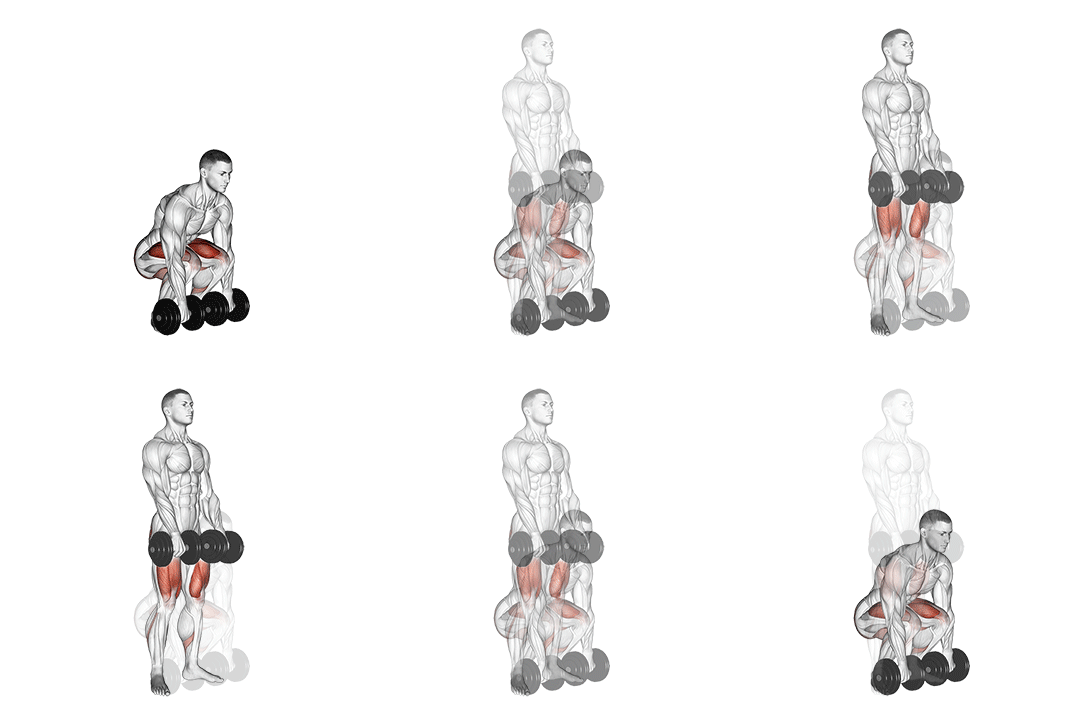
Dumbbell Deadlift
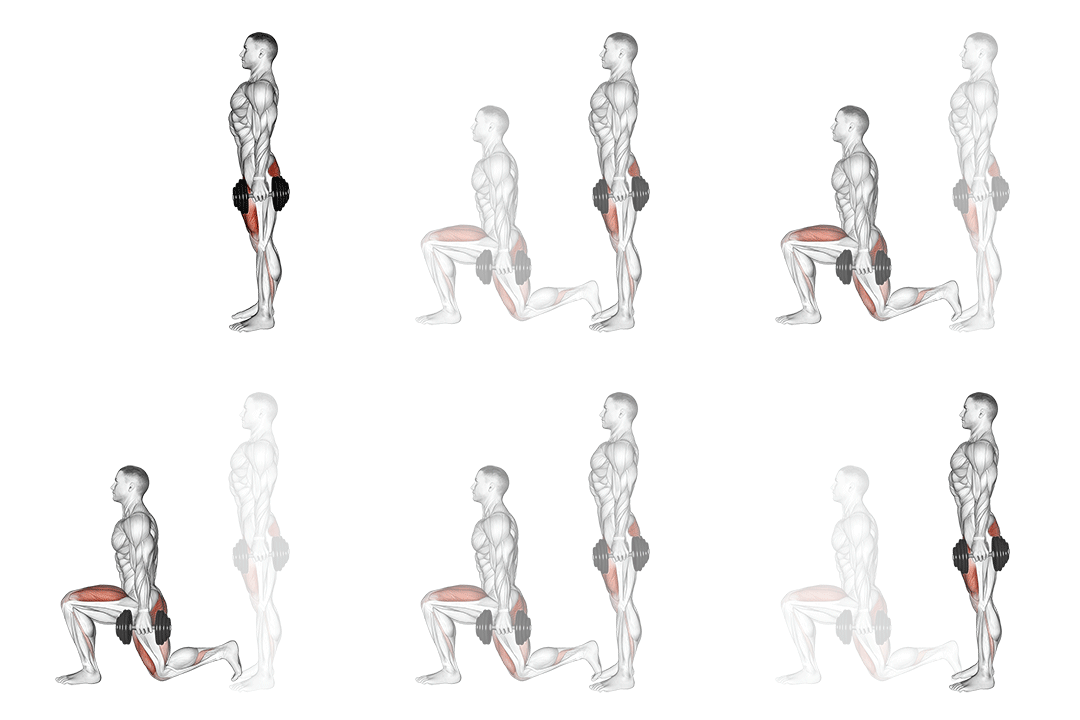
Dumbbell Lunge
Head-to-Head Comparison
| Attribute | Dumbbell Deadlift | Dumbbell Lunge |
|---|---|---|
| Target Muscle |
Glutes
|
Glutes
|
| Body Part |
Upper-legs
|
Upper-legs
|
| Equipment |
Dumbbell
|
Dumbbell
|
| Difficulty |
Intermediate
|
Intermediate
|
| Movement Type |
Compound
|
Compound
|
| Secondary Muscles |
2
|
3
|
Secondary Muscles Activated
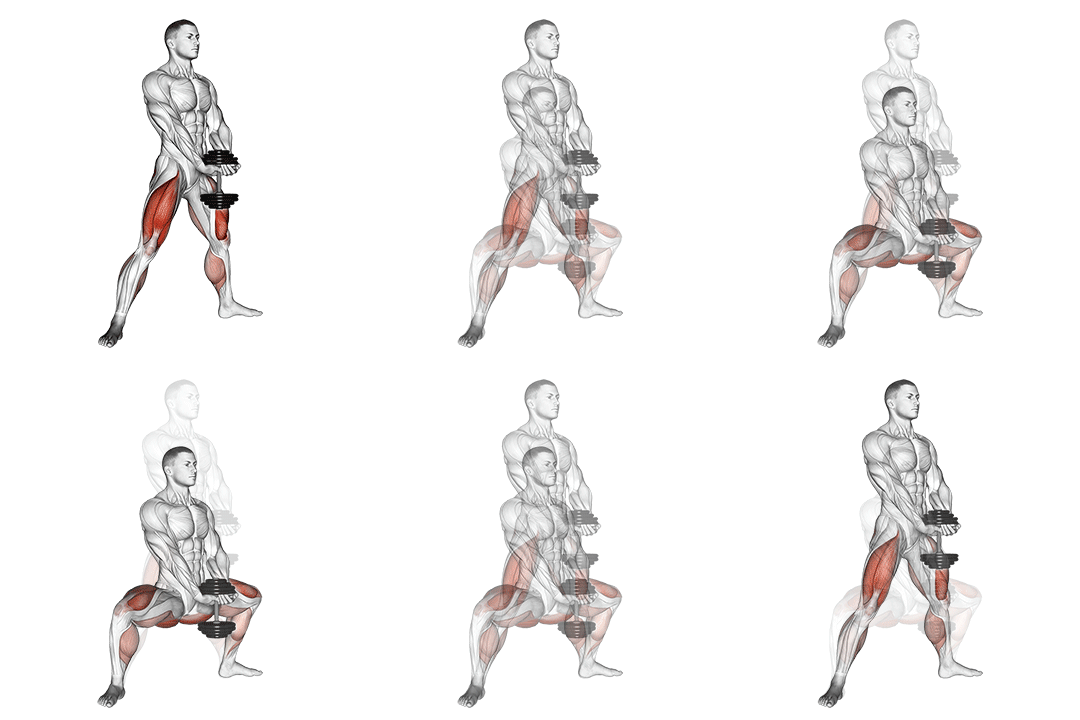
Dumbbell Deadlift
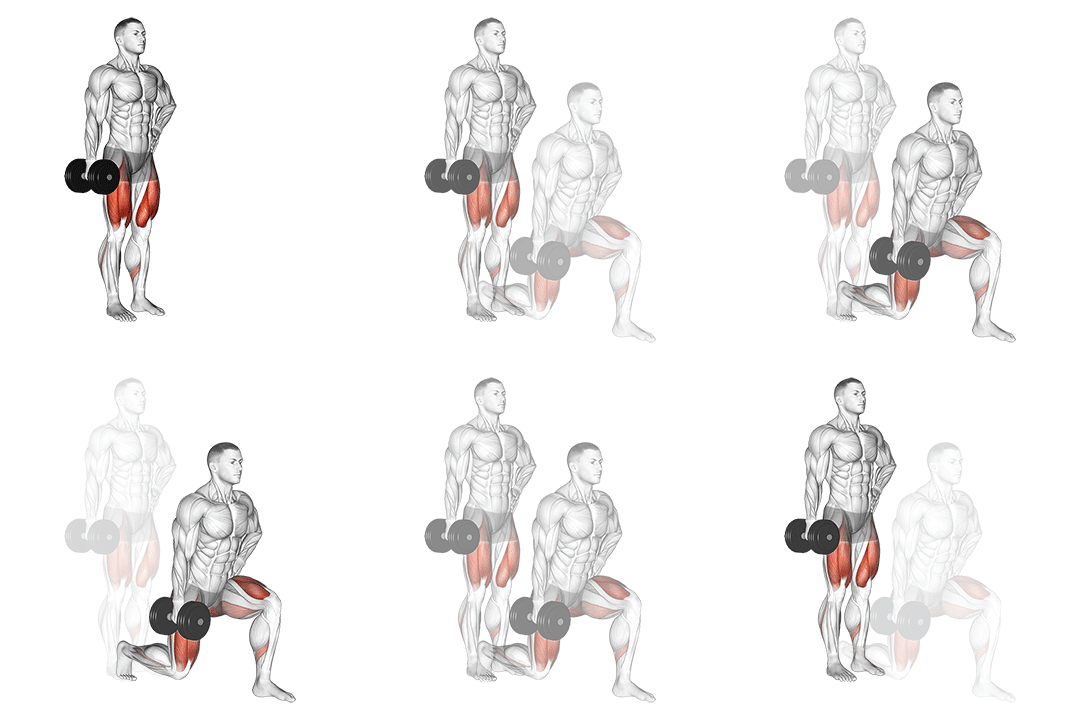
Dumbbell Lunge
Visual Comparison
Overview
Dumbbell Deadlift vs Dumbbell Lunge — if you want stronger, fuller glutes and thicker upper legs, you need to pick the right movement. I’ll walk you through biomechanics, muscle activation, equipment needs, technique cues, and which exercise fits specific goals like hypertrophy, strength, or home training. You’ll get clear rep ranges (3–6 for strength, 6–12 for hypertrophy, 12–20 for endurance), concrete setup and execution tips, and decision rules so you can choose the exercise that best accelerates your progress.
Key Differences
- Both exercises target the Glutes using Dumbbell. The main differences are in their movement patterns and muscle activation angles.
Pros & Cons
Dumbbell Deadlift
+ Pros
- Builds posterior chain strength and mass with heavy bilateral loading
- High hamstring and lower-back activation for balanced upper-leg development
- Straightforward progression by adding load or tempo (3–6 reps for strength)
- Efficient for moving heavier weight with less cardiovascular demand
− Cons
- Higher technical demand—must learn a solid hip hinge and bracing
- Greater risk to lower back if form breaks under load
- Less unilateral balance and single-leg stability carryover
Dumbbell Lunge
+ Pros
- Strong unilateral development to fix strength imbalances and improve balance
- Higher quadriceps engagement—good for knee-dominant development
- Easily scaled to bodyweight or light dumbbells for beginners and home use
- Versatile: forward, reverse, walking, and Bulgarian variations
− Cons
- Lower absolute loading per leg, limiting max strength progression
- Requires more balance and can expose mobility asymmetries
- Incorrect knee track or stride can stress the knee joint
When Each Exercise Wins
The bilateral hip hinge lets you load the glutes and hamstrings heavier, increasing mechanical tension and time under tension—key drivers for hypertrophy. Use 6–12 reps with controlled 2–3 second eccentrics to maximize muscle growth.
Deadlifts create larger hip and knee extension moments so you can lift heavier absolute loads, which drives neural and structural strength improvements. Focus on 3–6 rep sets and progressive overload to increase maximal force output.
Lunges are easier to regress (bodyweight, reduced ROM) and teach single-leg control while producing measurable hypertrophy stimulus. They let you build coordination and correct asymmetries before progressing to heavy hinges.
You can do lunges with bodyweight or a single pair of light dumbbells and limited space, requiring no lifting platform or heavy load. Variations like reverse or stationary lunges reduce balance demands while still targeting the glutes and quads.
Frequently Asked Questions
Can I do both Dumbbell Deadlift and Dumbbell Lunge in the same workout?
Yes. Pairing deadlifts (heavy, 3–6 reps) with lunges (8–12 reps per leg) creates a powerful combination: deadlifts build overall posterior strength while lunges isolate unilateral control and hypertrophy. Structure them so heavy deadlifts come earlier and lunges follow as accessory work to avoid neuromuscular fatigue compromising hinge technique.
Which exercise is better for beginners?
Dumbbell Lunge is better for most beginners because you can start with bodyweight and gradually add load while developing balance and knee/hip control. Learn lunges and basic hinge mechanics separately before adding heavy deadlifts.
How do the muscle activation patterns differ?
Deadlifts drive high posterior chain activation with peak glute/hamstring tension during hip extension, benefiting from hamstrings being placed on stretch. Lunges distribute work between the quads and glutes with unilateral concentric peaks near knee extension and require more stabilizer activation in the hip and ankle.
Can Dumbbell Lunge replace Dumbbell Deadlift?
Not entirely—lunges can replace some hypertrophy work but won’t match the deadlift’s capacity for heavy bilateral loading and posterior chain strength. Use lunges as a substitute when equipment or back issues limit deadlifts, but include a hinge-based movement eventually to develop maximal hip extension strength.
Expert Verdict
Choose the Dumbbell Deadlift when your priority is posterior chain strength and heavy loading to drive muscle growth in the glutes and hamstrings; it’s the go-to for higher absolute loads and strength cycles (3–6 rep ranges). Choose the Dumbbell Lunge when you need unilateral balance, quad emphasis, or a more accessible, low-equipment option for home or beginner programs. For most trainees, rotate both: use deadlifts for heavy compound loading phases and lunges for accessory work, unilateral conditioning, and mobility balance. Progress range, tempo, and load based on your goal—heavier and lower reps for strength, moderate reps (6–12) for hypertrophy, and higher reps for endurance.
Also Compare
More comparisons with Dumbbell Deadlift
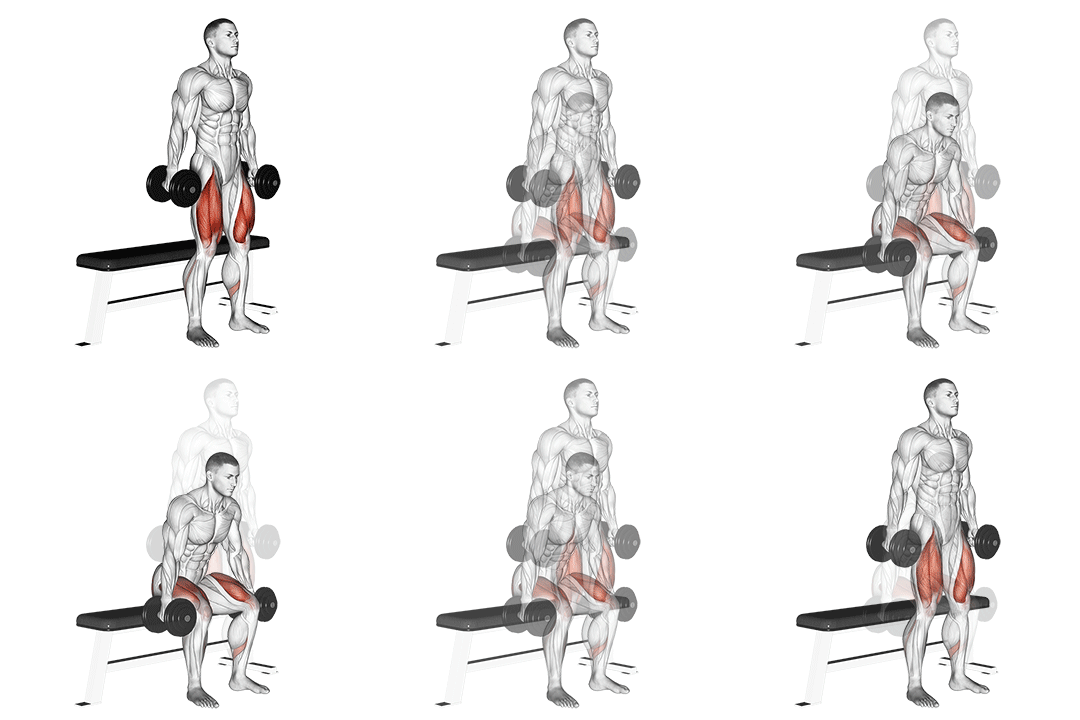
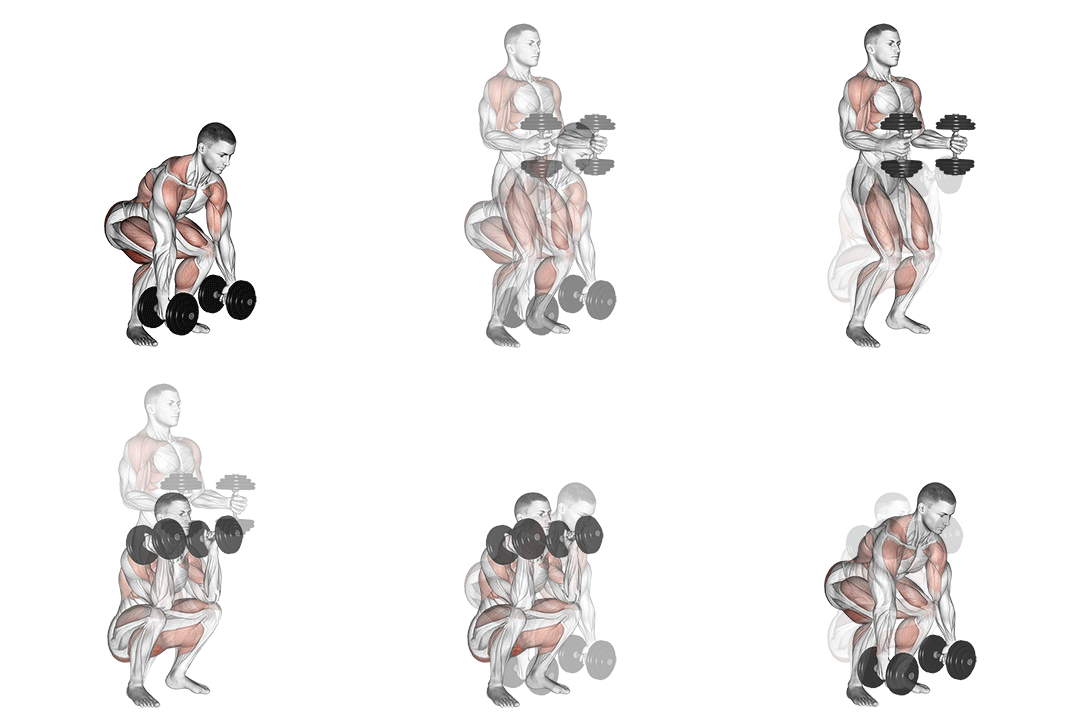
Compare More Exercises
Use our free comparison tool to analyze any two exercises head-to-head.
Compare Exercises