

Dumbbell Deadlift vs Dumbbell Plyo Squat: Complete Comparison Guide
Dumbbell Deadlift vs Dumbbell Plyo Squat — pick the right upper‑leg move for your goals. If you want raw hip‑dominant posterior‑chain strength, the deadlift uses a hip hinge to load the glutes and hamstrings through long muscle lengths. If you want explosive triple‑extension power and a strong stretch‑shortening cycle, the plyo squat forces rapid knee and hip extension plus ankle plantarflexion. I'll break down muscle activation, biomechanics (hip angles, force vectors), equipment needs, difficulty and programming—including rep ranges and progressions—so you can choose which to prioritize in your workouts.
Exercise Comparison
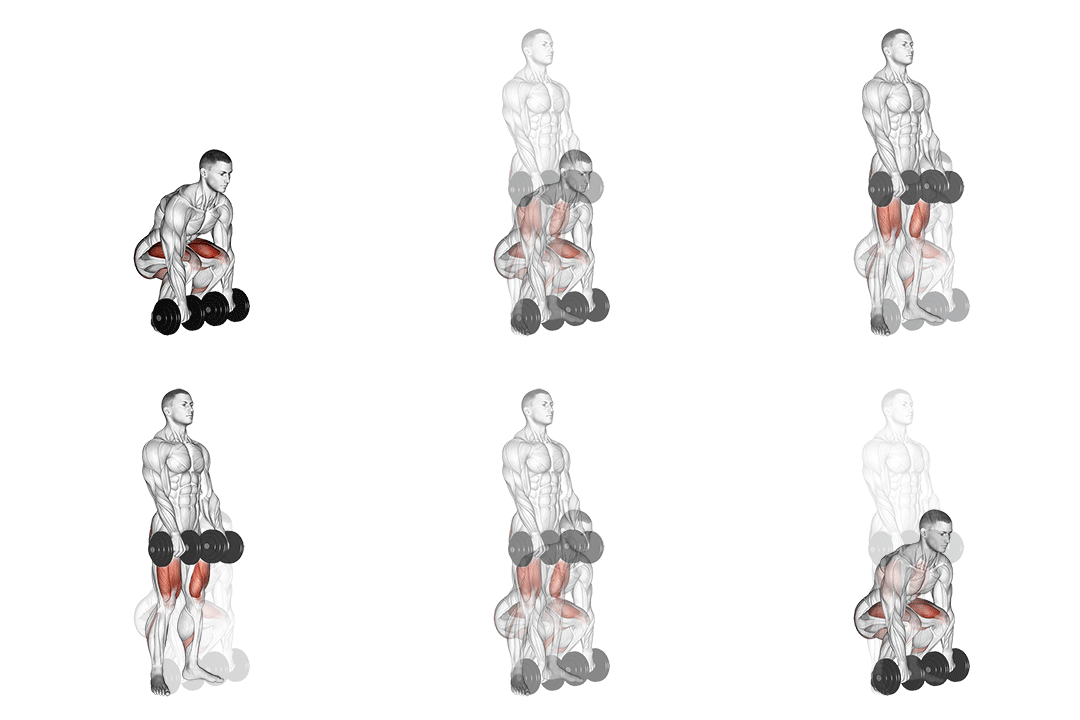
Dumbbell Deadlift
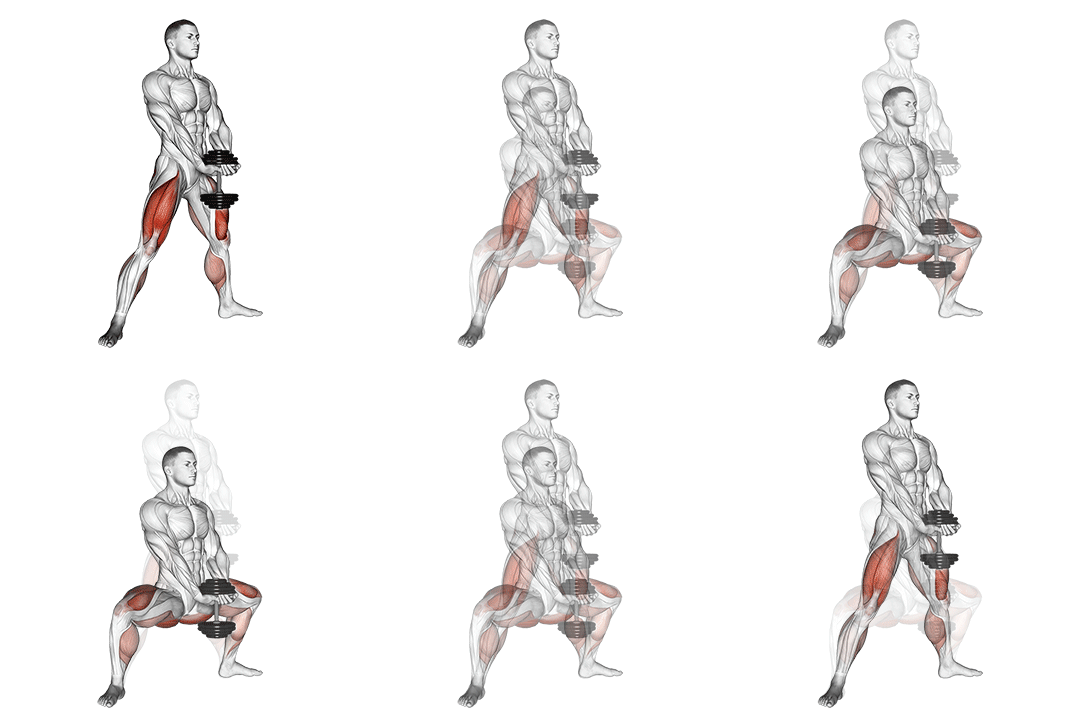
Dumbbell Plyo Squat
Head-to-Head Comparison
| Attribute | Dumbbell Deadlift | Dumbbell Plyo Squat |
|---|---|---|
| Target Muscle |
Glutes
|
Glutes
|
| Body Part |
Upper-legs
|
Upper-legs
|
| Equipment |
Dumbbell
|
Dumbbell
|
| Difficulty |
Intermediate
|
Advanced
|
| Movement Type |
Compound
|
Compound
|
| Secondary Muscles |
2
|
3
|
Secondary Muscles Activated
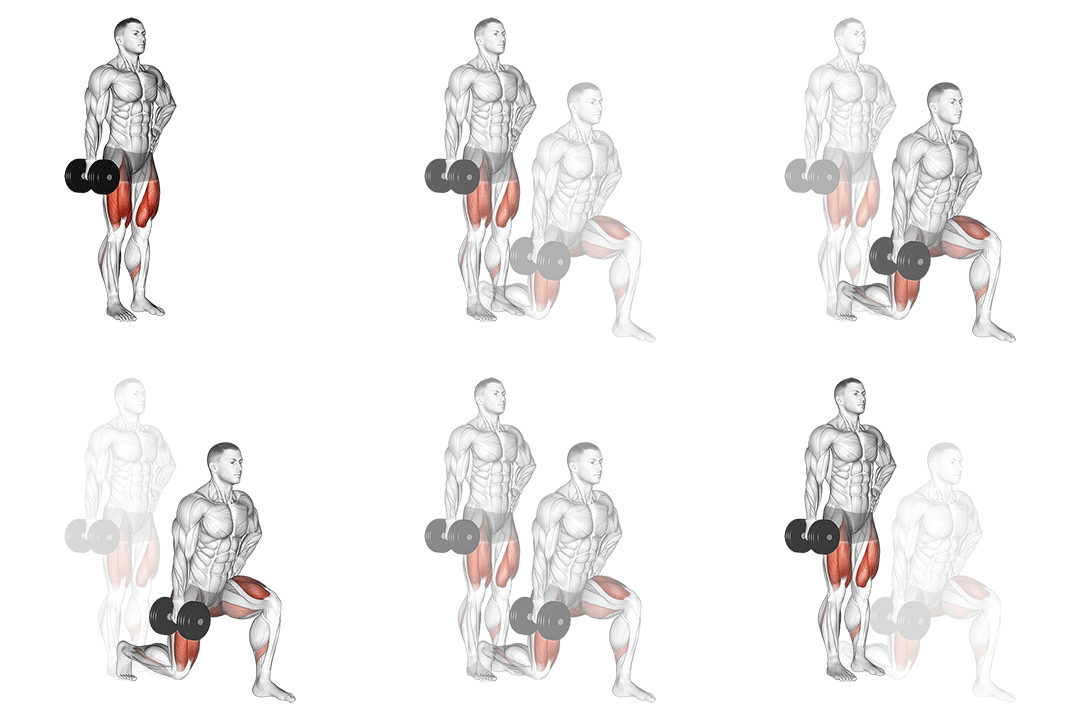
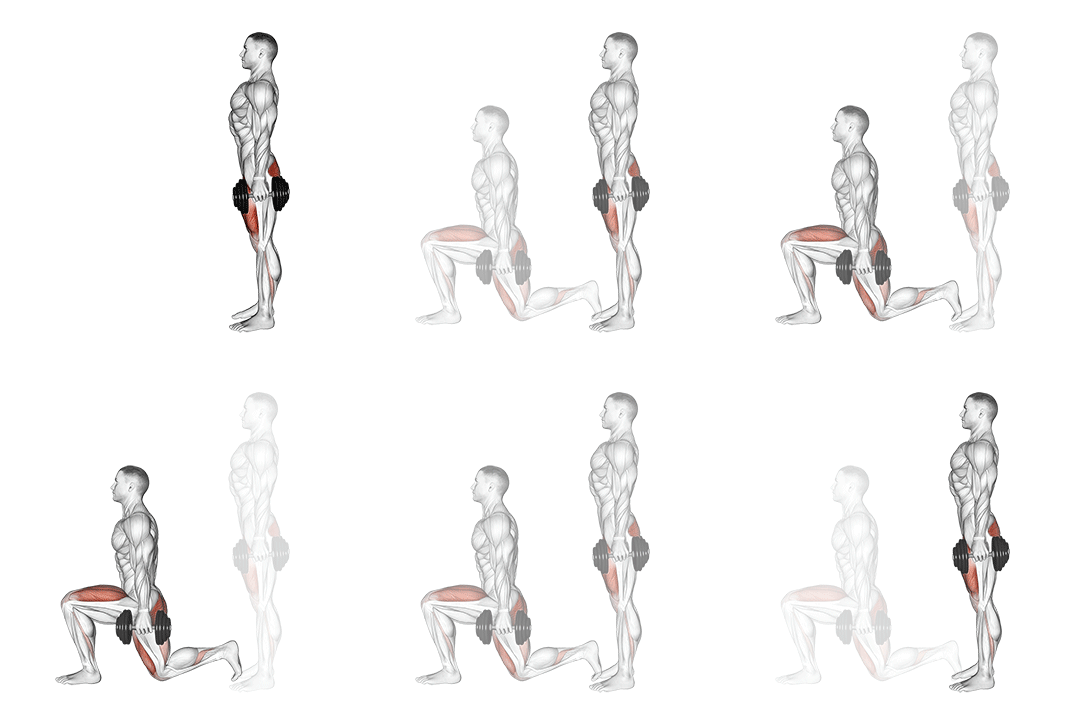
Dumbbell Deadlift
Dumbbell Plyo Squat
Visual Comparison
Overview
Dumbbell Deadlift vs Dumbbell Plyo Squat — pick the right upper‑leg move for your goals. If you want raw hip‑dominant posterior‑chain strength, the deadlift uses a hip hinge to load the glutes and hamstrings through long muscle lengths. If you want explosive triple‑extension power and a strong stretch‑shortening cycle, the plyo squat forces rapid knee and hip extension plus ankle plantarflexion. I'll break down muscle activation, biomechanics (hip angles, force vectors), equipment needs, difficulty and programming—including rep ranges and progressions—so you can choose which to prioritize in your workouts.
Key Differences
- Difficulty levels differ: Dumbbell Deadlift is intermediate, while Dumbbell Plyo Squat is advanced.
- Both exercises target the Glutes using Dumbbell. The main differences are in their movement patterns and muscle activation angles.
Pros & Cons
Dumbbell Deadlift
+ Pros
- Direct posterior‑chain overload for glutes and hamstrings
- Easily scalable with heavier weights for strength and hypertrophy
- Teaches the hip hinge pattern that protects the spine
- Requires minimal space and equipment
− Cons
- Technique‑sensitive; poor form can load the lumbar spine
- Less quad and calf stimulation compared to knee‑dominant moves
- Lower metabolic and power carryover compared with plyometrics
Dumbbell Plyo Squat
+ Pros
- Develops explosive triple‑extension power and rate of force development
- Improves reactive strength and athleticism
- Higher metabolic demand per set when performed for reps
- Builds coordination, ankle stiffness, and quick hip/knee extension
− Cons
- High impact on joints; requires solid landing mechanics
- Harder to progressively overload for pure strength or hypertrophy
- Requires more space and athletic baseline to perform safely
When Each Exercise Wins
Deadlifts allow greater time‑under‑tension and heavier loads, making 6–12 rep ranges effective for glute and hamstring hypertrophy. The hip hinge places glutes at favorable length‑tension relationships to stimulate growth.
Deadlifts provide a direct way to increase maximal force via progressive overload (4–6 heavy reps) and strengthen hip extension mechanics that transfer to other lifts.
Between these two, deadlifts are easier to scale and teach fundamental hip‑hinge mechanics. Start with light loads and 6–10 reps to build strength and safe movement patterns before adding complex plyometrics.
Deadlifts need minimal space and are lower impact, making them safer and more practical at home. Plyo squats require more landing space and surface considerations to avoid injury.
Frequently Asked Questions
Can I do both Dumbbell Deadlift and Dumbbell Plyo Squat in the same workout?
Yes. Do plyo squats early in the session when you’re fresh to maximize power output (3–6 explosive reps), then follow with deadlifts for strength or hypertrophy. Keep volume and intensity managed to avoid cumulative fatigue—limit total sets per session to 8–12 combined.
Which exercise is better for beginners?
Dumbbell Deadlift is better for most beginners because it’s easier to scale and teaches the hip‑hinge. Start with light loads and focus on neutral spine, hip drive and proper bracing before introducing plyometrics.
How do the muscle activation patterns differ?
Deadlifts produce sustained posterior‑chain activation with peak glute/hamstring force during hip extension, favoring time‑under‑tension. Plyo squats use a rapid eccentric braking phase and an immediate concentric, producing high rate of force development and peak activation in the transition from eccentric to concentric.
Can Dumbbell Plyo Squat replace Dumbbell Deadlift?
No, not fully. Plyo squats build power and reactive strength but don’t provide the same heavy, controlled loading for posterior‑chain hypertrophy and maximal strength. Use plyo squats to complement deadlifts rather than substitute them when strength or hypertrophy is the primary goal.
Expert Verdict
Use the Dumbbell Deadlift when your priority is posterior‑chain strength, muscle growth, or foundational movement quality. It loads the glutes and hamstrings through a hip hinge that optimizes length‑tension and allows straightforward progressive overload (strength: 4–6 reps; hypertrophy: 6–12 reps). Use the Dumbbell Plyo Squat when you need power, rate of force development, and athletic transfer—program short, explosive sets (3–6 reps) early in sessions or on separate power days. If you must choose one, pick deadlifts for broad strength and steady progression; add plyo squats selectively to enhance explosiveness, reactive strength, and conditioning once your technique and joint tolerance are solid.
Also Compare
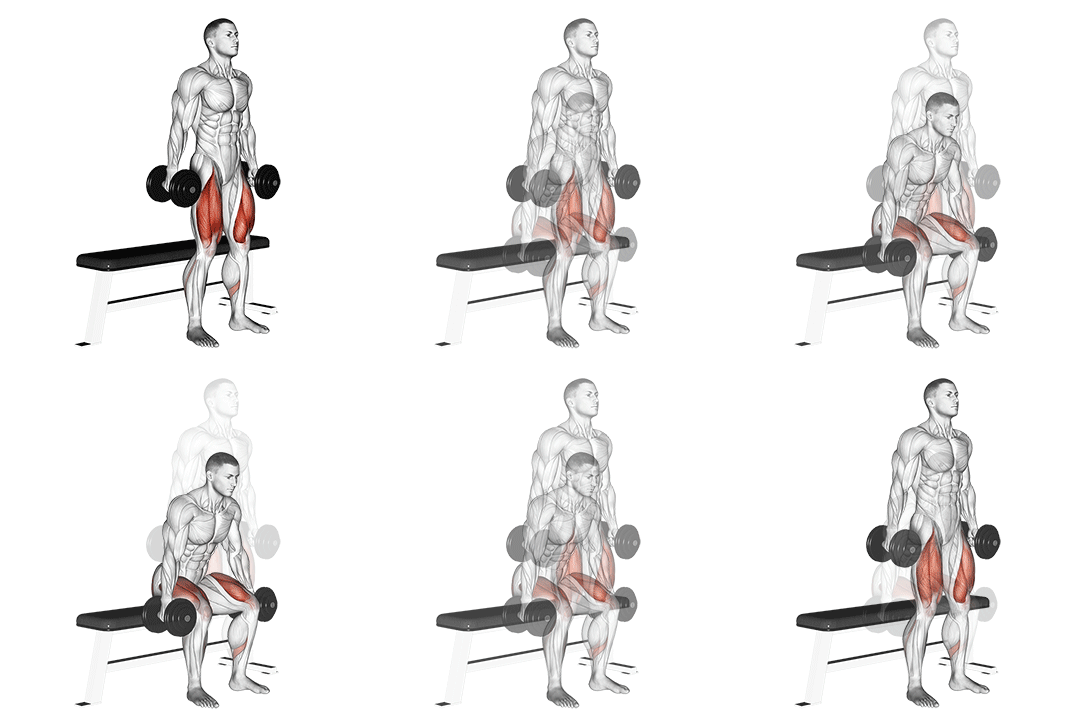
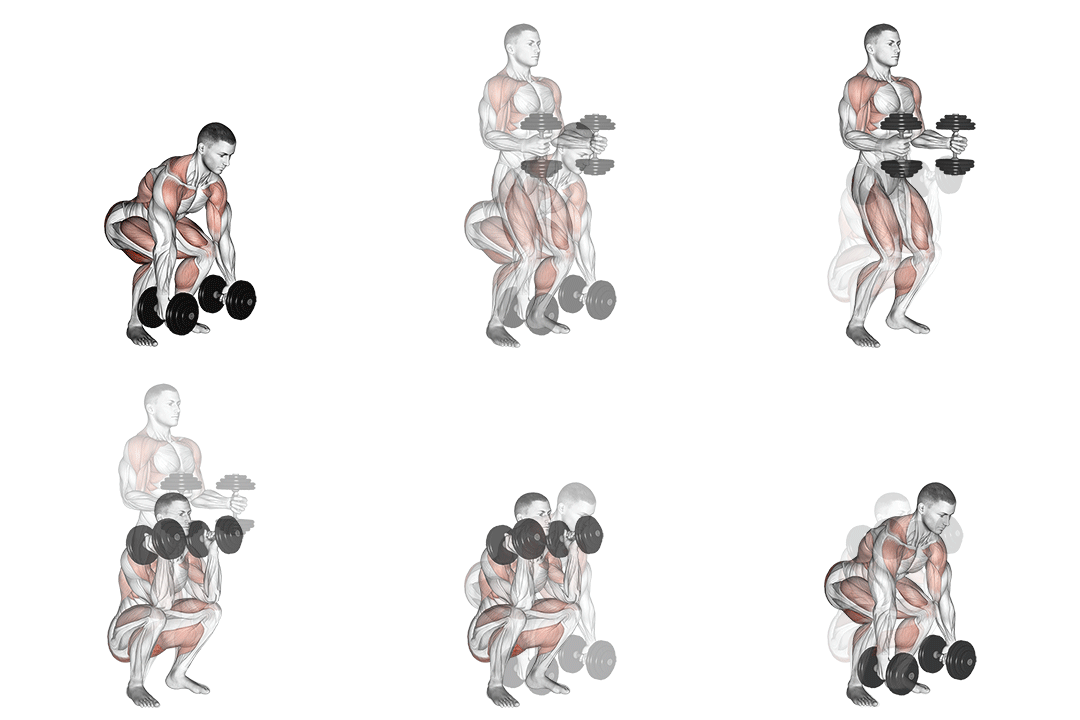
More comparisons with Dumbbell Deadlift
Compare More Exercises
Use our free comparison tool to analyze any two exercises head-to-head.
Compare Exercises