

Dumbbell Decline Bench Press vs Dumbbell Decline Hammer Press: Complete Comparison Guide
Dumbbell Decline Bench Press vs Dumbbell Decline Hammer Press — both load the lower chest but use different grips and force vectors. If you want clear guidance, this comparison shows how each move stresses the pectorals, which secondary muscles change with grip, exact technique cues (decline angle, elbow position, tempo), programming ranges, and who should prioritize each lift. Read on to learn biomechanics-backed reasons to pick one for hypertrophy, one for shoulder-friendly pressing, and practical ways to use both in your program.
Exercise Comparison
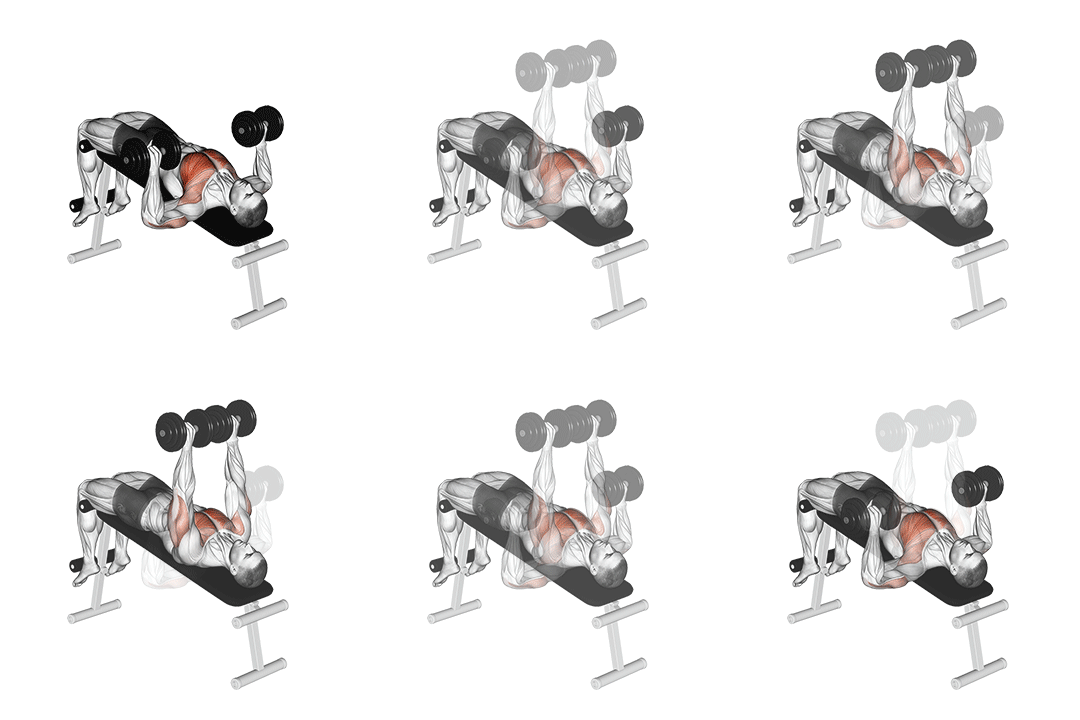
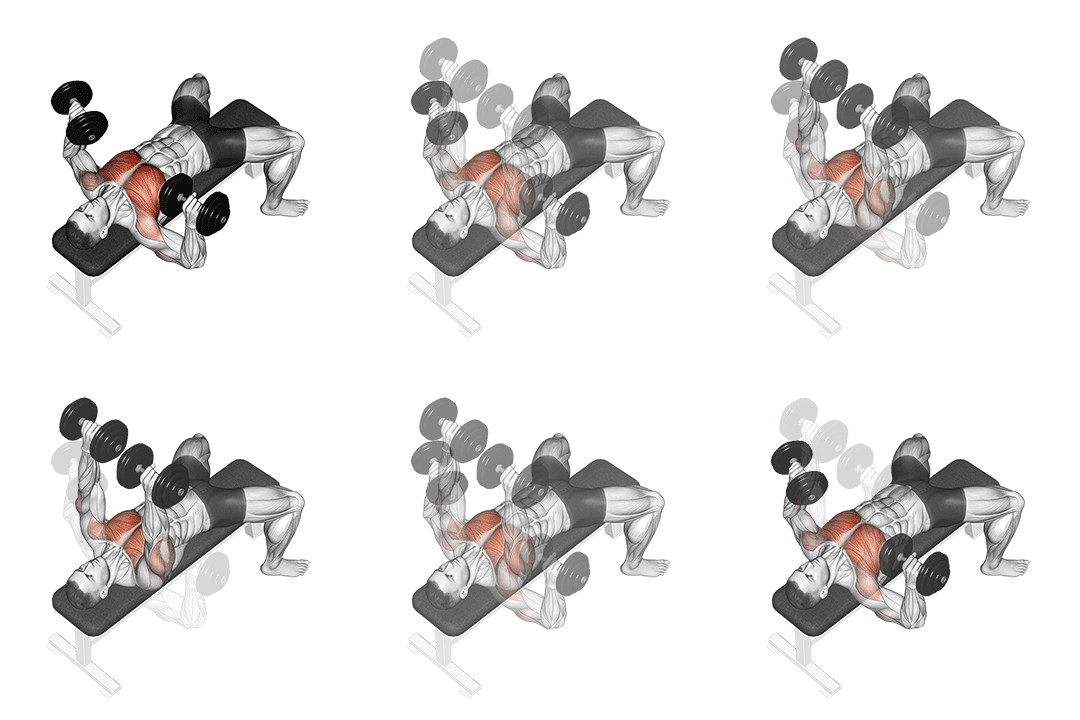
Dumbbell Decline Bench Press
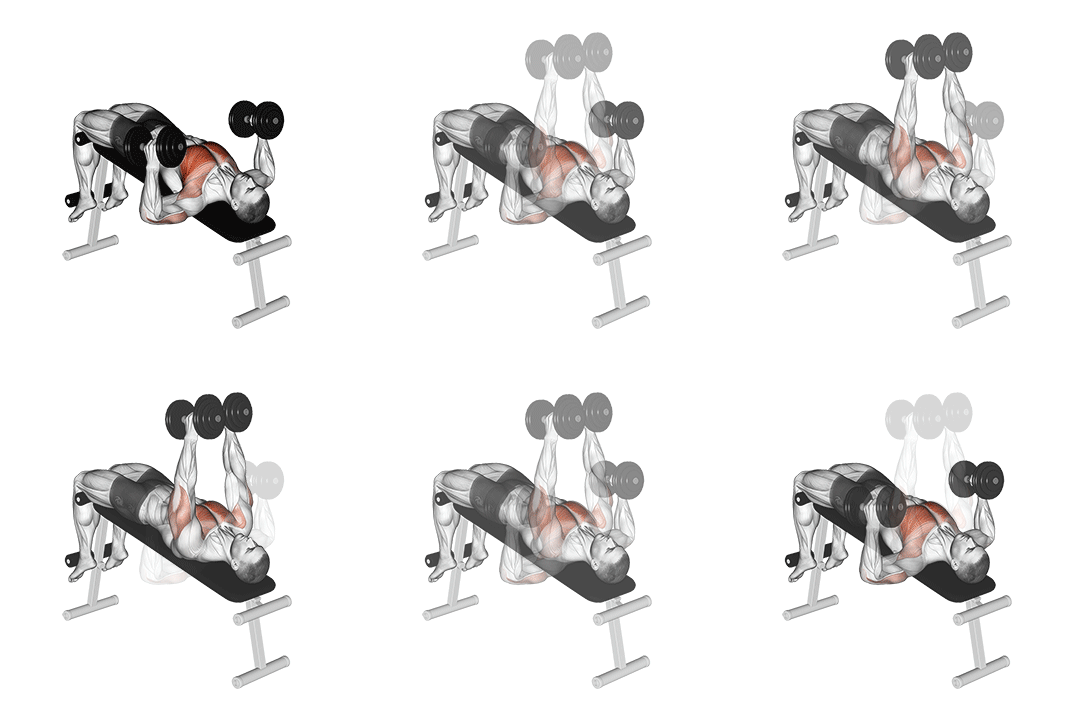
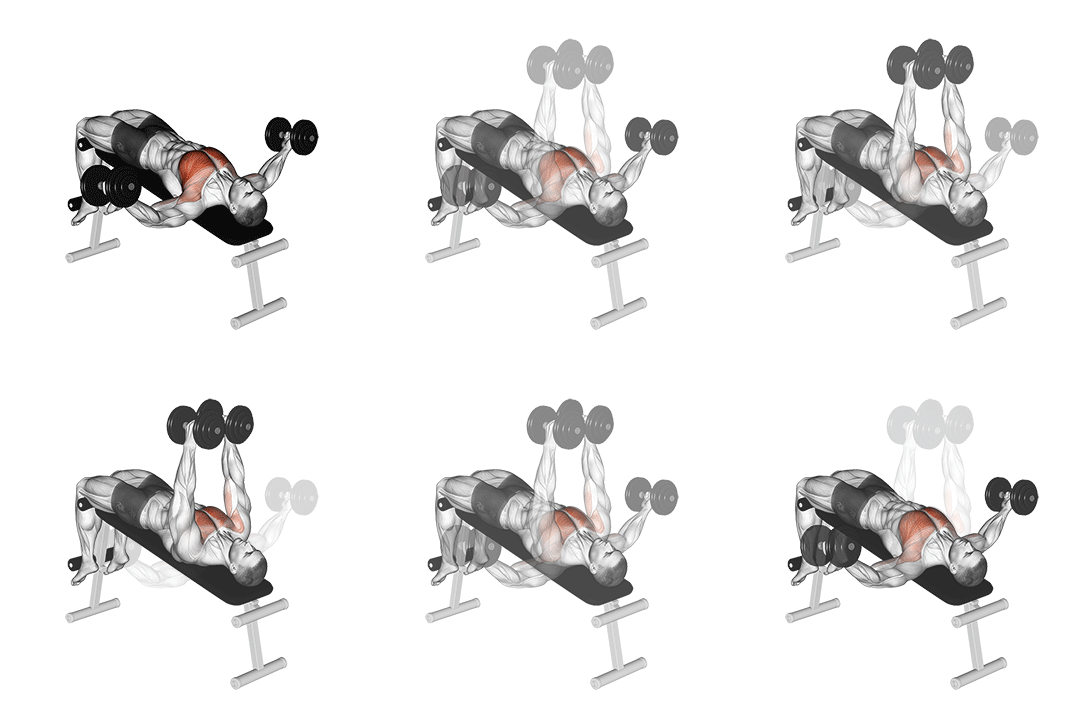
Dumbbell Decline Hammer Press
Head-to-Head Comparison
| Attribute | Dumbbell Decline Bench Press | Dumbbell Decline Hammer Press |
|---|---|---|
| Target Muscle |
Pectorals
|
Pectorals
|
| Body Part |
Chest
|
Chest
|
| Equipment |
Dumbbell
|
Dumbbell
|
| Difficulty |
Intermediate
|
Intermediate
|
| Movement Type |
Compound
|
Compound
|
| Secondary Muscles |
2
|
2
|
Secondary Muscles Activated
Dumbbell Decline Bench Press
Dumbbell Decline Hammer Press
Visual Comparison
Overview
Dumbbell Decline Bench Press vs Dumbbell Decline Hammer Press — both load the lower chest but use different grips and force vectors. If you want clear guidance, this comparison shows how each move stresses the pectorals, which secondary muscles change with grip, exact technique cues (decline angle, elbow position, tempo), programming ranges, and who should prioritize each lift. Read on to learn biomechanics-backed reasons to pick one for hypertrophy, one for shoulder-friendly pressing, and practical ways to use both in your program.
Key Differences
- Both exercises target the Pectorals using Dumbbell. The main differences are in their movement patterns and muscle activation angles.
Pros & Cons
Dumbbell Decline Bench Press
+ Pros
- Stronger horizontal adduction moment increases lower-pec recruitment
- Easier to create direct mechanical tension for hypertrophy (6-12 rep sweet spot)
- Allows heavier loading for lower-pec strength work (3-6 rep ranges)
- Clear bar path for experienced lifters to maximize chest stretch
− Cons
- Greater shoulder stress for those with mobility or impingement issues
- Requires precise elbow tuck (around 30-45 degrees) to protect the joint
- Decline bench is less common in home gyms, limiting accessibility
Dumbbell Decline Hammer Press
+ Pros
- Neutral grip reduces shoulder shear and is joint-friendly
- Shifts some load to triceps, allowing varied strength curves
- Easier to learn and maintain wrist alignment
- Can be approximated by neutral floor or bench variations if space is limited
− Cons
- Slightly less direct horizontal adduction, so marginally lower pec peak activation
- Triceps can become the limiting factor before the chest fatigues
- May require slower tempos or higher reps to match pec stimulus of pronated press
When Each Exercise Wins
The pronated decline press produces a larger horizontal adduction moment and a stronger stretch on the sternal pec fibers, which increases mechanical tension. Use 6-12 reps, 2-4 sets, 15-30 degree decline, and a controlled 2-3 second eccentric to maximize hypertrophy.
Greater direct pectoral loading and a more favorable pec moment arm let you progressively add heavier loads for low-rep strength work. Program 3-6 rep blocks with longer rests and focus on tight scapular retraction and consistent elbow tuck.
Neutral grip simplifies wrist and shoulder alignment, making it easier to learn pressing mechanics and reduce early injury risk. Start with 8-12 reps focusing on tempo and full range before increasing load.
The neutral grip is easier to replicate with floor neutral presses or slight-incline variations when a decline bench isn't available, and it is kinder to the shoulders for frequent home training. Use higher rep ranges (10-15) or slow eccentrics to compensate if load is limited.
Frequently Asked Questions
Can I do both Dumbbell Decline Bench Press and Dumbbell Decline Hammer Press in the same workout?
Yes — pair them intelligently: use the Decline Bench Press as a heavy compound first (3-6 or 6-8 reps) then follow with the Hammer Press as a higher-rep accessory (8-15 reps) to extend time under tension without excessive shoulder strain. Keep total sets manageable (3-5 sets per exercise) to avoid overtraining the pecs and triceps.
Which exercise is better for beginners?
Dumbbell Decline Hammer Press is better for beginners because the neutral grip simplifies wrist and shoulder positioning and lowers injury risk. Start with controlled tempo, perfect the range of motion, then add weight or switch to pronated decline press as your shoulder stability improves.
How do the muscle activation patterns differ?
The pronated Decline Bench Press increases horizontal adduction and places the sternal pec fibers at a longer length on the eccentric, so peak pec activation is higher earlier in the concentric. The neutral-grip Hammer Press shifts some torque to elbow extension, so triceps contribute more and pec activation peaks slightly later in the lift.
Can Dumbbell Decline Hammer Press replace Dumbbell Decline Bench Press?
Yes, it can replace it when shoulder health or equipment limits you, though you may need to adjust reps or tempo to match pec stimulus. If your goal is maximal lower-pec overload, cycle back to the pronated decline press periodically to target those fibers more directly.
Expert Verdict
Choose the Dumbbell Decline Bench Press when your primary goal is maximizing lower-pectoral mechanical tension and progressive overload for hypertrophy or strength. Set the bench 15-30 degrees, keep elbows around 30-45 degrees from the torso, and use rep ranges of 3-6 for strength or 6-12 for muscle growth. Pick the Dumbbell Decline Hammer Press when you need a shoulder-friendly option or are just starting; the neutral grip reduces shear and is easier to stabilize. For most programs, rotating both across training blocks gives balanced chest development while managing shoulder load.
Also Compare
More comparisons with Dumbbell Decline Bench Press
More comparisons with Dumbbell Decline Hammer Press
Compare More Exercises
Use our free comparison tool to analyze any two exercises head-to-head.
Compare Exercises