

Dumbbell Decline Bench Press vs Dumbbell Decline One Arm Fly: Complete Comparison Guide
Dumbbell Decline Bench Press vs Dumbbell Decline One Arm Fly — if you want a deeper lower-chest stimulus, you need to pick the right tool. I’ll walk you through how each move loads the pectorals, which secondary muscles come into play, and the biomechanics that determine stretch, tension, and transfer to strength. You’ll get clear technique cues (bench angle, range of motion, grip), rep ranges for hypertrophy and strength, and practical recommendations so you can choose the best exercise for your goals and training level.
Exercise Comparison
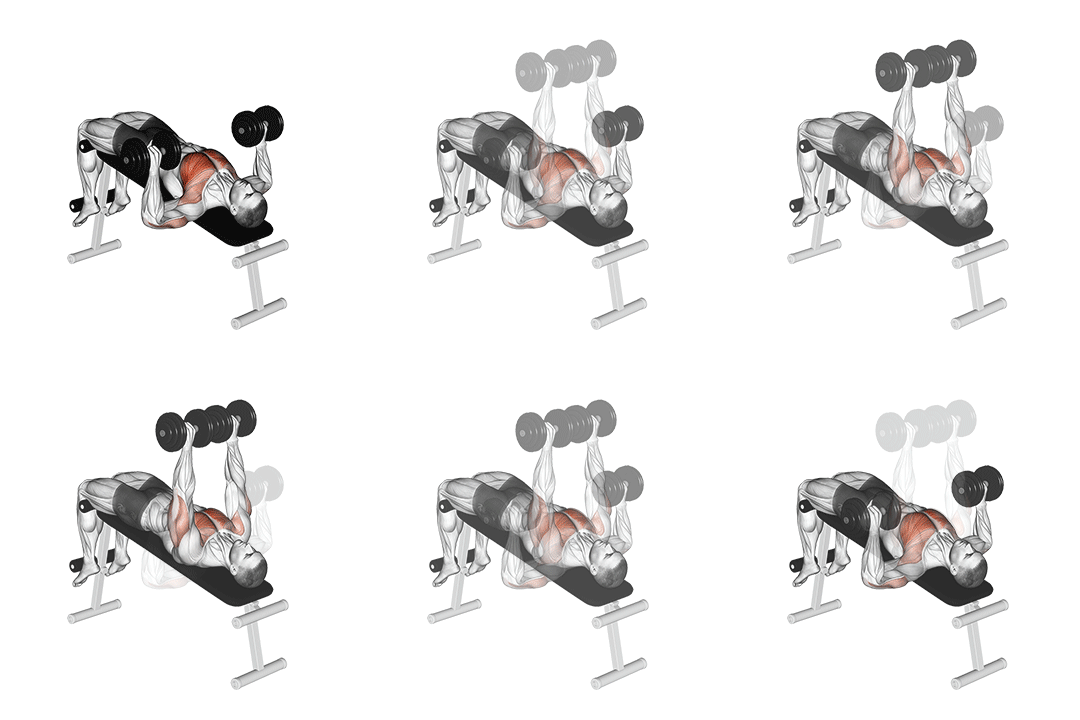
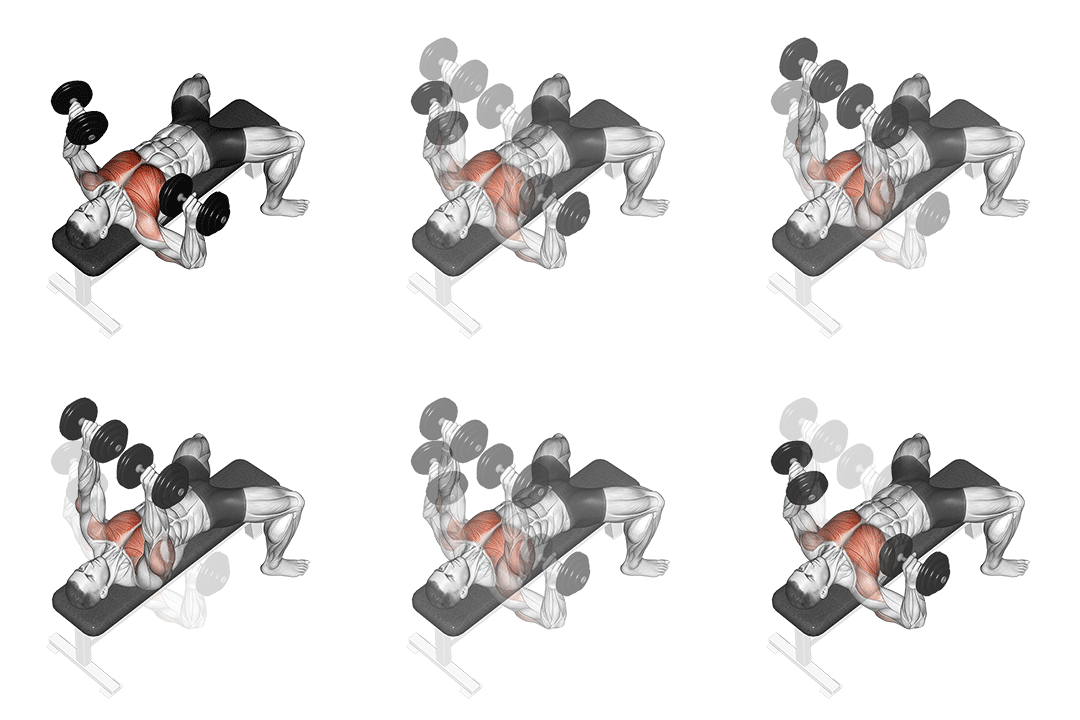
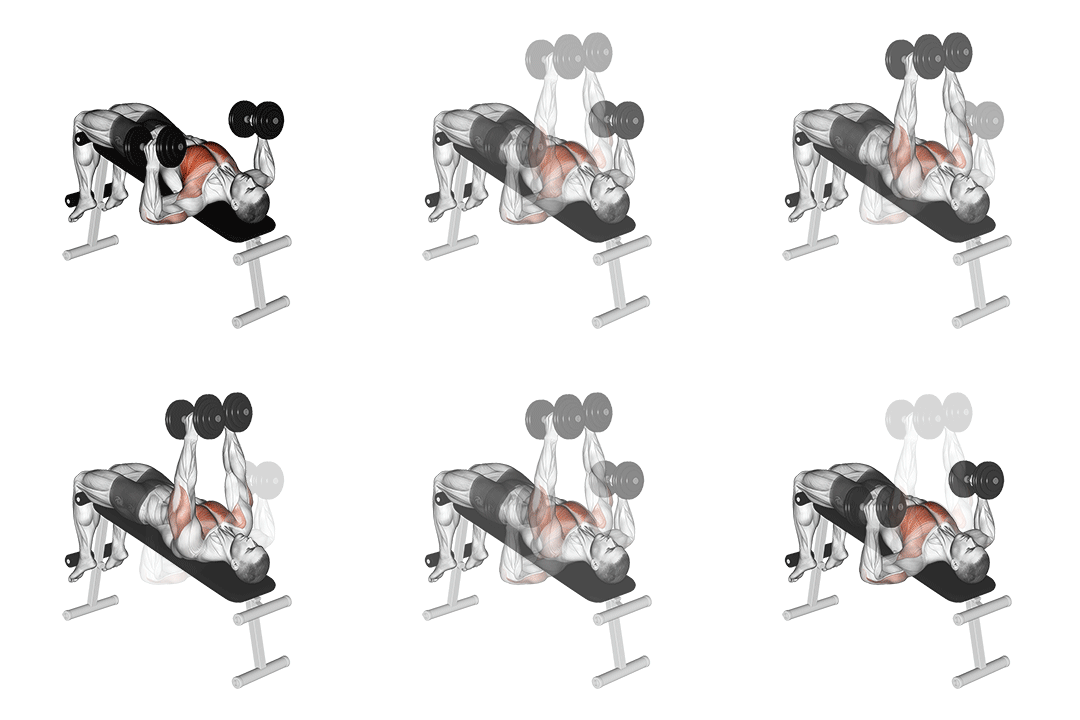
Dumbbell Decline Bench Press
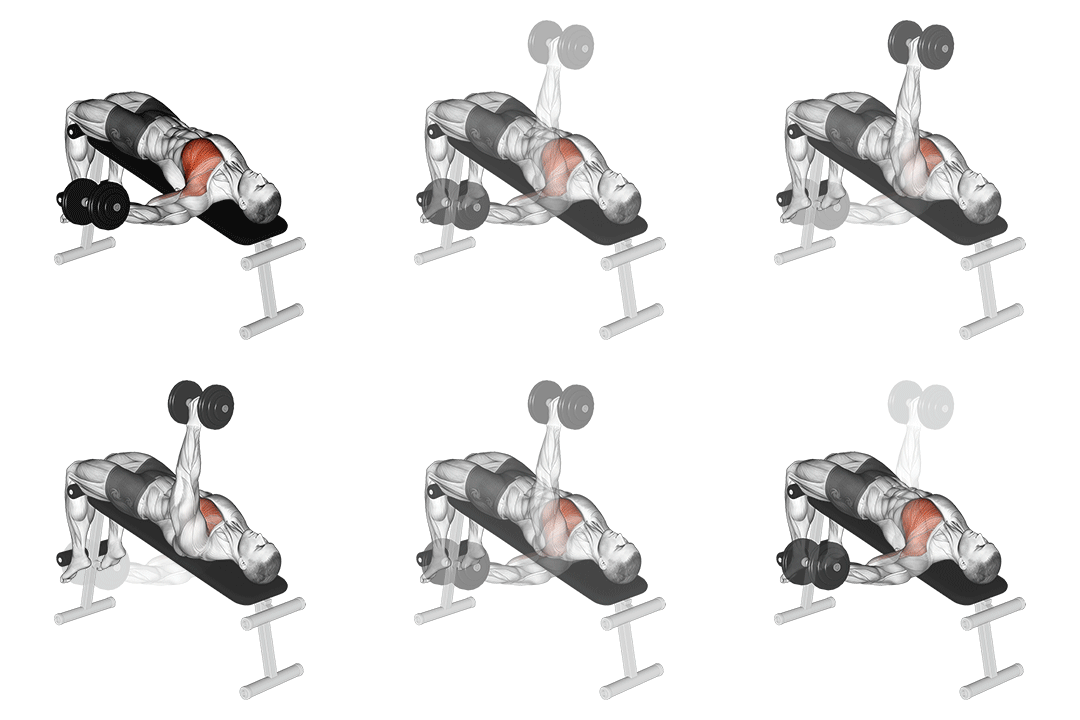
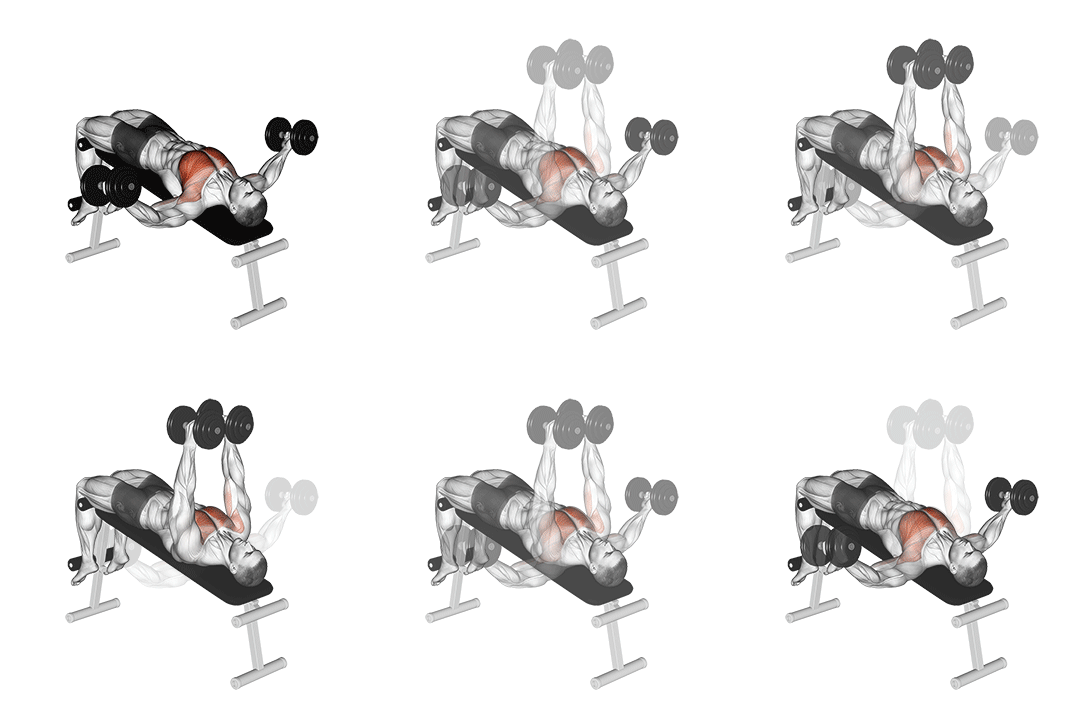
Dumbbell Decline One Arm Fly
Head-to-Head Comparison
| Attribute | Dumbbell Decline Bench Press | Dumbbell Decline One Arm Fly |
|---|---|---|
| Target Muscle |
Pectorals
|
Pectorals
|
| Body Part |
Chest
|
Chest
|
| Equipment |
Dumbbell
|
Dumbbell
|
| Difficulty |
Intermediate
|
Advanced
|
| Movement Type |
Compound
|
Isolation
|
| Secondary Muscles |
2
|
1
|
Secondary Muscles Activated
Dumbbell Decline Bench Press
Dumbbell Decline One Arm Fly
Visual Comparison
Overview
Dumbbell Decline Bench Press vs Dumbbell Decline One Arm Fly — if you want a deeper lower-chest stimulus, you need to pick the right tool. I’ll walk you through how each move loads the pectorals, which secondary muscles come into play, and the biomechanics that determine stretch, tension, and transfer to strength. You’ll get clear technique cues (bench angle, range of motion, grip), rep ranges for hypertrophy and strength, and practical recommendations so you can choose the best exercise for your goals and training level.
Key Differences
- Dumbbell Decline Bench Press is a compound movement, while Dumbbell Decline One Arm Fly is an isolation exercise.
- Difficulty levels differ: Dumbbell Decline Bench Press is intermediate, while Dumbbell Decline One Arm Fly is advanced.
- Both exercises target the Pectorals using Dumbbell. The main differences are in their movement patterns and muscle activation angles.
Pros & Cons
Dumbbell Decline Bench Press
+ Pros
- Allows heavier loading for greater mechanical tension and progressive overload
- Recruits triceps and anterior delts for compound strength transfer
- Easier to learn and scale with linear progression (3–6, 6–12 rep ranges)
- More accessible in most gyms with decline bench setups
− Cons
- Less pec isolation—triceps can limit repetitions
- Requires spotter or careful loading for max attempts
- Can reinforce anterior shoulder dominance if not paired with horizontal pulling
Dumbbell Decline One Arm Fly
+ Pros
- Superior pec isolation and long muscle-length tension at end range
- Unilateral work corrects imbalances and increases core anti-rotation demand
- Lower absolute load means safer for trainees avoiding heavy pressing
- Excellent for sculpting lower-pec definition and time-under-tension work
− Cons
- High shoulder stress at deep stretch—greater injury risk without mobility
- Harder to progressively overload with heavy weights
- Steep technical demand for scapular and rotator cuff control
When Each Exercise Wins
The decline press allows higher absolute loads and repeated sets in the 6–12 rep range, increasing mechanical tension across the sternocostal fibers. Use paired fly variations for added time-under-tension, but prioritize the press for total-volume-driven growth.
Compound pressing recruits triceps and stabilizers and lets you progressively increase weight (3–6 rep range), which transfers directly to improved pressing strength. The one-arm fly lacks the joint levers to drive meaningful increases in maximal load.
Beginners benefit from learning the pressing pattern and can safely progress load and volume. The fly requires refined shoulder stability and mobility that novice lifters often haven’t developed yet.
When equipment and heavy loads are limited, the one-arm fly offers intense pec stimulus with a single dumbbell and sets of 8–15 reps, while also challenging core stability. It’s easier to manipulate time-under-tension at home without heavy plates.
Frequently Asked Questions
Can I do both Dumbbell Decline Bench Press and Dumbbell Decline One Arm Fly in the same workout?
Yes — sequence compound presses first (3–5 sets) to prioritize mechanical tension, then follow with 2–3 sets of one-arm flies as an isolation finisher for extra time under tension. Keep total volume manageable to avoid shoulder fatigue.
Which exercise is better for beginners?
Beginners should start with the Dumbbell Decline Bench Press because pressing mechanics are easier to learn and scale. Focus on technique, a 15–30° decline, and progressive loading before introducing advanced unilateral fly variations.
How do the muscle activation patterns differ?
The decline press produces peak activation through mid-range concentric force as the pecs, triceps, and delts share the load; the fly emphasizes eccentric control and horizontal adduction, creating higher stretch-mediated tension in the pecs and greater scapular/rotator cuff demand.
Can Dumbbell Decline One Arm Fly replace Dumbbell Decline Bench Press?
Not completely — the one-arm fly can complement presses for isolation and symmetry, but it won’t replace the press for maximal mechanical tension and strength transfer. Choose flies for detail work or when heavy loading isn’t available.
Expert Verdict
Use the Dumbbell Decline Bench Press when your priority is lower-chest hypertrophy or pressing strength — it permits heavier loads, clearer progression, and robust triceps involvement (aim 6–12 reps for size, 3–6 for strength). Reserve the Dumbbell Decline One Arm Fly when you want to isolate the pecs, correct side-to-side differences, or emphasize long muscle-length tension and tempo work; perform it with controlled ROM and excellent scapular control (8–15 reps, slow eccentrics). Pair them intelligently: press-heavy weeks for overload, and dedicate an isolation day or finisher with unilateral flies to maximize shape and symmetry.
Also Compare
More comparisons with Dumbbell Decline Bench Press
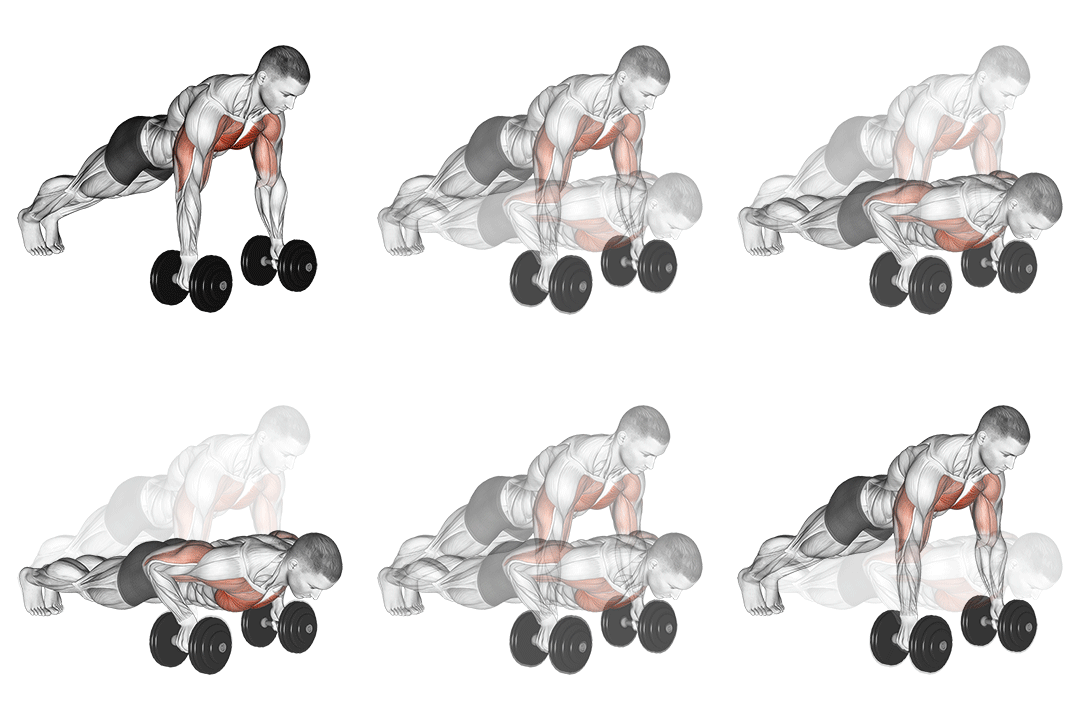
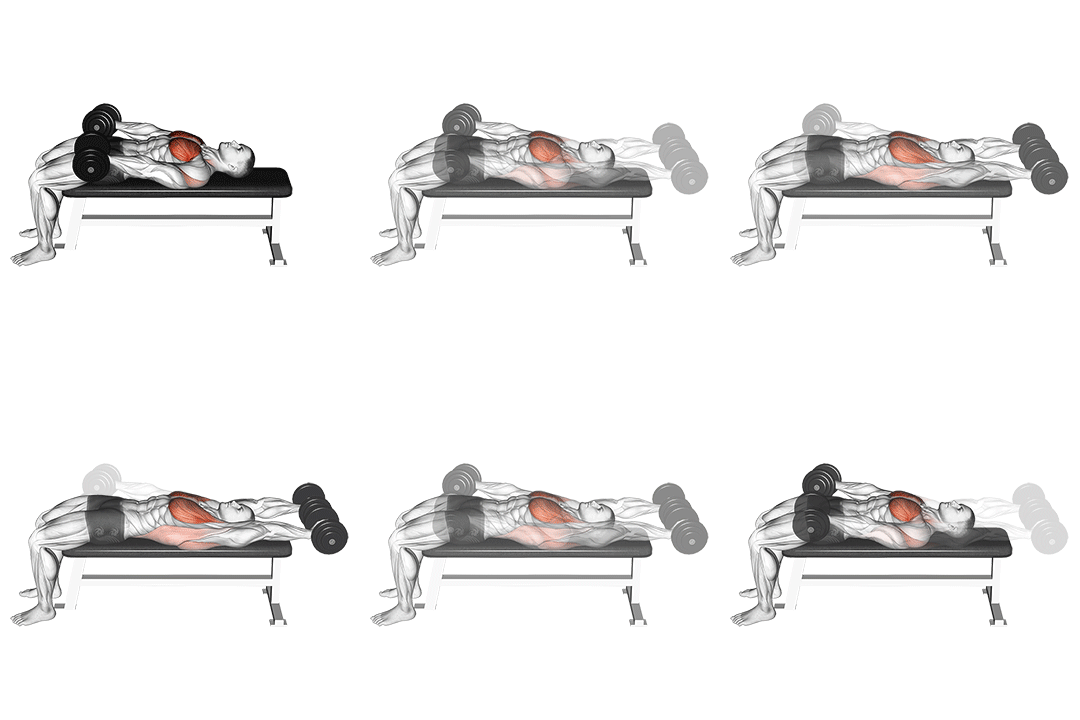
More comparisons with Dumbbell Decline One Arm Fly
Compare More Exercises
Use our free comparison tool to analyze any two exercises head-to-head.
Compare Exercises