Dumbbell Decline Bench Press vs Incline Dumbbell Press

Compare target muscles, equipment, difficulty, movement type, and secondary muscles for Dumbbell Decline Bench Press and Incline Dumbbell Press.

Change comparison Share

Get comparison link

Select the link and use your device's Copy command.

Comparison overview

AI-generated
Dumbbell Decline Bench Press vs Incline Dumbbell Press — if you want a fuller, more developed chest you need to pick the right angle. I’ll walk you through how each move loads the pectorals, which secondary muscles take the work, the equipment and setup, plus clear recommendations for hypertrophy, strength, beginners, and home training. You’ll learn concrete cues (bench angle, elbow path, leg bracing), sensible rep ranges (6–12 for size, 3–6 for strength), and the biomechanics behind why each press shifts force vectors across the chest.

Exercise Comparison

Exercise A
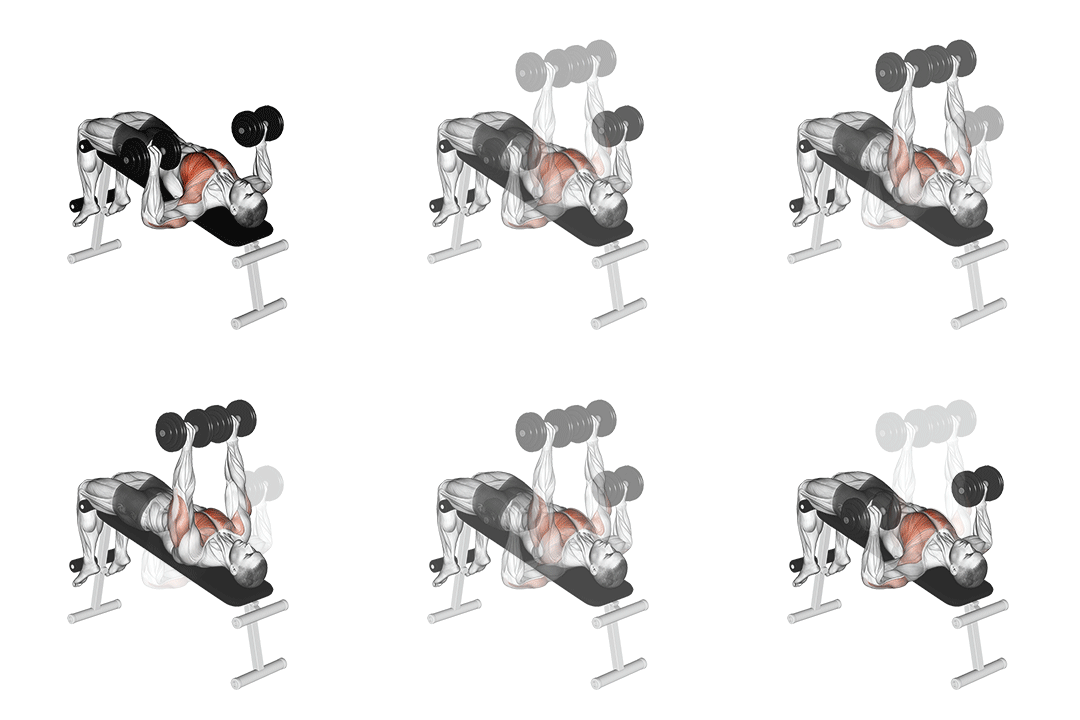
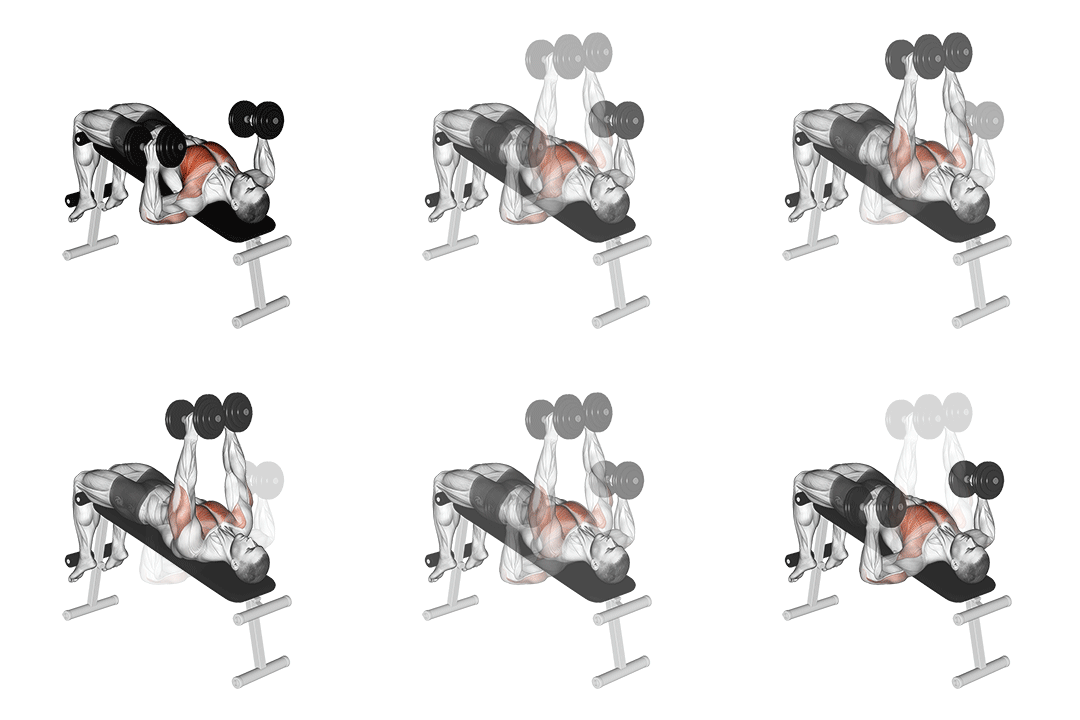
Dumbbell Decline Bench Press demonstration

Dumbbell Decline Bench Press

Target Pectorals
Equipment Dumbbell
Body Part Chest
Difficulty Intermediate
Movement Compound
Secondary Muscles
Triceps Shoulders
VS
Exercise B
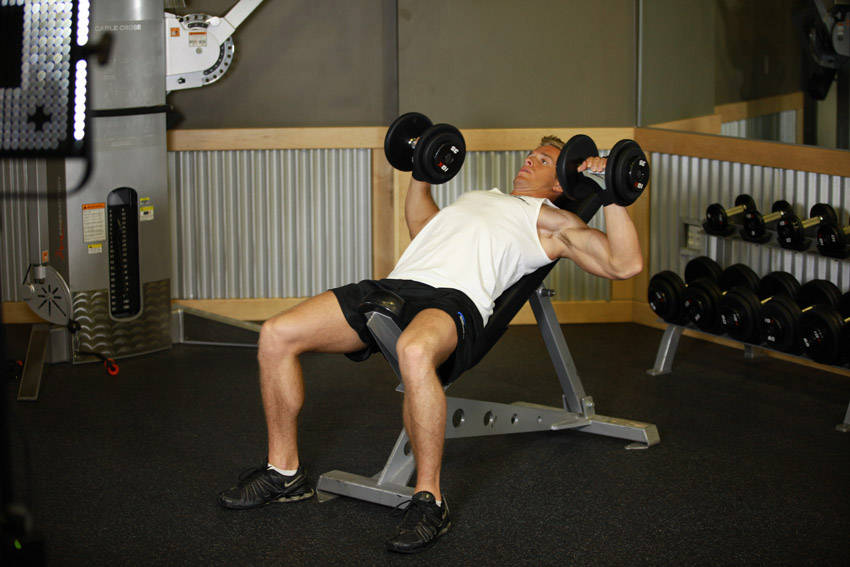
Incline Dumbbell Press demonstration

Incline Dumbbell Press

Target Pectorals
Equipment Dumbbell
Body Part Chest
Difficulty Intermediate
Movement Compound
Secondary Muscles
Shoulders Triceps

Head-to-Head Comparison

Different values are marked. These are catalogue attributes, not performance scores.

Muscles used

Listed target and secondary muscles, shown on the body. Locations, not activation or strength scores.

  • Target
  • Secondary
  • Not highlighted

Dumbbell Decline Bench Press

Front
Dumbbell Decline Bench Press: front muscle locationsSolid: listed target. Striped: listed secondary. Grey: not highlighted. Locations, not activation or strength scores. See the muscle names below.
Back
Dumbbell Decline Bench Press: back muscle locationsSolid: listed target. Striped: listed secondary. Grey: not highlighted. Locations, not activation or strength scores. See the muscle names below.
Target
Pectorals
Secondary
Triceps, Shoulders

Not shown on diagram: Shoulders. These labels do not identify a precise region on this map.

Incline Dumbbell Press

Front
Incline Dumbbell Press: front muscle locationsSolid: listed target. Striped: listed secondary. Grey: not highlighted. Locations, not activation or strength scores. See the muscle names below.
Back
Incline Dumbbell Press: back muscle locationsSolid: listed target. Striped: listed secondary. Grey: not highlighted. Locations, not activation or strength scores. See the muscle names below.
Target
Pectorals
Secondary
Shoulders, Triceps

Not shown on diagram: Shoulders. These labels do not identify a precise region on this map.

Grey does not mean a muscle is unused. The diagrams show only the mapped catalogue labels.

Attribute Dumbbell Decline Bench Press Incline Dumbbell Press
Target Muscle
Pectorals
Pectorals
Body Part
Chest
Chest
Equipment
Dumbbell
Dumbbell
Difficulty
Intermediate
Intermediate
Movement Type
Compound
Compound
Secondary Muscles
Triceps, Shoulders
Shoulders, Triceps

Visual Comparison

An illustrative 1–10 profile derived from catalog difficulty, equipment, and listed-muscle fields—not measured performance or muscle activation.

Key Differences

  • Both exercises target the Pectorals using Dumbbell. The catalogue does not establish which exercise is better for an individual goal.

Muscle comparison

Shared target muscles

Both presses target the pectoralis major, producing horizontal adduction and shoulder flexion. The incline press shifts the force vector upward, biasing the clavicular (upper) head; typical incline angles of 30°–45° increase upper pec activation by roughly 10–15% versus flat. The decline press orients the torso downward (about -15° to -30°), shortening the clavicular head and emphasizing the sternal/lower fibers, increasing lower-pectoral loading by an estimated 10–20%. Both exercises allow strong bilateral and unilateral loading with dumbbells.

Secondary muscle differences

Incline Dumbbell Press recruits anterior deltoids more heavily because shoulder flexion increases at steeper bench angles; expect a larger role for the front delts and stabilizing rotator cuff. Decline Bench Press reduces anterior delt demand and shifts some load to the triceps long head and the sternocostal fibers of the pecs. In practice, incline presses feel more shoulder-driven while decline presses feel more chest- and triceps-driven.

Muscle involvement analysis

During the concentric phase, incline pressing creates a more upward and forward force vector, increasing moment arm at the shoulder and lengthening the upper pec under tension. Decline pressing shortens the upper fibers and elongates the lower pec, altering the length-tension relationship to favor force production from the sternal head. Both require scapular stability; the decline reduces shoulder extension range of motion, while the incline increases anterior shoulder excursion.

Equipment and setup

Dumbbell Decline Bench Press: setup

Dumbbell Decline Bench Press needs an adjustable decline bench (or a fixed decline bench), a set of dumbbells, and often a way to brace the legs. For heavy sets a spotter helps with safe unracking and reracking.

Incline Dumbbell Press: setup

Incline Dumbbell Press requires an adjustable bench set to 30°–45° and dumbbells. A stable bench back pad and moderate incline collars help maintain shoulder health; a spotter is less critical for moderate loads.

Access and practicality

Incline Dumbbell Press — most gyms and home setups have an adjustable bench that inclines. Decline benches are less common at home and require careful setup and leg bracing, making incline the more accessible option for most lifters.

Learning and progression

Learning the movements

Incline Dumbbell Press is easier to learn because the starting position and bar path are closer to the flat press; gripping and pressing are more familiar and you can start light. Decline requires precise body position, secure leg bracing, and careful dumbbell entry/exit, which raises the setup complexity.

Progression considerations

Both exercises scale well, but incline pressing offers more straightforward progression via angle tweaks (15° increments), tempo, and unilateral overload. Decline allows slightly higher loads because of mechanical advantage and a shorter range of motion, which can benefit maximal-load progressions.

Limitations and precautions

Relative risk favors decline for the shoulder joint because it reduces anterior shoulder excursion, but decline can increase strain on the lower sternum and requires secure leg bracing to avoid slipping. Incline increases anterior deltoid stress and, at angles above 45°, raises risk of impingement for lifters with poor scapular control.

Pros & Cons

Dumbbell Decline Bench Press

+ Pros

  • Stronger emphasis on lower/sternal pec fibers for balanced chest development
  • Often allows heavier loads due to mechanical advantage and reduced ROM
  • Less anterior deltoid involvement, reducing shoulder strain for some lifters
  • Good transfer to pressing strength from a lower-bar path

Cons

  • Less accessible equipment in many gyms and homes
  • Setup and dumbbell entry/exit are more awkward and require care
  • Can feel uncomfortable for lifters with weak leg bracing or ribcage sensitivity

Incline Dumbbell Press

+ Pros

  • Targets upper pecs and front delts for fuller clavicular development
  • Highly accessible — adjustable bench found in most gyms and home setups
  • Easier to learn and progress with incremental angle and load changes
  • Better for unilateral variations and addressing strength imbalances

Cons

  • Greater anterior deltoid involvement can limit chest focus
  • Steeper angles (>45°) increase shoulder impingement risk for some lifters
  • May not load lower pec fibers as effectively as decline variations

When Each Exercise Wins

1
For muscle hypertrophy: Incline Dumbbell Press

Incline targets the upper pecs that many lifters underdevelop, expanding the chest’s upper shelf. Use 6–12 reps with 30°–45° incline and control the eccentric to maximize time under tension for balanced hypertrophy.

2
For strength gains: Dumbbell Decline Bench Press

Decline offers a mechanical advantage and shorter range of motion so you can often handle heavier loads, aiding raw pressing strength. Work in lower rep ranges (3–6) with progressive overload to exploit that force production window.

3
For beginners: Incline Dumbbell Press

The incline setup is simpler and the movement pattern is more intuitive with less awkward bracing. Start with 8–12 reps at a light weight to learn scapular stability and elbow path.

4
For home workouts: Incline Dumbbell Press

Most home gyms have an adjustable bench and a set of dumbbells, making incline easy to program. Decline benches are rare at home and require extra space and secure anchoring.

Frequently Asked Questions

Can I do both Dumbbell Decline Bench Press and Incline Dumbbell Press in the same workout?

Yes. Start with the compound movement you prioritize (usually the stronger press for your goal) and use the other as a secondary exercise for 2–4 sets. Keep total chest volume sensible — aim for 12–20 hard sets per week per region to avoid overtraining.

Which exercise is better for beginners?

Incline Dumbbell Press is better for most beginners because the setup is simpler and it builds scapular control and upper-pec strength. Begin with light weight and 8–12 reps, focusing on a consistent elbow path and full control.

How do the muscle activation patterns differ?

Incline increases activation of the clavicular (upper) pec and anterior deltoid due to an upward force vector and greater shoulder flexion; decline shifts the vector to favor the sternal/lower pec and triceps by reducing shoulder excursion and shortening the upper fibers, changing the length-tension relationship.

Can Incline Dumbbell Press replace Dumbbell Decline Bench Press?

You can substitute incline for decline if you lack a decline bench, but you will shift emphasis to the upper chest and anterior delts. If your goal is lower-pectoral thickness or maximal pressing strength, program decline or complementary flat work into your cycle.

Comparison Summary

Use the Incline Dumbbell Press when you want to prioritize upper-pectoral development, improve shoulder-stability under press, or train at home with limited equipment. Set the bench to 30°–45°, emphasize a controlled eccentric, and train in 6–12 reps for hypertrophy. Choose the Dumbbell Decline Bench Press when you need to load the sternal/lower pecs and lift heavier loads with a shorter ROM — it’s the better pick for raw pressing strength and adding lower-chest thickness. Alternate both across training cycles: prioritize incline for upper-chest phases (8–12 reps) and add decline blocks for strength phases (3–6 reps) to cover the full pec length-tension curve.

Exercise instructions

Steps from the exercise catalogue. Read the full sequence before starting.

Dumbbell Decline Bench Press

  1. Lie down on a decline bench with your feet secured and your head lower than your hips.
  2. Hold a dumbbell in each hand and extend your arms straight up above your chest, palms facing forward.
  3. Lower the dumbbells slowly to the sides of your chest, keeping your elbows at a 90-degree angle.
Read remaining steps for Dumbbell Decline Bench Press
  1. Push the dumbbells back up to the starting position, fully extending your arms.
  2. Repeat for the desired number of repetitions.

Incline Dumbbell Press

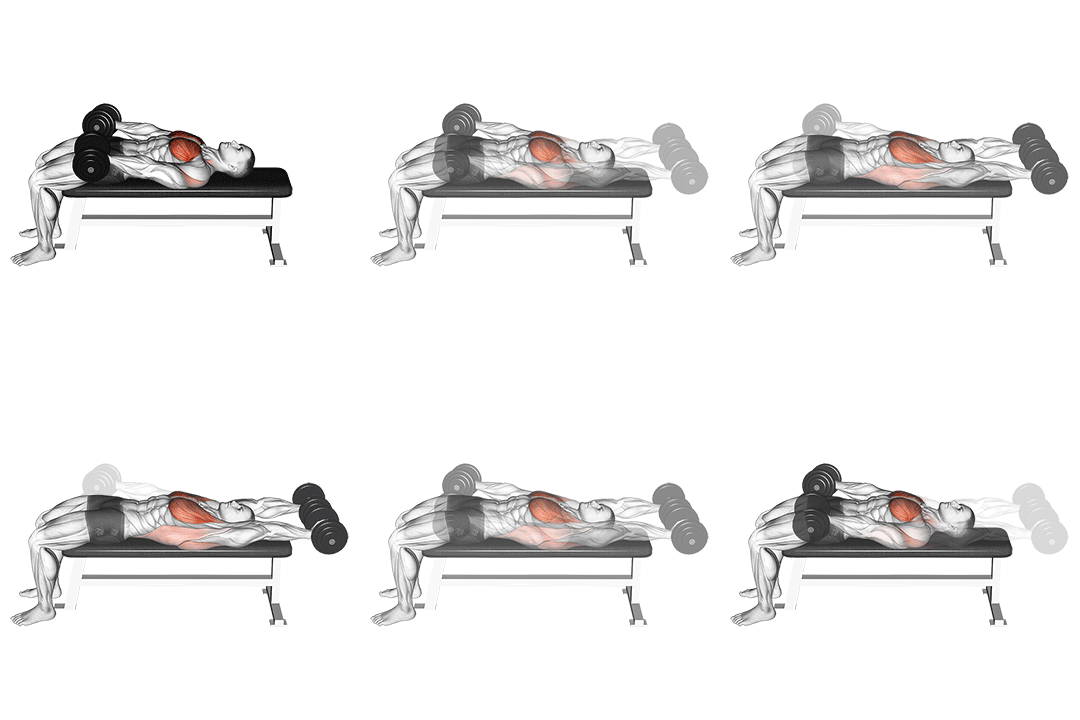
  1. Lie back on an incline bench with a dumbbell in each hand atop your thighs. The palms of your hands will be facing each other.
  2. Then, using your thighs to help push the dumbbells up, lift the dumbbells one at a time so that you can hold them at shoulder width.
  3. Once you have the dumbbells raised to shoulder width, rotate your wrists forward so that the palms of your hands are facing away from you. This will be your starting position.
Read remaining steps for Incline Dumbbell Press
  1. Be sure to keep full control of the dumbbells at all times. Then breathe out and push the dumbbells up with your chest.
  2. Lock your arms at the top, hold for a second, and then start slowly lowering the weight. Tip Ideally, lowering the weights should take about twice as long as raising them.
  3. Repeat the movement for the prescribed amount of repetitions.
  4. When you are done, place the dumbbells back on your thighs and then on the floor. This is the safest manner to release the dumbbells.

Also Compare

Compare another pair

Choose two exercises to see their differences side by side.

Compare Exercises