Incline Dumbbell Press vs Lever Incline Chest Press

Compare target muscles, equipment, difficulty, movement type, and secondary muscles for Incline Dumbbell Press and Lever Incline Chest Press.

Change comparison Share

Get comparison link

Select the link and use your device's Copy command.

Comparison overview

AI-generated
Incline Dumbbell Press vs Lever Incline Chest Press — if you want a stronger, fuller upper chest you need to pick the right tool. I'll walk you through how each exercise loads the pectorals, how shoulders and triceps assist, the biomechanics of force vectors and range of motion, technique cues for safer pressing, and clear recommendations for hypertrophy, strength, beginners, and home training. Read on and decide which option fits your goals, equipment access, and movement preferences.

Exercise Comparison

Exercise A
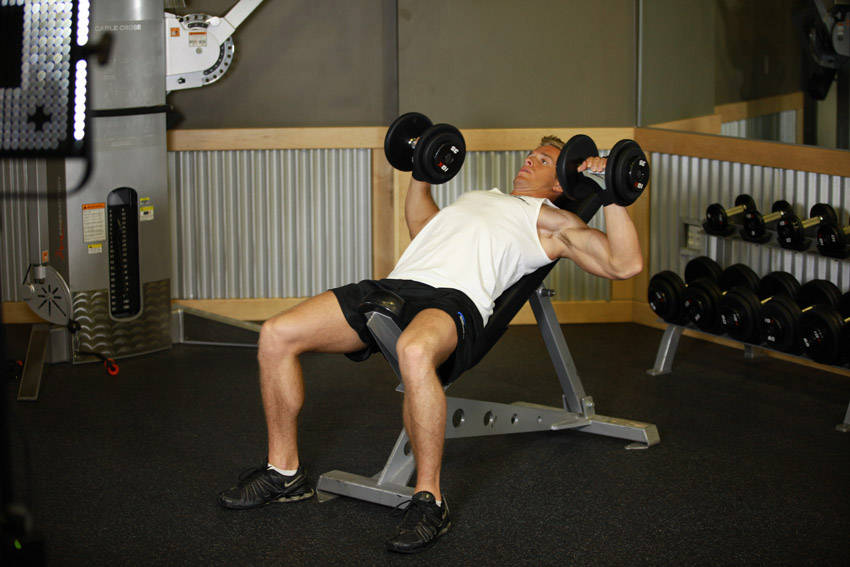
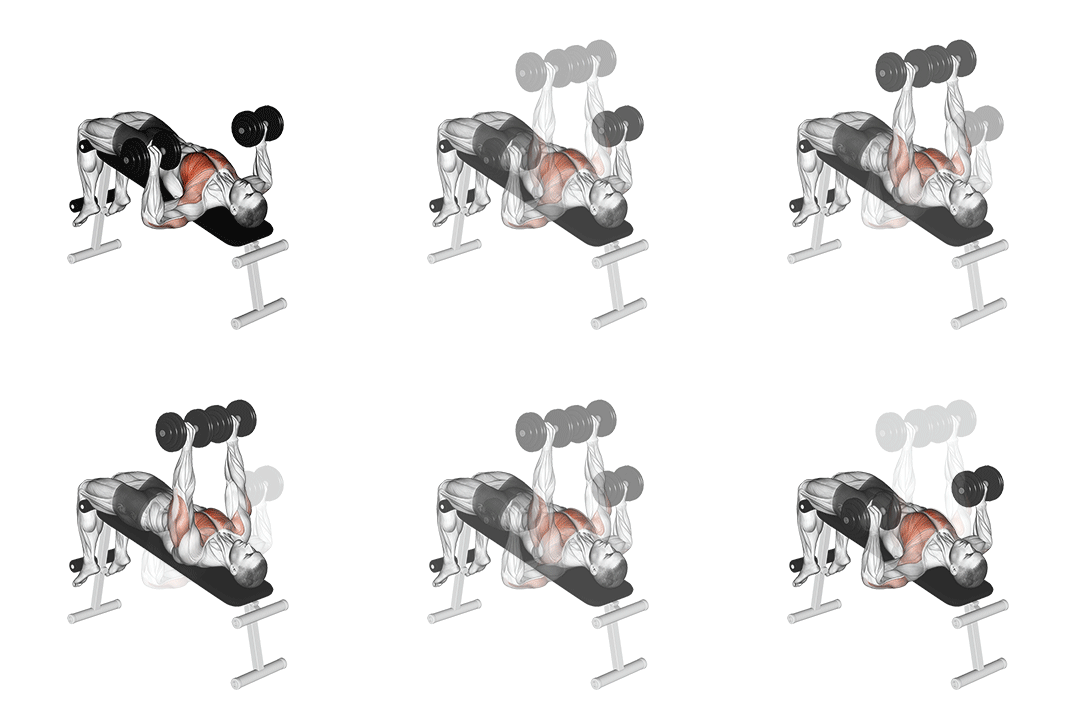
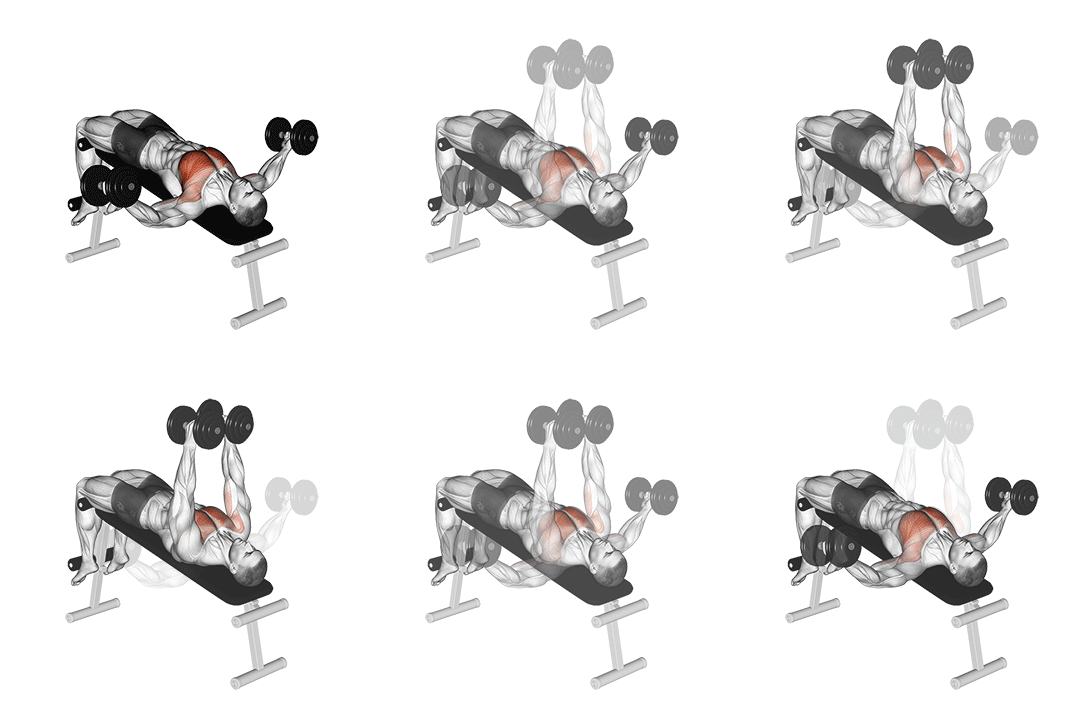
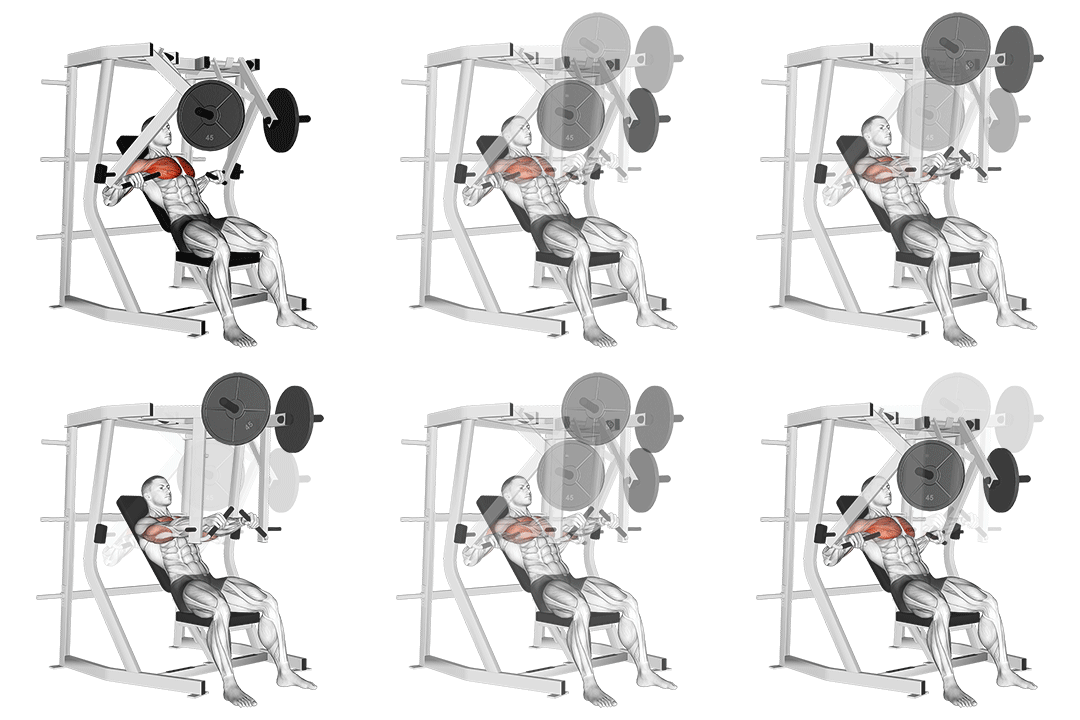
Incline Dumbbell Press demonstration

Incline Dumbbell Press

Target Pectorals
Equipment Dumbbell
Body Part Chest
Difficulty Intermediate
Movement Compound
Secondary Muscles
Shoulders Triceps
VS
Exercise B
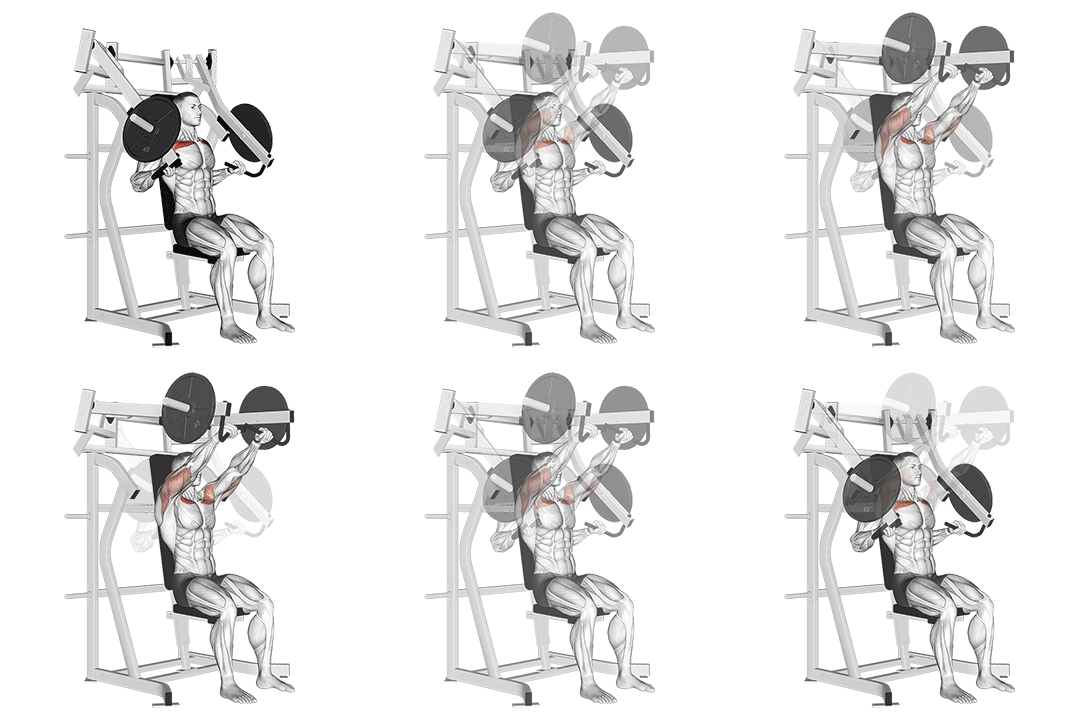
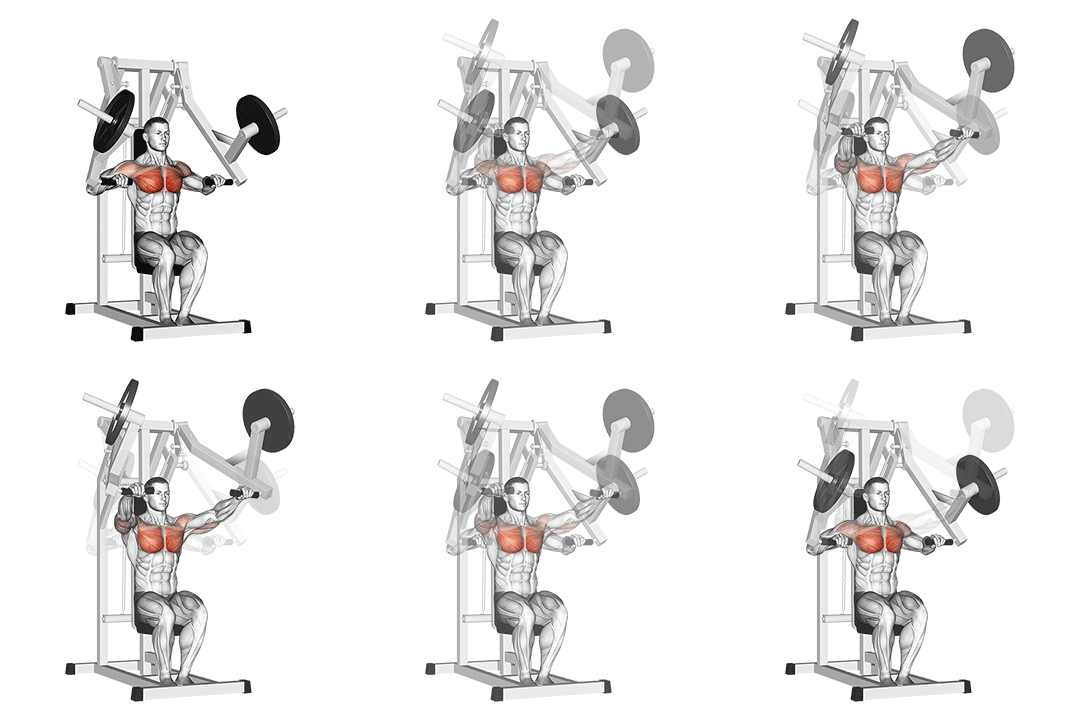
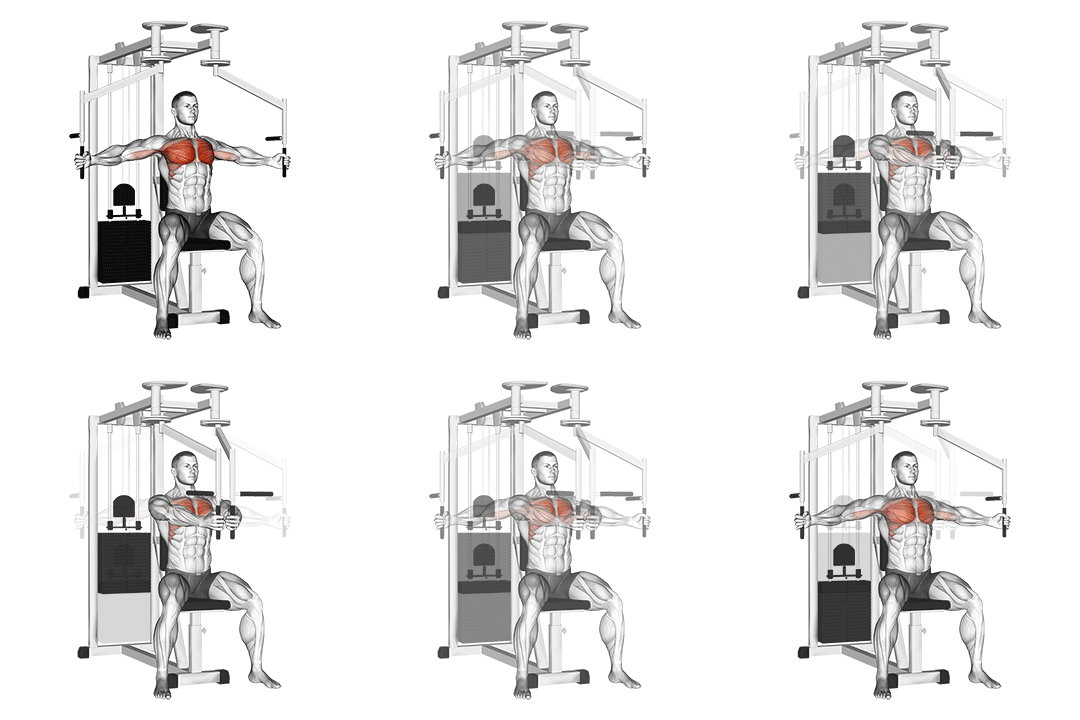
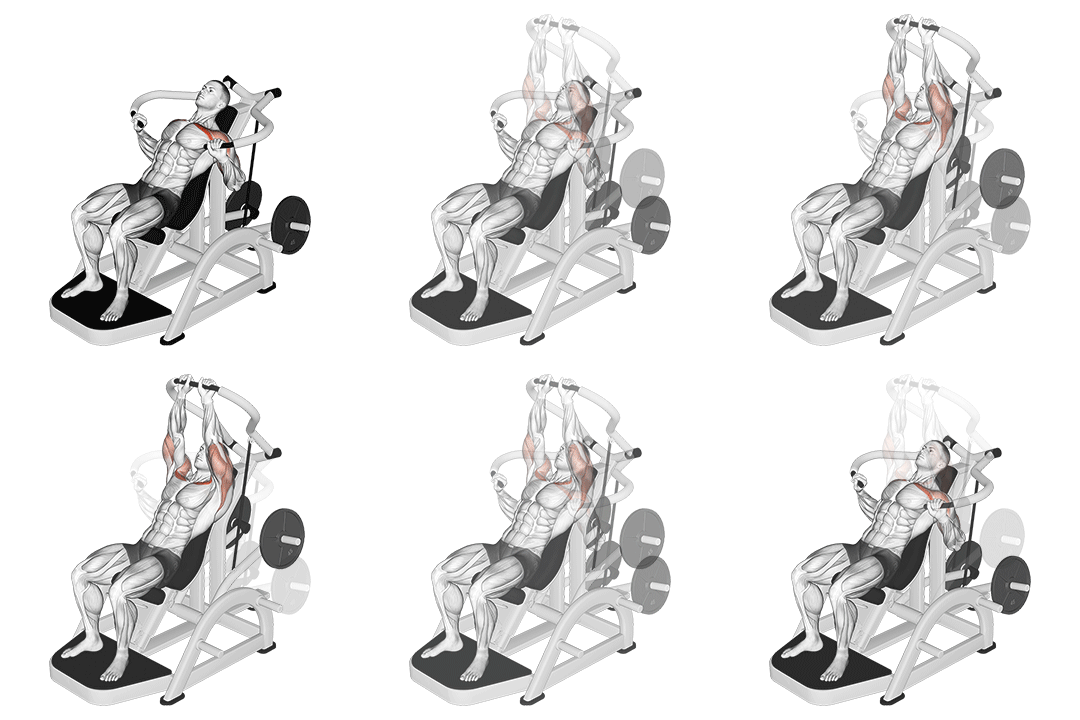
Lever Incline Chest Press demonstration

Lever Incline Chest Press

Target Pectorals
Equipment Lever
Body Part Chest
Difficulty Intermediate
Movement Compound
Secondary Muscles
Shoulders Triceps

Head-to-Head Comparison

Different values are marked. These are catalogue attributes, not performance scores.

Muscles used

Listed target and secondary muscles, shown on the body. Locations, not activation or strength scores.

  • Target
  • Secondary
  • Not highlighted

Incline Dumbbell Press

Front
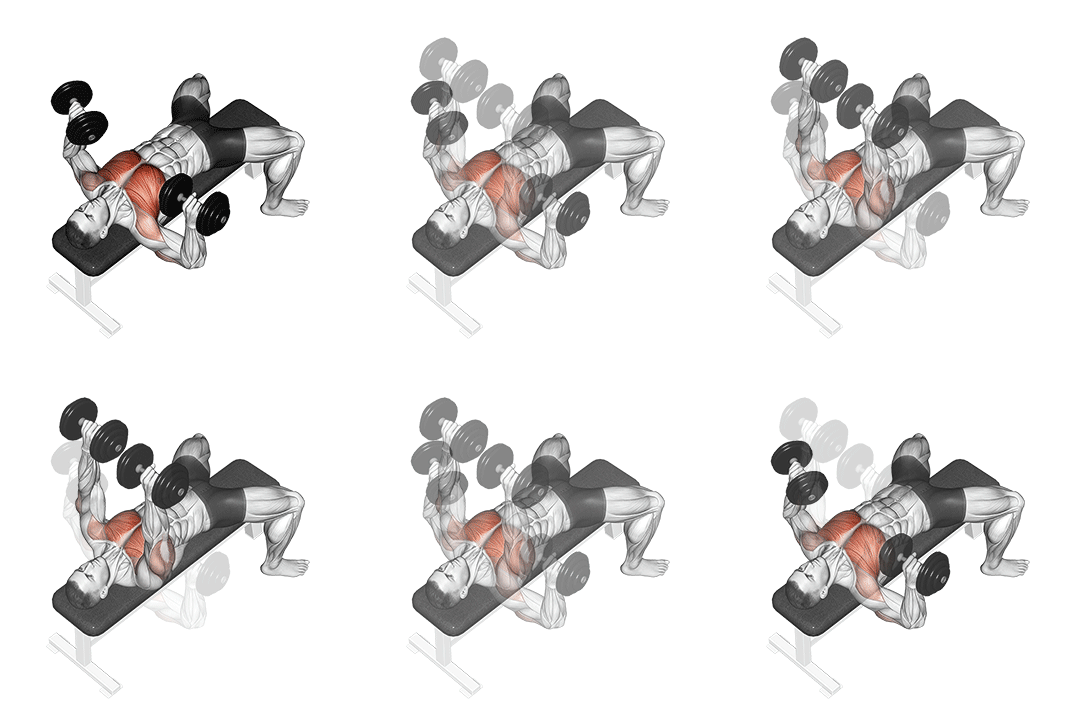
Incline Dumbbell Press: front muscle locationsSolid: listed target. Striped: listed secondary. Grey: not highlighted. Locations, not activation or strength scores. See the muscle names below.
Back
Incline Dumbbell Press: back muscle locationsSolid: listed target. Striped: listed secondary. Grey: not highlighted. Locations, not activation or strength scores. See the muscle names below.
Target
Pectorals
Secondary
Shoulders, Triceps

Not shown on diagram: Shoulders. These labels do not identify a precise region on this map.

Lever Incline Chest Press

Front
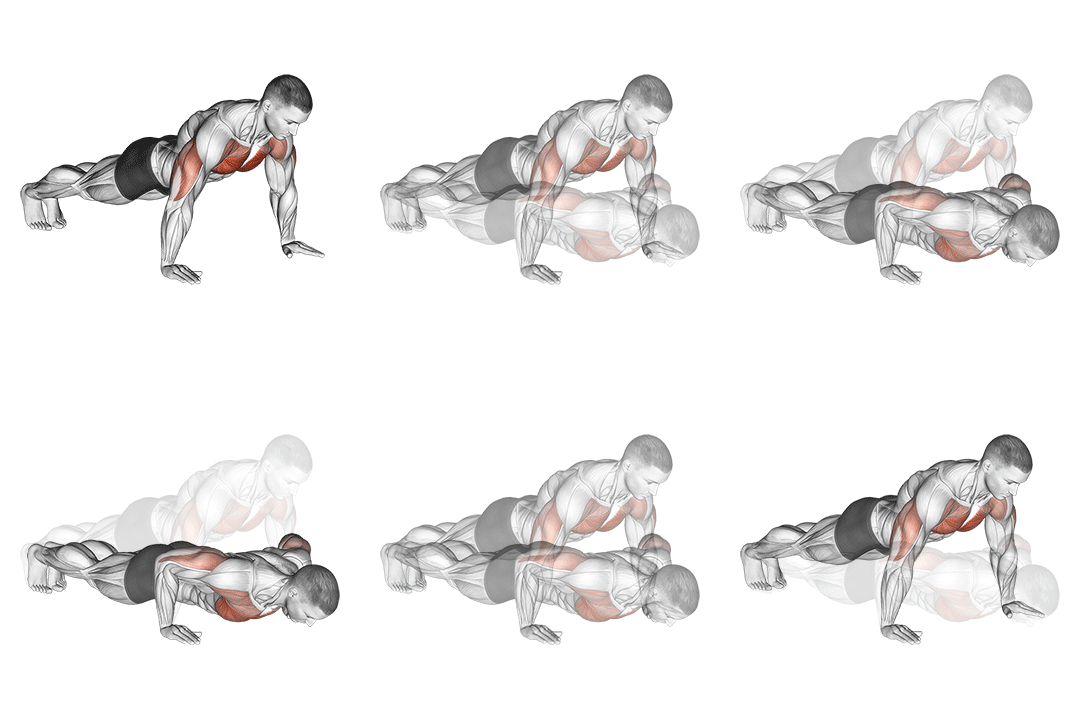
Lever Incline Chest Press: front muscle locationsSolid: listed target. Striped: listed secondary. Grey: not highlighted. Locations, not activation or strength scores. See the muscle names below.
Back
Lever Incline Chest Press: back muscle locationsSolid: listed target. Striped: listed secondary. Grey: not highlighted. Locations, not activation or strength scores. See the muscle names below.
Target
Pectorals
Secondary
Shoulders, Triceps

Not shown on diagram: Shoulders. These labels do not identify a precise region on this map.

Grey does not mean a muscle is unused. The diagrams show only the mapped catalogue labels.

Attribute Incline Dumbbell Press Lever Incline Chest Press
Target Muscle
Pectorals
Pectorals
Body Part
Chest
Chest
Equipment Different
Dumbbell
Lever
Difficulty
Intermediate
Intermediate
Movement Type
Compound
Compound
Secondary Muscles
Shoulders, Triceps
Shoulders, Triceps

Visual Comparison

An illustrative 1–10 profile derived from catalog difficulty, equipment, and listed-muscle fields—not measured performance or muscle activation.

Key Differences

  • Equipment differs: Incline Dumbbell Press uses Dumbbell, while Lever Incline Chest Press requires Lever.

Muscle comparison

Shared target muscles

Both exercises primarily target the upper pectoralis major when performed at a 30 to 45 degree bench incline. Because the clavicular head aligns more with the force vector at those angles, both moves produce similar gross pectoral loading. The dumbbell press often allows a slightly greater stretch and peak contraction due to independent arms and increased range of motion — roughly 5–12% more excursion at the shoulder joint compared with a fixed-path lever in many lifters.

Secondary muscle differences

Secondary recruitment differs mainly in stabilizers and deltoids. Dumbbells require more activation of the anterior deltoid and rotator cuff stabilizers to control transverse plane motion, increasing shoulder and scapular stabilizer recruitment by an estimated 10–15%. The lever machine reduces stabilizer demand and shifts some work to prime movers and triceps because the path is fixed and the scapula moves less freely.

Muscle involvement analysis

With dumbbells you get greater unilateral control and independent concentric/eccentric phases, creating asymmetrical activation patterns as each pec works separately. The lever produces a more uniform bilateral activation pattern and consistent force curve through the range. Biomechanically, dumbbells change the moment arm as the elbows travel through a larger arc, increasing length-tension variation; the lever keeps a more constant moment arm and force vector.

Equipment and setup

Incline Dumbbell Press: setup

Incline Dumbbell Press requires an adjustable incline bench (30–45°) and a set of dumbbells that allow progressive loading. Space for pressing and a spotter or safety setup for heavy sets is recommended.

Lever Incline Chest Press: setup

Lever Incline Chest Press needs a commercial lever or plate-loaded machine set to an incline position, access to plates or built-in resistance, and space for the machine. Adjust the back pad and handles to align the lever with your shoulders.

Access and practicality

Incline Dumbbell Press is more accessible because benches and dumbbells are common in most gyms and home setups. Lever machines are less common at home and vary widely between facilities, so dumbbells win on availability and portability.

Learning and progression

Learning the movements

Lever Incline Chest Press is easier to learn because the fixed path guides your hands and reduces balance demands. Dumbbells require coordination, scapular control, and unilateral stability, so they have a steeper initial learning curve.

Progression considerations

Incline Dumbbell Press offers broader progression options: increase load, reps, tempo, one-arm variations, or range of motion. The lever provides linear plate loading and is convenient for microloading, but has less variety in movement patterns.

Limitations and precautions

Dumbbells carry higher acute technique risk if you lose control, especially at heavy loads, increasing shoulder and pec strain if form breaks. The lever reduces shoulder joint shear and limits compensatory movement, lowering acute injury risk, but repetitive poor pad alignment can still cause trouble.

Pros & Cons

Incline Dumbbell Press

+ Pros

  • Greater range of motion and stretch at shoulder extension for better muscle length-tension cycling
  • Unilateral work fixes left-right imbalances and builds stabilizers
  • Easier to modify angle, grip, and tempo for progressive overload
  • Portable and available in most gyms and home setups

Cons

  • Higher demand on stabilizers increases coordination and technique requirements
  • Greater injury risk with heavy uncontrolled reps or poor scapular positioning
  • Harder to safely push to failure alone without a spotter

Lever Incline Chest Press

+ Pros

  • Fixed path reduces coordination demands and isolates the pecs more consistently
  • Lower acute injury risk from loss of balance or rotation
  • Easy plate-based progression and quick load changes
  • Good for heavy singles and controlled top-end loading

Cons

  • Limited range of motion compared with free weights and less stretch at end range
  • Reduced stabilizer activation, which can limit transfer to free-weight performance
  • Machine geometry may not fit every shoulder structure, causing discomfort

When Each Exercise Wins

1
For muscle hypertrophy: Incline Dumbbell Press

Dumbbells allow extra range of motion and independent loading, boosting stretch-mediated hypertrophy and addressing side-to-side imbalances. Use 6–12 reps with controlled 2–3 second eccentrics at a 30–45° incline to maximize time under tension.

2
For strength gains: Lever Incline Chest Press

The lever lets you handle heavy loads safely with a consistent force curve and minimal stabilization loss, which is ideal for heavy sets and low-rep strength work. Use 3–6 rep sets and progressive plate loading to overload without technical breakdown.

3
For beginners: Lever Incline Chest Press

Beginners benefit from the guided path that reduces technical errors and limits risky rotations. It lets you build pressing strength and learned loading patterns before transitioning to free-weight variations.

4
For home workouts: Incline Dumbbell Press

Dumbbells and an adjustable bench are far more practical for a home gym than a bulky lever machine. They deliver similar pectoral stimulus and offer more exercise variety in limited space.

Frequently Asked Questions

Can I do both Incline Dumbbell Press and Lever Incline Chest Press in the same workout?

Yes. Pair them by using the lever for heavy top sets and finishing with dumbbells for volume and extra range of motion. For example, do 3 heavy lever sets at 3–5 reps, then 3–4 dumbbell sets at 8–12 reps to target both strength and hypertrophy.

Which exercise is better for beginners?

The lever incline chest press is generally better for beginners because it guides the path and reduces stabilization demands. It helps build pressing strength safely before progressing to dumbbell variations that require more control.

How do the muscle activation patterns differ?

Dumbbells create asymmetric activation with higher rotator cuff and stabilizer recruitment and a larger shoulder arc, altering moment arms through the range. The lever produces a more uniform bilateral activation and a steadier force curve, reducing stabilizer load while maintaining pectoral drive.

Can Lever Incline Chest Press replace Incline Dumbbell Press?

It can replace dumbbells for specific goals like heavy strength work or when stabilizer demand needs limiting, but it won’t fully replicate the increased range of motion and unilateral control of dumbbells. Use the lever for load management and dumbbells to add hypertrophy and balance work.

Comparison Summary

Choose the Incline Dumbbell Press if your priority is upper chest hypertrophy, unilateral control, and training variety. The added range of motion and independent arm work produce favorable length-tension cycles and help correct imbalances. Opt for the Lever Incline Chest Press when you need a safer path for heavy loading, quick plate progression, and a lower technical learning curve — it’s better for early-stage strength blocks and coaches managing large groups. Ideally, cycle both: prioritize the lever for heavy strength phases (3–6 reps) and dumbbells for hypertrophy phases (6–12 reps, slower eccentrics).

Exercise instructions

Steps from the exercise catalogue. Read the full sequence before starting.

Incline Dumbbell Press

  1. Lie back on an incline bench with a dumbbell in each hand atop your thighs. The palms of your hands will be facing each other.
  2. Then, using your thighs to help push the dumbbells up, lift the dumbbells one at a time so that you can hold them at shoulder width.
  3. Once you have the dumbbells raised to shoulder width, rotate your wrists forward so that the palms of your hands are facing away from you. This will be your starting position.
Read remaining steps for Incline Dumbbell Press
  1. Be sure to keep full control of the dumbbells at all times. Then breathe out and push the dumbbells up with your chest.
  2. Lock your arms at the top, hold for a second, and then start slowly lowering the weight. Tip Ideally, lowering the weights should take about twice as long as raising them.
  3. Repeat the movement for the prescribed amount of repetitions.
  4. When you are done, place the dumbbells back on your thighs and then on the floor. This is the safest manner to release the dumbbells.

Lever Incline Chest Press

  1. Adjust the seat and backrest of the leverage machine to a comfortable position.
  2. Sit on the machine with your back against the backrest and your feet flat on the floor.
  3. Grasp the handles with an overhand grip and position your hands slightly wider than shoulder-width apart.
Read remaining steps for Lever Incline Chest Press
  1. Push the handles forward and away from your body until your arms are fully extended.
  2. Pause for a moment, then slowly bend your elbows and lower the handles back towards your chest.
  3. Repeat for the desired number of repetitions.

Also Compare

Compare another pair

Choose two exercises to see their differences side by side.

Compare Exercises