

Dumbbell Decline Fly vs Dumbbell Decline One Arm Fly: Complete Comparison Guide
Dumbbell Decline Fly vs Dumbbell Decline One Arm Fly — which fits your program? You’ll get a clear, practical breakdown of how each move stresses the pectorals, what secondary muscles fire, and the technical cues you must use. I’ll walk you through biomechanics (decline angle, force vectors, length-tension), set and rep ranges, progression options, and injury risk so you can pick the right variation for hypertrophy, strength, or home training.
Exercise Comparison
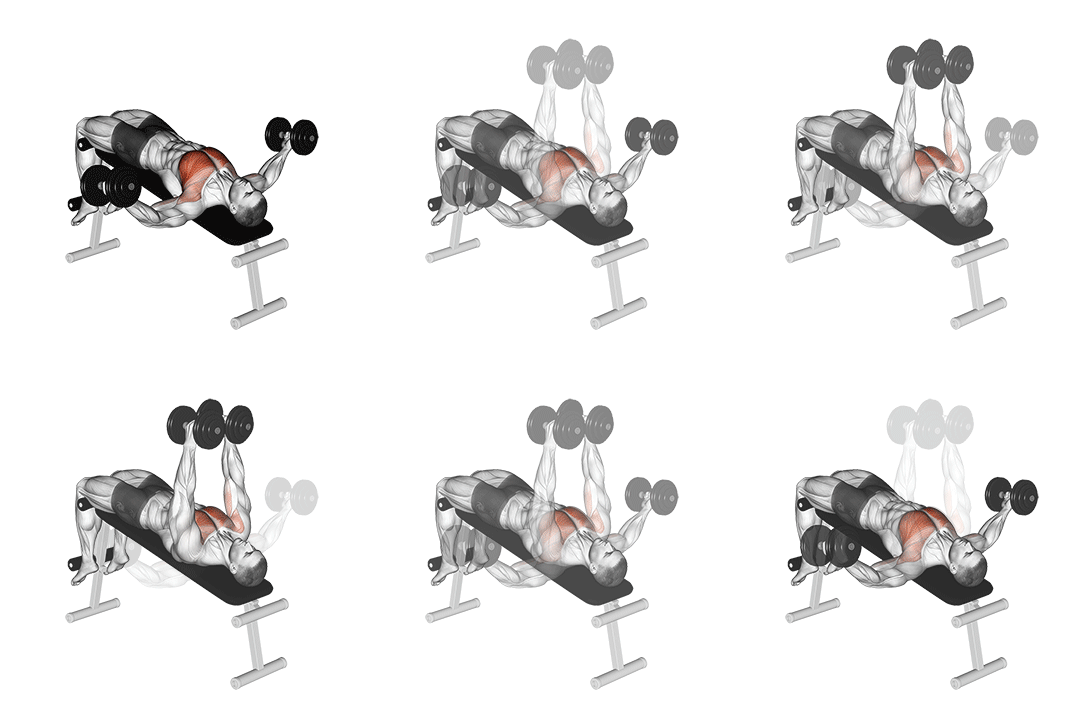
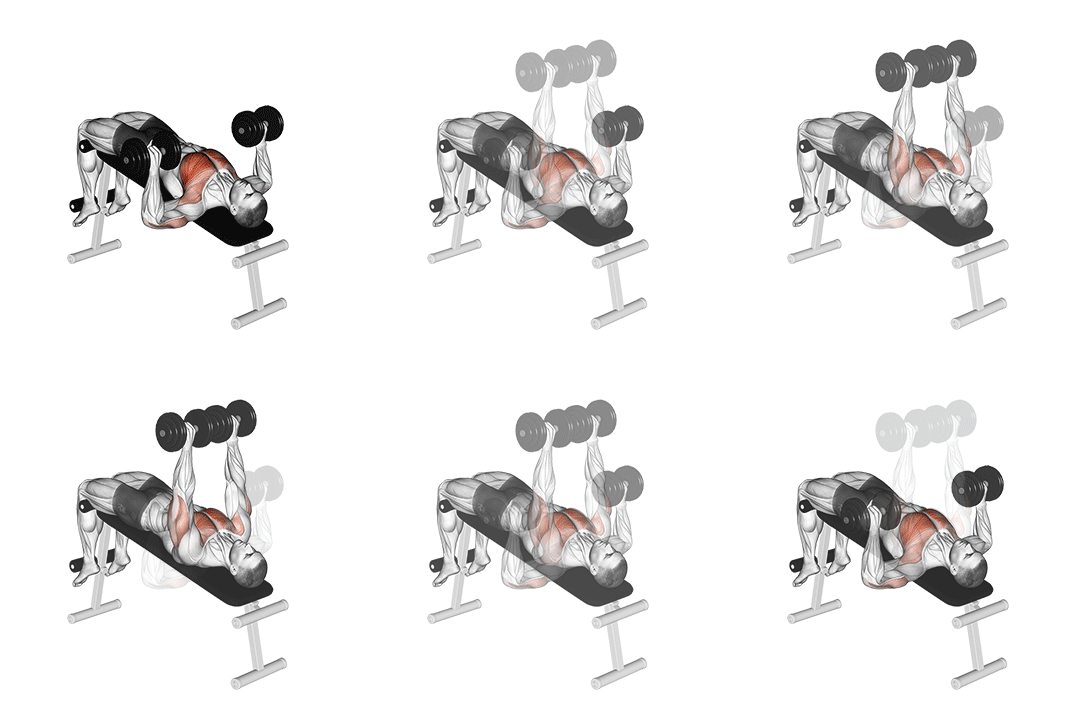
Dumbbell Decline Fly
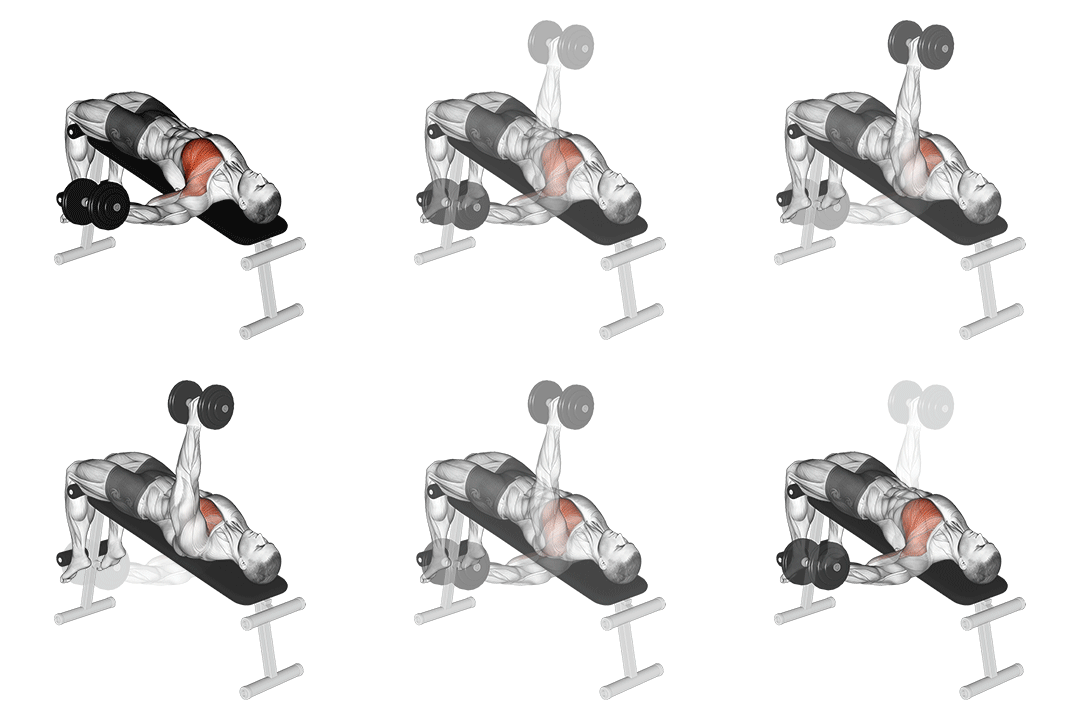
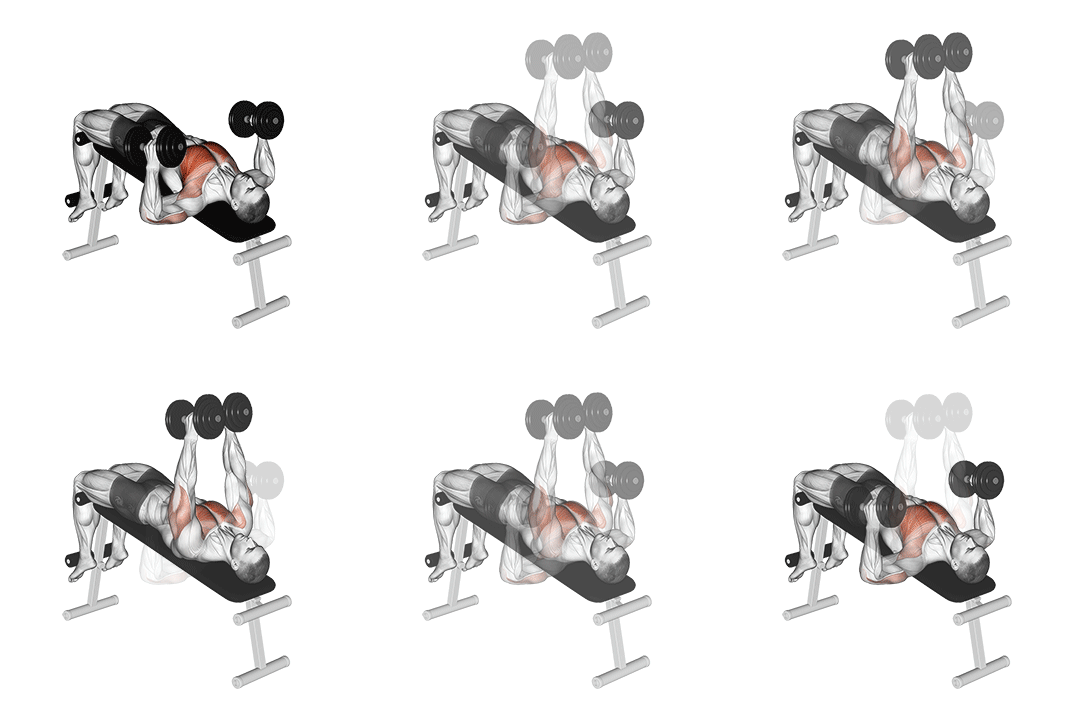
Dumbbell Decline One Arm Fly
Head-to-Head Comparison
| Attribute | Dumbbell Decline Fly | Dumbbell Decline One Arm Fly |
|---|---|---|
| Target Muscle |
Pectorals
|
Pectorals
|
| Body Part |
Chest
|
Chest
|
| Equipment |
Dumbbell
|
Dumbbell
|
| Difficulty |
Beginner
|
Advanced
|
| Movement Type |
Isolation
|
Isolation
|
| Secondary Muscles |
1
|
1
|
Secondary Muscles Activated
Dumbbell Decline Fly
Dumbbell Decline One Arm Fly
Visual Comparison
Overview
Dumbbell Decline Fly vs Dumbbell Decline One Arm Fly — which fits your program? You’ll get a clear, practical breakdown of how each move stresses the pectorals, what secondary muscles fire, and the technical cues you must use. I’ll walk you through biomechanics (decline angle, force vectors, length-tension), set and rep ranges, progression options, and injury risk so you can pick the right variation for hypertrophy, strength, or home training.
Key Differences
- Difficulty levels differ: Dumbbell Decline Fly is beginner, while Dumbbell Decline One Arm Fly is advanced.
- Both exercises target the Pectorals using Dumbbell. The main differences are in their movement patterns and muscle activation angles.
Pros & Cons
Dumbbell Decline Fly
+ Pros
- Stable bilateral loading allows heavier weight for progressive overload
- Cleaner technique for beginners — less coordination required
- Consistent symmetric activation of pectorals at decline angle
- Easier to program into higher-volume hypertrophy blocks (8–15 reps)
− Cons
- Less core and anti-rotation benefit compared with unilateral work
- May mask left-right imbalances
- Still places stress on anterior shoulder if performed with excessive ROM
Dumbbell Decline One Arm Fly
+ Pros
- Improves unilateral strength and helps correct asymmetries
- Greater core and scapular stabilizer activation (anti-rotation demand)
- Can enhance mind-muscle connection on the working pec
- Uses only one dumbbell, useful when equipment is limited
− Cons
- Higher coordination and stabilization demands — steep learning curve
- Limits absolute load per side, reducing mechanical tension potential
- Increased rotational and shoulder stress if form breaks down
When Each Exercise Wins
The bilateral decline fly lets you load both pecs heavier and accumulate more volume (sets of 3–4 x 8–15), producing greater mechanical tension and metabolic stress. Use slow eccentrics (2–3s) and a 15–30° decline to emphasize lower pec fibers.
Strength improvements for an isolation movement come from handling heavier loads; bilateral loading allows ~15–25% more absolute weight than unilateral work. Focus on progressive overload and low-moderate reps (6–10) with controlled tempo.
Beginners benefit from the simpler, symmetric movement pattern and lower coordination demands. It’s easier to learn scapular retraction and elbow angle (15–25° bend) before progressing to unilateral variations.
If you have only one dumbbell or limited weights, the one-arm version is practical and effective for unilateral work. It also adds core activation, so you get more bang for limited equipment.
Frequently Asked Questions
Can I do both Dumbbell Decline Fly and Dumbbell Decline One Arm Fly in the same workout?
Yes — pair them intelligently. Do the bilateral decline fly early for heavier loading (3–4 sets of 8–12), then add 1–2 sets per side of the one-arm fly as a finisher to address imbalances and increase core work.
Which exercise is better for beginners?
Dumbbell Decline Fly is better for beginners because it has lower coordination demand and lets you learn scapular control and elbow positioning before adding unilateral instability.
How do the muscle activation patterns differ?
Both peak pec tension occurs mid-range (about 30–60° of abduction), but the one-arm variation increases continuous isometric activity in the obliques and serratus anterior to resist rotation, slightly altering force vectors and stabilization demands on the working pec.
Can Dumbbell Decline One Arm Fly replace Dumbbell Decline Fly?
It can replace the bilateral fly for specific goals like correcting asymmetry or training with limited equipment, but it doesn’t fully replace the bilateral version if your priority is maximal mechanical tension and heavy progressive overload.
Expert Verdict
Use the Dumbbell Decline Fly as your primary decline isolation movement when your goal is lower-chest hypertrophy or building strength through heavier, symmetric loading. Keep the bench at 15–30°, maintain a slight elbow bend (15–25°), retract the scapula, and control a 2–3s eccentric. Add the Dumbbell Decline One Arm Fly selectively: use it for unilateral balance work, core integration, or when equipment is limited. Progress the one-arm variation with higher time under tension (8–12 reps) and lighter loads, and only increase weight when you can hold scapular stability without torso rotation.
Also Compare
More comparisons with Dumbbell Decline Fly
More comparisons with Dumbbell Decline One Arm Fly
Compare More Exercises
Use our free comparison tool to analyze any two exercises head-to-head.
Compare Exercises