

Dumbbell Decline Hammer Press vs Dumbbell Decline One Arm Fly: Complete Comparison Guide
Dumbbell Decline Hammer Press vs Dumbbell Decline One Arm Fly — both target the lower pectorals on a decline bench, but they do it with very different mechanics. If you want clear guidance, this guide compares technique cues, biomechanics, muscle activation, equipment needs, difficulty, and how each fits into hypertrophy and strength programs. Read on and you’ll know which exercise to program for heavier load, which one to use for isolated chest stretch and time under tension, and how to progress safely with rep ranges and angles.
Exercise Comparison
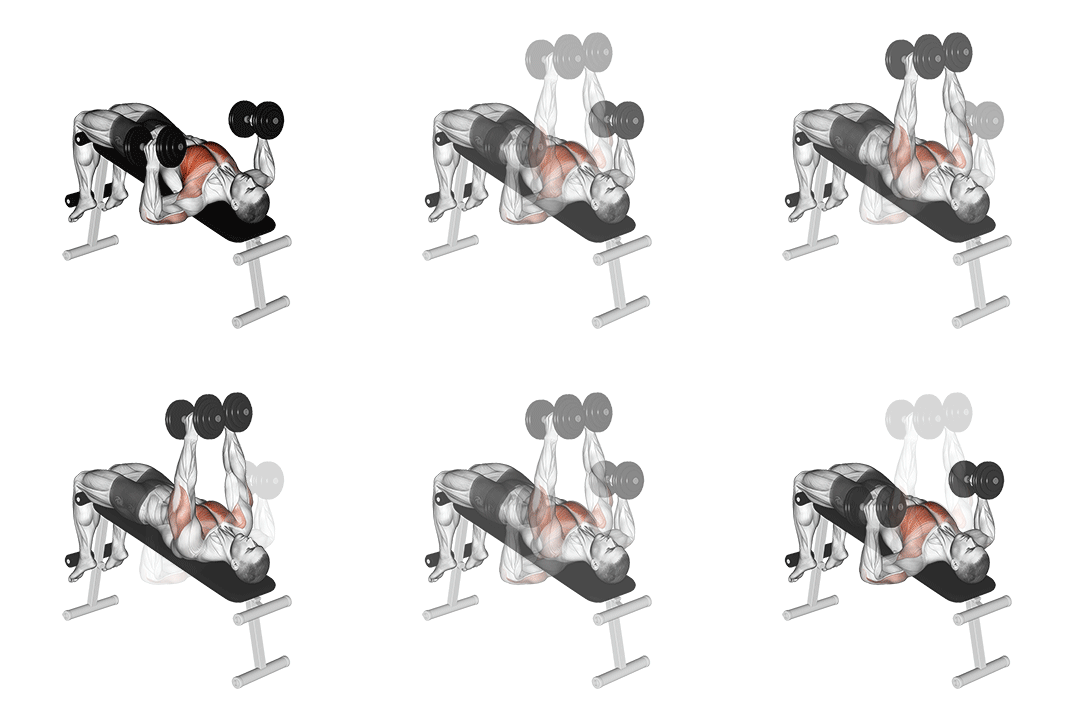
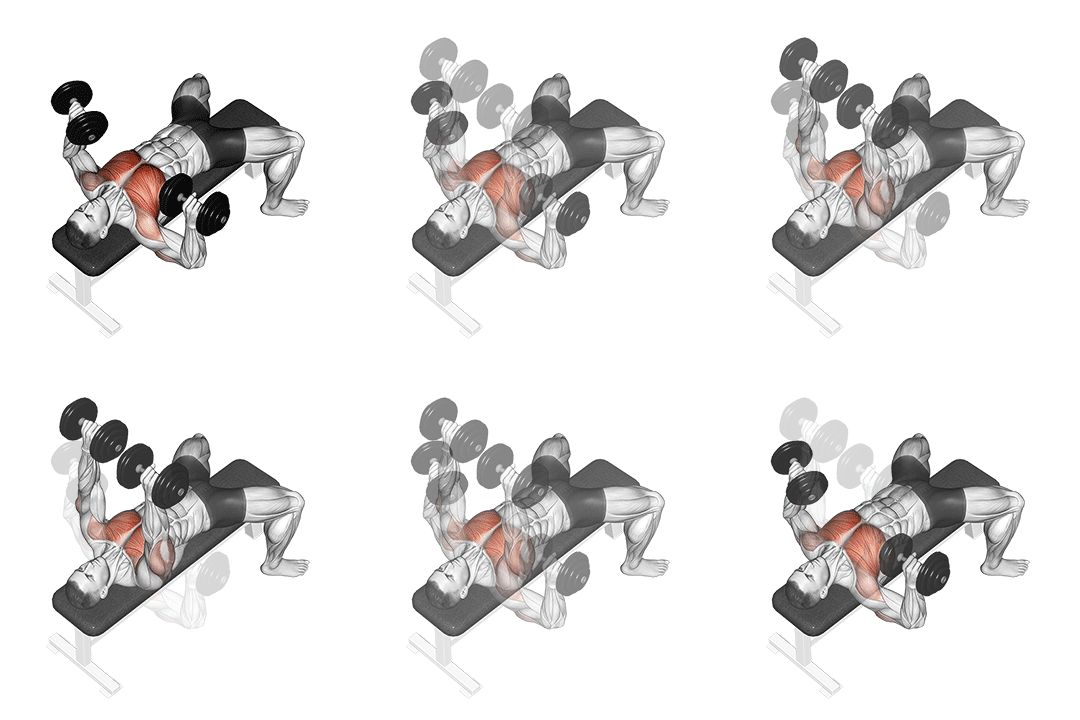
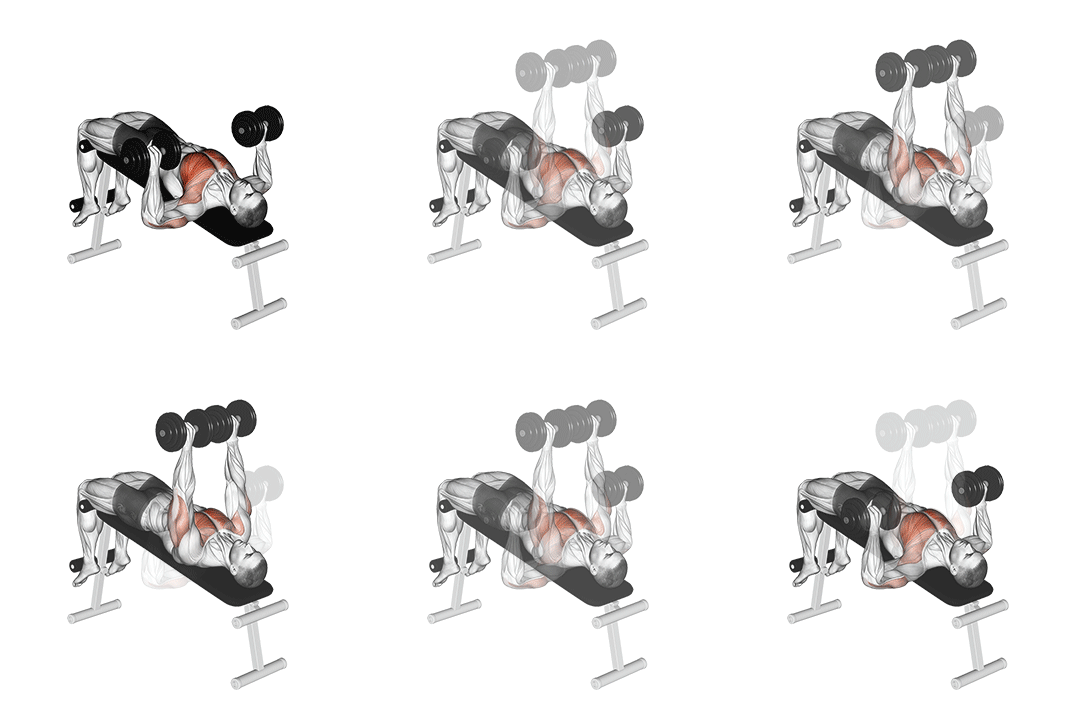
Dumbbell Decline Hammer Press
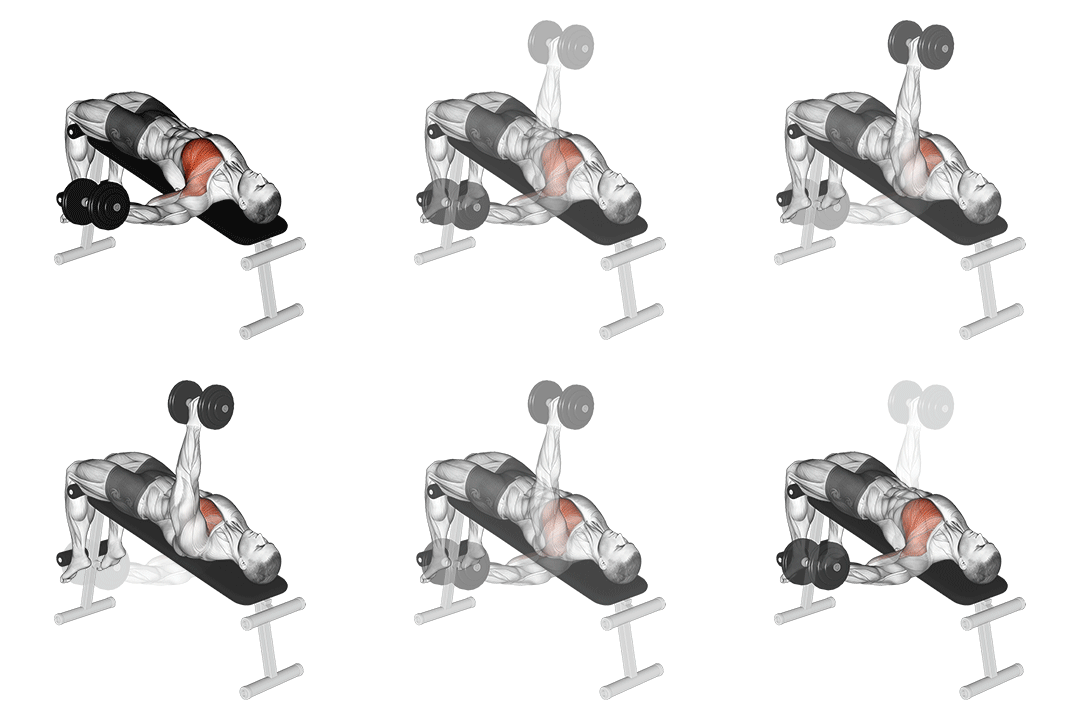
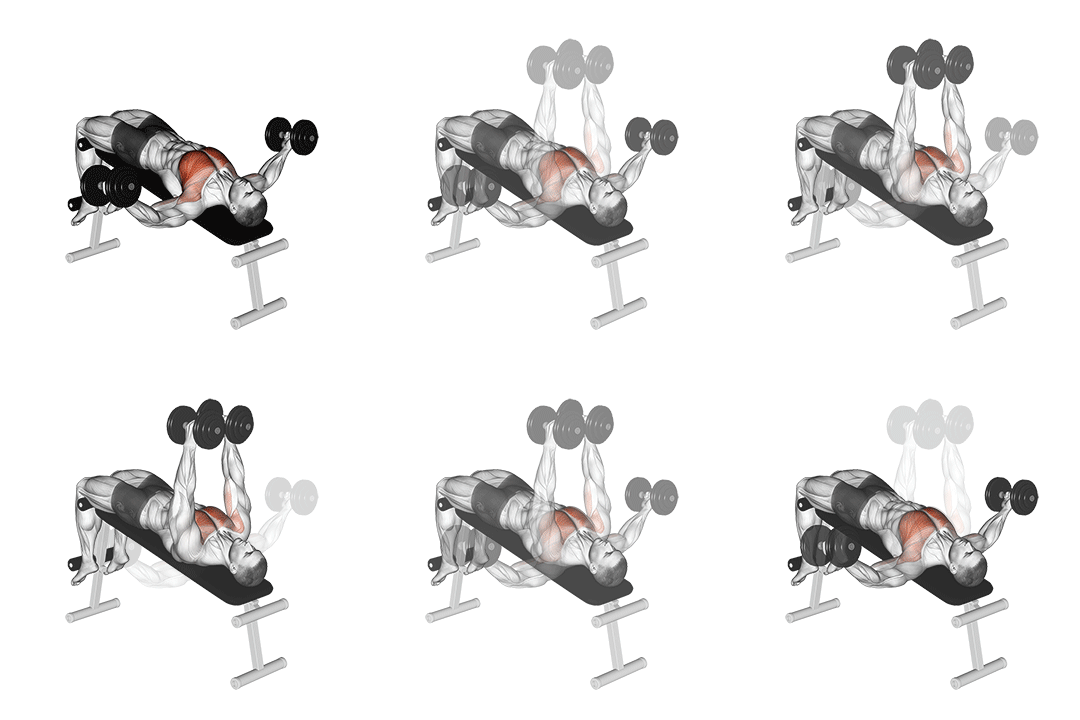
Dumbbell Decline One Arm Fly
Head-to-Head Comparison
| Attribute | Dumbbell Decline Hammer Press | Dumbbell Decline One Arm Fly |
|---|---|---|
| Target Muscle |
Pectorals
|
Pectorals
|
| Body Part |
Chest
|
Chest
|
| Equipment |
Dumbbell
|
Dumbbell
|
| Difficulty |
Intermediate
|
Advanced
|
| Movement Type |
Compound
|
Isolation
|
| Secondary Muscles |
2
|
1
|
Secondary Muscles Activated
Dumbbell Decline Hammer Press
Dumbbell Decline One Arm Fly
Visual Comparison
Overview
Dumbbell Decline Hammer Press vs Dumbbell Decline One Arm Fly — both target the lower pectorals on a decline bench, but they do it with very different mechanics. If you want clear guidance, this guide compares technique cues, biomechanics, muscle activation, equipment needs, difficulty, and how each fits into hypertrophy and strength programs. Read on and you’ll know which exercise to program for heavier load, which one to use for isolated chest stretch and time under tension, and how to progress safely with rep ranges and angles.
Key Differences
- Dumbbell Decline Hammer Press is a compound movement, while Dumbbell Decline One Arm Fly is an isolation exercise.
- Difficulty levels differ: Dumbbell Decline Hammer Press is intermediate, while Dumbbell Decline One Arm Fly is advanced.
- Both exercises target the Pectorals using Dumbbell. The main differences are in their movement patterns and muscle activation angles.
Pros & Cons
Dumbbell Decline Hammer Press
+ Pros
- Allows heavier loading for strength and lower-pec hypertrophy
- Greater triceps and anterior deltoid involvement for compound strength
- Easier to progress with added weight and standard rep schemes (3–12 reps)
- More stable bilateral setup reduces anti-rotation demand
− Cons
- Less pure pectoral isolation compared with fly variations
- Can overload triceps if elbows excessively tuck or flare
- Requires care to avoid lowering weight too far and stressing the shoulders
Dumbbell Decline One Arm Fly
+ Pros
- Places pecs at a longer muscle length for strong stretch-mediated tension
- High unilateral core and stabilizer demand improves symmetry and muscle targeting
- Excellent for time-under-tension hypertrophy work (8–15+ reps, slow eccentrics)
- Reduces triceps involvement, isolating the chest more effectively
− Cons
- Higher technical and shoulder injury risk if range or tempo is uncontrolled
- Limited ability to progressively overload with heavy absolute loads
- Requires superior scapular control and often lighter weights
When Each Exercise Wins
The hammer press lets you handle heavier loads while still biasing the lower pecs, offering a larger stimulus via mechanical tension across 6–12 reps. Use it as a primary hypertrophy movement and follow with isolation work like flies for stretch emphasis.
As a compound press, it produces higher peak forces and transfers to other pressing patterns; program 3–6 reps with progressive overload to build pressing strength and lower-pec drive.
Beginners benefit from the simpler pattern and clearer loading progression of the hammer press, with lower coordination demands and reduced unilateral stabilization compared to the one-arm fly.
If you have a pair of dumbbells and a decline bench or incline adjustment, the hammer press gives more return per equipment investment because it scales from light to heavy and serves multiple training goals.
Frequently Asked Questions
Can I do both Dumbbell Decline Hammer Press and Dumbbell Decline One Arm Fly in the same workout?
Yes — program the hammer press first as your heavy compound (3–8 or 6–12 reps), then use the one-arm fly as a higher-rep finisher (8–15 reps) to increase stretch and time under tension. Keep total volume and shoulder fatigue in check to avoid overworking the anterior capsule.
Which exercise is better for beginners?
Beginners should start with the Dumbbell Decline Hammer Press because it’s easier to learn, allows clearer load progression, and has lower unilateral stability demands. Once you’ve built scapular control and shoulder mobility, introduce the one-arm fly for isolation work.
How do the muscle activation patterns differ?
The press produces higher peak force and recruits triceps and anterior deltoid along with the pecs due to elbow extension and a combined vertical/horizontal force vector. The one-arm fly emphasizes horizontal adduction and places the pecs at a longer muscle length during the eccentric phase, increasing stretch-mediated tension and isolation of the chest.
Can Dumbbell Decline One Arm Fly replace Dumbbell Decline Hammer Press?
Not completely — the one-arm fly isolates and stretches the pecs but can’t match the load or compound strength carryover of the hammer press. Use the fly to complement the press for hypertrophy and symmetry, not as a full replacement when your goal is maximal strength.
Expert Verdict
Use the Dumbbell Decline Hammer Press as your primary decline pressing movement when you want strength and scalable hypertrophy. Its force vector and ability to handle heavier loads make it ideal for 3–12 rep blocks and progressive overload. Add the Dumbbell Decline One Arm Fly as a targeted finisher or corrective movement when you need more pec stretch, unilateral balance work, and time under tension in the 8–15+ rep range. Prioritize the press if you’re building strength or are new to decline work; choose the fly when you have solid shoulder control and want to isolate the lower chest or even out asymmetries.
Also Compare
More comparisons with Dumbbell Decline Hammer Press
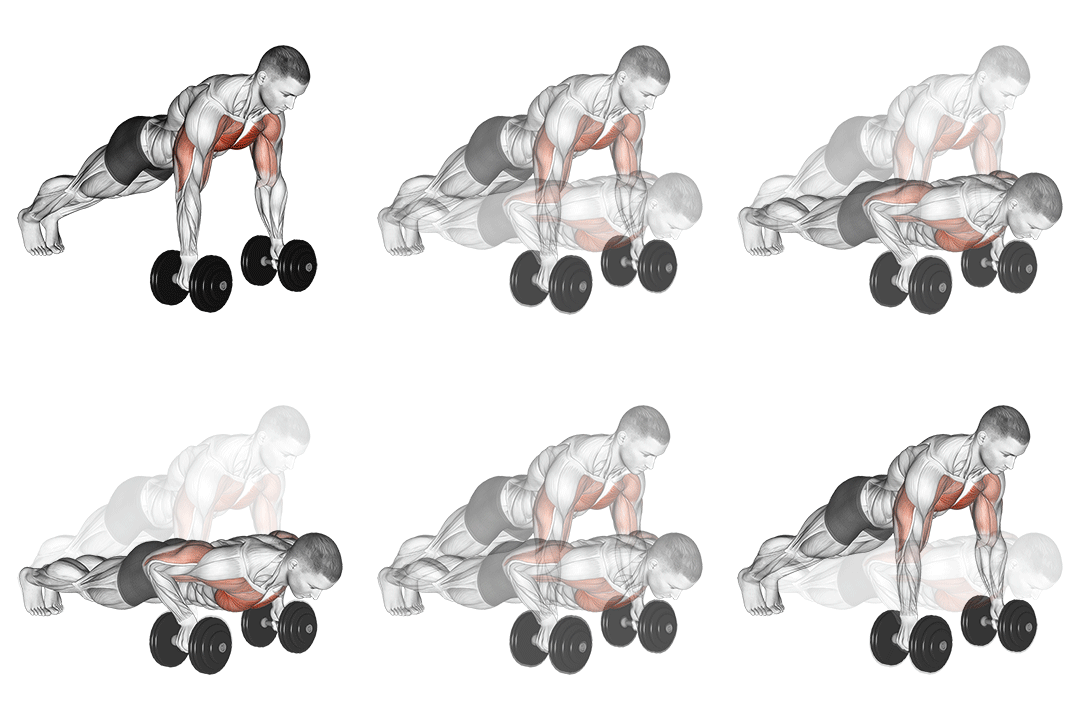
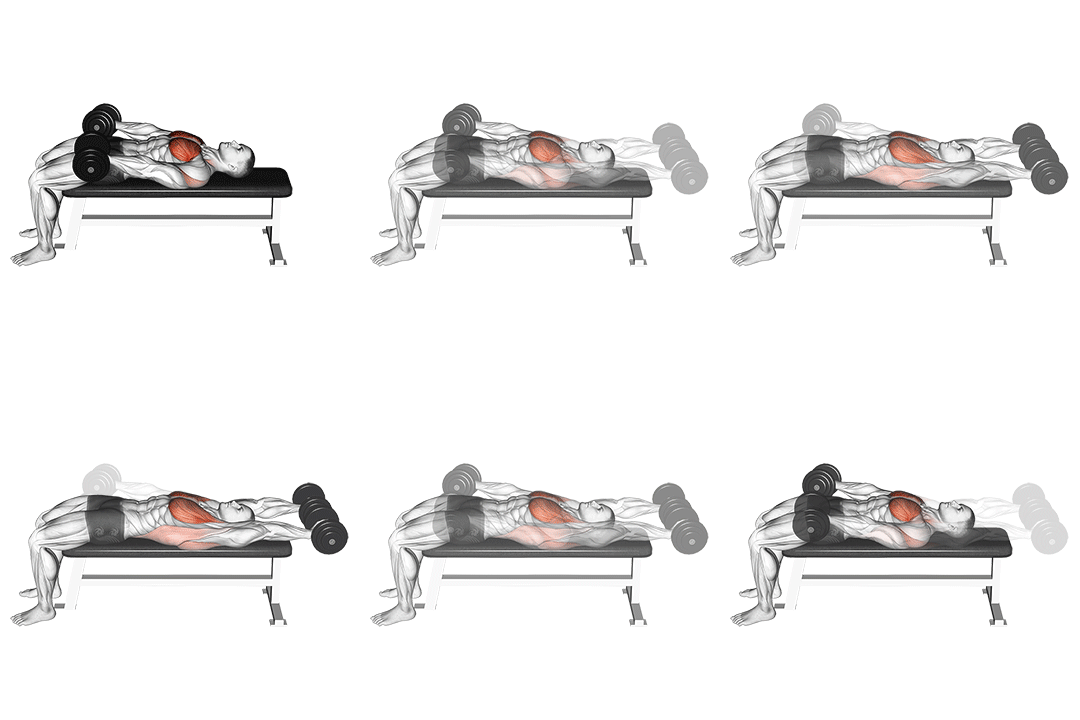
More comparisons with Dumbbell Decline One Arm Fly
Compare More Exercises
Use our free comparison tool to analyze any two exercises head-to-head.
Compare Exercises